


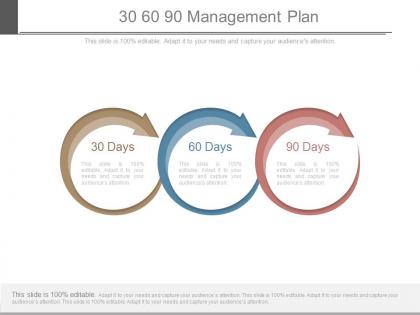
30 60 90 management plan powerpoint slides




Try Before you Buy Download Free Sample Product
 Impress Your
 Audience
 100%
100% Editable
 Save Hours
 of Time


Absorb the battering with our PT&s. Confidently allow them to go hammer and tongs.
People who downloaded this PowerPoint presentation also viewed the following :
30 60 90 management plan powerpoint slides with all 7 slides:
Our 30 60 90 Management Plan Powerpoint Slides endow you with extra endurance. They will augment your capacity.





FAQs for 30 60 90 management
Okay so first month is all about listening - meet your team, figure out what's already working (or not), spot some easy wins. Month two gets busier - start rolling out those quick fixes while you're building relationships with everyone. Honestly this part always feels chaotic but just stay focused on your priorities. By month three you can tackle the bigger picture stuff and really establish how you want to lead. Oh and definitely write everything down! You'll need to adjust your approach as you learn more about the dynamics. Trust me, no plan survives contact with reality intact.
Honestly, I'd break it into phases and go deeper each time. First month? Schedule one-on-ones with everyone to figure out their goals and how they actually work. Month two is where it gets interesting - start working on projects together and you'll see the real dynamics, plus who's actually running things behind the scenes. Then months 61-90, that's when you can dive into career stuff and give real feedback. It's basically: meet people, then work with them, then invest in their growth. Oh and definitely get those first meetings on the calendar this week before you forget.
Honestly, I'd focus on both the soft stuff and the hard numbers. Track how your stakeholders feel about working with you and whether your team actually likes having you around. Also watch how fast you're hitting those learning goals they set up. The "time to first real contribution" thing is weirdly important - sounds basic but it tells you everything. Beyond that, just count project milestones and any quick wins you can point to. Are you hitting what's in your onboarding plan? Don't go crazy with tracking though. Pick maybe 3-5 things that actually matter for your specific role and do quick weekly check-ins with your manager about where you stand.
Honestly, just feel out your company's vibe first. Hierarchical place? You'll need to understand who reports to who and get the right approvals before changing anything. Startup energy? Jump straight into collaborating across teams. Some companies are obsessed with documenting everything, others just want a quick chat over coffee. Figure this out week one - it'll save you tons of headaches later. Watch how decisions really happen vs what the org chart tells you. Ask your manager about communication style and meeting frequency right away, then adjust your timeline from there. Trust me on this one.
Honestly, the worst thing you can do is go in trying to change everything immediately. That's a recipe for burnout - yours and your team's. Talk to people first before making any big plans. I can't tell you how many new managers I've watched completely bomb because they drafted some grand strategy without actually listening to anyone. Small wins are your friend early on. Build relationships before you start moving mountains. Oh, and be specific with your goals - vague direction just confuses everyone. Check in regularly too, because you'll definitely need to adjust course. Stick to whatever timeline you promise or people will stop taking you seriously.
Look, you really need those 30-60-90 days to figure out what's actually going on before you start trying to fix anything. First month? Just watch everyone - see who clashes with who and try to understand why people are butting heads. Month two is when you can finally start having some of those awkward conversations and maybe try small tweaks based on what you've observed. Trust me, jumping in too fast without the full picture is a recipe for disaster. I learned that the hard way at my last job, actually. By month three you'll know if your changes worked or if you need to completely switch tactics. Map out the team dynamics first - it's like a weird office soap opera once you start paying attention.
Honestly, feedback makes or breaks these plans. Without it, you're just creating fancy paperwork that'll collect dust. Schedule those check-ins with your boss, teammates, and anyone who reports to you right from the start - otherwise they won't happen, trust me. The whole thing should evolve as you go. Priorities change, some stuff doesn't work out, whatever. Just pivot instead of being stubborn about the original plan. Use what people tell you to tweak your next phase goals and fix things fast when they're not working.
Honestly, your first month should just be listening and getting to know people - don't change anything yet, even if you're itching to. Month two is when you can start making small improvements and figuring out your leadership vibe (this part's rough because everyone's watching). The 90-day mark is perfect for bigger strategic stuff. I know it's tempting to come in guns blazing, but that usually blows up in your face. Oh, and write down like 3-5 concrete goals for each phase so you don't get distracted by every shiny problem.
Honestly, those 30-60-90 day plans are game changers for new hires. Your people know exactly what they're supposed to hit at each milestone instead of just wandering around confused. Quick wins early on? Total confidence boost - I've watched new employees literally light up when they nail those first goals. Shows you actually care about their growth too, which keeps them way more invested. Oh, and the regular check-ins are perfect for catching stuff before it becomes a problem. Seriously, try it with your next hire and you'll see how much smoother everything goes.
Honestly, just grab the obvious stuff first - things that'll show results fast. Hit up those early meetings and actually listen. People love complaining about what's broken, so let them tell you exactly where the pain points are. Maybe there's some annoying manual process everyone hates that you could automate? Communication gaps are usually pretty glaring too. Don't go for anything revolutionary right away. Pick like 2-3 things your team can knock out in a month, then make sure everyone knows when you actually pull it off. It's all about building that momentum early.
Honestly, just pick a couple good tools and stick with them. I always start with something like Asana for mapping out those 30-60-90 day goals - keeps everything visible. Calendar blocking is huge too, otherwise you'll get pulled into random meetings all day. Set up some automated check-ins through Slack so you're not constantly chasing people down. The analytics dashboards are where it gets fun though - there's something weirdly satisfying about watching those metrics actually move. Oh, and grab a feedback tool like 15Five for regular team pulse checks. But seriously, don't go overboard with the tech stack or you'll spend forever just managing apps instead of actually getting stuff done.
Focus on outcomes over just listing tasks - that's key. Start with an overview slide showing your 30-60-90 breakdown, then get into specific goals and metrics. Always explain the "why" behind each priority because stakeholders need that context. Honestly, less is more here - stick to high-impact stuff that ties directly to business goals instead of overwhelming them with every little thing you'll do. Be realistic about your timelines too. Oh, and frame it as something you'll keep updating based on their feedback and how priorities shift.
Dude, you NEED a solid 30-60-90 day plan. It forces you to map out quick wins while keeping the bigger picture in mind. Don't just wing it with random tasks - build momentum that actually connects to company goals. The 90-day mark is clutch because that's when you finally have enough context to contribute real strategic value. Leadership notices when you're thinking beyond just "figuring things out," trust me. All those relationships and systems you learn early on? They'll make or break how well you execute bigger projects later. Oh, and set clear metrics for each phase - makes everything way easier to track.
Honestly? Overconfidence gets most people around this time. You've picked up the basics and suddenly feel ready to change everything, but you don't really know the politics yet. I've watched new managers totally flame out because they got too cocky around week 6-8. That's when the honeymoon period ends and people start judging your ideas harder. You might accidentally piss off the wrong person or miss key stakeholders - been there! Run your bigger ideas by someone you trust first. Ask more questions, even if they seem dumb. Way easier than fixing disasters later.
Get them involved from day one, seriously. Call a team meeting and share your rough ideas, then ask what they think about priorities and what'll actually slow things down. Honestly, I've watched so many managers lock themselves in a room to plan and it always backfires. Your team knows which goals are realistic and what projects depend on each other. Plus they won't feel like you're just dropping some random plan on their heads. Maybe do one of those whiteboard sessions where you map everything out together? They'll actually want to make it work instead of just going through the motions.
-
Amazing product with appealing content and design.
-
The content is very helpful from business point of view.