


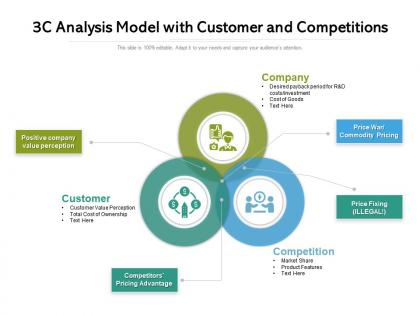
3c analysis model with customer and competitions




Try Before you Buy Download Free Sample Product
 Impress Your
 Audience
 100%
100% Editable
 Save Hours
 of Time


Our 3c Analysis Model With Customer And Competitions are topically designed to provide an attractive backdrop to any subject. Use them to look like a presentation pro.
People who downloaded this PowerPoint presentation also viewed the following :
3c analysis model with customer and competitions with all 2 slides:
Use our 3c Analysis Model With Customer And Competitions to effectively help you save your valuable time. They are readymade to fit into any presentation structure.

FAQs for 3c analysis model with
So 3C Analysis is Company, Customers, and Competitors - pretty straightforward. Look at your internal strengths/weaknesses first. Then figure out what your customers actually want and how they behave. Competitors are where it gets interesting though - you map out who's doing what and spot the gaps. Honestly, most people try to tackle all three at once and end up with shallow insights. Pick one area and really dig into it first. The whole point is finding where your strengths meet customer needs that competitors are missing. That's where you'll actually make money.
Look, 3C is way more focused on the external stuff - your company vs customers vs competitors. SWOT though? That's looking at everything including internal things like what you're actually good at or terrible at. Honestly, I lean toward 3C when I need to figure out competitive positioning. It's cleaner for market strategy stuff. SWOT feels more like a full business checkup - strengths, weaknesses, all that. Use 3C when you want to zoom in on market dynamics instead of doing the whole internal/external analysis thing. Way less overwhelming too.
Honestly, I pull out 3C Analysis whenever I'm dealing with new markets or product launches - it's a lifesaver. Major competitive shifts too. Super helpful for strategic planning when you need that clear competitive picture. My clients love it because it beats doing random scattered research that goes nowhere. Best results happen when there's real uncertainty about where you stand in the market. Also works great for quarterly reviews or when investors start grilling you with "so how exactly are you different?" Quarterly reviews can be brutal without prep. Just start with whatever C feels most pressing right now.
Okay so the "Company" part is basically about being real with yourself before you make any big moves. You're digging into your actual resources, what you're good at, internal stuff - things we totally ignore when we're obsessed with what competitors are doing. Been there! Short version: figure out what you can actually pull off vs. what sounds cool on paper. I think too many businesses chase shiny strategies that don't match their strengths at all. The whole point is picking moves that fit what your organization genuinely does well, not some fantasy version of your company.
Customer analysis is your North Star - it shows you exactly who you're targeting and what they actually want. Look into their demographics, behaviors, pain points, buying habits. Honestly, so many companies just skip this part! Once you nail down those insights, everything else flows from there: positioning, messaging, which channels to use. Even product features sometimes. Without knowing your customers, you're basically throwing darts blindfolded. Build detailed personas first, then map their journey. That foundation makes your competitor research way more targeted too. It's like... you can't hit a bullseye if you don't know where the target is.
So here's the thing about competitive dynamics in the 3C Model - you can't just look at who your competitors are on paper. You need to see how they actually behave. Are they playing nice, cutting each other's throats on pricing, or totally ignoring one another? It gets wild when indirect competitors suddenly jump into your space too. Map out their moves and counter-moves over time. Look for alliance patterns and where they have blind spots. Honestly, focus on whoever's actively making moves that'll mess with your strategy, not necessarily the biggest names.
Yeah, totally works for both! Startups use it to validate their idea - figure out what customers actually need, see who they're up against, and get real about what they can pull off. Established companies? They're usually looking at pivots or expansions. Same framework, different data though. Startups are basically guessing and doing surveys, while bigger companies have actual customer info to work with. Honestly, I'd start with nailing down your customer first - that's where most people mess up. The competitive stuff flows way easier once you know who you're actually serving.
So I'd definitely combine 3C with SWOT analysis - gives you way more depth on your internal stuff while 3C handles the external view. Porter's Five Forces breaks down competitive pressure really well too. Oh, and value chain analysis shows exactly where you're creating value vs competitors, which is huge. Honestly though? The combo that's worked best for me is 3C plus customer journey mapping. You get the competitive landscape but also see how people actually move through your space. Start with 3C, then just add whatever fills your biggest blind spots.
So the 3C thing is basically about finding gaps where competitors suck at giving customers what they want. Map out what customers actually need, then look at where your competition is dropping the ball - maybe they're slow or expensive or whatever. Then honestly assess what you're actually good at. The sweet spot is where all three overlap, like if people want faster shipping but everyone else is terrible at logistics and you happen to have good delivery systems. I'd literally draw it out side-by-side because seeing it visually makes the opportunities way more obvious. It's kind of like connect-the-dots but for business strategy.
Don't treat each C like it exists in a vacuum - they're all connected. Your customers directly impact competitive positioning, which then shapes what capabilities you actually need. I've totally fallen into this trap before, but analysis paralysis will kill you. You'll spend forever gathering data and never actually do anything with it. Competitor info gets stale fast too, especially with how quickly companies pivot these days. Honestly, most of this analysis just ends up rotting in PowerPoint anyway. Set yourself a hard deadline and actually stick to it - the goal is making decisions, not creating the perfect report.
So basically you wanna hit all three C's before jumping into product decisions. Start with what your company can actually pull off - like what resources and skills you've got right now. Customer pain points come next - what problems aren't being solved yet? Competitor research is last but honestly, teams always blow this off and kick themselves later. The good stuff happens when you find where these three overlap. I'd literally make three separate lists or boards, then hunt for those sweet intersection points where you can build something customers need that competitors aren't touching.
Honestly, measuring 3C is pretty straightforward - just look at market share shifts, where you stand against competitors, and customer satisfaction numbers. The tricky part? Getting solid competitor data is such a pain. But anyway, track whether your customer insights actually boosted retention or if that competitive research helped you snag new opportunities. Speed matters too - are your teams making decisions faster now? I'd start with maybe 2-3 metrics that align with your main goals and check them quarterly. Don't overcomplicate it.
Honestly? Every 6-12 months, but that depends on your industry. Tech moves crazy fast so maybe quarterly reviews make sense there. More stable sectors can probably get away with annual check-ins. Big things to watch for: competitors dropping major announcements, customer behavior shifting, or when your company does a strategic pivot. I'd set up Google alerts for competitor news too - way better than waiting for your next scheduled review. One thing though - don't be like those teams who set calendar reminders then completely ignore them for two years. Your analysis becomes pretty useless fast in today's market.
Amazon and Apple are constantly using 3C Analysis - those companies absolutely nail it. Tech and retail crush it with this framework because customer preferences shift so fast and competition's brutal. Consulting firms obviously love it too, but that's their whole thing. Works best in dynamic markets where people's behavior changes quickly. Honestly, more stable industries can still benefit but it won't be as revolutionary. You should definitely try it during your next strategic planning session - just don't expect miracles if you're in like, utilities or something boring.
Dude, the 3C thing is actually pretty smart for getting departments on the same page. You know how marketing only cares about customers while ops is stuck thinking about what they can actually do? With this framework, everyone's looking at customers, competitors, AND company capabilities together. No more of those painful meetings where people are talking past each other. Your sales team starts getting why certain features take forever to build, and product finally pays attention to what competitors are doing. Honestly, I'd just make it your go-to template whenever you're kicking off projects with multiple teams. Works way better than you'd think.
-
Awesomely designed templates, Easy to understand.
-
Illustrative design with editable content. Exceptional value for money. Highly pleased with the product.
-
Appreciate the research and its presentable format.
-
Much better than the original! Thanks for the quick turnaround.