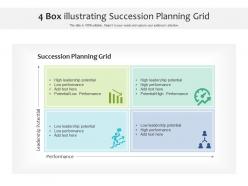
4 box illustrating succession planning grid
Try Before you Buy Download Free Sample Product
Audience
Editable
of Time
Our 4 Box Illustrating Succession Planning Grid are topically designed to provide an attractive backdrop to any subject. Use them to look like a presentation pro.
People who downloaded this PowerPoint presentation also viewed the following :
4 box illustrating succession planning grid with all 2 slides:
Use our 4 Box Illustrating Succession Planning Grid to effectively help you save your valuable time. They are readymade to fit into any presentation structure.
FAQs for 4 box illustrating
So it's basically a visual chart showing who could fill important roles if people leave or move up. Picture a spreadsheet - current jobs down the left side, potential replacements across the top. Each box shows if someone's "ready now," "ready in 1-2 years," or whatever. Super simple concept but honestly? It'll save your butt when people quit unexpectedly. You just gotta keep it updated and be real about who can actually handle what - not just who seems promising on paper. Trust me, way better than panicking and promoting whoever's available.
Start with a 9-box grid - performance on one axis, potential on the other. Rate everyone as low/medium/high on both using actual review data and 360 feedback. Your top-right corner people (high performance + high potential) are obvious succession candidates, but honestly the medium-high combos can surprise you too. Map this against your critical roles first - no point developing someone amazing for a position that doesn't matter. Then throw your development budget at the right boxes and build specific plans for each group. The whole thing falls apart if you're not brutally honest about where people actually sit.
Look at what your best people are already crushing - that's your starting point. Technical skills matter, but don't sleep on the soft stuff like communication and managing change. Those trip up new leaders constantly. Add strategic thinking, financial basics, and how they handle pressure situations. Stakeholder management is probably more important than most companies realize, honestly. Team development should definitely be in there too. The trick is making it specific to your industry instead of some generic leadership thing. Map out where future leaders might stumble without proper development, then build around those gaps.
So basically, it's this visual map that shows you who's ready to step up into key roles and who still needs work. Plot your important positions against potential successors - you'll probably find some scary gaps you didn't know about. Honestly, most companies are way more vulnerable than they think. Short sentences help you spot succession risks fast. Then you can actually build development plans for people instead of just crossing your fingers and hoping someone will be ready when your star performer quits. It's like having a crystal ball, but for your org chart.
Honestly, most companies rush it and skip getting managers on board first - that's where things fall apart. You'll build this fancy chart but nobody uses it because people weren't part of creating it. Super frustrating to watch! Don't ignore mid-level roles either, those departures can totally blindside you. Oh, and treating it like a checkbox exercise instead of something living? Big mistake. People change, skills develop, priorities shift. I'd say pick maybe 3-4 critical roles to start with. Get your team leaders actually invested in mapping it out together, then expand from there once you've got some wins.
Think of it as your talent cheat sheet - you map employees based on performance and potential, which shows you who's promotion-ready and who needs more development. Honestly, it's a lifesaver when you're trying to figure out succession plans. The visual makes it super obvious where your weak spots are if someone decides to bounce. Short sentences work too. You'll stop panicking every time a key person hints at leaving because you actually know who could step up. Way better than scrambling last-minute when someone drops their resignation letter on your desk (been there, not fun).
Dude, if your high-potential people aren't engaged, you're basically screwed. They'll either bail before you can promote them or totally flop when they move up. Engaged folks actually want to do the development programs and mentoring stuff that builds your pipeline. I learned this the hard way at my last job - we kept identifying these "rising stars" who were already mentally checked out. You've got to regularly check in on engagement levels for everyone in your succession grid. Don't just pick successors and hope for the best. Keep them excited about sticking around and growing with you.
Honestly, once a year is the absolute minimum - but don't just set it and forget it. Big changes like someone leaving or getting promoted? Update it right away. I've seen too many companies scrambling because their succession plan was based on who worked there six months ago. Quarterly reviews work well too, especially since people's goals shift pretty often. Oh, and definitely set a calendar reminder or you'll totally forget (speaking from experience here). The whole thing becomes useless if it's not current.
Honestly, start with internal promotion rates - you want like 70-80% of leadership spots filled from within. That's the big one. Time-to-fill for critical roles matters too, plus retention rates for your high-potential people (because what's the point if they all bail?). Don't sleep on engagement scores for your identified successors either. Nobody wants to invest in developing someone who's already got one foot out the door. Leadership readiness assessments help you figure out if people are actually building the right skills. Pick maybe 2-3 metrics that match your biggest headaches and check them quarterly.
So succession grids basically make your leadership pipeline super visible - which is both good and awkward. You'll probably notice all your "high potential" people look pretty similar (yikes). But that's actually helpful because now you can spot the gaps and do something about it. Map out who could move up where, then actively look for talent you might've missed before. Different departments, different backgrounds, whatever. Track the numbers across levels too. Honestly, if your current grid isn't diverse, you're just setting yourself up for the same boring leadership later.
HRIS systems like Workday or BambooHR have succession planning features that'll automate your grid updates - pretty handy actually. SuccessFactors is solid too but can be pricey. If you're just getting started though, honestly? A good Excel template with some conditional formatting works great. I've seen companies spend months debating software when they could've been tracking talent gaps already. Power BI or Tableau are worth checking out later for the visual stuff - seeing your talent pipeline mapped out is actually pretty cool. Just pick whatever your team won't ignore after two weeks.
Add a "mentor assignment" column to your grid - super easy way to pair high-potential people with leaders from their target roles. I'd start by looking at what informal mentoring already exists, then spot the obvious gaps. Each succession candidate gets matched with someone who's already mastered that position they want. Track these relationships right alongside readiness levels and development stuff. The grid becomes way more useful this way, honestly. Update mentor pairings as people move through different stages - don't just set it and forget it. Focus your formal programs where they'll actually move the needle.
Honestly, bias is your biggest worry here - companies get sued over this stuff all the time. Document everything so you can prove your decisions were fair if someone challenges them later. Focus on actual job skills and performance, not who you think "looks like leadership material" (that's where people usually mess up). Keep the whole thing confidential too since you're basically planning people's careers without them knowing. Have HR double-check your work before you finalize anything. Oh, and use measurable criteria instead of gut feelings - makes everything way cleaner if questions come up down the road.
Honestly, your employees will tell you if your succession planning grid is BS or not. Survey them about career paths and promotion transparency - they always know when it's just corporate theater. Their feedback shows you where the grid doesn't match reality. I'd look for patterns in what people say about skill assessments and development resources. Are they actually getting opportunities? Use that info to fix your criteria and processes. Make it a yearly thing so you're not working with outdated assumptions about what people want or need.
Okay so first thing - don't just drop this grid on people without explaining how it works. That's asking for office drama! Be super clear about what puts someone at each readiness level and what development stuff is actually available. Frame it as growth opportunities, not some weird ranking system. Also make sure everyone knows this thing gets updated all the time - it's not set in stone. Give people real feedback about where they landed and why. Honestly, the biggest mistake would be sharing it without follow-through. You gotta have actual development plans ready or it just looks like BS promises.
-
Good research work and creative work done on every template.