


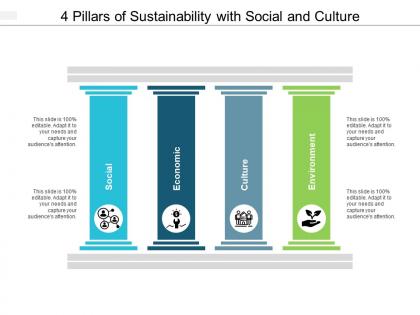
4 pillars of sustainability with social and culture




Try Before you Buy Download Free Sample Product
 Impress Your
 Audience
 100%
100% Editable
 Save Hours
 of Time


Increase camaraderie with our 4 Pillars Of Sustainability With Social And Culture. Give a huge boost to feelings of bonhomie.
People who downloaded this PowerPoint presentation also viewed the following :
4 pillars of sustainability with social and culture with all 5 slides:
Give your ideas an attractive flavour with our 4 Pillars Of Sustainability With Social And Culture. It helps add the cream.




FAQs for 4 pillars of sustainability with
So there are three big things: making money, not destroying the environment, and being fair to people. Honestly, most companies mess this up by only thinking about profits first. You've gotta ask yourself - will this actually work long-term financially? What's it doing to the planet? And who gets screwed over in the process? Manufacturing might switch to solar power and decent wages. Tech companies could focus on reducing electronic waste - though good luck with that one. The trick is baking all three into your plan from the start instead of slapping on some green initiatives later.
First thing - map out your whole supply chain so you can spot the worst offenders. Usually it's sourcing, transport, and packaging that are killing you. Find suppliers with real certifications, not just flashy websites (seriously, the greenwashing is insane right now). Cut waste wherever you can, switch to renewables if possible, and streamline your logistics. Oh, and definitely set actual measurable goals - otherwise you're just guessing. I'd start with maybe one or two changes first, see how they work, then build from there. Way easier than overhauling everything at once.
Honestly, communities are where the real work gets done. They're running conservation projects, building local food networks that cut down on shipping stuff across the country, teaching neighbors about sustainability. Makes sense - they actually know what problems they're dealing with, unlike some nonprofit that parachutes in from elsewhere. Plus they're the ones who can push back on local government or businesses when needed. The cool part is watching old-school knowledge mix with newer green tech approaches. My advice? Figure out what's already happening in your area first, then see how you can help instead of reinventing everything.
Honestly, tech is what's making clean energy actually work at scale now. Solar's getting dirt cheap and way more efficient. Smart grids can balance everything automatically, which is pretty cool. Battery storage finally doesn't suck - that was the biggest problem for years with wind and solar being so inconsistent. Modern wind turbines are insanely sophisticated compared to the old ones. Oh, and AI is optimizing energy use in real-time across whole systems, cutting tons of waste. If you're curious about this stuff, definitely look into grid-scale battery projects. That's where the really exciting breakthroughs are happening.
Honestly, the best cities just get the basics right - green spaces everywhere, mixed-use buildings so you're not driving to grab coffee, and decent public transit. Walkable neighborhoods are everything. People should be able to live, work, hang out all in the same area without needing a car for every little thing. Dense communities actually work better for the environment too, plus they use way less space than sprawl. Oh and throw in some permeable pavement and urban trees - that stuff really helps with flooding and heat. Check out Copenhagen or Portland if you want to see how it's done right.
Oh man, this is such a pain because you're juggling three things at once - environmental, social, and economic stuff - and they're constantly fighting each other. Like you'll boost the economy but trash the environment. Then there's the timing nightmare where you need results now but environmental damage takes forever to show up. Don't even get me started on crappy data, especially in developing countries where they barely have monitoring systems. Nobody can agree on what "winning" looks like either, which is honestly ridiculous. Start with clear indicators you can actually measure, then mix hard numbers with softer assessments.
Don't make it a separate "green" class - that's where schools mess up. Instead, mix sustainability into what you're already teaching. History lessons about civilizations that collapsed from bad resource choices? Gold. Math kids analyzing their school's carbon footprint? They eat that up. Science is obvious with climate stuff. Honestly, hands-on projects kill it every time - gardens, energy audits, waste challenges. Students aren't dumb, they know when you're being preachy. Make it connect to their actual lives and prove they can change things. Pick one subject first and see where sustainability fits naturally into your existing lessons.
Ugh, climate change makes every development goal so much harder to hit. Communities can't focus on education or reducing poverty when they're literally fighting floods and droughts. Everything's connected in the most annoying way possible. But here's what's cool - renewable energy projects actually knock out multiple goals at once. They create jobs AND cut emissions. Solar panels in rural areas? That's energy access plus economic opportunities. I'd honestly just look for those overlap solutions where you're solving climate stuff while tackling other problems. Way more efficient than treating them separately.
So there's basically two main ways governments can get companies to go green. Financial incentives work great - tax breaks, carbon credits, subsidies for renewable energy. That stuff actually motivates businesses because it hits their bottom line. Then you've got the regulatory side where they just force compliance through emission limits and mandatory reporting. Honestly, the procurement angle is probably underrated though - when governments refuse to buy from non-sustainable suppliers, companies scramble to adapt real quick. You need both the carrot and stick approach or companies'll just do the bare minimum to avoid penalties.
Look, you've gotta make sure both sides actually benefit - like real money benefits, not just feel-good stuff. Pilot projects are your best friend here because results speak louder than PowerPoints. Tax breaks and faster permits help tons too. Honestly? Half the battle is just getting everyone to sit down together in the first place - people are weirdly territorial about this stuff. Joint funding works well since nobody wants to foot the whole bill alone. Oh, and pick industries that already have regulatory heat on them. Way easier sell when they're already feeling pressure to go green anyway.
So sustainable agriculture is pretty cool - it feeds people without trashing the environment. Crop rotation, cutting back on pesticides, soil conservation, that kind of stuff. Instead of just going for max yields now, farmers think long-term. Keeps biodiversity intact, stops soil from getting wrecked, cuts water pollution. I mean, it just makes sense, right? Plus local communities actually benefit instead of getting squeezed out. Oh, and regenerative farming is where all the exciting new stuff is happening if you want to dive deeper into it.
So overconsumption basically screws up sustainable development because we're burning through resources way faster than we can replace them or figure out alternatives. It's like we're maxing out Earth's credit card - pretty grim when you think about it. This whole mess makes inequality worse too since rich countries are hogging everything while poorer ones can't even get basics. The cycle just keeps getting worse. We need to find ways to grow economies without destroying the planet, maybe through recycling systems and just being smarter about what we actually need vs. want.
Honestly, sustainable tourism comes down to three main things. First, cap visitor numbers - ecosystems can only take so much before they're totally screwed. Support local communities by hiring locally and buying from nearby businesses instead of shipping everything in. Also focus on cutting resource use with solar power, waste reduction, that kind of stuff. Oh and definitely work with local guides rather than outside companies - way better for everyone involved. My advice? Test things out with small pilot programs first. Track your environmental impact and tweak based on what you're seeing in the data.
Honestly, you can't solve the big SDG stuff without countries working together. Climate change doesn't care about borders, right? Same with poverty and supply chains. The Paris Agreement works pretty well when everyone actually follows through (big if there). But yeah, countries need to pool resources and share tech - otherwise you just get random efforts that don't really add up. Even smaller organizations can jump into international partnerships. I mean, every bit helps when you're talking about global problems this massive.
Honestly, it's all about small stuff that adds up. LED bulbs and unplugging things saves cash too. Walk or bike when you can - I'm terrible at this but trying. Local food's way better anyway, and cutting back on meat helps (though I still love a good burger sometimes). The plastic thing is actually huge - just carry a water bottle and those reusable bags. Takes forever to remember at first. Public transit beats sitting in traffic. Oh, and buy from companies that aren't totally awful environmentally. Your friends will probably start copying you without realizing it.
No Reviews