

4 ps marketing diagram




Try Before you Buy Download Free Sample Product
 Impress Your
 Audience
 100%
100% Editable
 Save Hours
 of Time


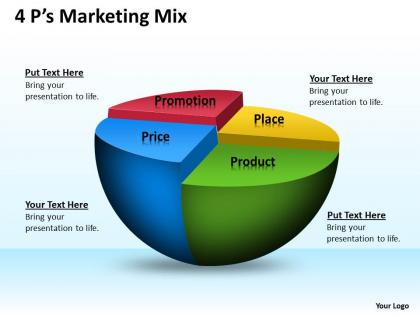
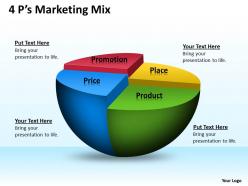
Whether you belong to a startup firm or an established one, the base for the study of product and services offered to your customers will remain the same. And this basic study is covered as 4Ps marketing diagram presentation model as designed and developed by us. Decipher your plethora of knowledge about the concept of marketing mix, purpose of the 4Ps of marketing, features of marketing mix module and how to develop the marketing mix structure. You will benefit from the provided marketing mix PPT PowerPoint presentation slide model as it will help you streamline your product offering activities in market and will also make you outshine your competitors. As a marketing manager you can use the available marketing mix PPT presentation slide template to manipulate each of the four variables in accordance to the changing marketing trend. Create value for your product and services by making the effective use and implementation of the 4Ps of marketing PowerPoint slide design background. Serve the key goal to create satisfied customers through impactful product offering by applying the principles of marketing mix.Our 4 Ps Marketing Diagram will brook no nonsense. Like you they are straight and direct.
People who downloaded this PowerPoint presentation also viewed the following :
4 ps marketing diagram with all 5 slides:
Bask in the glow of our 4 Ps Marketing Diagram. They will give your ideas the radiance they deserve.
FAQs for 4
The 4 Ps of Marketing include Product, Price, Place, and Promotion, forming an integrated framework that guides strategic marketing decisions across all business sectors. These elements interrelate by creating a cohesive customer experience, with successful companies like retail chains and financial services finding that aligning product features with competitive pricing, strategic distribution channels, and targeted promotional campaigns ultimately delivers enhanced market positioning and sustainable competitive advantage.
Understanding the 4 Ps enables small businesses to strategically align product features, competitive pricing, targeted distribution channels, and cost-effective promotional tactics with customer needs and market opportunities. This framework streamlines decision-making by providing clear focus areas, with many small retailers and service providers finding that systematic application of product positioning, value-based pricing, and targeted promotions ultimately delivers improved customer acquisition and sustainable competitive advantage.
The 4 Ps adapt to digital environments through enhanced Product customization via data analytics, dynamic Pricing strategies using real-time market data, expanded Place opportunities across multiple online channels, and targeted Promotion through social media and content marketing. These digital adaptations enable businesses to deliver personalized customer experiences, optimize pricing strategies instantly, and reach global audiences more efficiently, ultimately providing competitive advantages in increasingly connected markets.
Cultural differences significantly influence global marketing by requiring localized adaptations across product features, pricing strategies, promotional messaging, and distribution channels. Companies like McDonald's adjust menu offerings for local tastes, while luxury brands modify pricing for different economic contexts, ultimately ensuring cultural relevance and market penetration across diverse international markets.
Pricing strategy serves as the revenue engine that directly impacts product positioning, distribution channel viability, and promotional messaging effectiveness across all four Ps. Strategic pricing decisions influence customer perceptions of value, determine profit margins for channel partners, and shape competitive positioning, with many organizations finding that integrated pricing approaches ultimately enhance market penetration and sustainable growth.
The 4 Ps framework guides brand positioning by aligning product differentiation, competitive pricing strategies, strategic distribution channels, and targeted promotional messaging to create a distinct market identity. Through this integrated approach, companies across sectors like retail, technology, and consumer goods can establish clear value propositions, optimize market penetration, and build sustainable competitive advantages that resonate with their target audiences.
Marketers can assess 4 Ps effectiveness through market research surveys, A/B testing, sales analytics, customer feedback platforms, and competitive analysis tools. These techniques enable businesses to measure price sensitivity, product satisfaction, promotional ROI, and distribution efficiency, with many organizations finding that integrated dashboard analytics ultimately deliver comprehensive insights and strategic competitive advantage.
The 4 Ps help identify target segments by revealing customer preferences through product features, price sensitivity analysis, distribution channel behaviors, and promotional response patterns. Through strategic combination of these elements, businesses can segment markets by demographics, psychographics, and purchasing behaviors, with many retail and financial services companies finding this approach streamlines customer acquisition while enhancing competitive positioning.
Successful 4 Ps campaigns include Apple's iPhone launch combining premium product design, psychological pricing, selective distribution, and integrated promotion, and Starbucks' global expansion balancing quality products, competitive pricing, strategic locations, and lifestyle branding. These campaigns demonstrate how aligning all four elements creates market differentiation, with many companies finding that synchronized 4 Ps strategies ultimately deliver stronger brand positioning and sustainable competitive advantage.
Service-oriented businesses adapt the 4 Ps by emphasizing intangible value delivery, relationship-based pricing models, omnichannel distribution through digital platforms and physical locations, and experience-focused promotional strategies. Through personalized customer interactions, flexible service packages, and reputation-driven marketing, service companies like banks, consulting firms, and healthcare providers ultimately deliver enhanced customer experiences and sustained competitive advantage compared to traditional product-focused approaches.
Modern marketers face significant challenges with traditional 4 Ps frameworks, including rapidly shifting consumer expectations, digital channel complexity, and increased price transparency through online comparison tools. These evolving dynamics require more agile approaches to product development, pricing strategies, and promotional tactics, with many organizations finding that integrated omnichannel strategies deliver better customer engagement.
The 4 Ps framework assists crisis management by enabling strategic adjustment across product modifications, pricing strategies, distribution channels, and communication approaches to address immediate concerns and rebuild trust. Through targeted product improvements, competitive pricing adjustments, and enhanced promotional messaging, brands can navigate challenges while strengthening market position, with many organizations finding that systematic 4 Ps analysis accelerates recovery and delivers sustainable competitive advantage.
Customer feedback influences the 4 Ps by revealing product enhancement opportunities, pricing sensitivity patterns, distribution channel preferences, and promotional message effectiveness. Through surveys, reviews, and behavioral analytics, companies streamline product features, adjust pricing strategies, optimize placement channels, and refine promotional campaigns, ultimately delivering better customer experiences and competitive advantage in increasingly dynamic markets.
Technology revolutionizes each marketing P by enabling dynamic pricing algorithms, facilitating direct-to-consumer distribution channels, streamlining product development through data analytics, and personalizing promotional campaigns across digital platforms. These advancements help companies optimize pricing strategies in real-time, expand market reach globally, accelerate innovation cycles, and deliver targeted messaging, ultimately enhancing customer engagement and competitive advantage.
Marketing mix success metrics include sales revenue growth, market share expansion, customer acquisition costs, brand awareness levels, and customer lifetime value. These comprehensive indicators evaluate product performance, pricing effectiveness, promotional impact, and place strategy results, with many organizations finding that balanced scorecard approaches combining financial metrics, customer satisfaction scores, and operational efficiency measures ultimately deliver clearer strategic insights.
-
Editable templates with innovative design and color combination.
-
Awesome use of colors and designs in product templates.