


5 Circle Infographic Communication Skills Planning Process Leadership





Try Before you Buy Download Free Sample Product
 Impress Your
 Audience
 100%
100% Editable
 Save Hours
 of Time


Enjoy every bit with our 5 Circle Infographic Communication Skills Planning Process Leadership. They will take you for a frolic.
People who downloaded this PowerPoint presentation also viewed the following :
5 Circle Infographic Communication Skills Planning Process Leadership with all 12 slides:
Enjoy a frolic with our 5 Circle Infographic Communication Skills Planning Process Leadership. Every experience will be full of fun.

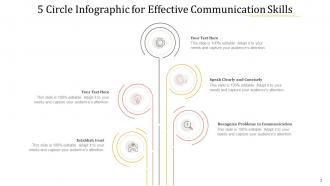
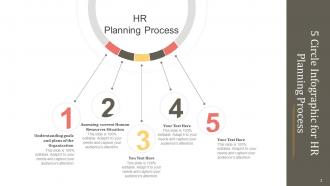
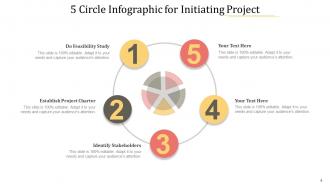
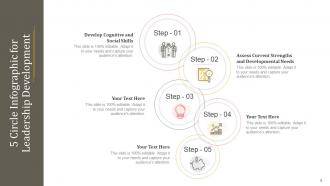

FAQs for 5 Circle Infographic Communication Skills
Key components of effective verbal communication in presentations include clear articulation, appropriate pacing, strategic vocal variety, confident tone, and purposeful pauses that emphasize critical points. These elements work together by enhancing audience engagement, improving message retention, and building presenter credibility, with many organizations finding that structured vocal techniques ultimately deliver more persuasive outcomes and stronger stakeholder buy-in.
Non-verbal cues enhance a presenter's message by reinforcing key points through gestures, establishing credibility with confident posture, and creating emotional connection through facial expressions and eye contact. These visual elements work together to increase audience engagement and message retention, with many business presenters finding that strategic body language and purposeful movement ultimately deliver more persuasive presentations and stronger stakeholder buy-in.
Active listening enhances successful communication by ensuring understanding, building trust, demonstrating respect, and reducing misunderstandings through focused attention and thoughtful responses. This approach enables professionals to gather accurate information, address concerns effectively, and strengthen workplace relationships, with many organizations finding that employees who practice active listening deliver superior customer service and collaborative outcomes.
Storytelling techniques improve engagement by creating emotional connections, simplifying complex concepts, and making information more memorable through narrative structure. Stories transform dry data into relatable scenarios, with many presenters finding that audiences retain 65% more information when delivered through narrative frameworks, ultimately delivering stronger persuasion and lasting impact.
Strategies to overcome public speaking anxiety include thorough preparation, visualization techniques, controlled breathing exercises, gradual exposure through practice sessions, and reframing nervous energy as excitement. These approaches work by building confidence through familiarity, reducing physical symptoms, and creating positive mental associations, with many professionals finding that consistent practice and preparation ultimately transforms anxiety into authentic, engaging presentations.
Feedback integration enhances communication skills development through regular practice sessions, peer evaluations, video analysis, and structured coaching conversations. Organizations increasingly implement feedback loops across departments, with managers conducting weekly communication assessments, teams using peer review systems, and training programs incorporating real-time feedback, ultimately delivering improved presentation abilities and stronger interpersonal effectiveness.
Visual aids best practices include using clear, simple graphics, maintaining consistent design elements, limiting text per slide, choosing readable fonts, and ensuring visuals directly support your message. These approaches enhance audience comprehension by reinforcing key points, accommodating different learning styles, and maintaining engagement, with many presenters finding that strategic visual integration ultimately delivers more memorable presentations and stronger audience retention.
Tailoring messages to different audiences significantly enhances communication effectiveness by ensuring relevance, clarity, and engagement through audience-specific language, examples, and delivery methods. This strategic approach enables organizations to improve comprehension rates, reduce miscommunication, and drive desired actions across diverse stakeholder groups, with many companies finding that customized messaging delivers stronger business outcomes and stakeholder buy-in.
Effective attention-maintenance techniques include strategic storytelling, interactive polling, visual variety, purposeful movement, and strategic pauses throughout your presentation. These approaches work by creating engagement touchpoints, breaking monotony, and involving multiple senses, with many presenters finding that combining storytelling with audience participation significantly enhances retention and ultimately delivers more persuasive, memorable presentations.
Body language is crucial for conveying confidence and authority, accounting for over half of communication impact through posture, eye contact, gestures, and spatial positioning. Strong nonverbal presence enhances leadership credibility in boardrooms, client meetings, and presentations, with executives finding that confident body language significantly improves audience engagement, trust-building, and ultimately delivers competitive advantage in professional interactions.
Common professional communication pitfalls include unclear messaging, poor timing, lack of active listening, inappropriate tone, and insufficient follow-up. These missteps often result from rushed exchanges or mismatched communication channels, with many organizations finding that structured communication protocols, regular feedback loops, and cultural awareness training significantly enhance workplace collaboration, reduce misunderstandings, and ultimately deliver stronger team performance.
**INPUT**: How can one effectively manage questions and discussions during a presentation? **OUTPUT**: Effective question management involves setting clear ground rules upfront, actively listening to understand underlying concerns, and providing concise yet comprehensive responses that acknowledge different perspectives. Strategic presenters enhance engagement by paraphrasing questions for clarity, deferring complex discussions to follow-up sessions when needed, and ultimately delivering more interactive experiences that build audience trust and participation. **Word count: 55 words**
Tone and pace significantly influence how audiences perceive emotional intensity and urgency, with slower, measured delivery conveying thoughtfulness while faster pacing creates immediacy and excitement. These vocal elements enable presenters to guide audience reactions strategically, with many business leaders finding that varying pace during quarterly reviews or crisis communications enhances message retention and drives appropriate response levels, ultimately delivering stronger stakeholder engagement.
Digital communication tools enhance presentation effectiveness by enabling interactive features, real-time audience engagement, multimedia integration, and seamless remote participation across global teams. However, they can also present challenges through technical difficulties, reduced personal connection, and potential distractions, with many organizations finding that strategic tool selection and presenter training ultimately deliver more engaging, accessible presentations while maintaining authentic audience relationships.
Effective cross-cultural communication strategies include active listening, cultural awareness training, using clear and simple language, respecting different communication styles, and leveraging visual aids or translation tools. These approaches streamline interactions by reducing misunderstandings, building trust, and enhancing collaboration, with many global organizations finding that diverse teams deliver stronger innovation and competitive advantage.
No Reviews