

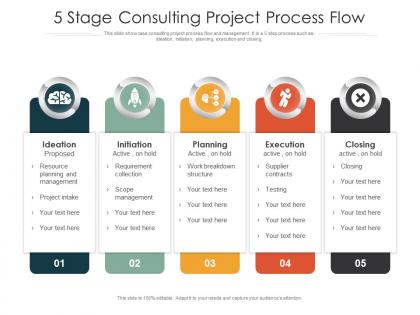
5 stage consulting project process flow




Try Before you Buy Download Free Sample Product
 Impress Your
 Audience
 100%
100% Editable
 Save Hours
 of Time


This slide showcase consulting project process flow and management. It is a 5 step process such as- Ideation, initiation, planning, execution and closing.
People who downloaded this PowerPoint presentation also viewed the following :
5 stage consulting project process flow with all 2 slides:
Use our 5 Stage Consulting Project Process Flow to effectively help you save your valuable time. They are readymade to fit into any presentation structure.
FAQs for 5 stage consulting
So there are basically five stages to consulting work. First you scope out the problem and gather data from your client. Then comes the analysis part - figuring out what's actually going wrong. After that you design your recommendations and help implement them. The last stage is supposed to be measuring results, but honestly that gets skipped way too often when everyone's rushing to the next project. Oh, and definitely keep checking in with your client throughout - you don't want to go off track. Document everything as you work through it too.
Honestly, most people suck at discovery because they just wait for their turn to pitch. Ask open-ended stuff about their biggest headaches first. Then keep digging into the "why" - like why is that actually a problem for them specifically? I probably spend way too long on these calls, but whatever. Listen for what they're NOT saying too. Sometimes the real mess is what they're embarrassed to admit. Don't assume you know their problems just because you've worked with similar companies before. Always send a recap after to make sure you didn't miss anything important.
So stakeholder analysis is like mapping out everyone who could make or break your project. List out the CEO funding it, frontline workers using it, literally anyone affected. Then figure out their power and interest levels - plot them on a grid if you're visual like me. The trick is understanding what each person cares about so you can talk to them the right way. Don't skip the grumpy department head who seems unimportant but could totally tank everything later. You'll save yourself so much headache by identifying potential roadblocks upfront and getting people on board early.
First thing - sit down with everyone involved and really dig into what's bugging them and what they actually want. I know it sounds boring, but I always spend way longer on this part than people think I should. Map out how things work now, spot the gaps, figure out what "winning" looks like. Write down your assumptions, timelines, what you're delivering - all that stuff. The scope conversation is huge though. You've gotta be super clear about what's included and what isn't, or you'll get requests for random extras later. Once that's solid, run it by the key people again before you lock it in. Oh, and definitely pad your timeline because something weird always pops up.
Mix different ways of collecting info - surveys and interviews for the hard data, but also grab people for quick informal chats. Honestly, those random conversations by the coffee machine tell you way more than formal surveys sometimes. Don't forget to look at existing documents too. Test your survey questions on like 5 people first because there's nothing worse than realizing your questions sucked after 100 people already answered them. Oh, and space things out - people get annoyed if you're constantly asking for feedback.
Listen to everyone first before you do anything else - I can't stress this enough. Break the big mess into smaller chunks you can actually handle. Too many people jump straight into "here's what you should do" mode without understanding what's really broken. Write down what you think is happening, then prove it with real data. Map out your game plan logically and keep the client updated as you go. Oh, and definitely run your ideas by whoever has to actually execute them - learned that one the hard way. Don't get stuck on your first theory if new info points somewhere else.
Honestly, the key is getting leadership on board first - without that you're screwed. Then make sure everyone understands WHY the change is happening, not just what's changing. I've seen this go wrong so many times when they just announce stuff without explanation. Get your key people involved in planning it. Nobody wants change shoved down their throat. Most pushback comes from people being scared about what's different, so be super clear about timelines and what's expected. Training during the switch is huge too. Oh, and find those natural influencers in your company who can sell it to everyone else - they're worth their weight in gold.
Honestly, just nail down your communication stuff right from the start. Figure out how often they want updates - weekly calls, email summaries, whatever works. Pick one main contact person too, trust me on this. I had a project completely blow up once because we all thought someone else was keeping the client in the loop... total mess. Don't just tell them what you did though. Explain what it actually means for their business and what's happening next. Oh, and write down the important decisions! People forget conversations way more than they admit.
Honestly, just start with Excel or Google Sheets - they'll handle most of what you need with pivot tables and basic analysis. Power BI's great for making those fancy dashboards clients love, though I personally think Tableau looks cleaner. Always define your hypothesis first, then test it with stats. Don't overthink it! Descriptive stats and correlation analysis are your bread and butter. Python's awesome if you want to get fancy later, but I've seen people waste weeks on complex models when simple analysis would've answered everything. Oh, and larger datasets? That's when you'll actually need the heavy-duty tools.
Honestly, you've gotta nail down what "winning" looks like before you even start - real numbers like revenue bumps or cost cuts, not fluffy stuff. I got burned once when a client loved my work but couldn't show their board any actual ROI. Super awkward. Do check-ins at 30, 60, 90 days so you can pivot if things go sideways. Track the hard data but also grab feedback from people using whatever you're implementing. The whole thing falls apart if everyone's measuring success differently, so get that agreement upfront or you'll be having weird conversations later about whether it "worked" or not.
Okay so three big things to focus on: keeping client info locked down, being upfront about conflicts, and giving them the truth even when it stings. Never share their sensitive stuff with anyone else - that's consulting 101. If you've got any potential conflicts brewing, just tell them right away. Trust me, awkward conversations beat nightmare situations later. Don't sugarcoat your assessments either, even if they're hoping for rainbows. Oh, and resist the urge to oversell what you can actually deliver just to get hired. Write down your decisions as you go and set those boundaries early. Saves everyone headaches down the road.
Honestly, tech can save you so much time it's ridiculous. Start with data analytics tools - they'll pull insights way faster than doing it manually. Project management platforms are clutch for keeping clients in the loop. Zoom meetings are obviously a given now (remember when we all had to fly everywhere?). AI research tools will dig up market data super quick. Then there's automation for boring stuff like reports and scheduling. Oh, and cloud docs let you work on presentations together in real-time. Pick whatever's eating up most of your time right now and tackle that first.
Oh man, cultural stuff changes everything when you're consulting internationally. Germany? Be super direct - they actually respect blunt feedback. Try that same approach in Japan and you'll crash and burn because saving face matters way more than being "honest." Some places want to dive straight into business, others need like three weeks of relationship building first (which honestly can feel painfully slow). Communication styles are night and day too. My advice? Do your homework beforehand and definitely find local teammates who know the unwritten rules. They'll save you from so many awkward moments.
Scope creep will destroy you - trust me on this one. Document literally everything and make clients sign off at each step. Communication breaks down fast when you don't know who actually makes decisions, so figure that out day one. I've watched people spend weeks solving problems that weren't even the real issue. Do a proper discovery phase first, even when clients push back on it. Those awkward budget and timeline conversations? Have them upfront. Short sentences mixed with longer explanations work better than wall-of-text emails. You'll hate yourself later if you skip this stuff.
Figure out what's actually bugging them first - usually it's fear or they got burned before. Don't just bulldoze through their pushback, that's the worst move. Actually listen to what they're saying. Show them how your idea fixes *their* specific problems, not some vague "this will be better" pitch. Get the important people involved in building the solution so they buy in. Honestly, people hate feeling like changes are being forced on them. Start small with easy wins to prove it works. Then you can tackle the bigger stuff once they trust you. Oh, and make sure they get the credit when things go well!
-
Professional and unique presentations.
-
Easily Understandable slides.
-
Good research work and creative work done on every template.