

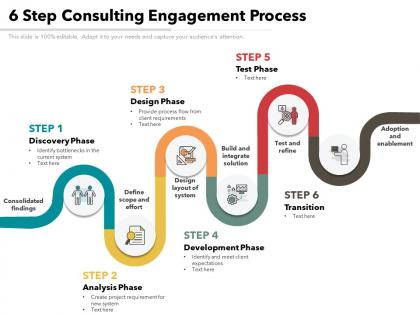
6 step consulting engagement process




Try Before you Buy Download Free Sample Product
 Impress Your
 Audience
 100%
100% Editable
 Save Hours
 of Time


Our 6 Step Consulting Engagement Process are topically designed to provide an attractive backdrop to any subject. Use them to look like a presentation pro.
People who downloaded this PowerPoint presentation also viewed the following :
6 step consulting engagement process with all 2 slides:
Use our 6 Step Consulting Engagement Process to effectively help you save your valuable time. They are readymade to fit into any presentation structure.
FAQs for 6 step
So there's basically five main phases you'll hit: discovery where you figure out what they actually need, then proposal writing (ugh, feels like a novel sometimes), project kickoff for getting everyone aligned, execution where the real work happens, and finally wrapping up with deliverables. Honestly? The discovery phase is where you want to go deep. I know it's tempting to rush through it, but trust me - spending extra time upfront will save you when scope creep inevitably shows up later. Once you kick off, it's all about execution and then handing everything over cleanly at the end.
Okay so first thing - nail down exactly what you're solving AND what you're NOT touching. The "not" part is huge because that's where everything falls apart later. Get your timeline and deliverables written down somewhere. Also, don't let them get away with vague success metrics like "make it better." That's meaningless. Document the conversations too, even the obvious stuff. I know it feels weird but people have selective memory once things get messy. Trust me, you'll thank yourself for being anal about this upfront instead of dealing with scope creep when everyone's panicking.
Honestly, stakeholder interviews are your best bet - people will tell you stuff that never shows up in reports. Then dig into the data, whether that's financials, KPIs, whatever makes sense. Process mapping is super helpful for spotting where things get stuck. SWOT analysis works too, though it feels kinda basic sometimes. Oh, and try the "5 Whys" technique - sounds silly but it actually gets you to the real problem instead of just surface issues. Don't go crazy though. Pick like 2-3 methods that actually fit what you're dealing with.
Honestly, just hash out communication stuff in your first meeting. Figure out if they're email people or Slack people, how often they want updates, who needs to be in the loop. I always do a quick RACI thing - trust me, you don't want to accidentally CC someone's boss on the wrong email. Document response times and meeting schedules upfront too. Stick it all in your contract or project doc so nobody can claim they "didn't know" later. That whole "how should we stay in touch" conversation at the start? Total game changer.
Look, data analysis is literally what makes or breaks your whole consulting project. You can't just wing it with gut feelings - clients need proof. Most of your time goes into collecting data, cleaning up the mess, and hunting for patterns that actually matter. Super boring sometimes but that's where you figure out what's really going on. I learned this the hard way early on. Start building your collection process from day one and automate whatever you can. Document everything too because you'll definitely need to explain your methods later when someone questions your findings.
Honestly, you've gotta get brutally specific about what "done" looks like before anything starts. Have those weird conversations - like if they say "comprehensive analysis," ask if they mean 20 pages or 200. I've watched so many projects crash because people just assumed everyone was thinking the same thing. Document everything after meetings, set check-ins every few weeks, and create detailed project charters upfront. Oh, and build in ways to pivot when expectations inevitably shift (they always do). Maybe start your next one with a quick alignment session where you literally walk through examples of deliverables.
Start by mapping out who actually matters - figure out who has real influence vs. just opinions. Then set up regular check-ins before problems hit. I swear, being proactive saves so much drama later. Don't send the same boring update to everyone though. Tailor your messages. Your CEO wants different info than your dev team, you know? Do workshops early to get input, and actually follow up when people give feedback. Otherwise they'll stop helping. Keep communication flowing both ways. Oh, and always end meetings with clear next steps - people forget everything otherwise.
Honestly, it all comes down to whether you fixed their actual problem. Did the numbers move like you promised - revenue up, costs down, whatever the target was? Client satisfaction surveys are nice but kinda meaningless if the real results suck. Here's what I'd watch: are they still using your stuff six months later? That tells you everything. Also, don't be like me and wait until the project's over to check if you're tracking the right metrics. Set those success measures early and actually look at them regularly.
Oh man, scope creep is gonna be your biggest nightmare - clients always want "just one tiny addition" that derails everything. Stakeholders will vanish when you need them most, then suddenly reappear with completely different priorities. Data's always messier than it looks too, or sometimes doesn't even exist where they promised it would. Timeline pressure just makes all this stuff ten times worse, honestly. Document every single scope change (trust me on this), check in with people weekly even if it feels annoying, and have backup data sources ready. You'll thank yourself later.
Honestly, the biggest mistake I see is consultants who skip getting people on board early. You'll want to figure out who the key players are first - like, actually talk to them about their concerns instead of just diving into solutions. People hate change when they feel left out of the process. Get your client team involved in building the recommendations with you, don't just show up with a finished deck. Quick wins are huge for momentum. Oh, and this part's critical - find internal champions who can keep things going after you're gone. Otherwise everything falls apart in like 3 months. Document everything clearly so the handoff actually sticks.
Dude, cut straight to the chase - give them your big recommendations right up front. Nobody wants to sit through 20 slides of buildup before you get to the good stuff. Stick to 3-5 main points max, and for each one, spell out exactly how it'll impact their business or save them money. Honestly, I've watched so many presentations crash and burn because the consultant buried their best insights halfway through. Your visuals should actually help explain things, not just look fancy. And here's the kicker - don't just point out what's broken. Give them a real action plan with dates they can actually follow.
Pick 2-3 quick wins that actually tie into your bigger strategy - not just random stuff that looks impressive. I've watched way too many consultants go after flashy projects that create headaches down the road. Each early victory should teach the organization something they'll need later or build skills for the real transformation. Short-term wins work best as stepping stones, honestly. Map out how today's progress connects to the long-term vision. Oh, and definitely explain this connection to your client - they need to see how current wins feed into the bigger picture you're building toward.
Dude, follow-up is everything. Your brilliant recommendations won't just magically happen after you leave - trust me on this one. Clients hit roadblocks constantly during implementation. Check in at 30, 60, and 90 days to see how they're actually doing with your advice. Most organizations totally struggle with change management (honestly, it's kind of painful to watch sometimes). Without you staying involved, even solid strategies fall apart. It's like... you can't plant seeds and then just vanish, right? Regular support makes the difference between success and everything just fizzling out.
Honestly, just pick a couple tools that'll actually fix your biggest headaches. I swear by Asana for tracking stuff and keeping clients updated - way better than email chains. Tableau makes your data look legit instead of boring spreadsheets (learned this the hard way). Video calls are obvious but don't skip the screen sharing part during presentations. Oh, and automated reports are a game changer for routine updates. Frees up time for the stuff that actually matters. Don't get distracted by every new platform though - I made that mistake early on. Two or three solid tools beats a dozen mediocre ones.
Confidentiality is huge - don't share client stuff between jobs or get sucked into office gossip (even when it's juicy). Be upfront about what you can actually deliver and your timeline from day one. Don't overpromise just to land the gig. Watch out for conflicts of interest too. If you're working with competitors or have skin in the game, say so. Keep your analysis objective even when they're pushing for certain results - that's honestly where a lot of consultants mess up. Oh, and document everything as you go. These situations get messy quick and you'll thank yourself later for having that paper trail.
No Reviews