


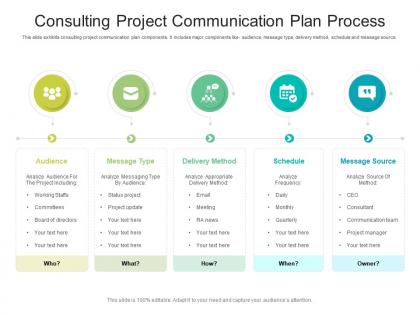
Consulting project communication plan process




Try Before you Buy Download Free Sample Product
 Impress Your
 Audience
 100%
100% Editable
 Save Hours
 of Time


This slide exhibits consulting project communication plan components. It includes major components like- audience, message type, delivery method, schedule and message source.
People who downloaded this PowerPoint presentation also viewed the following :
Consulting project communication plan process with all 2 slides:
Use our Consulting Project Communication Plan Process to effectively help you save your valuable time. They are readymade to fit into any presentation structure.

FAQs for Consulting project
Okay so you'll want four main things: figure out who needs what info and when (stakeholder mapping), pick your communication channels - email, Slack, calls, whatever, set up regular update schedules, and create clear escalation paths. Honestly the stakeholder thing is such a pain because clients never tell you about all their decision-makers upfront. Document everything somewhere accessible - key decisions, action items, all that stuff. Oh and definitely draft a simple one-pager with these elements first. Get client sign-off before you start or you'll hate yourself later when everyone's confused about expectations.
Dude, communication plans are everything for client relationships. You gotta set expectations from day one - tell them when you'll check in, how you'll update them, who does what. Trust me on this one. Weekly calls work best, and actually stick to the schedule because consistency builds serious trust. It prevents those super awkward "um, what's going on?" messages that nobody wants to deal with. Regular updates help you spot problems before they blow up. Honestly, clients just want to feel like you're not ignoring them and their project matters.
Ok so stakeholder analysis is literally where you start - can't build a communication plan if you don't know who you're dealing with. Map out everyone who affects or gets affected by your project. Then dig into what they actually want. Some execs love those fancy weekly dashboards, others just want you to swing by their office for 5 minutes (trust me on this one). Figure out who has real decision-making power versus who just thinks they do. List everyone out, then sort by influence and interest levels. Oh and it helps spot your potential troublemakers early too. This becomes your whole communication game plan basically.
Weekly is the bare minimum, but honestly I'd go with 2-3 times per week. During crunch time or when shit gets complicated, daily check-ins are clutch. The main thing is being consistent - clients get nervous when they don't hear from you regularly. I've watched projects totally implode because people thought weekly updates were enough and small problems just kept piling up. Oh, and set this rhythm from the start. Even a quick "hey, here's what's happening" text keeps everyone sane. Trust me on this one.
Start by figuring out who your stakeholders actually are and what they care about. Execs want dashboards and quick summaries. Tech people need the nitty-gritty details. Just ask everyone how they prefer to communicate - some are email people, others practically live in Slack. Financial teams obsess over ROI numbers, operations folks worry about timelines, and end users basically want to know "what's this gonna do for me?" I'd make little profiles for each group noting their preferences. Sounds nerdy but it actually saves tons of headaches later when you're not constantly guessing how to reach people.
Honestly, just pick 2-3 tools and stick with them - people hate learning new platforms every week. Monday or Asana work great for tracking deadlines and who's doing what. Slack's my go-to for quick questions since email chains get messy fast. Video calls are still huge, especially when you're presenting to stakeholders and need to read the room. Oh, and definitely use SharePoint or Google Drive so your client can grab the latest files without bugging you constantly. The trick isn't finding perfect tools - it's getting everyone to actually use whatever you choose consistently.
Honestly? Most people mess up by being way too vague about who needs what info and when. Then they forget to actually ask for feedback - like, hello, communication goes both ways! Don't spam people with updates though. Nobody wants 15 status emails per week (learned that the hard way). But also don't go radio silent when something major changes. Skip the consulting buzzwords too - stakeholders just want straight talk. Oh, and here's the killer mistake: spending hours on this perfect plan then never touching it again when things inevitably shift. Start by actually mapping out what each person needs to know, not what you assume they want.
Look at the basics first - response times, meeting attendance, whether people actually share info with you without you having to drag it out of them. But honestly? Watch their faces during meetings. Blank stares = your message isn't getting through. Quick decisions happening after you communicate something is a good sign too. I'd set up casual check-ins with key people every few weeks - just ask them straight up what's working and what sucks. Sometimes the informal stuff tells you way more than any metric will. Oh, and if what you're saying matches what people actually do afterward, you're golden.
Hey! So first thing - set up weekly check-ins and just be brutally honest about where things stand. Share your project dashboard so everyone can see progress in real time. Document everything and get those meeting notes out fast (like within a day). Here's the thing though - don't wait for people to figure out you're behind. Tell them first. Bad news doesn't get better with age, trust me on that one. Oh, and create one spot where all the info lives instead of making people dig through a million emails. Way less headache for everyone.
Don't make feedback an afterthought - build it right into your project timeline from the start. Weekly check-ins are a lifesaver, honestly. Send recap emails but skip the useless "any questions?" thing. Ask stuff like "Does this match what you're expecting for the Q2 rollout?" Way more helpful. Oh, and set up shared docs where people can drop comments whenever instead of waiting for those formal review meetings. I learned this one the messy way - vague feedback requests just don't work. You'll get way better input when you're specific about what you need.
Dude, the second something shifts, shoot them a message. Don't wait until you've figured everything out - that's where people mess up. Just say "heads up, we're dealing with X and I'll know more by Friday." Honestly, I've watched so many consultants crash and burn because they went radio silent trying to fix stuff first. Tell them what you know, what you don't, and how you're handling it. Oh and definitely call about the big stuff instead of just emailing - people appreciate hearing your voice when things get messy.
Oh man, cultural stuff will absolutely wreck your international projects if you're not paying attention. Your "direct and efficient" communication? Might come off as super rude in some places. Others expect way more formal processes than you'd think. Honestly, time zones are nothing compared to this. People have totally different takes on deadlines, how they give feedback, even what silence means in meetings - that one still trips me up sometimes. My suggestion: figure out each stakeholder's communication style early on and actually build that cultural prep time into your project schedule.
Look, you need clear rules about when stuff gets kicked upstairs. Map out who handles what - PMs deal with daily fires, directors jump in for budget/scope drama, partners only see the nuclear-level disasters. Timeline matters too. Most problems blow up because people sit on issues way too long (learned that the hard way). Include everyone's contact info and what details they need when someone escalates. Oh, and spell out communication preferences - some folks want calls, others prefer Slack. Bottom line: make it so obvious that nobody has an excuse for not knowing when to ask for backup.
Honestly, visuals are a game-changer for getting stakeholders to actually understand your data. Charts and diagrams help people spot patterns they'd totally miss in paragraphs of text. I can't tell you how many times I've watched a room of glazed-over faces suddenly perk up when someone pulls out a clear visual. People just retain info better when they can see the problem and solution laid out. Flowcharts work great for processes, dashboards for tracking metrics. Oh, and those simple before/after comparisons? Chef's kiss. Just don't cram too much into one visual or you'll lose them again.
Okay so documentation is basically your safety net for keeping everyone on the same page. Meeting notes, scope changes, milestones - write it all down or you'll regret it later. I can't tell you how many times I've watched projects blow up because someone goes "wait, didn't we decide on this other thing?" and there's zero proof either way. It's honestly painful to watch. New team members can get up to speed way faster when you've got everything documented too. Don't overthink it though - just start with shared Google docs and keep your file names consistent. Future you will thank you.
-
Attractive design and informative presentation.
-
Best Representation of topics, really appreciable.