


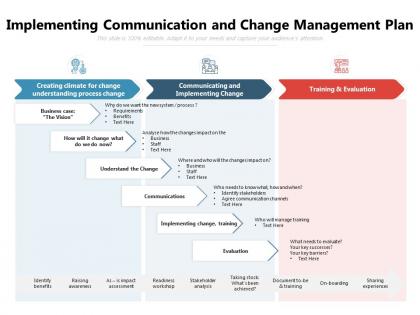
Implementing communication and change management plan





Try Before you Buy Download Free Sample Product
 Impress Your
 Audience
 100%
100% Editable
 Save Hours
 of Time


Our Implementing Communication And Change Management Plan are topically designed to provide an attractive backdrop to any subject. Use them to look like a presentation pro.
People who downloaded this PowerPoint presentation also viewed the following :
Implementing communication and change management plan with all 2 slides:
Use our Implementing Communication And Change Management Plan to effectively help you save your valuable time. They are readymade to fit into any presentation structure.
FAQs for Implementing communication and
So there are basically 5 stages: prep work (figuring out if you're ready and building your case), planning your whole approach, actually doing the implementation, reinforcement to make stuff stick, then evaluating how it went. Most projects honestly crash and burn during reinforcement because everyone gets pumped about the kickoff then just... forgets to follow through? Which is so frustrating. You've gotta build in checkpoints and celebrate the small wins as you go - not wait until everything's "perfect." First step though is just figuring out where you are right now in the process.
Okay so first thing - tell people WHY you're making changes. Nobody likes being kept in the dark and they'll just push back harder. Get your managers ready to field questions because trust me, there will be a lot. Don't dump news on people last minute (learned that one the hard way). Mix up how you communicate - team meetings, emails, whatever works for your company. Actually listen when people have concerns too. Oh and be real about it - change sucks sometimes and it's okay to admit things might get messy before they get better. Early communication is everything here.
Honestly, you can't do change without solid leaders backing it up. They need to explain the "why" really clearly and actually walk the walk themselves. I've seen too many initiatives die because leadership just announces something and then disappears. The best leaders I've worked with jump in and help people through the messy parts. They don't pretend resistance won't happen - they tackle it head on. Short version: get your key people aligned on the vision first, then make sure they stay visible and consistent throughout. Otherwise it just becomes another corporate fad that fizzles out.
Honestly, you've gotta get people involved from day one - that's huge. Nobody wants changes dumped on them without warning. Explain the why behind everything because people hate being left in the dark about their own jobs. Small wins first, then make a big deal about celebrating them so everyone sees it's actually working. Oh, and figure out who the real influencers are on your team (not just the managers). Those people can totally make or break you. Be upfront about concerns in meetings too. Change sucks and everyone knows it, so don't pretend otherwise.
Start early, that's huge. Mix it up - some folks learn by watching, others gotta jump in and mess around with it themselves. I always pair newbies with the veterans who actually know their stuff. Just don't overwhelm people right off the bat - chunk it out over a few weeks. Honestly? There's gonna be pushback no matter what you do, so just roll with it. Check in with everyone regularly after training wraps up. Catch problems while they're still small instead of waiting until someone's completely lost. Oh, and get feedback constantly - you'll probably need to tweak your approach anyway.
Okay so first things first - figure out what your culture *actually* values, not whatever's written on some poster in the break room. People's real behavior matters way more than mission statements. Once you've got that mapped out, work WITH those patterns instead of fighting them. Like if everyone's super collaborative, get them involved in planning the change. More top-down place? Get leadership buy-in first. I swear, most change efforts crash and burn because they completely ignore the whole "this is how we do things around here" vibe. Make it feel like you're just evolving who you already are, not doing some total makeover. Way easier sell.
Honestly, you gotta track both the numbers and the feelings - both matter a ton. So like adoption rates, timelines, budget stuff, productivity changes. But also employee engagement, how much people are pushing back, general feedback vibes. Those soft metrics actually predict long-term success way better than most people realize. Communication effectiveness and training completion are key too. Oh, and set up your tracking system before you launch anything - you'll need that baseline data to compare against later. Otherwise you're just guessing if things actually improved.
Tech is such a double-edged sword for managing change, honestly. You can push updates way faster now and get instant feedback through surveys and analytics. Remote training at scale? Game changer. But here's the thing - you're juggling like five different changes at once because everything moves so fast. Teams get burned out quick. Start with pilot groups when rolling out new stuff - trust me, saves you from epic disasters later. Slack and Teams keep everyone talking (well, mostly). Oh, and actually invest in change management software that tracks if people are using what you built. Otherwise you're flying blind.
Start by figuring out who actually matters in this whole thing - map out your stakeholders and what they care about. Then talk TO them, not AT them. Do surveys, grab coffee, whatever works. I swear, half the failed changes I've seen bombed because leadership just assumed they knew what people wanted. Find your influencers and turn them into your cheerleaders - peer-to-peer stuff works way better than top-down announcements. Check in regularly so you can pivot when things get weird. Oh, and celebrate the small wins! People need to see progress. Focus on your supporters first to build some momentum.
Oh man, this is so important! Start with weekly check-ins the first month - I can't tell you how many changes crash because leaders think everything's fine when it's not. Set up multiple ways to get feedback: quick pulse surveys, focus groups, casual coffee conversations. Anonymous surveys work great too since people actually tell you the truth. Hit major milestones, don't wait until the end when it's too late. The real trick though? You've got to actually do something with what you hear and tell people what you're changing. Otherwise they'll stop giving you honest feedback pretty quickly.
So planned change is basically when you map everything out beforehand - you know, project timelines, getting everyone on board, the whole nine yards. Emergent change? That's when you're figuring it out as you go, adapting to whatever curveballs get thrown at you. Real talk though - most changes end up being a hot mess of both types. Planning gives you some control, but you've got to be ready to pivot when your carefully laid plans meet actual reality. I've seen way too many organizations stick stubbornly to their original plan when it's clearly not working. The trick is reading the room and knowing when to ditch the script.
Honestly, you've got to bake the changes right into how things actually work day-to-day. Update processes, job descriptions, performance reviews - make it impossible for people to slip back into old patterns. Training's fine and all, but let's be real, most people zone out and forget half of it anyway. What really works? Getting your managers to consistently reinforce the new stuff and celebrating every win, no matter how small. Oh, and figure out which systems need fixing first - that's where you'll see the biggest impact. The culture shift happens when people realize this isn't just another flavor-of-the-month initiative.
Oh man, EQ is everything when you're dealing with change at work. You've got to actually listen to what people are saying - and what they're NOT saying, you know? Half the time someone's "being difficult" about a new process, they're just scared they'll look stupid or lose their job. I swear, most failed changes happen because leadership just bulldozes through without checking if anyone's on board. Plus when you're stressed about the changes yourself, your team picks up on that energy fast. So yeah, validate people's feelings first before you start problem-solving. Trust me on this one.
So basically you gotta adapt whatever framework you pick to your specific industry. Healthcare? Safety and compliance need to be front and center through all of Kotter's steps. Tech startups can probably skip ahead on the urgency part since everyone's already expecting constant change anyway. Manufacturing though - that's where you need patience. Those factory floors can take forever to get on board with new stuff, like literally 6 months sometimes just to get people aware of what's happening. I've seen it drag on way longer than anyone expected. Map out where your industry typically pushes back first, then adjust your timelines and how you communicate from there.
External pressures basically force companies to change whether they want to or not. Economic shifts, new regulations, tech disruptions - all that stuff makes transformation unavoidable. Competition is probably the worst culprit honestly, pushing businesses to pivot way too fast sometimes. The trick is staying ahead of it instead of scrambling when crisis hits. You've got to keep scanning what's happening around you and build some flexibility into your plans. My old boss used to say "adapt or die" which sounds dramatic but... kinda true? Don't wait until you're putting out fires to start planning for change.
No Reviews