


Communication Plan For Organizational Change Management




Try Before you Buy Download Free Sample Product
 Impress Your
 Audience
 100%
100% Editable
 Save Hours
 of Time


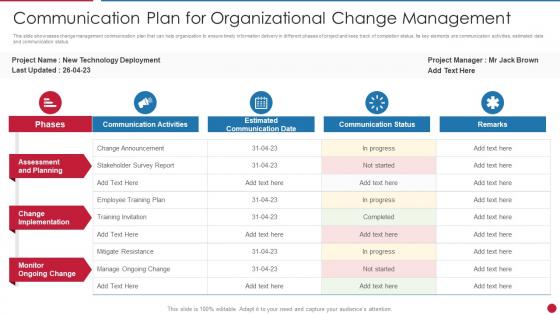
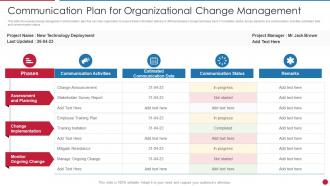
This slide showcases change management communication plan that can help organization to ensure timely information delivery in different phases of project and keep track of completion status. Its key elements are communication activities, estimated date and communication status.
People who downloaded this PowerPoint presentation also viewed the following :
Communication Plan For Organizational Change Management with all 6 slides:
Use our Communication Plan For Organizational Change Management to effectively help you save your valuable time. They are readymade to fit into any presentation structure.





FAQs for Communication Plan For
Ok so first figure out who actually needs to hear this stuff and what you're trying to get them to do. Then nail down your main talking points - the stuff that absolutely can't get lost in translation. Pick your channels based on what people actually check. Email's fine but honestly Slack might hit better depending on your team. Timing is where everything usually goes sideways though - I've seen people send like 12 updates in a week then disappear for a month. Build in ways for people to ask questions without feeling dumb about it. Oh and map out all your stakeholders first, then figure out the rest from there.
Honestly, stakeholder analysis is a total game-changer for communication planning. Map out who needs what info first - some people want those detailed reports, others just need the highlights. I learned this the hard way when I sent a 10-page analysis to someone who literally only reads bullet points. Awkward. Figure out each person's influence level and how they prefer getting updates. Then you can actually target your messaging instead of blasting everyone with the same stuff. Way more effective than just winging it and hoping for the best.
So audience segmentation is just grouping people by what actually matters to them instead of blasting everyone with the same message. Map out your stakeholders first - executives care about ROI and big picture stuff, but your frontline people need to know "ok how does this mess with my Tuesday morning routine?" Different groups, totally different concerns. I swear it makes such a huge difference for getting people to actually pay attention. Once you start tailoring messages this way, your response rates will be way better. It's honestly one of those things that seems obvious after you do it.
Honestly, communication plans are game changers because they stop people from working with totally different assumptions about what's happening. You'll know exactly who needs updates and when - no more forgetting to tell the finance team about budget changes (learned that one the hard way). Regular check-ins help you spot problems before they blow up. The trick is figuring out your key stakeholders first and what info they actually care about. I mean, your CEO doesn't need daily progress reports, but your dev team definitely does. Once you map that out, everything else falls into place way easier.
Honestly, start simple with just a few metrics that actually matter to your goals. Check if people are opening/clicking your stuff - basic engagement tells you a lot. Surveys work great for figuring out if your message is getting through (though response rates can be brutal sometimes). I'd also watch for behavioral changes - like, are people actually doing what you asked them to? Focus groups give good insights but they're such a time suck. Don't try measuring everything right away or you'll go crazy. Pick 2-3 methods max and see what happens first.
Honestly? Check it every quarter minimum, but that's probably not often enough if your company's always changing stuff. Monthly reviews work better when things are moving fast. Too many teams just write these plans and never look at them again - such a waste! Watch for these red flags: new people joining who need different info, your project scope shifting around, or feedback showing people aren't getting your messages. Oh, and obviously any big org changes. Just throw a reminder in your calendar right now before you forget. Trust me, you'll be glad you did when your communication actually works instead of feeling totally outdated.
Honestly, most people mess up by being super vague about who needs what info and when. Then you get that awkward thing where you're bombarding some folks with updates while others are totally clueless. Also - and this drives me nuts - nobody defines what "urgent" actually means, so everyone's got different ideas. Oh, and plans usually tank because there's no way for people to give feedback. Like, it's all one-way communication. I'd start by figuring out your key people first, then build backwards from what they actually need. Way easier than trying to create some perfect system from scratch.
Honestly, digital tools are game-changers for getting your message out there. Email campaigns can automate everything while analytics show you what's actually working (spoiler: it's usually not what you think). Slack or Teams keeps everyone updated without endless meetings. I'm obsessed with social media schedulers - they let you batch content so you're not constantly posting. Oh, and project management tools are clutch for coordinating who's doing what. Don't go crazy though - pick like 2-3 that play nice together. You'll just confuse yourself otherwise.
Honestly, it really depends what you're trying to accomplish. Engagement rates and reach are solid starting points. Email campaigns? Track opens and clicks obviously. But the real stuff that matters is way harder to measure - did people actually *get* your message and do something about it? Survey responses tell you more than vanity metrics ever will. Same with meeting attendance or just casual feedback from people. I'd pick like 2-3 things that directly connect to what you want to happen, then stick with tracking those consistently. Don't try measuring everything or you'll go crazy.
Build feedback into every touchpoint from day one - don't treat it like an afterthought. Set up surveys after big announcements, do regular check-ins with key people, maybe hold office hours for questions. Both formal stuff (monthly forms) and casual conversations work. The trick is actually doing something with what people tell you, then showing them how their input changed things. Oh, and be super clear about how they can reach you and when you'll get back to them. I've watched too many communication plans crash because nobody thought about the feedback part until it was too late.
Okay so first thing - move FAST. Even if you don't have all the facts yet, just say "hey we're aware of this issue and looking into it." Pick one person to be the voice, otherwise you'll have three different versions of the story floating around which is a nightmare. Set up multiple ways to reach people - email, Slack, phone calls, whatever. Here's the thing though: people hate being left in the dark more than hearing bad news. So keep updating them regularly and be honest about what you actually know vs what you're still trying to figure out. Don't let them make up their own stories.
Oh man, cultural sensitivity is HUGE for comms. You've gotta think about language preferences, whether people communicate directly or more indirectly, and even stuff like color meanings in different cultures. We totally bombed once by launching something right during Ramadan - felt so dumb afterward! Research your audience's backgrounds first, then test your messaging with people from those groups. Also watch your timing around cultural holidays. Your tone and examples need to actually connect with people, not just check a diversity box. Short version: know your audience before you hit send.
Honestly, you gotta start with a solid brand guide that everyone can actually find and use. Templates are a lifesaver - your team won't have to start from scratch every damn time. I'd set up shared folders with all your approved stuff, messaging, style guides, the works. Regular check-ins catch problems early. Also super important to have clear approval processes so nothing sketchy goes live. Oh and make sure someone actually keeps those folders updated - nothing worse than outdated guidelines. The whole point is making consistency the easy choice, not some impossible memory test.
Honestly, templates are game-changers for presentations. Your audience will actually know where to look for the important stuff instead of getting lost in random slide layouts. I've seen teams waste so much time starting from scratch every single time - it's ridiculous. Templates force you to think through your points logically too. Just make 2-3 solid ones for different situations (like project updates vs. new proposals). You'll notice the difference right away. Everyone stays on the same page, and you're not scrambling to format slides an hour before your meeting.
Oh man, remote work totally changes how you talk to people. All those random office chats? Gone. Now you have to be super explicit about everything since you can't just pop over to someone's desk. I swear the first few weeks are brutal - you're writing novels for simple questions. But you get used to it. Documentation becomes your best friend, and you'll do way more check-ins than before. Everyone's working different hours too, so don't expect instant replies. The weirdest part? You lose all those visual cues, so follow up important stuff in writing or you'll forget what was actually decided.
-
I am a big fan of their newsletters because that is how I found my perfect requirement at the time of urgency. Thank God, I kept opening those.
-
SlideTeam, Please don’t stop sharing discount coupons! I love your occasional discounts and tend to buy your products around that corner.