


Organizational Change And Stress Management Techniques Powerpoint Presentation Slides





Try Before you Buy Download Free Sample Product
 Impress Your
Audience
 100%
Editable
 Save Hours
of Time


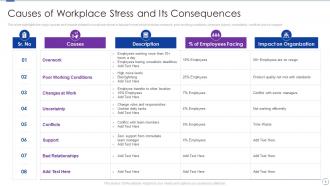
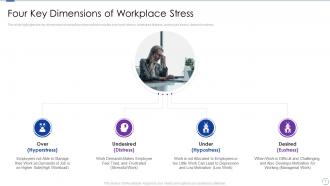
Occupational stress management strategies or programs are designed to prevent and cure the negative effect of job stress on employees. First, this module highlights the causes and dimensions of workplace stress, including overwork, poor working conditions, change at work, uncertainty, conflicts, and zero support from management as the main causes and its consequences on the organization and employees. Grab our professionally designed Organizational Change and Stress Management Techniques template. Additionally, it covers the need for work-related stress, including the importance of managing stress, symptoms-based self-assessment of stress levels, and physical and emotional signs to evaluate stress. Further going, it highlights the different methods to reduce stress levels, including promoting supportive management, and covers various strategies and techniques to deal with stress, including behavioral techniques, diversion techniques, workplace techniques, and physical techniques. Lastly, it mentions the stress management training program along with positive effects, and in the final stage, it covers the dashboard to measure occupational stress management effectiveness. Get access now.
People who downloaded this PowerPoint presentation also viewed the following :
Content of this Powerpoint Presentation
Slide 1: This slide introduces Organizational Change and Stress Management Techniques. State Your Company Name and begin.
Slide 2: This slide states Agenda of the presentation.
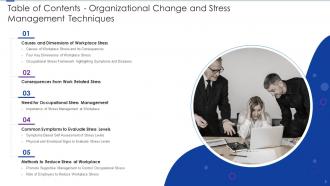
Slide 3: This slide presents Table of Content for the presentation.
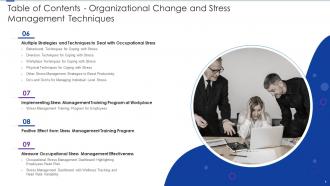
Slide 4: This is another slide continuing Table of Content for the presentation.
Slide 5: This slide highlights title for topics that are to be covered next in the template.
Slide 6: This slide displays Causes of Workplace Stress and Its Consequences.
Slide 7: This slide highlights the key dimensions of workplace stress.
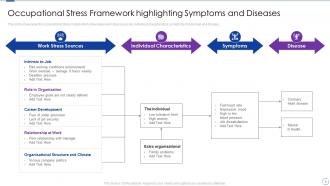
Slide 8: This slide represents Occupational Stress Framework highlighting Symptoms and Diseases.
Slide 9: This slide highlights title for topics that are to be covered next in the template.
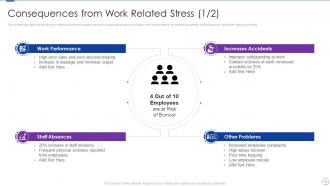
Slide 10: This slide showcases Consequences from Work Related Stress.
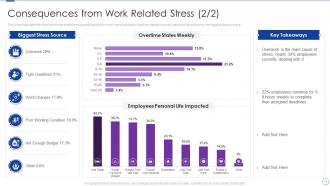
Slide 11: This is another slide continuing Consequences from Work Related Stress.
Slide 12: This slide highlights title for topics that are to be covered next in the template.
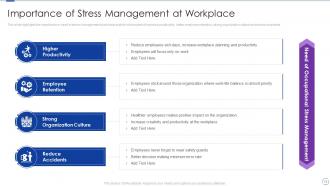
Slide 13: This slide shows Importance of Stress Management at Workplace.
Slide 14: This slide highlights title for topics that are to be covered next in the template.
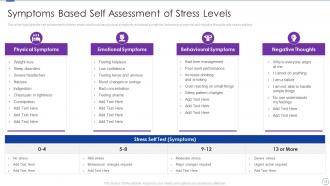
Slide 15: This slide presents Symptoms Based Self Assessment of Stress Levels.
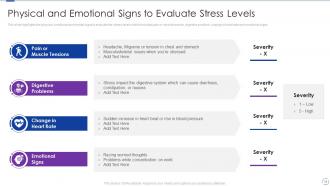
Slide 16: This slide displays Physical and Emotional Signs to Evaluate Stress Levels.
Slide 17: This slide highlights title for topics that are to be covered next in the template.
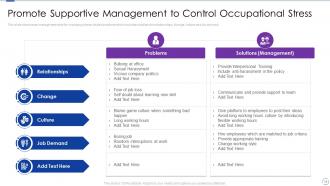
Slide 18: This slide represents Promote Supportive Management to Control Occupational Stress.
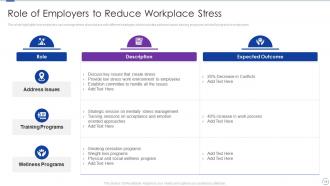
Slide 19: This slide showcases Role of Employers to Reduce Workplace Stress.
Slide 20: This slide highlights title for topics that are to be covered next in the template.
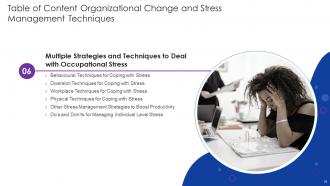
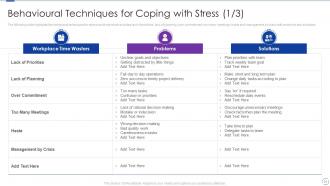
Slide 21: This slide shows Behavioural Techniques for Coping with Stress.
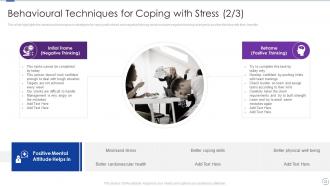
Slide 22: This is another slide continuing Behavioural Techniques for Coping with Stress.
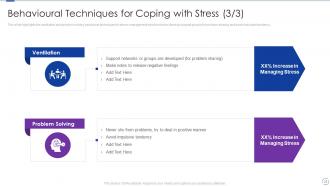
Slide 23: This is another slide continuing Behavioural Techniques for Coping with Stress.
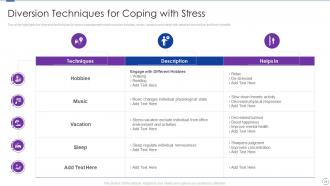
Slide 24: This slide presents Diversion Techniques for Coping with Stress.
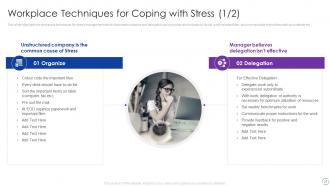
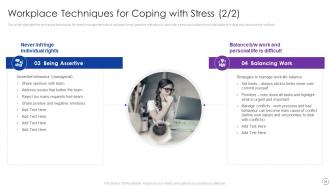
Slide 25: This slide displays Workplace Techniques for Coping with Stress.
Slide 26: This is another slide continuing Workplace Techniques for Coping with Stress.
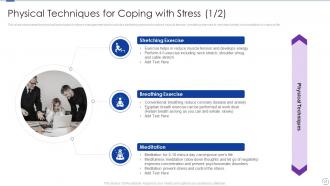
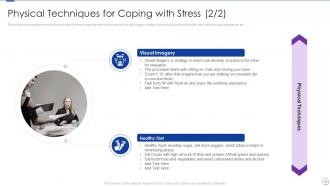
Slide 27: This slide showcases Physical Techniques for Coping with Stress.
Slide 28: This slide shows Physical Techniques for Coping with Stress.
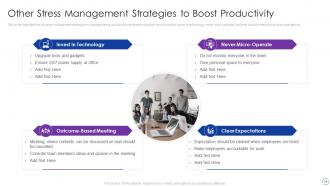
Slide 29: This slide presents Other Stress Management Strategies to Boost Productivity.
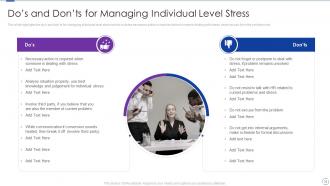
Slide 30: This slide displays Dos and Donts for Managing Individual Level Stress.
Slide 31: This slide highlights title for topics that are to be covered next in the template.
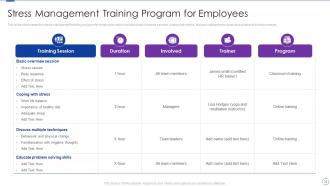
Slide 32: This slide represents Stress Management Training Program for Employees.
Slide 33: This slide highlights title for topics that are to be covered next in the template.
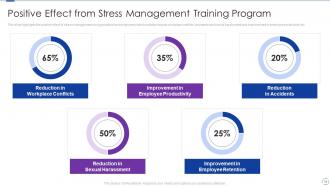
Slide 34: This slide showcases Positive Effect from Stress Management Training Program.
Slide 35: This slide highlights title for topics that are to be covered next in the template.
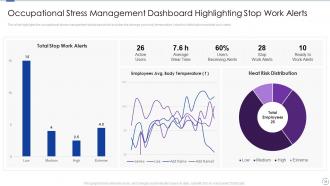
Slide 36: This slide shows Occupational Stress Management Dashboard Highlighting Stop Work Alerts.
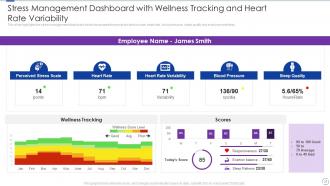
Slide 37: This slide presents Stress Management Dashboard with Wellness Tracking and Heart Rate Variability.
Slide 38: This slide displays Icons Slide for Organizational Change and Stress Management Techniques.
Slide 39: This slide is titled as Additional Slides for moving forward.
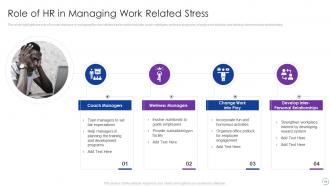
Slide 40: This slide displays Role of HR in Managing Work Related Stress.
Slide 41: This slide provides 30 60 90 Days Plan with text boxes.
Slide 42: This slide presents Roadmap with additional textboxes.
Slide 43: This slide contains Puzzle with related icons and text.
Slide 44: This slide shows Post It Notes. Post your important notes here.
Slide 45: This slide depicts Venn diagram with text boxes.
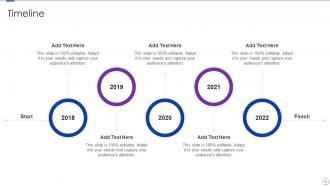
Slide 46: This is a Timeline slide. Show data related to time intervals here.
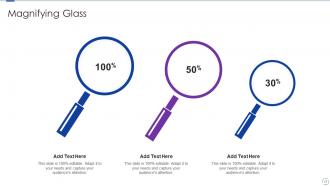
Slide 47: This slide showcases Magnifying Glass to highlight information, specifications, etc.
Slide 48: This is a Thank You slide with address, contact numbers and email address.
Organizational Change And Stress Management Techniques Powerpoint Presentation Slides with all 53 slides:
Use our Organizational Change And Stress Management Techniques Powerpoint Presentation Slides to effectively help you save your valuable time. They are readymade to fit into any presentation structure.






FAQs for Organizational Change And Stress Management Techniques
Dude, it's wild out there right now. Digital stuff is changing everything, customers want more than ever, and competition's brutal. Remote work threw everyone for a loop too. Then you've got regulations shifting left and right - honestly feels like whack-a-mole sometimes. Economic mess isn't helping either, forcing companies to scramble or slash budgets. Here's the thing though: change isn't going away. It's the new normal. Help your team get comfortable with being uncomfortable, you know? That flexibility will save you way more headaches down the road.
You gotta explain the "why" first - people hate change when they're clueless about the reasoning. Paint them a picture of what things look like after the change happens. Connect it to their actual day-to-day work and how it might help their careers. Stories work way better than boring abstract explanations, trust me on this. Give people space to ask questions and complain a little - honestly, half the resistance melts away once they can voice their concerns. Oh, and don't just have one big meeting about it. Follow up with smaller conversations to keep everyone on board.
Look, culture is everything when you're trying to change stuff at work. Think of it like planting something - good soil means it'll actually grow. Places that are flexible and open to learning? Changes happen smoothly. But those super rigid companies where everyone's scared to mess up? Ugh, good luck getting anyone on board with anything new. Here's what actually works: figure out who your biggest supporters are first. Those people become your examples. Oh, and don't just throw new systems at people - you've got to get their heads in the right space beforehand or you're basically setting yourself up to fail.
Honestly, you need both hard data and the soft stuff to really know what's happening. Pulse surveys are great - run them before, during, and after to track engagement. But numbers don't tell the whole story, you know? Do focus groups and one-on-ones to dig into the why behind any changes. I'd also watch behavioral stuff like absenteeism, turnover, who's showing up to optional meetings. Even silly things like coffee machine conversations matter more than people think. The trick is being consistent with measuring over time rather than just checking once. Oh, and start collecting baseline data now if you haven't already - you'll thank yourself later.
Dude, talk to people early and constantly - seriously, this makes or breaks everything. Get employees involved in the actual planning so they don't feel steamrolled. I always tell the "why" first, not just what's happening. Quick wins help build momentum too. Oh, and start with those unofficial leaders who everyone actually listens to - you know the ones I mean? They'll spread the word way better than any company email. Most changes crash because bosses think people will automatically jump on board (spoiler: they won't). Acknowledge it's genuinely tough for people.
So I'd definitely lean on tech for this - project management platforms and communication apps are your best friends here. Teams or Slack work amazing for quick updates and handling people's concerns as they come up. Map out your biggest headaches first, then find tools that actually solve those specific problems. Learning management systems are solid for training rollouts. Dashboards help you spot bottlenecks before they blow up. Here's the thing though - don't go overboard with like 10 different platforms. Pick 2-3 tools max that people will actually want to use (because honestly, nobody needs another nightmare software situation).
So basically you start by making everyone see why change has to happen right now. Build up your crew of supporters first - that's crucial. Then figure out your actual vision and strategy (don't rush this part, seriously). Communication comes next and honestly? Most people totally bomb here because they think saying it once is enough. You've got to say it like ten times minimum. Give people the power to actually do stuff, grab some easy wins early on. Oh and make sure it actually sticks in your culture long-term, otherwise you'll be back where you started in six months.
Look, half your problems disappear if people don't feel blindsided by changes. Get them involved from the start - like actually involved, not just "we asked for feedback" nonsense. Cross-functional teams work great for designing stuff together. Focus groups too. Give people real decision-making power when you can. Town halls help, but honestly? Find those informal leaders first - you know, the ones everyone actually listens to at lunch. They'll spread good vibes way better than any official memo. Oh, and make sure their input genuinely shapes what you're doing. People can smell fake consultation from miles away.
Honestly, the worst mistake is not explaining WHY you're changing things. People hate being left in the dark. Also - and I learned this the hard way - everything takes way longer than you think it will. Don't try fixing everything at once either, you'll just overwhelm everyone. Get the biggest complainers on your side first though, because once they're convinced, they'll do half your work for you. Leadership has to actually show up too, not just send an email and vanish. Oh, and talk to the people who'll actually be doing the new stuff before you decide anything.
Honestly, data beats guessing every single time. Track things like engagement scores and productivity patterns - you'll actually see what's broken instead of just what feels weird. Too many leaders think they know the problem without looking at the numbers first (been there, done that). Once you're rolling out changes, real-time monitoring lets you catch problems early and switch gears fast. Pick maybe 3-4 metrics that match your goals and check them monthly. Way better than flying blind and hoping for the best.
Track the obvious stuff first - adoption rates, productivity numbers, how people are engaging. But honestly, the informal feedback is where you'll catch the real issues. Set up some pulse surveys or just grab coffee with people and actually listen. Turnover during transitions is brutal, so watch those numbers too. Here's what I'd do: get your baseline data before changing anything (super important), then pick maybe 4-5 key metrics for a simple dashboard. Check it weekly. The hard data tells you what's happening, but those random hallway conversations? That's where you'll hear if people actually hate the changes.
Honestly, your leadership style can make or break any change initiative. Transformational leaders are usually money because they get people excited about where you're heading instead of scared. Autocratic approaches? Sure, they're fast, but good luck with all the pushback you'll get. People absolutely hate being left in the dark. Democratic styles take forever but at least your team actually wants to participate. Oh, and laissez-faire during big changes is basically asking for chaos - learned that one the hard way. Really depends on what you're dealing with though. Complex stuff needs more hand-holding, culture changes need more input from everyone.
Look at Netflix - they basically killed their own DVD business before anyone else could. Smart move. Microsoft did something similar under Satya Nadella, ditching their obsession with Windows to go cloud-first. Seemed crazy back then but worked out. Both companies show you can't wait around for competitors to force your hand. The trick is explaining the "why" constantly to your team, though honestly some people just won't adapt. I'd suggest starting small with pilot programs first - test things out before you blow up your whole operation. Those short-term hits are brutal but necessary.
Honestly, external stuff just throws your plans out the window whether you like it or not. COVID basically proved that - suddenly everyone's working remotely and companies had to scramble. Competition's the same way. They launch something new and you're either copying them or going totally different. The trick is building in flexibility from the start because you never know what's coming. I'd probably do those environmental scans every quarter (sounds fancy but it's just checking what's happening in your industry). Otherwise you're always behind the curve. Market shifts are brutal when you're not ready for them.
Look, most change projects crash and burn because people assume everyone will just adapt automatically. Spoiler alert - they won't. Your team needs actual training to build the skills for whatever's coming next. Skip this step and you'll get pushback, confused employees, and honestly a lot of people feeling abandoned by leadership. I've seen it happen too many times. Training shows you're investing in them instead of just dumping change on their desk. Figure out what skills they're missing early on. Then weave learning right into your change plan from the start.
-
Wide collection of templates available. SlideTeam has made it easier to create presentations in just a few minutes.
-
Requested a complete pitch deck. Delivered immediately and with high quality well researched content.