

Organizational Effectiveness Powerpoint Presentation Slides




Try Before you Buy Download Free Sample Product
 Impress Your
 Audience
 100%
100% Editable
 Save Hours
 of Time


Improve your business efficiency with this content ready Organizational Effectiveness Powerpoint Presentation Slides. Showcase the factors affecting business success using the professionally designed organization efficacy presentation deck. The visually appealing organizational success PowerPoint complete deck includes a set of slides such as organizational effectiveness model & services, matrix, strategies, steps to achieve, approaches to measure, time dimensions, etc. Additional slides like our team, comparison, financial, about us, dashboard, location, post-it notes, our mission, mind map, Venn, our target, stacked bar, clustered bar, pie chart, area chart and thank you slide, etc can make information easier to understand. You’ll find all the PPT slides fully customizable and easy to edit. You can enter text in the placeholders, change color if you wish to. Utilize easy to understand business effectiveness PowerPoint templates to demonstrate ways to achieve business excellence. Download these easy to use enterprise efficiency PPT slides to boost employee commitment and motivation. Our Organizational Effectiveness Powerpoint Presentation Slides are for you forever. You will always find them around.
People who downloaded this PowerPoint presentation also viewed the following :
Content of this Powerpoint Presentation
Slide 1: This slide introduces Organizational Effectiveness. State Your Company Name and begin.
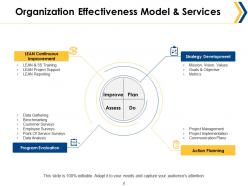
Slide 2: This slide shows Organization Effectiveness Model & Services.
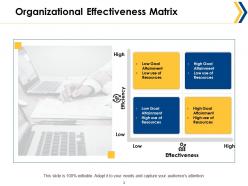
Slide 3: This slide presents Organizational Effectiveness Matrix.
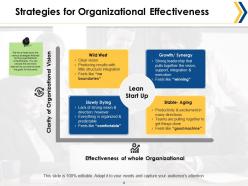
Slide 4: This slide displays Strategies for Organizational Effectiveness. You can choose the one most relevant to you and list down the goals for the same.
Slide 5: This slide represents Steps to Achieve Organizational Effectiveness as- Companies Mgmt., Engagement & Matrix Development, Matrix Review & Alignment, Training & Communication, Review & Tracking, Linking to Performance Management.
Slide 6: This slide showcases Approaches to Measure Organizational Effectiveness in a tabular form.
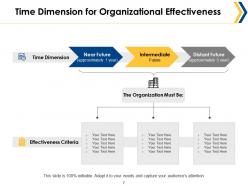
Slide 7: This slide shows Time Dimension for Organizational Effectiveness.
Slide 8: This slide presents Organizational Effectiveness Icons.
Slide 9: This slide is titled as Additional Slides for moving forward.
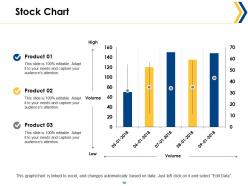
Slide 10: This slide displays Stock Chart with three products comparison.
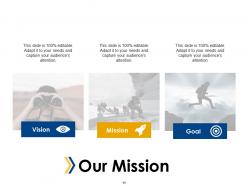
Slide 11: This is Our Mission slide with related imagery.
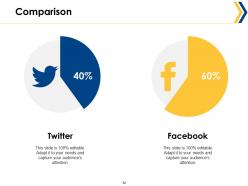
Slide 12: This is a Comparison slide to state comparison between commodities, entities etc.
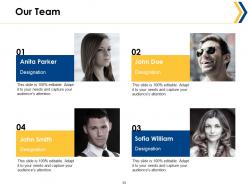
Slide 13: This is Our Team slide with names and designation.
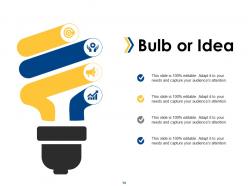
Slide 14: This is a Bulb or Idea slide to state a new idea.
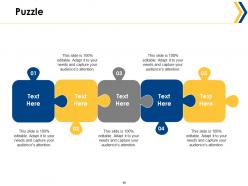
Slide 15: This is a Puzzle slide with text boxes to show information.
Slide 16: This is a Thank You slide with address, contact numbers and email address.
Organizational Effectiveness Powerpoint Presentation Slides with all 16 slides:
Use our Organizational Effectiveness Powerpoint Presentation Slides to effectively help you save your valuable time. They are readymade to fit into any presentation structure.



FAQs for Organizational Effectiveness
So there's four big things to watch: hitting your goals, not wasting money, staying flexible, and keeping everyone happy. Honestly, the budget part trips up so many companies - they'll spend like crazy then wonder why they're broke. You've gotta track whether you're actually reaching targets while being smart with resources. When the market shifts (and it always does), you need room to pivot. Plus employees, customers, investors - they all want different things. Here's the thing though - these four areas clash sometimes. Don't try measuring everything or you'll go nuts. Just pick 2-3 solid metrics for each and check them regularly.
Honestly, revenue numbers don't tell the whole story. Track your employee engagement scores and customer satisfaction - those are way more telling. Retention rates matter too, both for staff and clients. I'd also look at operational stuff like how fast you're completing projects and adapting to changes. Quality scores are huge. Oh, and don't sleep on impact metrics if that's your thing - community work, environmental goals, whatever fits your mission. Pick maybe 3-4 of these that actually matter to you and check them quarterly. Way better picture than just looking at dollars.
Dude, you're literally the thermostat for your whole team's vibe. What you celebrate, call out, or let slide becomes the norm super fast. I've watched amazing cultures tank under bad leadership - it's wild how quick it happens. Model what you want to see, keep your vision consistent, and create that safe space where people actually feel heard. Oh, and be intentional about it! Culture won't magically fix itself. You gotta actively define those behaviors that make everything click. Short version: your actions set the tone for everything else.
Look, engaged employees just work harder - it's that simple. They'll stick around longer too, which saves you a fortune on hiring and training new people. Plus they actually give a damn about customers, so service gets better. I've seen teams where everyone's checked out mentally, and honestly? The whole place feels dead. But when people are invested, they problem-solve without being asked and go beyond the bare minimum. Regular check-ins help catch issues early before they snowball. The productivity gains alone make it worth focusing on, but the better workplace culture is probably the biggest win.
Honestly, start by mixing people up - put together project teams from different departments working on the same stuff instead of everyone staying in their lanes. Those monthly cross-department coffee things actually do help, even though they sound super corporate-y. The real trick is making sure departments aren't fighting each other for budget or credit. Leadership's gotta walk the walk too or nobody will care. Oh, and create some shared metrics everyone can actually see - transparency helps a ton. Maybe try it with just two departments first to show it works, then expand from there.
Honestly, tech is pretty much everything for companies now. It cuts through the BS in processes and lets teams work together even when they're scattered everywhere. Real-time data means you can actually make smart decisions fast instead of guessing. Companies using automation and cloud stuff are absolutely destroying their competition - they just move faster. But here's what trips people up: buying fancy software doesn't automatically fix anything. Your team has to actually know how to use it, and it needs to match what you're trying to accomplish. Otherwise you're just throwing cash at problems.
Look, good communication is literally the foundation for everything else. Fewer mistakes happen when people actually know what's expected. Decision-making speeds up too. Teams stop working against each other - which honestly should be obvious but you'd be surprised how often that happens. Trust builds between leadership and everyone else, making jobs way less stressful. People feel heard instead of being left wondering what's going on. I'd start by figuring out where info gets stuck or lost in your current setup. Fix those problem spots first and you'll see things improve pretty quickly.
Honestly, I'd start with cycle time - basically how fast you go from "hey, this is a good idea" to actually doing something about it. Response time matters too when the market shifts. Can you pivot resources quickly or does everything move like molasses? Employee adaptability is tricky to measure but pulse surveys work okay I guess. Decision-making speed at different levels tells you a lot. Oh, and see if your teams can actually collaborate when everything's on fire - that's when you really know if it works. Customer feedback loops are crucial. Don't try tracking everything though. Pick 2-3 metrics max.
Honestly, diverse teams just solve problems better - you get people thinking about stuff from totally different angles instead of everyone having the same blind spots. Inclusive workplaces make people actually want to share their ideas too, which is huge. I mean, what's the point of hiring smart people if they don't feel safe speaking up? Plus retention gets way better because people stick around when they feel valued. Oh, and diverse companies crush it on innovation - makes sense when you think about it. I'd start by looking at your hiring process and seeing where you might be accidentally filtering out good candidates.
Dude, training your team is seriously one of the smartest moves you can make. Your people get better at their jobs, make fewer screw-ups, and actually seem to enjoy work more. Plus they won't bail on you as quickly since they see you care about their growth. The trick is focusing on skills they actually need - not some random workshop about synergy or whatever. I'd start by just asking your team what they feel weak on. You'll be surprised how honest they get when you ask directly. Better productivity, happier employees, less turnover... it's pretty much a win all around.
Think of company values as your internal compass - they help people make quick decisions without constantly checking with their boss. When employees actually know what you stand for (not just the fancy poster in the break room), they can move faster and stay aligned. Good values also work like a magnet for the right people, both employees and customers who get what you're about. Honestly, most companies mess this up by saying one thing and rewarding something totally different. Check if your actual behaviors match what you claim to value - that's where the magic happens.
Ugh, where do I even start? Communication breakdowns are huge - people just don't talk to each other properly. Then you've got unclear goals, which is honestly maddening because how are you supposed to hit targets nobody defined? Leadership not being on the same page kills everything. Resources are always tight, departments refuse to work together (classic), and sometimes the market just isn't ready for what you're doing. Oh, and old processes that nobody wants to update. Start with fixing how teams communicate and clarifying what success looks like - those changes usually make everything else click.
Dude, feedback loops are total game-changers for making better calls. You get real info from people who actually know what's happening instead of just guessing. Most terrible decisions happen because someone had the missing piece but nobody asked them, you know? The trick is making it systematic - not just crossing your fingers that people will speak up when stuff goes sideways. Pick one decision your team makes all the time and create a simple feedback system around it. Trust me, once you see what's actually working (and what definitely isn't), you'll wonder how you made decisions before.
Look, if you're not innovating, you're basically dying a slow corporate death. Competitors will eat your lunch while you're still doing things the same old way. Your team gets bored out of their minds too - nobody wants to be stuck in groundhog day forever, you know? The shark thing is kinda overused but honestly? It's true. Keep moving or get left behind. Don't make it this big fancy initiative though. Just bake it into what you already do. Maybe give people 10% of their time to mess around with new ideas. Small stuff adds up way faster than you'd think.
Honestly, data analytics is a game changer for spotting what's actually broken in your business. Grab metrics on your main stuff - productivity numbers, how happy customers are, employee engagement, whatever. Then look for patterns you missed before. My old team found bottlenecks we had no clue about! Dashboards help everyone actually get what the data means (numbers on spreadsheets are useless if nobody understands them). Pick one important metric to start with and build up from there. Way better than just guessing what's wrong.
-
Out of the box and creative design.
-
Professional and unique presentations.
-
Professional and unique presentations.