

Organizational Cultural Change Powerpoint Presentation Slides




Try Before you Buy Download Free Sample Product
 Impress Your
 Audience
 100%
100% Editable
 Save Hours
 of Time


Introducing Organizational Cultural Change PowerPoint Presentation Slides. The objective of this presentation is to integrate and maintain company culture after the merger. This culture change plan PPT slide provides details like the company’s productivity and revenue for 4 years after the merger and acquisition due to incongruent cultural fit. This readily available culture change management PPT templates will be useful for middle-level management which is responsible for executing organizational plans in conformance with the company’s policies and the objectives of the top management. Highlight the cultural issue faced by both the companies during mergers and acquisitions which leads to slow decision making, an increase in employee attrition rate, etc. Furthermore, a better cultural strategy like integration strategy is considered in the company following with top-down approach. Our content-ready organizational culture change PPT templates show the roadmap for the cultural integration journey and workshops to be conducted during post-merger cultural integration. The present employee turns over rate, net promoter score metrics post cultural integration by downloading our visually attention-grabbing change organization culture PowerPoint slide deck.
People who downloaded this PowerPoint presentation also viewed the following :
Content of this Powerpoint Presentation
Slide 1: This slide introduces Organizational Cultural Change. State your Company name and begin.
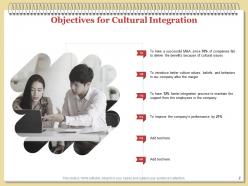
Slide 2: This slide displays Objectives for Cultural Integration
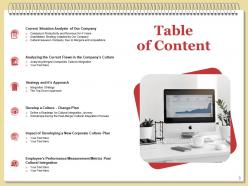
Slide 3: This slide displays Table of Content
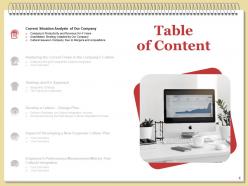
Slide 4: This slide showcases Table of Content
Slide 5: The purpose of this slide is to provide a glimpse of the company’s productivity and revenue for 4 years decreasing after the merger and acquisition due to incongruent cultural fit.
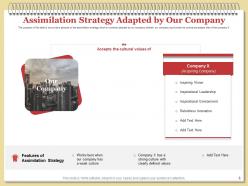
Slide 6: The purpose of this slide is to provide a glimpse of the assimilation strategy which is currently adopted by our company wherein our company dysfunction its culture and adapts that of the company X.
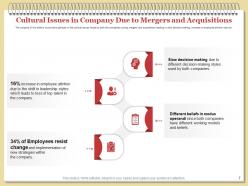
Slide 7: The purpose of this slide is to provide a glimpse of the cultural issues faced by both the companies during mergers and acquisitions leading to slow decision making, increase in employee attrition rate etc.
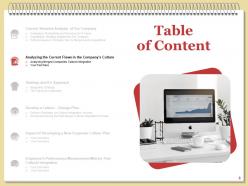
Slide 8: This slide displays Table of Content.
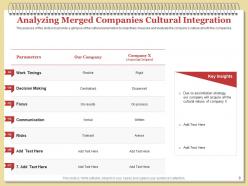
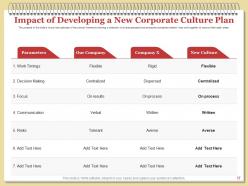
Slide 9: The purpose of this slide is to provide a glimpse of the cultural parameters to objectively measure and evaluate the company’s culture at both the companies.
Slide 10: This slide displays Table of Content
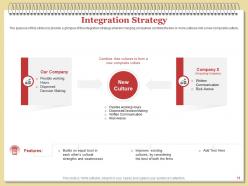
Slide 11: The purpose of this slide is to provide a glimpse of the integration strategy wherein merging companies combine the two or more cultures into a new composite culture.
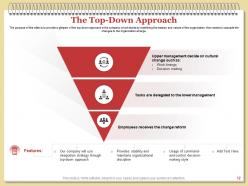
Slide 12: The purpose of this slide is to provide a glimpse of the top-down approach in the company which starts by redefining the mission and values of the organization, then seeks to cascade the changes to the organization at large.
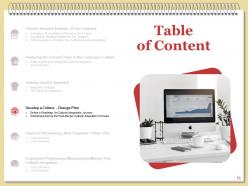
Slide 13: This slide shows Table of Content.
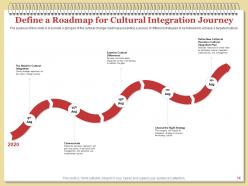
Slide 14: The purpose of this slide is to provide a glimpse of the cultural change roadmap presenting a journey of different strategies to be followed to achieve a targeted culture.
Slide 15: The purpose of this slide is to provide a glimpse of various workshops to be conducted in the company to influence corporate culture after the post-merger integration processes.
Slide 16: This slide displays Table of Content
Slide 17: The purpose of this slide is to provide a glimpse of the cultural framework showing a collection of diverse perspectives among the companies wherein they work together to improve their weak areas.
Slide 18: This slide displays Table of Content.
Slide 19: The purpose of this slide is to provide a glimpse of the employee performance measurement by employee turnover rate and employee net promoter score metrics required to measure the stability and consistency of the workforce in the company.
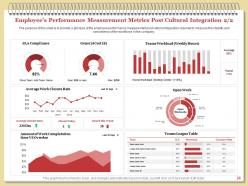
Slide 20: The purpose of this slide is to provide a glimpse of the employee performance measurement post cultural integration required to measure the stability and consistency of the workforce in the company.
Slide 21: This is Icons Slide for Organizational Cultural Change.
Slide 22: This slide is titled as Additional Slides for moving forward.
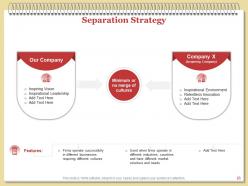
Slide 23: This slide depicts Separation Strategy which is Used when firms operate in different industries, countries and have different market structure and needs
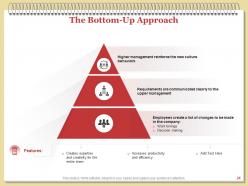
Slide 24: This slide displays The Bottom-Up Approach with features.
Slide 25: The purpose of this slide is to represent all levels and functions to make leaders work as a team and make good decisions quickly.
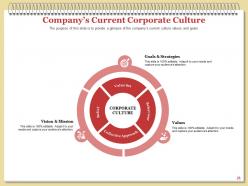
Slide 26: The purpose of this slide is to provide a glimpse of the company’s current culture values and goals.
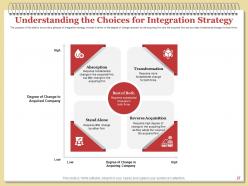
Slide 27: The purpose of this slide is to provide a glimpse of integration strategy choices in terms of the degree of change required by the acquiring firm and the acquired firm and provides fundamental change for both firms.
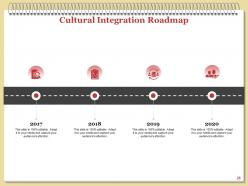
Slide 28: This slide showcases Cultural Integration Roadmap
Slide 29: This is 30 60 90 Day Plan slide.
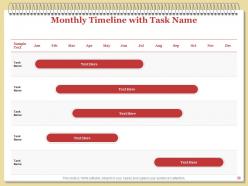
Slide 30: This slide depicts Monthly Timeline with Task Name
Slide 31: This is Thank you slide with Contact details.
Organizational Cultural Change Powerpoint Presentation Slides with all 31 slides:
Use our Organizational Cultural Change Powerpoint Presentation Slides to effectively help you save your valuable time. They are readymade to fit into any presentation structure.







FAQs for Organizational Cultural Change
Honestly, the warning signs are pretty obvious once you know what to look for. High turnover is a big one - people don't just leave good cultures. Watch for when your company talks about innovation but then punishes anyone who takes actual risks (so annoying). Poor communication between departments is another red flag. You'll also notice productivity dropping and customers complaining more about service. If people seem totally checked out in meetings or departments are working like they're competing instead of collaborating, that's your culture problem right there. Oh, and if you can't attract decent talent anymore - that says everything. I'd start with anonymous employee surveys to get the real tea about what's actually happening.
Make it super concrete - like, don't just say "we want more collaboration." Actually paint the picture of what meetings look like, how decisions get made, stuff people can visualize. Tell stories about the future, not boring bullet points. Here's the thing though - you'll feel like a broken record because you have to repeat it constantly. People need to hear things like 5 times before it clicks. Hit every channel you've got: town halls, team meetings, random hallway chats. Oh, and make sure your middle managers can explain it as well as you can. That's honestly where most visions die.
Look, employee values are literally the backbone of your whole culture. They're what makes people act right when nobody's watching. If your team's values actually match what the company preaches, culture change happens naturally and sticks around. But here's where most places screw up - there's this huge disconnect between what employees care about and what leadership wants to build. When that happens? Total resistance. People fake it but don't actually buy in. My advice? Survey your people first to figure out what they value, then work backwards from there. Way easier than fighting uphill.
Honestly, you've got to watch both the hard numbers and the softer stuff. Employee surveys and turnover rates are your baseline - plus track how many people get promoted internally. But the real tell? Listen to how people actually talk in meetings now. Are they collaborating more across teams? Is leadership walking the walk? I'd do quick pulse surveys quarterly instead of waiting for those annual things. Oh and don't expect instant results - culture shifts take forever. The trick is staying consistent with your measuring. Sometimes the informal conversations tell you way more than any survey will.
Honestly, skip the whole "just telling people about changes" thing - you need them actually participating. Be upfront about why this is happening and what they personally get out of it. Those old suggestion boxes? Total waste of time. Do real feedback sessions where people can speak up without getting in trouble. Let employees help design the new processes themselves - gives them skin in the game. Your leaders better be walking the walk too, because people notice when you're being fake about it. Oh, and celebrate the small wins loudly. Find those early adopters who are killing it and make them the heroes.
Honestly, you can't do real culture change without D&I - they're totally connected. Different perspectives help catch the blind spots that same-thinking groups always miss. Plus, if you're not actively including everyone from the start, you'll just end up with another exclusive culture (which is kinda pointless). The key thing - and I learned this the hard way at my last job - is getting diverse voices involved in your culture initiatives right away. Don't treat it like something you add later. When you're challenging old assumptions and shifting norms, you need people who actually experience those problems differently.
Honestly, most companies just rush it and skip getting their leadership on the same page first. They'll announce some big culture shift but then don't actually change any of the systems or processes that created the old culture in the first place. It's pretty much pointless - like trying to fix a car by washing it, you know? Also, people seriously underestimate the timeline. We're talking years here, not a few months. And if you can't explain WHY you're changing things, good luck getting anyone to care. Figure out what behaviors actually need to shift first, then work backwards from there.
Honestly, storytelling is your best bet here. Instead of another boring corporate memo, find real examples of people already living your values. Like when Sarah stayed late helping that struggling teammate - boom, perfect collaboration story right there. People actually remember stories (unlike those endless PowerPoint slides we all ignore). Get your leaders sharing these in meetings and ask employees to tell their own. Just make sure they're authentic, not some fluffy nonsense. I'd start collecting these stories now and work them into your regular comms. Way more effective than preaching about values.
Honestly, start with employee surveys - they'll give you the numbers on engagement and how people actually feel about working there. But here's the thing: people get way more real in smaller groups, so do some focus groups or one-on-ones after. Watch how things actually go down too. Are meetings super hierarchical or do people actually collaborate? How's conflict handled? Oh, and definitely talk to people who are leaving - exit interviews are brutal but so worth it because departing employees don't hold back. Surveys first for the overview, then dig deeper.
First thing - figure out what you're actually trying to accomplish business-wise. Revenue growth? Keeping customers around longer? Whatever it is, connect your culture stuff directly to those goals. So if you want faster decisions, don't just preach about "empowerment" (ugh, I hate that buzzword). Actually change how approvals work and reward people who make quick, smart calls. Here's the thing though - you've got to track both the culture changes AND the business numbers together. Leadership gets bored super fast if they can't see the connection. Every culture initiative needs a clear "this helps us hit X target" story.
Look, you've gotta ask your people what they actually think - not what you assume they're thinking. Most culture changes crash and burn because leadership just makes stuff up about what employees want. Get feedback before you start (what's really broken?), while you're doing it (is this actually helping?), and after. Pulse surveys work great, but honestly even casual conversations in the break room tell you a lot. I learned this the hard way at my last job - we spent six months "fixing" problems that weren't even real problems. Don't be those guys.
Honestly, tech can be huge for culture change if you use it right. Start with pulse surveys - they'll show you what's actually happening vs what leadership thinks is happening. Collaboration tools break down those annoying silos between departments. Internal social networks work great for celebrating wins and sharing stories (though don't expect overnight miracles). Video calls make your leaders way more accessible, even if we're all zoomed out at this point. Learning platforms help train people on new behaviors. My advice? Pick ONE tool that fixes your biggest headache first. Don't go crazy trying to digitize everything immediately.
Hey! So when culture change actually works, people just stop leaving as much. Makes sense - they feel like they belong and can actually grow there. Honestly, the money you save on recruiting alone is crazy. Plus all that knowledge doesn't walk out the door with people. Your company reputation gets better too, so good candidates start coming to you. I'd say give it at least 18 months before you really know if it worked. That's when the retention numbers tell the real story.
Ugh, most culture change fails because leadership moves on to the next shiny thing after like 3 months! You've got to bake it into your actual systems - hiring, performance reviews, promotions, daily decisions. Can't just do some motivational speech and call it done. Start by figuring out what's currently working against you and fix that mess first. Then celebrate small wins as they happen. The boring stuff matters more than the flashy initiatives, honestly. Model what you want to see and don't let people slide when they revert to old habits.
Honestly, just talk to people constantly about this stuff - town halls, team meetings, whatever. I know it feels like overkill but trust me on this one. Celebrate the employees who actually live these values, not just the ones crushing their numbers. Your managers have to actually do what they're preaching because everyone's watching them anyway. Find those people who are already bought in and let them tell their stories to others. Oh, and don't underestimate casual conversations either - sometimes that's where the real change happens.
-
Great product with effective design. Helped a lot in our corporate presentations. Easy to edit and stunning visuals.
-
Easy to edit slides with easy to understand instructions.
-
Editable templates with innovative design and color combination.
-
Topic best represented with attractive design.
-
Illustrative design with editable content. Exceptional value for money. Highly pleased with the product.