


Cross Cultural Management Powerpoint Presentation Slides





Try Before you Buy Download Free Sample Product
 Impress Your
 Audience
 100%
100% Editable
 Save Hours
 of Time


Introducing Cross-Cultural Management PowerPoint Presentation Slides. The objective of this presentation is to introduce better cultural values, beliefs, and behaviors in the company after the merger. The culture management PPT slideshow contains current situation analysis of the company, analysis of current flaws in the company’s culture, strategy, and approach, the impact of developing a new corporate culture plan, and so on. The cross-culture management PPT visuals help to analyze decreasing productivity and revenue of the company due to incongruent culture fit. Discuss the culture issue faced by both the companies during merging and acquisitions which leads to slow decision making, an increase in employee attrition rate, etc. Measure and evaluate the cultural integration of both companies by using parameters for the same that are provided in the table. Discuss integration strategies and features of merging companies using our content-ready cross-culture organization PPT infographics. Measure the impact of the culture on morale and productivity by incorporating our thoroughly researched and fully editable cross-culture companies PPT slides.
People who downloaded this PowerPoint presentation also viewed the following :
Content of this Powerpoint Presentation
Slide 1: This slide introduces Cross Cultural Management. State your Company name and begin.
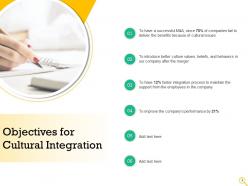
Slide 2: This slide displays Objectives for Cultural Integration
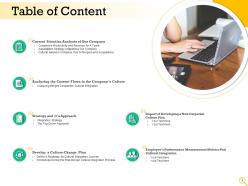
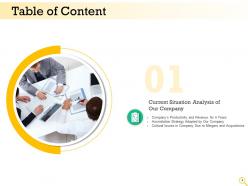
Slide 3: This slide displays Table of Content
Slide 4: This slide showcases Table of Content
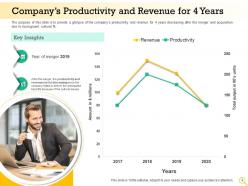
Slide 5: The purpose of this slide is to provide a glimpse of the company’s productivity and revenue for 4 years decreasing after the merger and acquisition due to incongruent cultural fit.
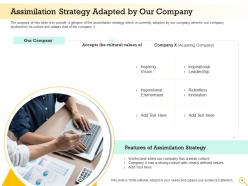
Slide 6: The purpose of this slide is to provide a glimpse of the assimilation strategy which is currently adopted by our company wherein our company dysfunction its culture and adapts that of the company X.
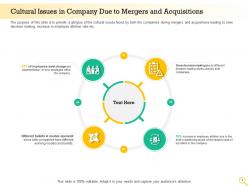
Slide 7: The purpose of this slide is to provide a glimpse of the cultural issues faced by both the companies during mergers and acquisitions leading to slow decision making, increase in employee attrition rate etc.
Slide 8: This slide displays Table of Content.
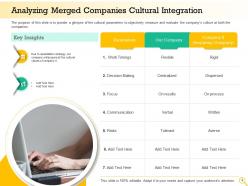
Slide 9: The purpose of this slide is to provide a glimpse of the cultural parameters to objectively measure and evaluate the company’s culture at both the companies.
Slide 10: This slide displays Table of Content
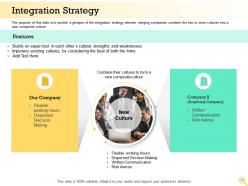
Slide 11: The purpose of this slide is to provide a glimpse of the integration strategy wherein merging companies combine the two or more cultures into a new composite culture.
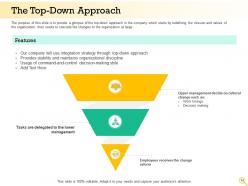
Slide 12: The purpose of this slide is to provide a glimpse of the top-down approach in the company which starts by redefining the mission and values of the organization, then seeks to cascade the changes to the organization at large.
Slide 13: This slide shows Table of Content.
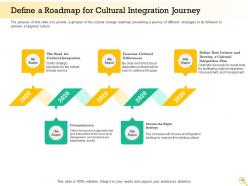
Slide 14: The purpose of this slide is to provide a glimpse of the cultural change roadmap presenting a journey of different strategies to be followed to achieve a targeted culture.
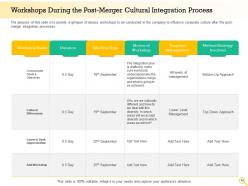
Slide 15: The purpose of this slide is to provide a glimpse of various workshops to be conducted in the company to influence corporate culture after the post-merger integration processes.
Slide 16: This slide displays Table of Content
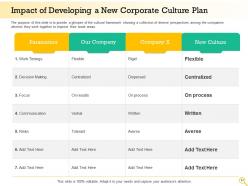
Slide 17: The purpose of this slide is to provide a glimpse of the cultural framework showing a collection of diverse perspectives among the companies wherein they work together to improve their weak areas.
Slide 18: This slide displays Table of Content.
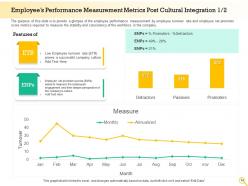
Slide 19: The purpose of this slide is to provide a glimpse of the employee performance measurement by employee turnover rate and employee net promoter score metrics required to measure the stability and consistency of the workforce in the company.
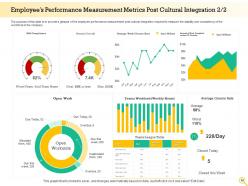
Slide 20: The purpose of this slide is to provide a glimpse of the employee performance measurement post cultural integration required to measure the stability and consistency of the workforce in the company.
Slide 21: This is Cross Cultural Management Icons Slide
Slide 22: This slide is titled as Additional Slides for moving forward.
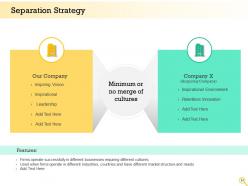
Slide 23: This slide depicts Separation Strategy which is used when firms operate in different industries, countries and have different market structure and needs
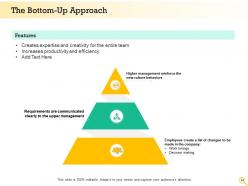
Slide 24: This slide represents The Bottom-Up Approach with features.
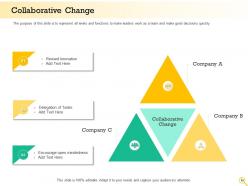
Slide 25: The purpose of this slide is to represent all levels and functions to make leaders work as a team and make good decisions quickly.
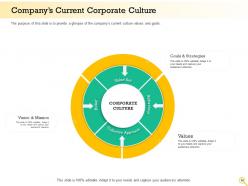
Slide 26: The purpose of this slide is to provide a glimpse of the company’s current culture values and goals.
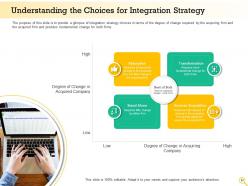
Slide 27: The purpose of this slide is to provide a glimpse of integration strategy choices in terms of the degree of change required by the acquiring firm and the acquired firm and provides fundamental change for both firms.
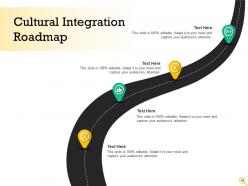
Slide 28: This slide displays Cultural Integration Roadmap.
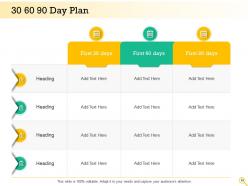
Slide 29: This is 30 60 90 Day Plan slide.
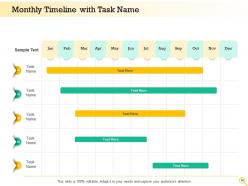
Slide 30: This slide displays Monthly Timeline with Task Name.
Slide 31: This is Thank you slide with Contact details.
Cross Cultural Management Powerpoint Presentation Slides with all 31 slides:
Use our Cross Cultural Management Powerpoint Presentation Slides to effectively help you save your valuable time. They are readymade to fit into any presentation structure.



FAQs for Cross Cultural Management
Communication's gonna be your biggest headache - and I don't just mean language barriers. Even when everyone speaks English, cultural context trips people up constantly. Some teammates want brutally direct feedback while others need that gentle, face-saving approach. Honestly, I've watched this destroy entire projects. Time zones make everything worse since you can't just hop on a quick call. Different attitudes about hierarchy and deadlines will surprise you too. My advice? Figure out each person's communication style early and get everyone to agree on basic norms upfront. Saves so much drama later.
Honestly, start by just asking your team how they like to communicate - sounds obvious but most people skip this step. Germans usually want you to be super direct, while a lot of Asian cultures prefer the roundabout approach to save face. I bombed this so hard in my first international gig! Watch their body language too, and don't assume they get what you're saying just because they nod. Some people need more formal language, others are chill with casual stuff. One-on-ones are perfect for figuring out everyone's style. Oh, and slow down your pace - we Americans talk way too fast sometimes.
So cultural intelligence is just how well you can read and work with people from different backgrounds. Super important if you're managing across cultures. You'll catch those unspoken rules everyone else follows, adapt how you communicate, and dodge those cringe moments that kill business deals. Instead of assuming everyone thinks like you do, you actually get why people act certain ways. Makes you way better at building trust with diverse teams and motivating different personalities. Oh, and negotiating becomes so much easier. Start by just watching patterns in how people interact - ask questions when something feels off.
Track engagement scores and retention rates broken down by demographics - that's your foundation. See who's actually speaking up in meetings and getting promoted. Honestly, surveys work best for the real stuff - just ask people if they feel heard. Business metrics matter too, like how your diverse teams perform with multicultural clients. Short sentences help. Start with baseline measurements, then check quarterly. Oh, and watch collaboration patterns on projects - sometimes the data surprises you there. Don't overthink it, but participation levels will tell you everything about whether it's actually working day-to-day.
Okay so three main things you gotta tackle. First, set up communication rules that work for everyone - some people are super direct, others beat around the bush, and that's fine. Just call it out early. Make sure you're actually giving diverse team members real decision-making power, not just putting them in meetings as token participants. The psychological safety thing is honestly where most teams mess up - people need to know they won't get side-eyed for speaking up. Oh, and do those cultural exchange sessions, like lunch talks about different holidays or whatever. Most important though? Actually ask your team what would make them feel included, then follow through on it.
Oh man, this stuff is so real. People from hierarchical cultures won't speak up in meetings while others expect everyone to jump in - creates weird tension. Then you've got the individual vs group thing where some want personal credit and others prioritize team decisions. Even timing gets tricky since cultures handle deadlines differently. Honestly, I learned this the hard way on my last project. Map out everyone's backgrounds first, then just be super explicit about how you want communication and decisions to work. Trust me, don't assume people will figure it out naturally.
Honestly, just listen first before jumping in with your own point. Different cultures communicate totally differently - some people are super blunt, others hint around stuff. Don't assume someone's being rude when they're just being direct, you know? Make sure everyone feels safe speaking up. I'd get a neutral person to help mediate if things get messy. Also, double-check what people actually meant vs what you heard - miscommunication kills teams. Set up clear communication rules from day one though, way easier than fixing drama later.
Honestly, mix up your project teams with people from totally different backgrounds - you'll be shocked at the blind spots that surface. First thing though? Make sure everyone feels comfortable throwing out "weird" ideas without getting shot down. I've seen this work best when you actually rotate who's leading projects, not just who's on them. Having diverse people is pointless if you're not setting up your work processes to let those different perspectives actually clash and build off each other. Oh, and start small - just pick your next project team differently and see what happens.
Honestly, cultural differences are huge when it comes to motivating people at work. Americans usually love getting called out for individual wins, but in a lot of Asian cultures? That can actually make people uncomfortable - they're more about the team succeeding together. Your reward system has to adapt to whoever you're managing. Some people prioritize climbing the ladder, others just want decent work-life balance (which, fair enough). Even giving feedback is tricky - being super direct works great in some places but can totally backfire in others. You really can't use the same approach for everyone. Oh, and don't forget how much titles and status matter in certain cultures too.
Skip the boring lectures and get people actually doing stuff instead. Set up role-playing scenarios and case studies that feel like real work situations. Pair people up with colleagues from different backgrounds - honestly, this peer mentoring thing works way better than sitting through another PowerPoint. You'll want to hit both the obvious cultural differences and those sneaky biases we all have but don't realize. Oh, and start with some kind of self-assessment so people can figure out their own blind spots first. The whole thing needs to be ongoing though, not just a one-and-done workshop.
McDonald's is probably the best example - they keep their brand consistent but totally adapt menus locally. Rice burgers in Taiwan, potato curry burgers in India, you know? Toyota takes this super patient approach, building actual trust with local teams instead of rushing in. Unilever's smart about it too, giving regional leaders real power since they actually understand their markets. The thing is, these companies don't just force their headquarters' style on everyone. They invest in cultural training and - here's the key part - they actually listen to their international teams. It's all about balancing global standards with local flexibility.
Honestly, cultural leadership styles totally mess with team performance in weird ways. Like, hierarchical setups make decisions super fast because someone's clearly in charge. But Scandinavian-style collaborative teams? They buy into everything way more, just take forever to actually do it. The chaos really starts when you mix different styles on one team - I've seen that go both amazing and terribly wrong. Really though, you've gotta match your leadership vibe to what your task needs AND who's actually on your team. Figure out what cultural styles you're working with first, then just roll with whatever fits.
Honestly, the hardest part is balancing respect for local culture without compromising your core values. Don't assume your approach is automatically better - that's where most people mess up. But you also can't let "cultural differences" become a cop-out for sketchy practices. Safety, corruption, fair treatment? Those are non-negotiables everywhere. Set those universal minimums first, then figure out how to adapt your style within those limits. Oh, and actually listen to local perspectives - you'll learn way more than you expect. It's messy but totally doable once you find that balance.
Honestly, tech makes this so much easier now. Real-time translation apps are game-changers for quick communication. Video calls let you actually see faces, which helps tons with building trust. I've found Slack works great for async messaging when people are in crazy different time zones - though honestly, sometimes I miss the simplicity of just email. Shared workspaces like Teams keep everyone on the same page. There are even cultural training platforms that teach you communication styles before you accidentally offend someone. The trick is finding what actually works for your specific team instead of just downloading every trendy app.
Oh man, language barriers will absolutely kill your cross-cultural projects if you're not careful. It's not just about knowing the words either - different cultures have totally different communication styles. Some are super direct, others dance around the point forever. What's worked for me: get your key people some language training, use lots of visuals and follow up everything in writing. Also - and this is huge - make sure people actually feel safe asking "wait, what?" without looking stupid. I've watched too many teams crash and burn because someone nodded along when they had no clue what was happening.
-
Helpful product design for delivering presentation.
-
Very well designed and informative templates.