


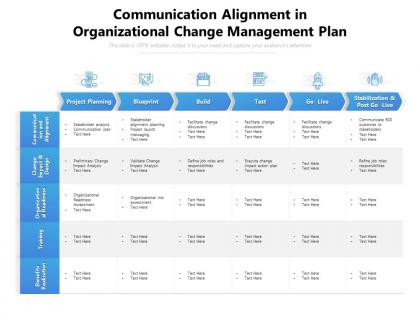
Communication alignment in organizational change management plan




Try Before you Buy Download Free Sample Product
 Impress Your
 Audience
 100%
100% Editable
 Save Hours
 of Time


Our Communication Alignment In Organizational Change Management Plan are explicit and effective. They combine clarity and concise expression.
People who downloaded this PowerPoint presentation also viewed the following :
Communication alignment in organizational change management plan with all 2 slides:
Give your audience a fulfilling experience. They will find our Communication Alignment In Organizational Change Management Plan elevating.
FAQs for Communication alignment in organizational
Honestly, it comes down to three things: be clear, stay organized, and actually connect with people. Don't just talk *at* them, you know? Eye contact is everything - makes it feel like a real conversation instead of some boring lecture. Stories work way better than bullet points for keeping everyone awake. Your body language matters too; stand confident and use your hands naturally. Oh god, please don't read straight from your slides - we've all been there and it's awful for everyone. Practice enough so you're not scrambling to remember what's next. Then you can focus on the people in front of you.
Here's the thing - your body language hits way harder than your actual words. Like, we're talking 55% of how people judge you happens before you even open your mouth. Crazy, right? If you're pitching something while slouching and staring at your shoes, nobody's buying it no matter how good your script is. Your posture and eye contact basically set the whole vibe. So definitely practice in front of a mirror first (I know it feels weird but trust me). Record yourself if you can handle the cringe - you'll catch all those distracting habits you don't realize you're doing.
Honestly, active listening completely changes how you communicate with people. Instead of just waiting for your turn to speak, you're actually tuning into their tone and what they really mean - not just the words coming out. People feel way more valued when they know you're genuinely hearing them. I swear it builds trust faster than anything else. Next time you're talking to someone, try focusing entirely on what they're saying rather than planning what you'll say back. You'll catch so many details you normally miss. Makes your responses way more thoughtful too.
Honestly, the right tech can make your work communication so much smoother. Quick questions? Just use Slack or Teams instead of formal emails. Video calls work way better for complicated stuff - I'm obsessed with screen sharing because it literally cuts meeting time in half! Project management tools keep everyone aligned without constant check-ins. Email scheduling is a lifesaver for different time zones too. The trick isn't using every tool out there, it's picking what actually fits each situation. Figure out what's driving you crazy communication-wise and tackle those problems first.
Figure out who you're talking to first. What's their background? Do they get technical stuff or nah? I made the mistake once of throwing around jargon with people who had no clue what I meant - awkward. Match your style to them. Some folks love charts and visuals, others want everything written out. Oh, and cultural stuff matters way more than you'd think, especially with global teams. Being super direct works great here but might come off rude elsewhere. Before any big convo, I literally ask myself "what do THESE specific people need to know and how do they actually want to hear it?" Then just roll with whatever fits them best.
Oh man, cultural differences are huge when it comes to communication! Some people are super direct while others hint at everything - honestly took me forever to figure that out. You've got different comfort levels with silence, personal space, eye contact, the whole deal. Plus there's the formality thing - like in some places interrupting means you're engaged, but elsewhere it's totally rude. I always try to watch how others interact first. When in doubt, just ask someone! Most people appreciate that you're trying to adapt your style to theirs instead of bulldozing through conversations.
Honestly, the usual suspects are noise and distractions, plus people making assumptions about what you already know. Different communication styles clash too - some people are super direct while others hint around everything. Language barriers and crappy wifi don't help either, obviously. Active listening helps a ton. Ask questions when something's unclear instead of nodding along confused. Pick the right way to communicate too - complex stuff needs a real conversation, not some long rambling email. Oh, and make sure people feel safe saying "I have no clue what you just said" without getting judged for it.
Okay so visuals are a game changer - people absorb images like 60,000 times faster than text (wild, right?). Charts make boring data actually click for people. Diagrams help them follow complicated stuff without their eyes glazing over. Death by PowerPoint bullet points is real, trust me. Keep your visuals simple though. They should back up what you're saying, not do all the talking. Oh and try this - if someone can't get your chart in 3 seconds flat, you've probably crammed too much in there. The "glance test" saves presentations honestly.
Okay so first thing - practice until you're sick of hearing yourself talk. I'm serious, over-preparation is your best friend here. Also try those deep breathing exercises right before you start, they actually work even though they sound kinda cheesy. Visualization helps too - just picture it going smoothly the night before. When you're up there, find the friendly faces and talk to them instead of scanning the whole room. Oh and speak way slower than feels right! Anxiety makes us speed through everything. Start with smaller presentations first so this stuff becomes second nature.
Stop treating feedback like some box you check at the end. Build it right into how you talk to people. Instead of "any questions?" try something specific like "does this timeline actually work for you?" People won't give honest feedback if they think you'll get defensive about it - learned that one the hard way after getting way too many fake "sounds good" responses. You gotta make it feel safe first. Actually listen when they respond and show you heard them. Here's what I'd do: pick one conversation today and pause for their input before you keep going. Makes a huge difference.
Stories work because they hit people in the feelings, not just the brain. Your audience actually experiences what you're saying instead of just hearing facts. I mean, we all remember stories way better than random statistics - that's just how our brains work. When you share a customer story or something personal that happened to you, people can picture themselves in that situation. Makes the whole thing less "presenter talking at me" and more like a real conversation. Oh, and definitely lead with a story that connects to your main point. Sets the tone perfectly.
Honestly, you've gotta show them it's okay to mess up first. I'm always admitting when I screw something up - makes everyone else way more comfortable. Try asking "what's one thing we could do better?" instead of the dreaded "any concerns?" question that just gets crickets. Thank people when they disagree with you, even if it's annoying. Those regular check-ins help too, but make sure it's not just the chatty people talking. Oh, and maybe start super small - like just ask what communication tools they actually prefer instead of forcing Slack on everyone (guilty of that one myself).
Honestly, just don't be shady about stuff. Be upfront when you're getting paid for something - people hate finding out later. Avoid making claims that aren't true (I mean, duh, but you'd be surprised). Respect privacy too, don't be creepy with data collection. The whole thing comes down to this: would you feel weird if someone marketed to you this way? Those super pushy ads that oversell everything? Yeah, don't do that. Use normal language instead of corporate BS. Give people something actually useful. Trust takes forever to build but like two seconds to destroy.
honestly, emotional intelligence is like having a superpower at work. You start picking up on when someone's stressed or excited, then you can match their vibe instead of accidentally being tone-deaf. I used to be terrible at this lol. But once you get better at reading body language and stuff, those weird miscommunications happen way less. Plus you won't get as defensive during feedback sessions - which is huge. Try watching people's energy in your next meeting. You'll notice so much more than you expect, and it makes responding to them feel way more natural.
Oh totally! So like, face-to-face is obviously the gold standard - you get everything, tone, body language, can read the room instantly. Email's weird because it strips out all that context, which honestly works great for quick updates but sucks for anything emotional. Video calls are decent but ugh, nothing kills a conversation like someone freezing mid-sentence. Phone calls keep the voice stuff at least. Really though, it's about picking the right tool - don't try having a serious talk over text, you know? Save that for actual conversations. Simple stuff? Fire off an email.
No Reviews