


7 step consulting methodology framework for solving business problem




Try Before you Buy Download Free Sample Product
 Impress Your
 Audience
 100%
100% Editable
 Save Hours
 of Time


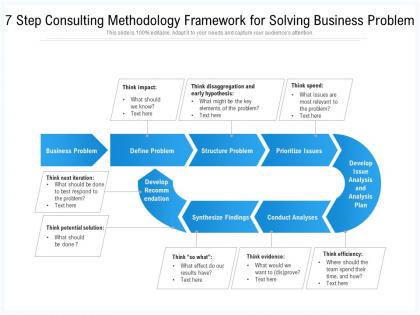
Our 7 Step Consulting Methodology Framework For Solving Business Problem are explicit and effective. They combine clarity and concise expression.
People who downloaded this PowerPoint presentation also viewed the following :
7 step consulting methodology framework for solving business problem with all 2 slides:
Give your audience a fulfilling experience. They will find our 7 Step Consulting Methodology Framework For Solving Business Problem elevating.
FAQs for 7 step consulting methodology framework for
Honestly, most consulting frameworks fail because people skip the boring stuff upfront. You've got to really nail what problem you're solving first - can't tell you how many times I've watched projects crash because everyone assumed they knew what needed fixing. Build your analysis around something structured like MECE (or whatever makes sense), then craft recommendations that are actually doable, not just consultant-speak nonsense. Oh, and figure out how you'll measure if it worked. The whole thing should be simple enough that they don't need you holding their hand forever. That's the real test.
Honestly, frameworks are lifesavers because they give everyone a roadmap instead of those awkward meetings where nobody knows what we're supposed to be talking about. You can redirect conversations like "hold up, we're still figuring out the problem, so let's save solutions for later." Makes you look super organized even when you're totally improvising behind the scenes lol. Clients love it too - they can actually see where things are headed instead of panicking. I always walk through the framework right at kickoff now. Trust me, it'll save you from so many "wait, what step are we on again?" messages later.
MECE and hypothesis-driven problem solving are the bread and butter - you'll see those literally everywhere. Issue trees help break down messy problems too. For strategy stuff, there's Porter's Five Forces and value chain analysis. SWOT is still around but honestly feels kinda stale at this point. Design thinking's having a moment, especially for innovation work. Oh, and agile methodologies are pretty big now too. Most firms just mix and match 2-3 frameworks depending on what they're dealing with. I'd definitely start with MECE and hypothesis-driven approaches since everything else builds off those basics.
You basically take the same framework but swap out the details for whatever industry you're looking at. Healthcare? Focus on patient outcomes and compliance costs. Tech companies? Look at R&D spending and how they're getting users. The core logic doesn't change - that's honestly why frameworks work so well in the first place. Your benchmarks and success metrics will be totally different though. Oh, and definitely research the industry's key performance indicators before you start. Otherwise you'll be measuring the wrong stuff and your analysis won't make sense.
Look, data analysis is what makes or breaks your consulting framework. Without it, you're just making educated guesses on slides. Use data to validate your problem, test assumptions, and figure out which solutions actually work. I've seen too many consultants skip this step and crash during client presentations. The analysis gives you structure and backs up your recommendations with real evidence. Short version: identify what data you need upfront for each part of your framework. Don't wing it.
Look, frameworks are just starting points - don't get married to them. First thing I do is really dig into what the client actually needs, their industry weirdness, all their constraints. Then I'll tweak the framework or sometimes completely gut parts that don't make sense. Add stuff that's specific to their world that textbook approaches totally miss. Honestly, I've watched consultants stick way too rigidly to what they learned in school when the client needed something completely different. You can flip the order around, change what you focus on - whatever works. Just explain why you're doing it differently so they get it.
Honestly, just pick whatever framework makes sense for how complex your project actually is. MECE sounds fancy but you'll hate yourself if you force it onto something simple. Train your team early on the basics, then let them figure out how to make it work with their stuff - way better than cramming their workflow into some rigid system. Map the framework steps to your actual milestones so people know when to use what tools. And definitely do regular check-ins because sometimes these things just create busywork instead of helping. Trust me on that one.
So basically it gives your whole team the same playbook for tackling problems. Everyone breaks down issues the same way instead of going off in random directions. Meetings actually get way more productive - and trust me, that's saying something. Your discussions stay focused because people know exactly where their ideas fit. When you're presenting to clients, having that consistent structure makes you look ridiculously polished. Oh and pick just one framework for your next project. You'll notice the difference right away. It's like suddenly everyone's speaking the same language.
Track the obvious stuff first - how long problems take to solve, client satisfaction, project success rates. But honestly? The real tell is whether people actually stick with your framework or ditch it after day one. I've watched so many fancy systems get ignored completely. Check if junior folks are learning faster too. Mix in some softer signals alongside the hard numbers. Pick maybe 2-3 things that actually matter for your situation and track them consistently across 5-10 projects minimum. Otherwise you're just guessing if it's working.
Look, change management is basically about getting people to not hate your new framework. Start by getting stakeholders on board early - like, actually involve them in designing it. Map out how it'll mess with their current processes because they *will* notice and complain. Honestly, people resist even good changes, so build in proper communication and training from day one. Roll it out gradually instead of dumping everything at once. The smart move? Create feedback loops so you can tweak things when (not if) stuff doesn't work as expected.
Pick 3-4 tools max and stick with them. Asana or Monday work great for tracking deadlines and deliverables. For visual stuff and client workshops, try Miro or Figma. Don't overthink document storage - honestly, a basic shared Google Drive does the job just fine. I've watched way too many consultants burn hours switching between like 10 different platforms. HubSpot's solid for keeping track of client history if you need a CRM. The trick is finding tools that actually play nice together instead of creating more work for yourself.
Honestly? Frameworks actually help with innovation, not hurt it. Your team gets braver about pitching wild ideas when there's a clear process for testing them out. Nobody's sitting there paralyzed wondering "but how do we even evaluate this?" Good frameworks also force you to reflect regularly - like doing post-mortems or quarterly check-ins. That's where you catch what's broken. I've noticed teams get way more experimental once they're not constantly second-guessing the process itself. Try doing monthly "how can we improve this" sessions. Sounds boring but it works.
Honestly, the worst part is when you try cramming messy real-world problems into these perfect little frameworks. Your data's all over the place, or people think you're being way too textbook-y about everything. I've definitely gotten tunnel vision before - so focused on checking all the framework boxes that I completely missed the obvious fix right in front of me. Just stay flexible with it. Frameworks are helpful starting points, but don't let them box you in. Skip the parts that don't apply, mix and match different approaches. Quick gut check before you go all-in usually saves time too.
Definitely check out Kotter's 8-step model or ADKAR - they're solid frameworks for figuring out if you're actually ready for change. Most companies are way too optimistic about this stuff, honestly. These tools make you dig into the messy reality: does leadership really care, do employees have the right skills, is everyone drowning in other priorities? Cultural openness is huge too. I'd pick one framework and rate yourself on each piece. The gaps will be pretty obvious once you see them on paper. Then you can tackle the biggest problems first instead of just winging it.
Dude, stakeholder feedback is your lifesaver when building consulting frameworks. You'll catch what actually works vs what just looks pretty in your deck. Clients will call out blind spots you totally missed - and honestly, the pushback that annoys you most? That's usually gold. I learned this the hard way on a project last year. Their input helps you tweak your methodology and fix the sequence of how you tackle problems. Don't wait until the end either - grab feedback at every milestone or you'll be scrambling to fix everything later.
No Reviews