


6 steps problem solving process powerpoint slide




Try Before you Buy Download Free Sample Product
 Impress Your
 Audience
 100%
100% Editable
 Save Hours
 of Time


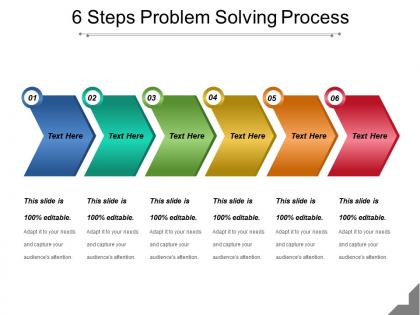
Access our 6 steps problem solving process PowerPoint slide to share information about effective problem solving process. Every problem comes with an opportunity and if you are able to overcome them in the best possible way then you have better chances to achieve success. Our six steps problem solving presentation template enables you to make an effective communication about what needs to be done in order to find the solution. Most of the people put solution at the first place which is not the right approach as it is needed at the end of the problem solving process. This six steps PPT layout can be used to show six effective techniques for business problems such as identify the concerns, understand everyone’s interests, list the possible solutions, make a decision, implement the solution and evaluate. Every corporate firm has a different set of challenges and businesses that follow right problem solving process are more successful. This six steps PowerPoint design can also be used to present information to share tips for effective business management and other related concepts. Our 6 Steps Problem Solving Process Powerpoint Slide have drained the cloud. They have acquired the best collection.
People who downloaded this PowerPoint presentation also viewed the following :
6 steps problem solving process powerpoint slide with all 5 slides:
Initiate a change of approach with our 6 Steps Problem Solving Process Powerpoint Slide. Institute fresh conditions.



FAQs for 6 steps problem solving
Okay so first thing - actually figure out what the problem is before you do anything else. I know it sounds obvious but most people (myself included honestly) just start throwing solutions around without really understanding what's wrong. Write it down in one sentence if you have to. Then gather info, brainstorm some options, and actually think through the pros and cons realistically. Don't just go with your gut on this part. Pick something, try it out, then check back later to see if it worked. Sometimes you'll need to tweak things or start over completely, and that's totally normal.
Here's the thing - you gotta figure out what's actually broken before you start fixing stuff. I learned this the hard way lol. Ask "what's really happening here?" and "why does this suck?" Don't just jump into solutions mode. Write it down in one sentence, then think about who it screws over and when. Get some examples too if you can. The boring upfront stuff honestly saves you from wasting weeks on the wrong problem. Trust me, I've been there way too many times.
Honestly, I'd start with talking to different stakeholders - you'll get way better perspectives that way. Dig into whatever data you already have lying around too, like reports or customer complaints. Surveys are decent for casting a wider net. But here's the thing - actually watching people work reveals stuff they don't even know they're doing, which is where the gold usually is. Oh, and those fishbone diagrams? Pretty helpful for organizing your thoughts once you've got some info. Mix maybe 2-3 approaches since they each show different pieces. Just go with what makes sense for your situation and don't overthink it.
Don't judge ideas while you're still coming up with them - that's the biggest mistake people make. Give yourself like 15-20 minutes and just go for quantity. Honestly, the weirder the better because those random ideas usually lead somewhere good. When someone shares something, try building on it instead of shooting it down. Oh, and sometimes it helps to have everyone write ideas silently first - prevents the loudest person from taking over. Make sure you're writing everything down where everyone can see it. You'll start noticing patterns. Then afterwards you can actually pick the good ones.
Think of critical thinking as your BS detector for problem-solving. It stops you from accepting the first answer that sounds good and makes you actually dig deeper. You'll question your assumptions, look at evidence from different angles, and spot holes in your logic before they bite you later. Honestly, most people skip this step and wonder why their solutions backfire. Breaking down complex problems becomes way easier when you're not just winging it. My advice? Start asking yourself "what am I missing here?" every time you think you've nailed it.
Honestly, I'd start with the stuff that'll actually fix the root problem, not just patch things up. Quick wins are your friend - grab those first to build momentum. Then look at what's realistic with your timeline and budget. The "perfect" solution sounds nice but if it takes 6 months, maybe skip it for now? I'm big on making a simple scoring chart - impact vs how doable it is vs what resources you need. Takes the emotion out of it. Once you've got some early victories, that's when you tackle the messier, complicated fixes.
Oh man, our brains are honestly terrible at this stuff sometimes! Confirmation bias is huge - we cherry-pick evidence that backs up what we already believe. Then there's anchoring bias where you get obsessed with the first idea you hear. Availability bias makes recent examples seem way more important than they actually are. And don't get me started on sunk cost fallacy - we've all thrown good money after bad, right? Best defense? Hunt for evidence that proves you wrong. Brainstorm tons of options before picking one. Get outside perspectives from people who think differently. Sleep on major decisions too - your brain literally rewires overnight and you'll catch things you totally missed.
Working with other people is like having superpowers for solving problems, honestly. You get different viewpoints plus expertise you don't have. Fresh eyes spot things you're too close to see. Someone's strength usually fills in where you're weak - it's wild how well that works. I've watched teams figure out stuff in a few hours that would've taken me days alone (though maybe I'm just slow lol). The trick is making everyone comfortable sharing ideas. Even the random ones. Quick brainstorming works great - just build on what others say instead of shutting it down right away.
Dude, I swear by a few go-to methods. Root cause stuff like the 5 Whys is solid - keeps you from just treating symptoms. Fishbone diagrams and problem trees break everything into bite-sized pieces, which is huge when you're drowning in complexity. For strategic headaches, SWOT analysis is your friend. Process mapping saves my ass with operational problems. But honestly? Sometimes I just grab a whiteboard and start sketching things out like a crazy person. Something about seeing it visually just clicks. Pick whatever fits your specific mess and start mapping - you'll spot patterns and obvious starting points that totally weren't there before.
Honestly, feedback loops are game-changers. Instead of waiting till the end to discover your solution is trash, you're constantly checking and tweaking as you go. Build something small, see how it works, then adjust. Rinse and repeat. Think of it like GPS - when there's traffic, it recalculates instead of sending you into a jam. You'll catch issues early when they're actually fixable, not when you're already screwed. I'd say start with weekly check-ins or something simple. Even that small habit makes a massive difference in how things turn out.
Before you roll anything out, figure out how you'll actually know if it's working. I'm talking both hard numbers - timelines, costs, whatever makes sense - and getting real feedback from people who have to live with the changes. Weekly check-ins are your friend here, trust me. Monthly works too if things move slower. The key is catching problems early instead of realizing six months later that everyone hates what you built. Oh, and definitely don't be like me and forget to set this stuff up beforehand - playing catch-up on metrics is the worst.
You've gotta match your approach to whatever industry you're in. Healthcare? Way more paperwork and getting everyone on board because of all those regulations. Tech companies let you move fast and screw up without anyone freaking out. Finance people want every risk mapped out beforehand - honestly, they're pretty paranoid about surprises. Manufacturing is all about digging into why stuff broke since they're dealing with actual machines and processes. Figure out your industry's vibe first. How much red tape exists? Do they make decisions quickly or slowly? Then adjust how fast you work, how much you document, and how you test ideas. Also, definitely pick the brain of someone who's been in that field forever.
Honestly, emotional intelligence is a game-changer for solving problems. You know how when you're stressed you make terrible decisions? Well, managing those emotions helps you think way clearer instead of rushing into fixes that blow up later. Most problems involve other people anyway, so reading their concerns and what's actually driving them makes your solutions stick better. I've learned to just pause when I feel myself getting wound up - usually there's something deeper going on that I'm missing. It's like being a detective for feelings, which sounds cheesy but actually works.
Dude, you gotta try drawing stuff out! I know it sounds basic, but sketching problems as flowcharts or mind maps totally changes how your brain processes things. Honestly, my drawings look like a 5-year-old made them, but whatever - it still works. You'll spot patterns and connections that were completely invisible when everything was just swirling around in your head. Plus it shows you where your logic has holes or you're missing steps. Even simple doodles work. Next time you're stuck on something, just dump it onto paper first. The "aha" moments hit different when you can actually see the problem laid out.
Don't rush into solutions before you actually get what's broken - I learned this the hard way lol. You'll end up fixing random symptoms while the real issue keeps causing problems. Break big messy problems into smaller pieces instead of trying to tackle everything. I'm terrible at this but try not to fall in love with your first idea. There might be way better options you're missing. Oh and definitely loop in the right people early or you'll regret it later. Sounds obvious but always ask yourself "what am I even trying to solve here?"
-
Visually stunning presentation, love the content.
-
Commendable slides with attractive designs. Extremely pleased with the fact that they are easy to modify. Great work!