


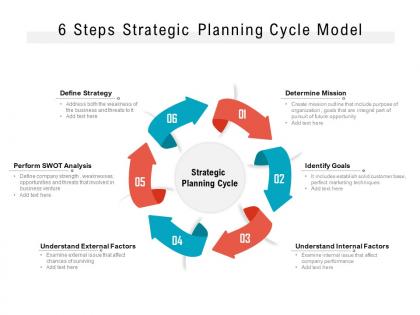
6 steps strategic planning cycle model




Try Before you Buy Download Free Sample Product
 Impress Your
 Audience
 100%
100% Editable
 Save Hours
 of Time


Generate good equity with our 6 Steps Strategic Planning Cycle Model. Dividends will definitely grow.
People who downloaded this PowerPoint presentation also viewed the following :
6 steps strategic planning cycle model with all 2 slides:
Generate great chemistry with our 6 Steps Strategic Planning Cycle Model. They act as an excellent catalyst.
FAQs for 6 steps strategic
Honestly, start with figuring out what's happening around you - like who you're competing against and what the market actually looks like. Then get clear on where you want to go and be realistic about your strengths vs. weaknesses. Build strategies that actually close those gaps instead of just sounding good on paper. Map out timelines and who's responsible for what. Here's the thing though - most strategic plans just collect dust because people skip the follow-up part. You'll need regular check-ins to see what's working and pivot when stuff changes. Also, don't try cramming this into one meeting. Block out real time for each piece.
SWOT analysis is basically mapping out where you stand before making big decisions. You look at internal stuff - your strengths and weaknesses - plus what's happening externally with opportunities and threats. Sounds simple, but it actually works really well when you don't half-ass it. The whole point is building strategies around what you're already good at while fixing your weak spots and preparing for whatever might hit you. Oh, and definitely get different people involved - you'll miss things if it's just you doing it. Be honest about the bad stuff too, otherwise what's the point? Think of it as your go-to starting place for planning, not some box you check once.
Look, stakeholder engagement can totally make or break your whole plan. I learned this the hard way watching a brilliant strategy crash and burn because leadership thought they could just figure it out themselves. Get your key people involved early - they'll catch stuff you missed and bring perspectives you never considered. Plus they're way more likely to actually buy in if they helped build it. The real trick? Figure out who your most influential stakeholders are first, then set up regular touchpoints throughout the process. Don't just loop them in at the end when it's too late to change anything meaningful.
Track the hard numbers that actually matter to your goals - revenue, market share, customer satisfaction scores, whatever fits your situation. Dashboards are clutch for keeping everything visible. But honestly, don't sleep on the soft stuff either. Employee engagement and whether people actually get the strategy matters more than you'd think. I do quarterly reviews against my original benchmarks and pivot when needed. The trick is focusing on metrics that move the needle, not just stuff that looks impressive in meetings. Oh, and make sure your teams are genuinely bought in - that's half the battle right there.
Oh man, the worst thing you can do is set some fluffy goal like "improve customer experience." What does that even mean? Also, don't just lock yourself in a room and dream up this perfect plan - I've watched teams do that and then get blindsided by basic stuff like budget limits or what customers actually want. Make sure you get input from people who'll have to execute it, otherwise you're just creating fancy documents nobody will follow. And honestly? Start smaller than you think. Big ambitious plans sound impressive but they usually crash and burn. Give people specific deadlines and ownership or it'll just sit there gathering dust.
Honestly, data analytics is just a fancy way of saying "let your numbers do the talking instead of relying on hunches." You'll spot patterns that would've flown right under your radar otherwise. Track what's genuinely moving the needle vs what you assumed was working. It predicts trends and flags risks buried in all that messy data you've been ignoring. The best part? No more shooting in the dark with strategy decisions. Real-time insights about customers and market shifts beat outdated gut instincts every time. My advice though - don't go crazy trying to measure everything at once. Pick one metric that actually matters to your goals first.
Think of your vision statement as your compass for big decisions. Does this opportunity actually move us toward where we want to be? If not, skip it. Honestly, I've seen too many companies chase shiny objects that look good but totally derail their focus. Your vision keeps everyone on the same page about what winning looks like - and trust me, that prevents a lot of heated meetings down the road. Before jumping into any new strategy, just ask yourself: "Is this getting us closer?" It's a simple filter that'll save you tons of wasted effort.
Honestly, first thing you gotta do is take a hard look at what you actually have right now - resources, skills, all of it. Don't sugarcoat it. Map that against what you're trying to accomplish and you'll see the gaps pretty clearly. Building new stuff internally takes forever though, way longer than you think it will. So you can either develop what's missing, buy it from outside, or - and this might sting - scale back your goals to match reality. I do this check every quarter instead of waiting for annual planning. Oh, and make your trade-offs obvious to everyone involved.
Okay so there's a bunch of ways to tackle this. Impact vs effort matrices are super popular - basically you want high impact, low effort stuff. Then there's weighted scoring where you assign points based on ROI and how well it fits your strategy. MoSCoW is another one (Must have, Should have, etc). Honestly? I really like the visual aspect of impact/effort because it gets teams on the same page fast. Oh, and ICE framework is solid too - Impact, Confidence, Ease. That one's perfect when you're dealing with newer projects and aren't totally sure how things'll pan out. Just pick whatever clicks with how your team naturally makes decisions.
Build flexibility right into your planning from day one. Quarterly reviews work way better than those marathon annual sessions - trust me on this. During COVID our "five-year plan" literally became worthless overnight, so now I'm all about living documents instead of set-in-stone strategies. Watch for early warning signs like customers acting differently or competitors making weird moves. Short sentences help here. Give your team permission to speak up when they spot problems brewing - that's honestly half the battle right there. Small shifts are manageable, but if you wait too long they'll steamroll you.
So scenario planning is basically creating 3-4 "what if" stories about where your market could go. Some good, some rough, maybe one total curveball that seems crazy but could happen. I actually think it's one of the smartest things you can do - way better than just crossing your fingers on one prediction. The magic happens when you test your current strategy against each scenario to spot weak points. Look, nobody knows what's coming next (especially these days), but if you build scenarios around your biggest uncertainties, you'll be ready for whatever hits. Makes your whole approach way less fragile.
Tech makes strategic planning way less painful - you can centralize all your data and let teams collaborate in real-time. I'd start with something like Miro for brainstorming (those digital whiteboards are actually pretty cool), then add a project management tool to track everything. BI dashboards help you monitor KPIs without drowning in spreadsheets. The trick is not going overboard with tools - I've seen teams waste months just debating software options. Cloud-based stuff works great for remote teams since everyone stays in the loop. Pick one or two tools that fix your biggest headaches first, then build from there.
Honestly, your leaders make or break execution - they're the difference between plans actually happening versus just sitting in some folder somewhere. Good ones can explain the vision so people actually get it, figure out where to spend money, and keep everyone moving in the same direction when stuff inevitably goes sideways. They also aren't afraid to make hard decisions when priorities change (which happens more than anyone wants to admit). Plus they'll call people out when commitments aren't met. But here's the thing - if your leadership team isn't genuinely excited about the plan from the start, you're basically screwed. Buy-in can't be faked.
Honestly? Pick one person for each big initiative - not a whole team, just one individual who's gonna own it. Monthly check-ins are clutch, but make people bring actual numbers, not just "oh we're making progress" BS. I've watched so many good plans crash because everyone thought someone else was handling it. Build in real consequences too - celebrate the wins, but also call out when stuff isn't working. The person needs to know it's literally their job to make this happen. Then back them up so they can actually deliver.
Honestly, most strategic plans fail because leadership isn't even on the same page first. Get your exec team aligned before you do anything else. Then hit people through different channels - town halls, team meetings, simple one-pagers that don't suck. The real trick? Connect the strategy to what people actually do every day, not just abstract company goals. I'd probably skip the fancy PowerPoint presentations tbh - they just collect dust. Build in regular check-ins and let people ask questions. Two-way conversations beat corporate announcements every time.
No Reviews