


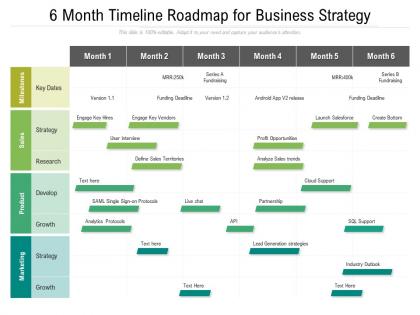
6 month timeline roadmap for business strategy




Try Before you Buy Download Free Sample Product
 Impress Your
 Audience
 100%
100% Editable
 Save Hours
 of Time


The success rate of business plans is hugely dependent on the plan of action, and this editable 6 Month Timeline Roadmap For Business Strategy rightly serves the purpose. Encapsulate all the information related to the project in a well structured manner to obtain maximum efficiency by incorporating our stunning PowerPoint theme. State the critical deliverable, steps involved, time frame, workforce allocation, and lots more in an easy to understand manner by utilizing this pre designed roadmap PowerPoint layout. You can also prioritize your tasks and discuss the problem areas with your colleagues by incorporating this tailor made PPT layout. Empower your work plan by employing this professionally designed PPT theme. Entrepreneurs can download 6 Month Timeline Roadmap For Business Strategy as a beneficial communication tool that facilitates in collaborating with different tasks and achieve targets.
People who downloaded this PowerPoint presentation also viewed the following :
6 month timeline roadmap for business strategy with all 2 slides:
Use our 6 Month Timeline Roadmap For Business Strategy to effectively help you save your valuable time. They are readymade to fit into any presentation structure.
FAQs for 6 month timeline roadmap
So basically you need five main things for your roadmap: a clear vision, understanding where you are now, strategic initiatives with timelines, how you'll allocate resources, and ways to measure success. Start with your 3-year vision first - that's honestly the hardest part but everything else flows from there. Then work backwards to figure out what needs to happen quarter by quarter. Don't forget to mark key decision points where you might need to pivot (trust me, you will). It's like planning a road trip but for your business. Map out how each initiative builds on the others over time.
Think of it as GPS for your whole team - nobody's wandering around wondering if they're doing the right stuff. Your roadmap connects everyone's daily grind to the big company goals, which honestly makes such a difference in how people prioritize. Those high-level objectives get broken down into actual milestones teams can work with. Better decisions happen when people see the connection. I'd set up quarterly check-ins (maybe over lunch?) where you literally map what each team's delivering back to the roadmap. Keeps everyone rowing in the same direction without being super rigid about it.
Think of market analysis as your GPS - you wouldn't start a road trip without knowing where you're going, right? It shows you the competitive landscape, what customers actually want, and where trends are heading. Without this stuff, you're basically throwing darts blindfolded (trust me, I've watched teams do this). The data helps you spot opportunities before competitors do and catch threats early. Plus it validates whether your big strategic bets are smart or just wishful thinking. Oh, and don't just do it once - check back in regularly as you execute your roadmap. Markets shift faster than you think.
I'd say check it every quarter, then do the big overhauls once a year. But honestly? Sometimes that feels way too rigid. If your industry's moving fast or something major hits, you might need to look at it more often. The trick is staying flexible without confusing your team - nobody wants to work somewhere the plan changes every week. I always set those quarterly reminders in my calendar (otherwise I forget), and definitely update it whenever you hit a big milestone or when shit hits the fan. Just don't overthink it.
Track both leading and lagging indicators - you need the full picture. Revenue growth, profit margins, market share for the big stuff. Then add operational KPIs like customer acquisition costs and employee engagement scores. Here's the thing though - resist tracking everything (I've made this mistake before). Pick maybe 5-7 core metrics that actually connect to your strategic goals. Review monthly. You want to measure progress toward milestones AND the underlying health of your business. Otherwise you're just collecting data for no reason.
Honestly, visuals are a game-changer for strategy presentations. People zone out with endless bullet points, but throw in some roadmaps and flowcharts? Suddenly everyone's paying attention. There's this wild stat about how we process visuals like 60,000 times faster than text - which explains why diagrams actually stick in people's heads. Charts make those messy timelines crystal clear too. Here's the thing though: visuals force you to cut the fluff and get to the point. I'd suggest one visual per major strategy piece. Trust me, your team will finally get what you're trying to say.
Oh man, biggest mistake? Trying to nail down every tiny detail from the start - you'll never actually ship anything. Keep your roadmap loose after like 3 months out because stuff WILL change. Leadership always wants crazy deadlines but don't cave to unrealistic timelines (trust me on this one lol). Actually talk to your users instead of just assuming what they need. Build in extra time for when things inevitably go sideways. The whole thing should be flexible - I treat mine more like rough guidelines than some sacred document you can't touch.
Dude, you really need stakeholder input or your roadmap will crash and burn. When people help build it, they actually want it to work instead of secretly hoping it fails. Sales teams know what customers really want, ops knows what's actually possible - stuff you'd never think of in those endless strategy sessions. I've watched so many good plans die because leadership thought they knew better than everyone else. Get feedback from sales, operations, customers, maybe key partners too. Do it during planning though, not after you've already decided everything.
So basically, your long-term roadmap is the big picture stuff - where you want to be in 1-3 years, major initiatives, that kind of thing. Short-term tactical plans? That's your next quarter broken down into specific actions and deadlines. I always think of it like this: strategy answers "where are we going and why," tactics answer "how do we get there this month." Roadmaps can flex and pivot when needed. Tactical plans are way more concrete - you've got real metrics, actual deliverables. Oh, and definitely start with strategy first, then build your tactical stuff around those bigger goals. Don't do it backwards.
Each industry's totally different when it comes to roadmaps. Healthcare? You're drowning in compliance stuff. Tech companies get to move fast and break things (lucky them). Retail plans around Black Friday madness, but manufacturing needs like 18 months just to swap out equipment. Honestly, templates are pretty useless here. Figure out what 3-4 things actually make or break success in your space first. Then build your milestones around those instead of some generic framework. Same basic structure, sure, but the timing and what you prioritize should match what works in your world.
Honestly, the key is starting with what they actually care about - job security, growth, that stuff. Skip the massive PowerPoint dumps (seriously, nobody has time for 50 slides). Tell stories instead of just throwing data at them. Make it interactive too - let people ask questions and push back a little. What really works is showing each person how their day-to-day work connects to the big picture. Don't just announce it once and move on either. You'll need regular check-ins so it doesn't become another thing leadership forgot about by next quarter.
Project management tools like Asana or Monday are honestly lifesavers for this stuff. Break your big strategic goals into actual tasks with deadlines and owners. Analytics dashboards let you see if you're actually hitting targets in real-time - way better than guessing. Even basic spreadsheets work fine if you're not ready for fancy software. Pick something that handles the boring tracking work for you. I'd start with just one tool for milestones, then add more later. The whole point is getting visibility into what's actually happening vs what you think is happening.
SWOT analysis is probably your best starting point - helps you figure out where you actually stand. For competition stuff, Porter's Five Forces is solid. Business Model Canvas is great for mapping out how you create value. OKRs are everywhere right now, like seriously everyone won't shut up about them, but they're actually useful for setting goals you can measure. Scenario planning and Three Horizons model are good too if you're thinking beyond next quarter. Don't go crazy trying to use everything though. Pick maybe two or three that make sense for what you're dealing with. SWOT plus OKRs is a decent combo to start with.
Honestly, I'd bake scenario planning right into your roadmap from day one. Pick 2-3 different futures that could realistically happen and map out how you'd pivot for each. Think about the stuff that genuinely worries you - market changes, new tech, regulations, whatever. Build specific decision points into your timeline where you'll stop and check which scenario is actually happening. The whole thing needs to be flexible enough that it won't completely break when you need to change direction (and you will). I do quarterly check-ins to see which way things are going and shift priorities based on that.
Honestly, competitive analysis is like your BS detector for strategy planning. It shows you what's actually happening in your market versus what you think is happening. You gotta know where competitors are crushing it and where they're totally dropping the ball. More importantly - what are they cooking up next? I've watched so many teams get completely sideswiped because they ignored this stuff. The real value is figuring out which projects will actually set you apart instead of just copying everyone else. Look for those weird gaps nobody's filling yet and time your launches right.
No Reviews