


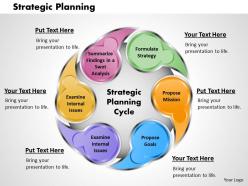
Strategic planning powerpoint presentation slide template





Try Before you Buy Download Free Sample Product
 Impress Your
 Audience
 100%
100% Editable
 Save Hours
 of Time


Our Strategic Planning Powerpoint Presentation Slide Template apply the balm. They can calm frayed nerves.
People who downloaded this PowerPoint presentation also viewed the following :
Strategic planning powerpoint presentation slide template with all 5 slides:
Equip them for change with our Strategic Planning Powerpoint Presentation Slide Template. They facilitate acceptance of alternate approaches.
FAQs for Strategic planning powerpoint
Look, you need four main things: where you're going (vision), specific goals you can actually measure, the steps to get there, and - this is where everyone screws up - regular check-ins to see if it's working. Most strategic plans are basically expensive paperweights because nobody tracks progress. Timeline's gotta be realistic too. Oh, and make sure someone owns each piece, otherwise it just becomes everyone's job which means it's nobody's job. Keep it simple enough that people will actually use it instead of filing it away somewhere. I'd start with your 3-5 biggest priorities and build from there.
Break down your big goals into specific stuff each team can actually measure. Then do regular check-ins - like weekly or monthly - where people have to explain how their current work connects to the bigger picture. Honestly, I've watched so many companies create these fancy strategy decks that just collect dust after the annual meeting. Build simple dashboards that show both day-to-day metrics and strategic progress together. But here's the real test: your performance reviews and budget decisions need to match your strategy, not just whatever fire you're putting out this week.
Look, data analysis is what keeps you from making dumb decisions based on hunches. It shows you the real story - trends, where you actually stand in the market, problems coming your way. I've watched so many people trust their gut and completely miss what's right in front of them. You can set goals that aren't total fantasy and actually track if you're hitting them. Focus on collecting info about your key metrics and how customers behave first. That's where you'll find the good stuff. Oh, and past performance gives you a baseline - way better than just winging it.
Look, you can't just plan stuff based on what you want to happen - the outside world doesn't care about your wishlist. Market changes, competitors doing random things, new regulations... all that stuff directly impacts what moves you can actually make. I learned this the hard way when a client ignored obvious market signals and got crushed. You've got to build scanning the environment into your regular planning routine. Otherwise you're flying blind and will get hit by things you should've seen coming. Short version: your strategy has to dance with reality, not fight it.
Get people from different teams involved - don't just let the executives decide everything in some boardroom. You need to be really honest about what sucks (skip the corporate BS for once). Make sure your opportunities are actually doable, not just pipe dreams. I've seen way too many of these that sound like bad marketing flyers. Focus on stuff that'll actually change how you make decisions. The real value comes when you connect everything - use your strengths to grab opportunities or deal with threats. Oh, and turn whatever you learn into actual steps within two days, otherwise it's pointless.
Ok so first thing - figure out who actually cares about your strategy. Employees, customers, investors, whoever has real stakes in this. Then just ask them stuff! Surveys work, but honestly I think one-on-ones give you way better insights. Do this early though, because trying to squeeze feedback in later is such a pain. Here's the key part everyone messes up: you've got to close the loop. Show people how their input changed things. Even a simple "you said X, so we're doing Y" report makes a huge difference. Otherwise they'll think you just ignored them.
Honestly? Most people mess up by being way too vague about what they actually want to achieve. Plus they forget to loop in the key players from the start - huge mistake. I've watched so many teams create these massive, gorgeous planning documents that literally no one ever opens again lol. Build in some checkpoints to track how things are going, otherwise you're just writing fiction. Oh and don't try planning for every weird scenario that might happen. You'll lose your mind. Keep it simple, make sure people can actually act on it, and stay flexible because stuff always changes anyway.
Look, most places do their big strategic review once a year, but that's honestly not enough. You'll want to check in quarterly - just quick pulse checks to see if you're still on track or if the market's gone sideways. Save the heavy stuff for that annual review where you actually reassess goals and maybe pivot based on what worked (or didn't). But here's the thing - if something major hits like a recession or new competitor, screw the schedule. Jump on it right away. I'd set up those quarterly check-ins now and block out time for the deep annual dive.
Honestly, the data analytics alone will save you so much headache - you'll actually see patterns instead of guessing. Real-time dashboards are clutch too. AI catches trends you'd probably miss, and project management tools beat updating spreadsheets any day (trust me on this one). Cloud platforms let everyone chip in from wherever, which is huge for getting different departments involved. Don't go crazy with multiple systems though. Pick one solid platform that handles planning, tracking, and team communication all in one place. Way less messy that way.
Honestly, you've gotta track the numbers that actually matter to your goals - revenue, market share, customer satisfaction, whatever fits your strategy. Don't get sucked into measuring random stuff just because it's easy to track (learned that one the hard way). Check your milestones quarterly and see if your team's still bought into the plan. The qualitative stuff matters too - does everyone feel like they're rowing in the same direction? If the data's telling you something's off, don't be stubborn about pivoting. Better to course-correct early than stick with something that's clearly not working.
Honestly, emails just get buried these days, so go multi-channel with this. Have leadership do town halls and cascade it down through team meetings. Back that up with visual stuff - infographics, one-pagers that people can actually scan quickly. Make it interactive on your intranet, maybe run some pulse surveys to see if it's actually landing. The biggest thing though? Show people how their specific job connects to the bigger picture. Otherwise it's just corporate noise. Keep repeating the message in different ways and make sure your managers can explain it without sounding like robots.
So the biggest thing is you're not chasing profit - you're measuring actual impact instead. Like how many people you helped vs quarterly numbers. Funding gets messy too since you're dealing with grants and donations rather than just selling stuff. Oh and stakeholders? Way more complicated. You've got donors, the people you're serving, board members, volunteers - everyone wants something different. Companies have it easier honestly, everyone just wants to make money. When you're planning, take way more time figuring out what "success" actually means for your mission. And yeah, prepare for lots more meetings to keep everyone happy.
Honestly, leadership makes or breaks everything. They're the difference between a strategy that actually happens and one that just collects dust. Your leaders have to champion the vision and put their money where their mouth is - literally allocating resources and keeping people focused when chaos hits. And trust me, it always does. The best part? They need to walk the walk, not just talk strategy all day. I've seen too many brilliant plans die because leadership got excited about creating them but couldn't be bothered to execute. Real commitment matters way more than fancy presentations.
Honestly, make it part of regular conversations instead of those painful annual retreats everyone dreads. Get people asking "why" and "what if" in meetings - but here's the thing, you actually have to reward them when they do it. Too many places claim they want fresh thinking then panic when someone suggests something bold. Maybe try monthly brainstorming sessions where ideas can breathe without the "how do we implement this tomorrow" pressure. Short sessions work better anyway. Model it yourself by thinking out loud about where decisions might lead us. Show you're genuinely curious about different approaches, not just fishing for validation of what you already decided.
Honestly, globalization changes everything about strategic planning. You can't just focus on your local competitors anymore - some startup from halfway across the world could completely disrupt your industry. Supply chains get way more complicated too, especially when you're dealing with different regulations in every country. Cultural stuff is trickier than people think. What's brilliant in the US might be a total disaster in Japan. But the flip side? You get access to amazing talent everywhere and can tap into markets you never considered before. My take: build flexibility into everything you do. Geopolitical chaos is basically guaranteed at this point, so you need backup plans for your backup plans.
-
Great quality product.
-
Awesome use of colors and designs in product templates.
-
Very Good