


Strategic Management Powerpoint Presentation Slides
Strategic management PowerPoint presentation slides provide reliable solutions for a systematic approach to business management. Following PowerPoint designs, involves the formulation and implementation of the major objectives and initiatives taken by an association's top management. Well researched topics with engaging graphics have been scripted here for an evaluation of the internal and external environments in which the organization works. Topics included here are, executive summary, mission vision values, management board organization chart, targets for the next business quarter, establish a value proposition, establish a value proposition, marketing plan objective, identifying new market channels, brand promotion strategies for engagement, focus on your strength, look to your competition, product feature comparison, annual, revenue financial summary, sales and performance dashboard and financial projections. These headings are scripted for a constant planning, monitoring, analysis and assessment for an organization to meet its goals and objectives. Further funding, hr services and operation plan deciding team initiates and strategies PPT slides are also included with chart sheets, timeline review, bar, and graphs PPT design for a comprehensive approach. Our Strategic Management Powerpoint Presentation Slides will grow upon you. You will definitely get fond of them.
Strategic management PowerPoint presentation slides provide reliable solutions for a systematic approach to business manage..















-

- Google Slides is a new FREE Presentation software from Google.
- All our content is 100% compatible with Google Slides.
- Just download our designs, and upload them to Google Slides and they will work automatically.
- Amaze your audience with SlideTeam and Google Slides.
-

Want Changes to This PPT Slide? Check out our Presentation Design Services
-

- WideScreen Aspect ratio is becoming a very popular format. When you download this product, the downloaded ZIP will contain this product in both standard and widescreen format.
-

- Some older products that we have may only be in standard format, but they can easily be converted to widescreen.
- To do this, please open the SlideTeam product in Powerpoint, and go to
- Design ( On the top bar) -> Page Setup -> and select "On-screen Show (16:9)” in the drop down for "Slides Sized for".
- The slide or theme will change to widescreen, and all graphics will adjust automatically. You can similarly convert our content to any other desired screen aspect ratio.
Compatible With Google Slides

Get This In WideScreen
You must be logged in to download this presentation.


Do you want to remove this product from your favourites?
PowerPoint presentation slides
These PPT slides are well compatible with Google slides and can be easily transformed into PDF or JPG formats. Employees can use this slide for strategic management related presentations. The user can customize these slides with respect to color, size, fonts, text, and images. Download in one step and compatible with Google slides.

People who downloaded this PowerPoint presentation also viewed the following :
Content of this Powerpoint Presentation
Slide 1: This slide introduces Strategic Management with an imagery. State Your Company Name and begin.
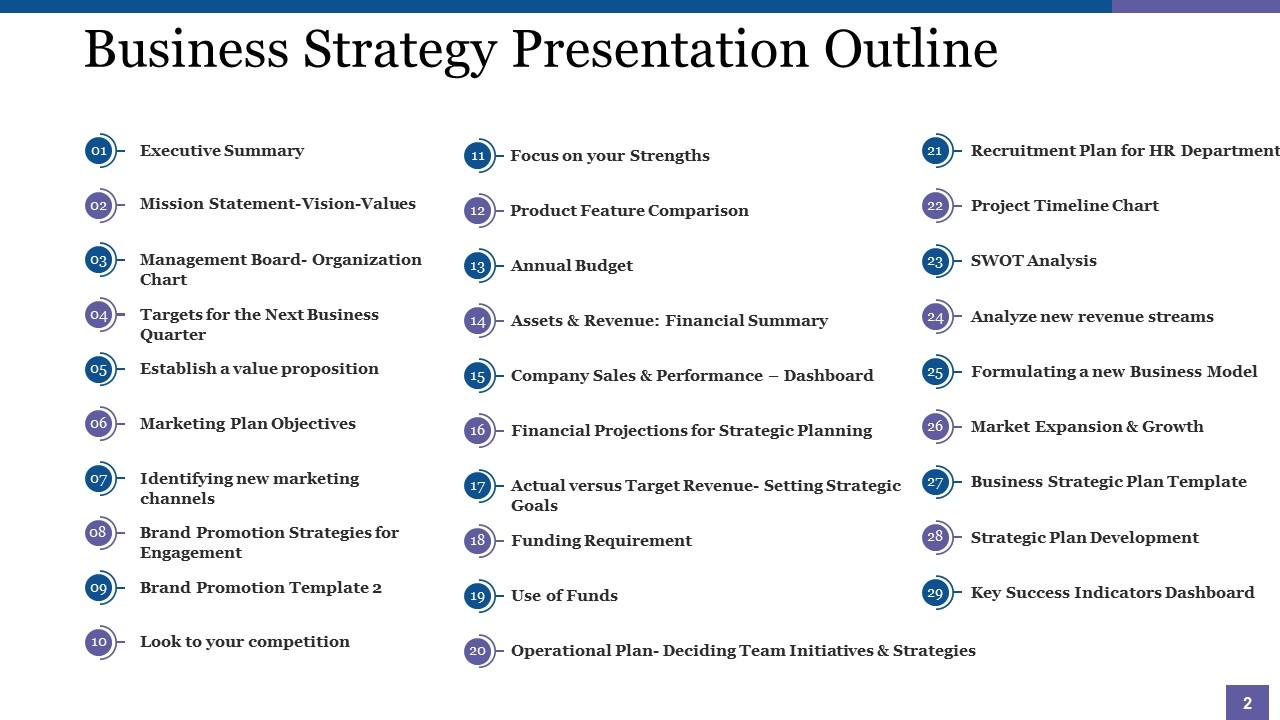
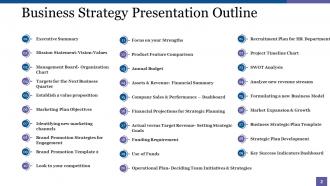
Slide 2: This slide presents Business Strategy Presentation Outline with the following points- Executive Summary, Mission Statement-Vision-Values, Management Board- Organization Chart, Targets for the Next Business Quarter, Establish a value proposition, Marketing Plan Objectives, Identifying new marketing channels, Brand Promotion Strategies for Engagement, Brand Promotion Template 2, Look to your competition, Focus on your Strengths, Product Feature Comparison, Annual Budget, Assets & Revenue: Financial Summary, Company Sales & Performance – Dashboard, Financial Projections for Strategic Planning, Actual versus Target Revenue- Setting Strategic Goals, Funding Requirement, Use of Funds, Operational Plan- Deciding Team Initiatives & Strategies, Recruitment Plan for HR Department, Project Timeline Chart, SWOT Analysis, Analyze new revenue streams, Formulating a new Business Model, Market Expansion & Growth, Business Strategic Plan Template, Strategic Plan Development, Key Success Indicators Dashboard.
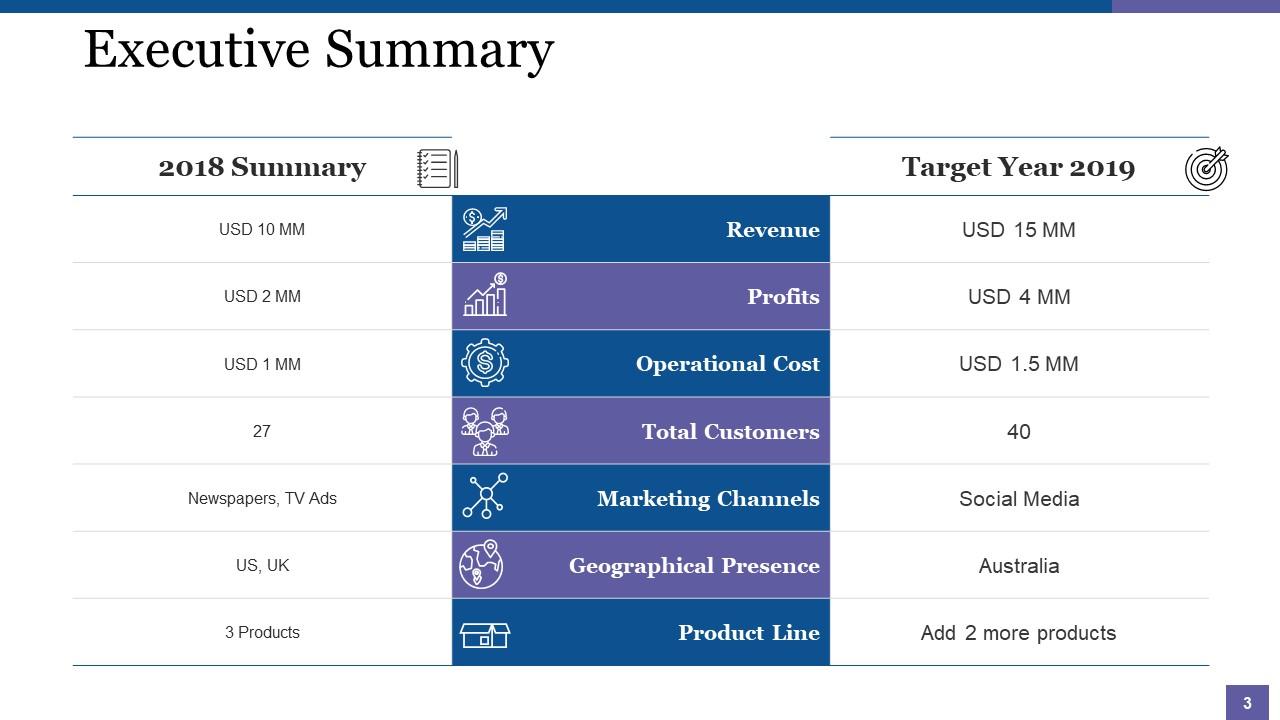
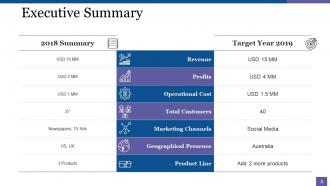
Slide 3: This slide presents an Executive Summary.
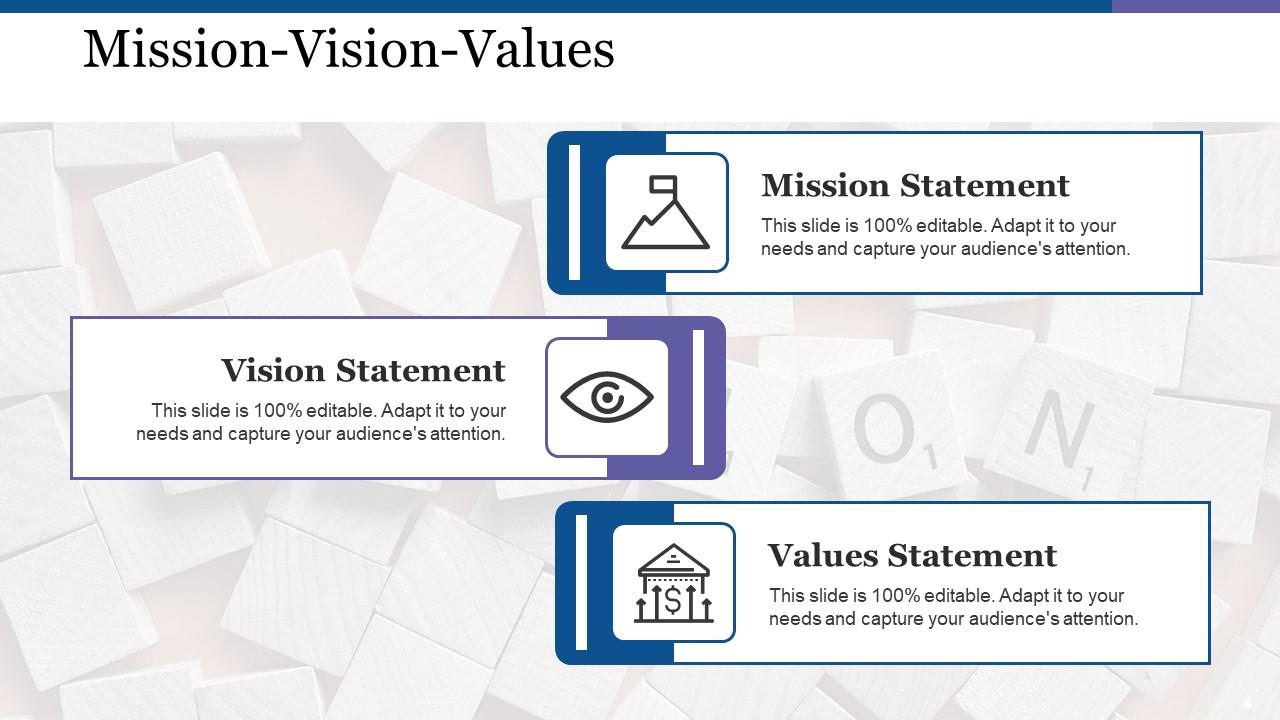
Slide 4: This is a Mission-Vision-Values slide. State them here.
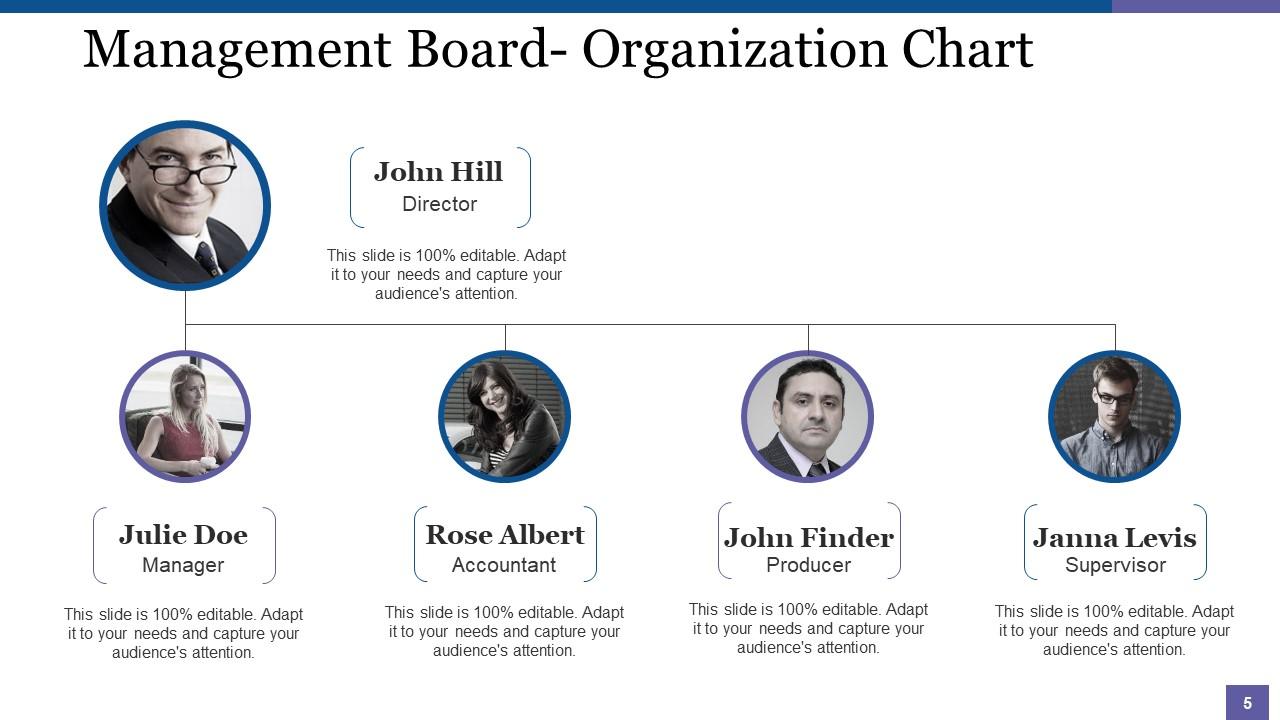
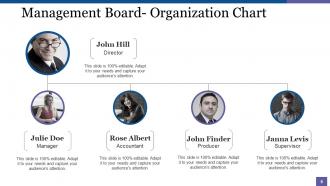
Slide 5: This is Management Board- Organization Chart slide with name, designation and image box to go with.
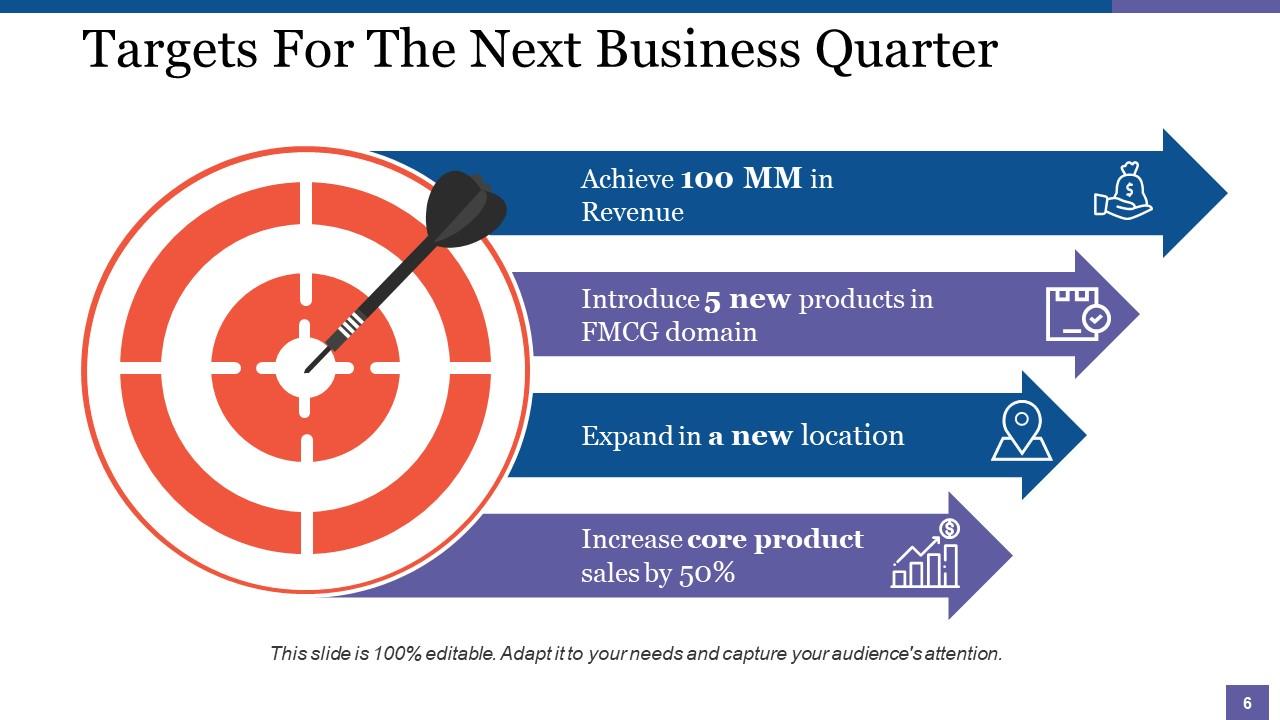
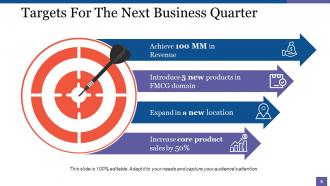
Slide 6: This is a Target For The Next Business Quarter slide to show targets, goals etc.
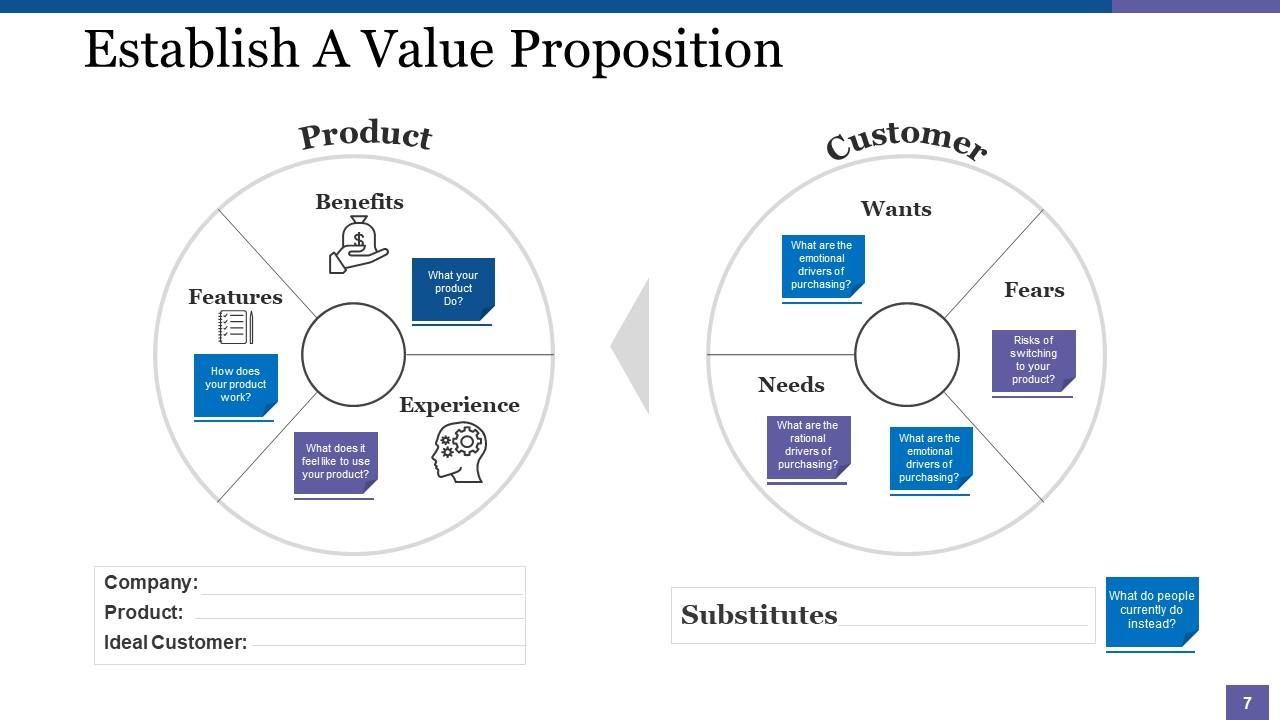
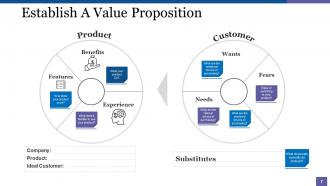
Slide 7: This slide presents Establish A Value Proposition for Customer (Wants, Fears, Needs) Product (What your product Do?) Benefits (How does your product work?) Features (What does it feel like to use your product?) Experience (What do people currently do instead?)
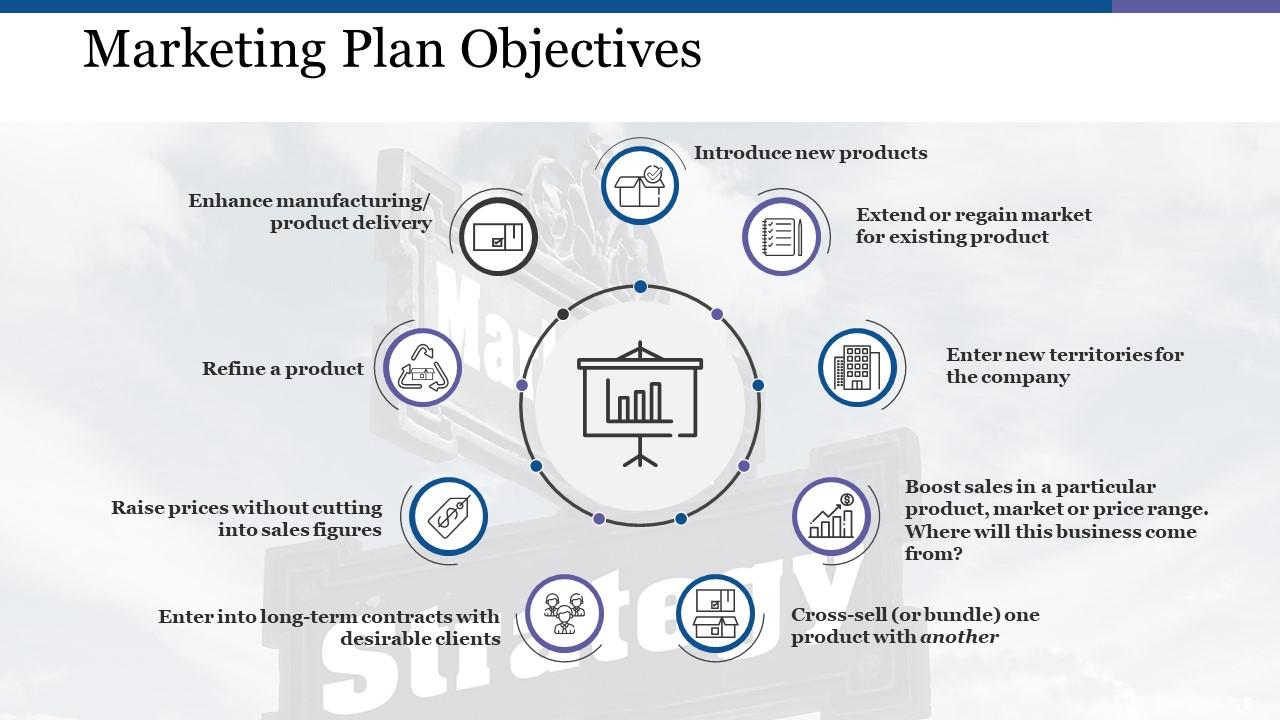
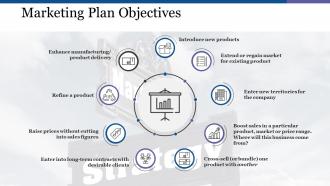
Slide 8: This slide displays Marketing Plan Objectives such as- Introduce new products, Extend or regain market for existing product, Enter new territories for the company, Boost sales in a particular product, market or price range. Where will this business come from? Cross-sell (or bundle) one product with another, Enter into long-term contracts with desirable clients, Raise prices without cutting into sales figures, Refine a product, Enhance manufacturing/ product delivery.
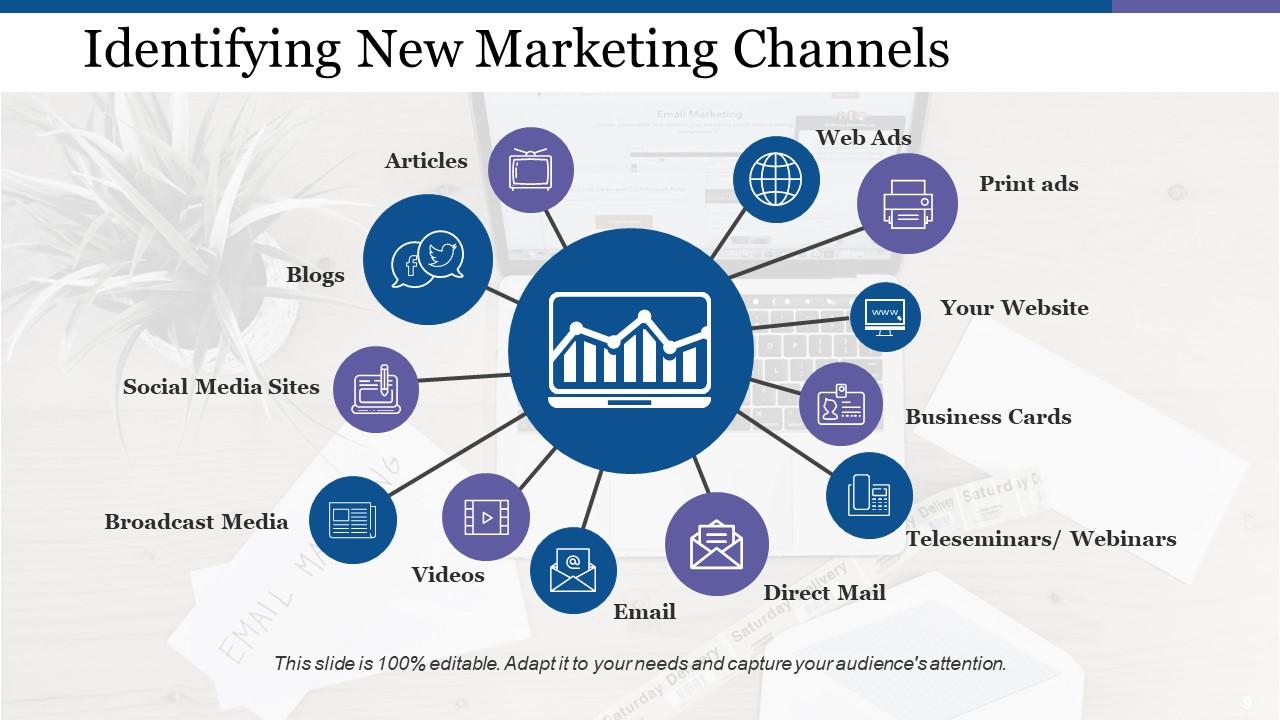
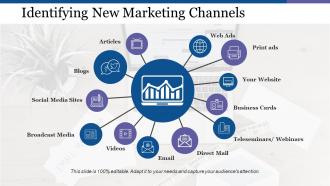
Slide 9: This slide shows Identifying New Marketing Channels such as- Web Ads, Print ads, Your Website, Business Cards, Teleseminars/ Webinars, Direct Mail, Email, Videos, Articles, Social Media Sites, Blogs, Broadcast Media.
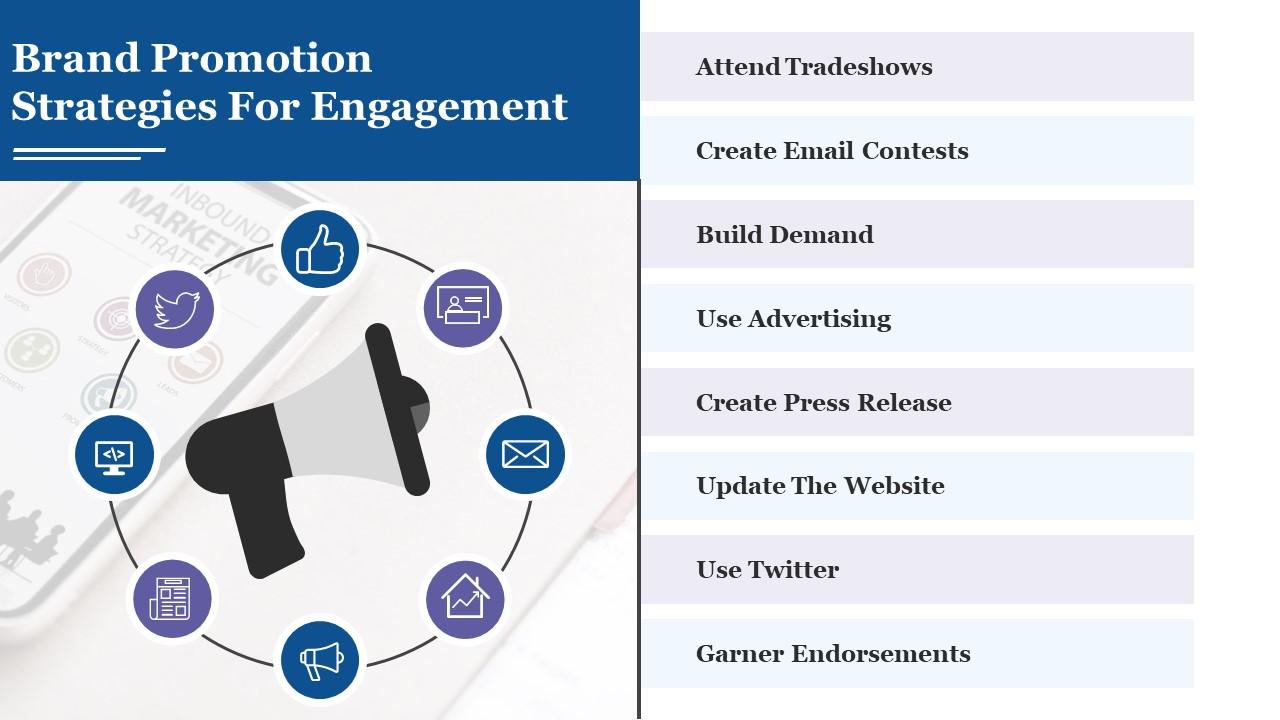
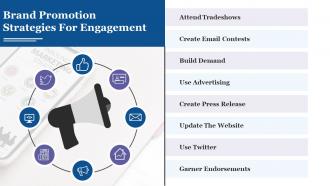
Slide 10: This slide showcases Brand Promotion Strategies For Engagement such as- Attend Tradeshows, Create Email Contests, Build Demand, Use Advertising, Create Press Release, Update The Website, Use Twitter, Garner Endorsements.
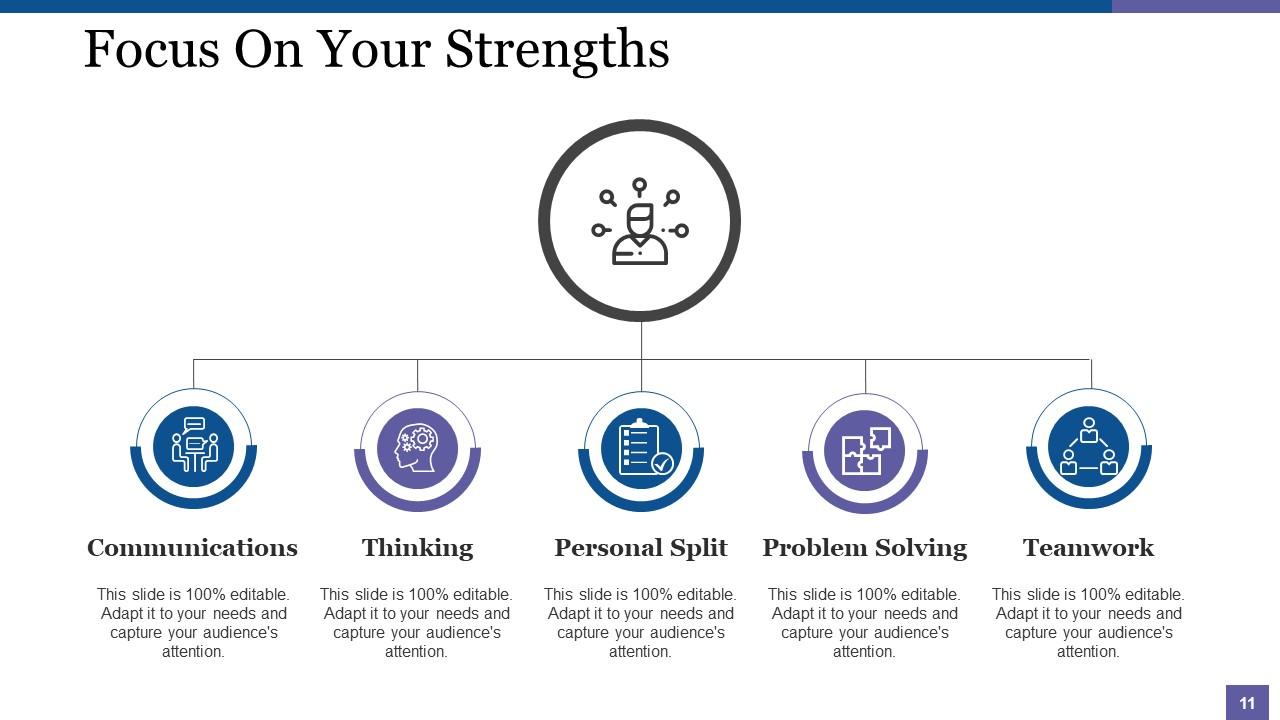
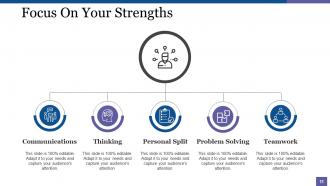
Slide 11: This slide showcases Focus On Your Strengths for better market results. The areas to focus are- Communications, Thinking, Personal Split, Problem Solving, Teamwork.
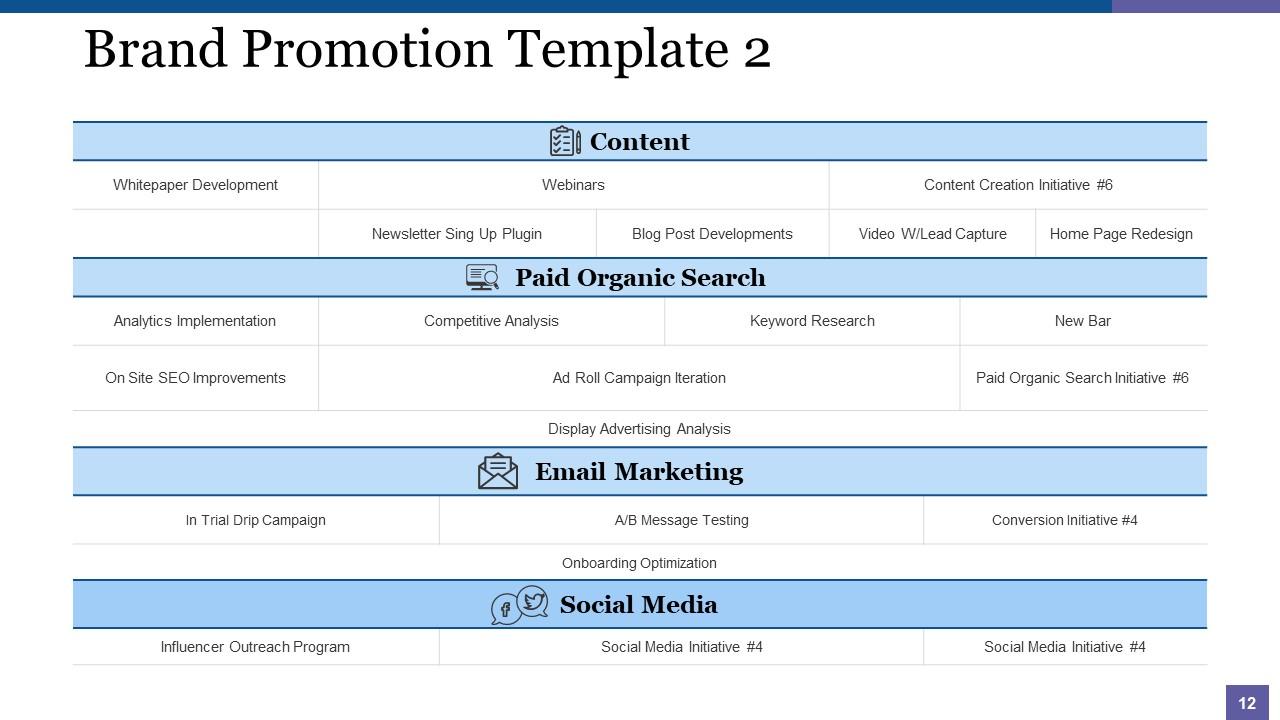
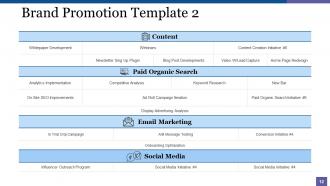
Slide 12: This slide showcases a Brand Promotion Template.
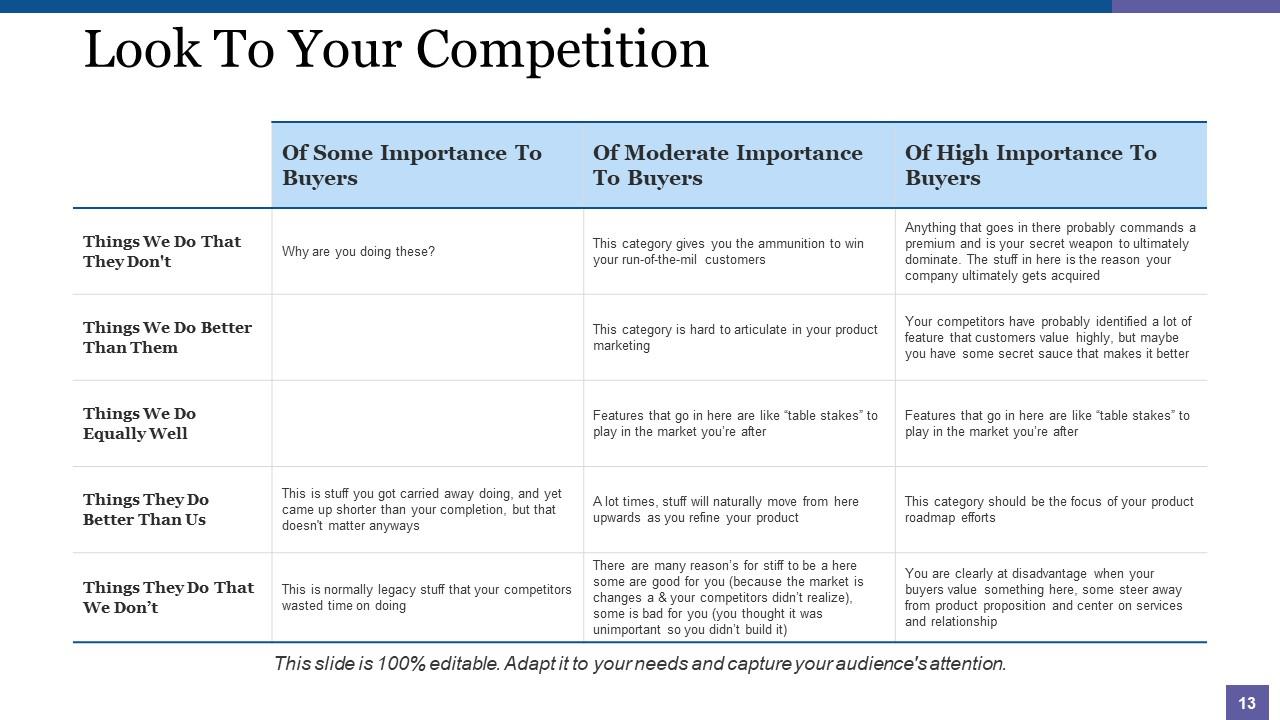
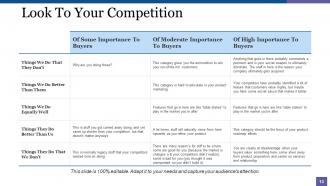
Slide 13: This slide presents Look To Your Competition in tabular form.
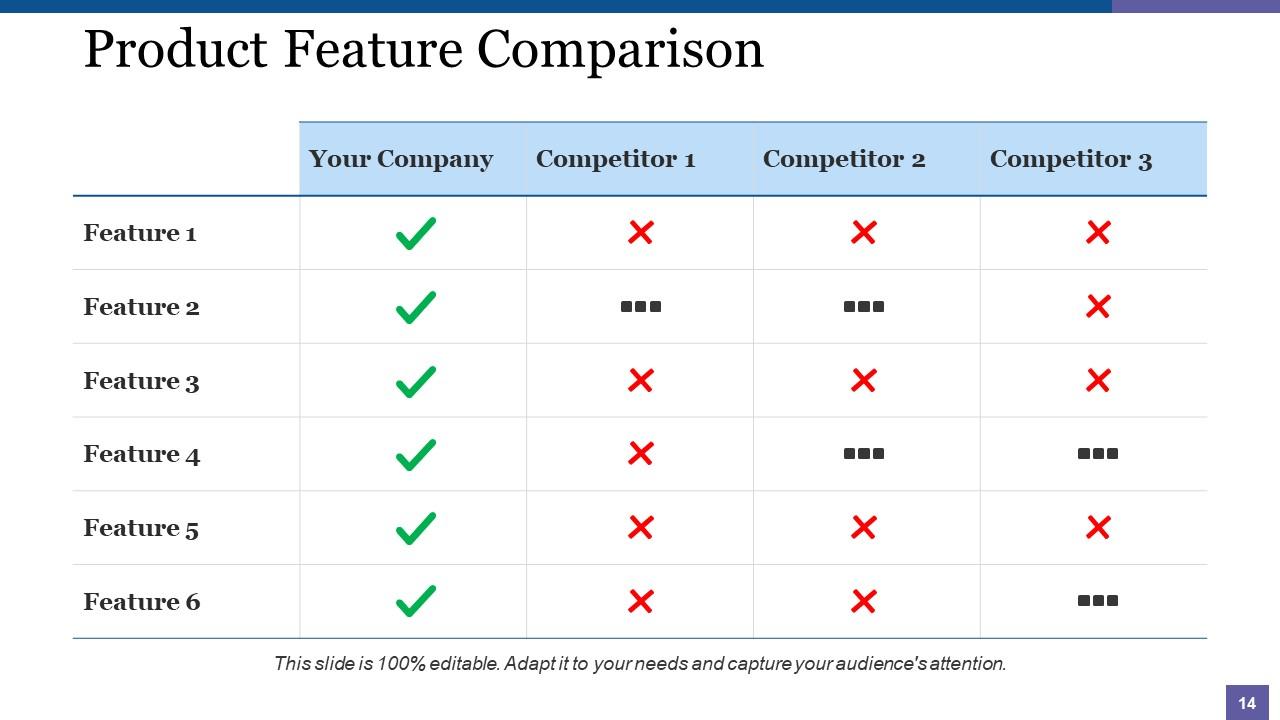
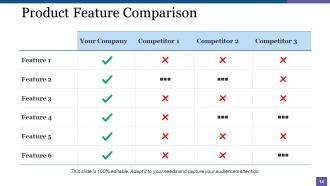
Slide 14: This slide showcases a Product Feature Comparison table.
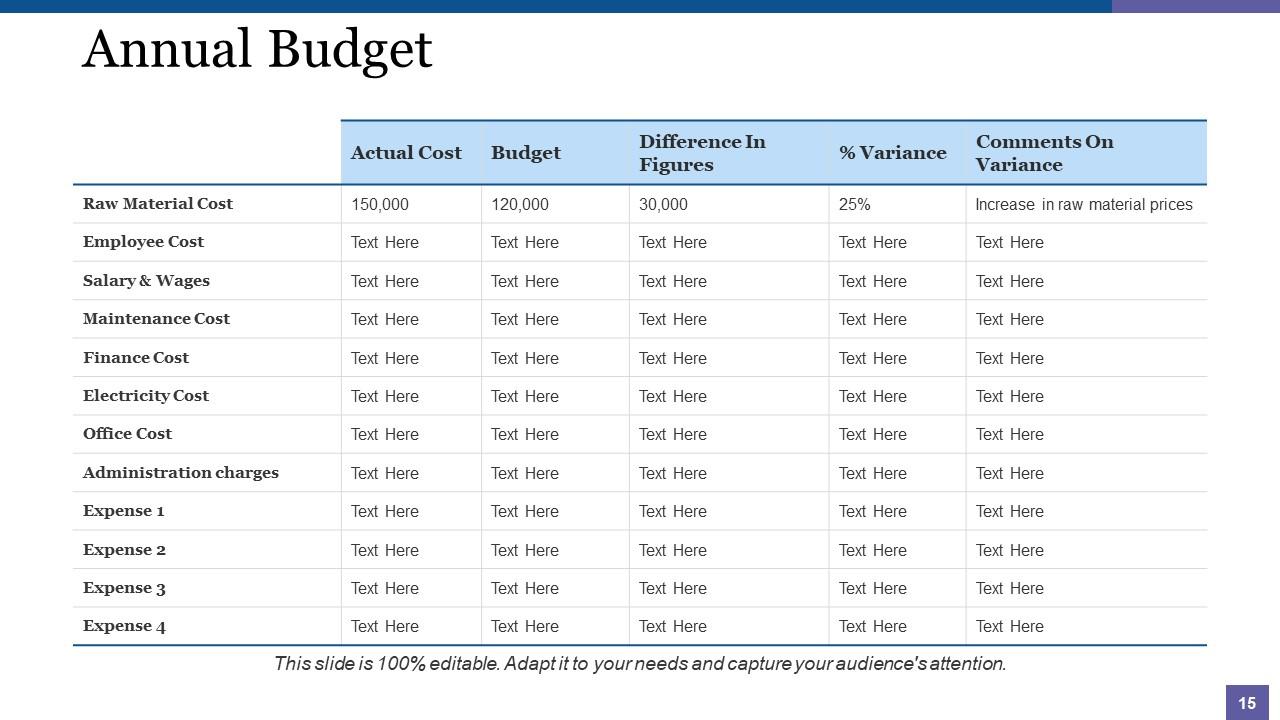
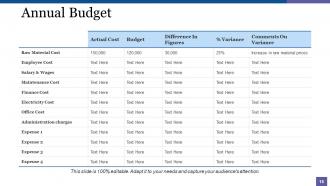
Slide 15: This slide presents Annual Budget for planning.
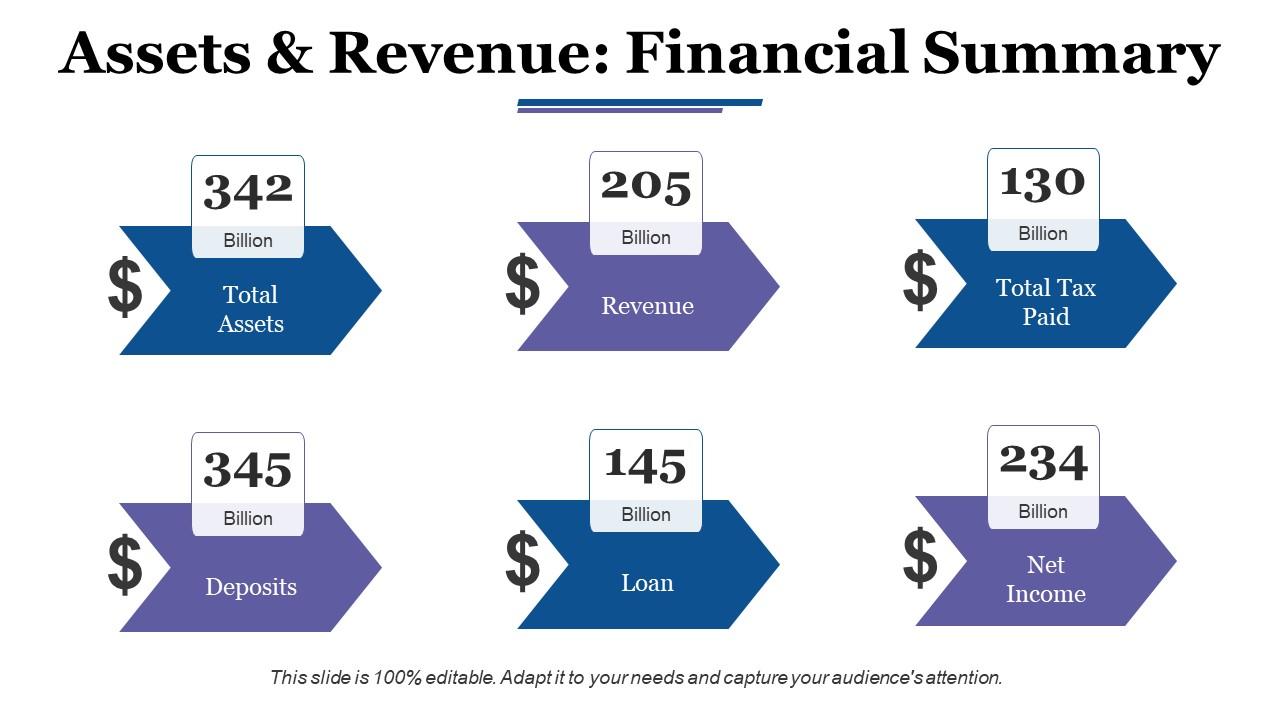
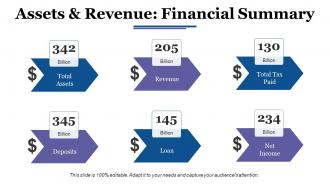
Slide 16: This slide showcases Assets & Revenue: Financial Summary with the following points- Total Assets, Revenue, Total Tax Paid, Deposits, Loan, Net Income.
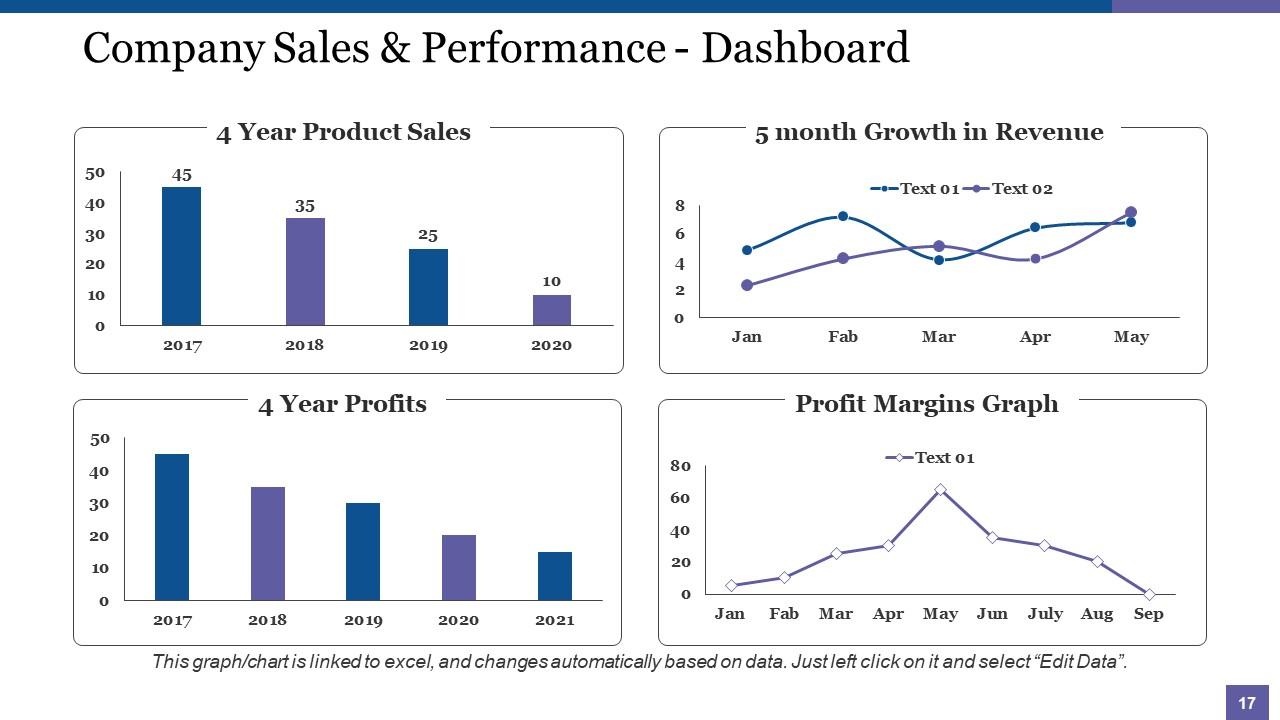
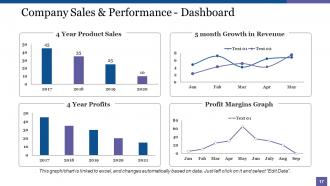
Slide 17: This slide presents Company Sales & Performance - Dashboard with Profit Margins Graph, Product Sales, Growth in Revenue and Profits.
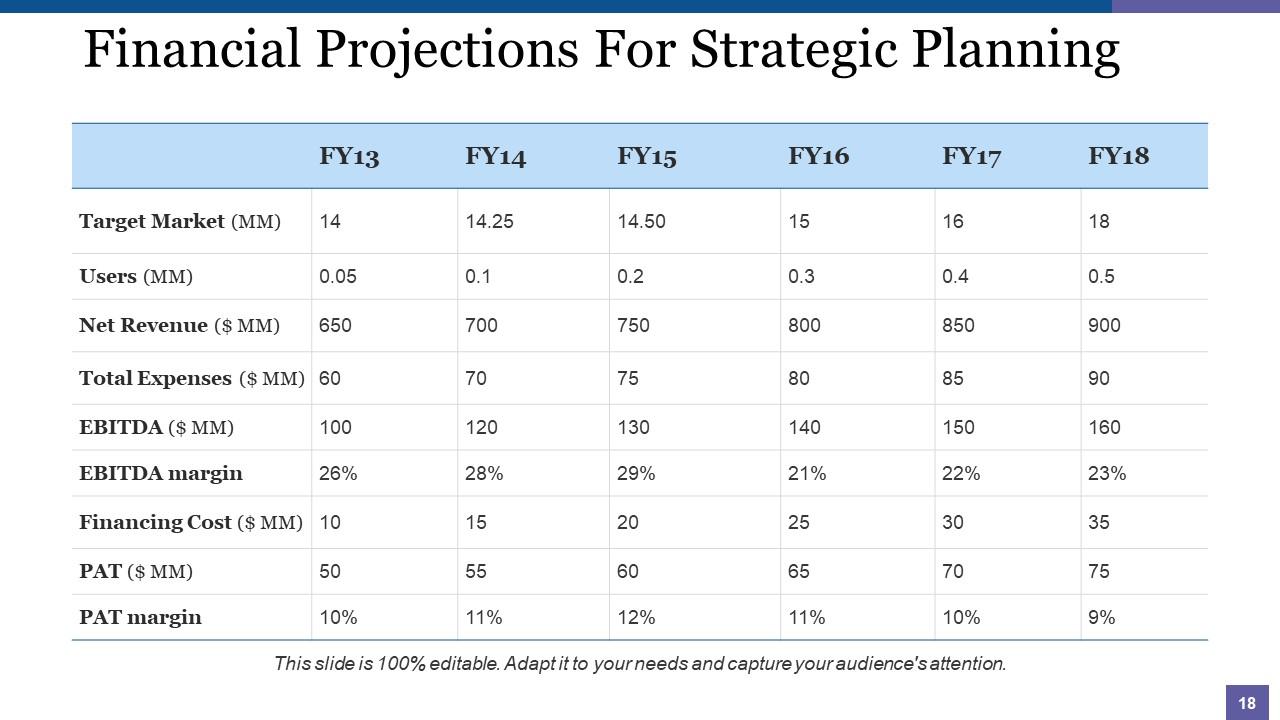
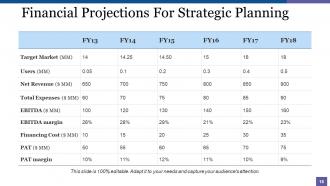
Slide 18: This slide presents Financial Projections For Strategic Planning in tabular form.
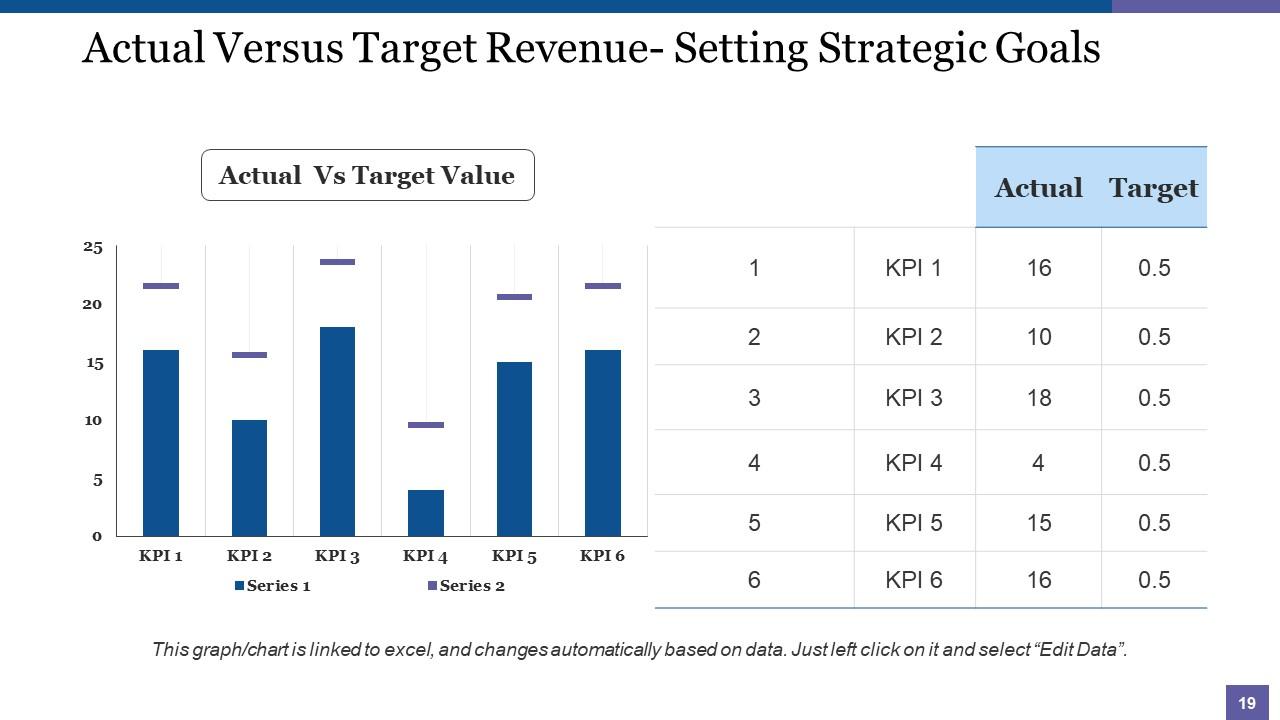
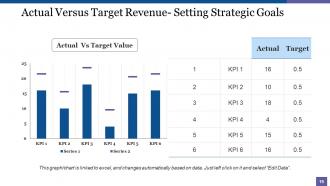
Slide 19: This slide showcases Actual Versus Target Revenue- Setting Strategic Goals in graph form.
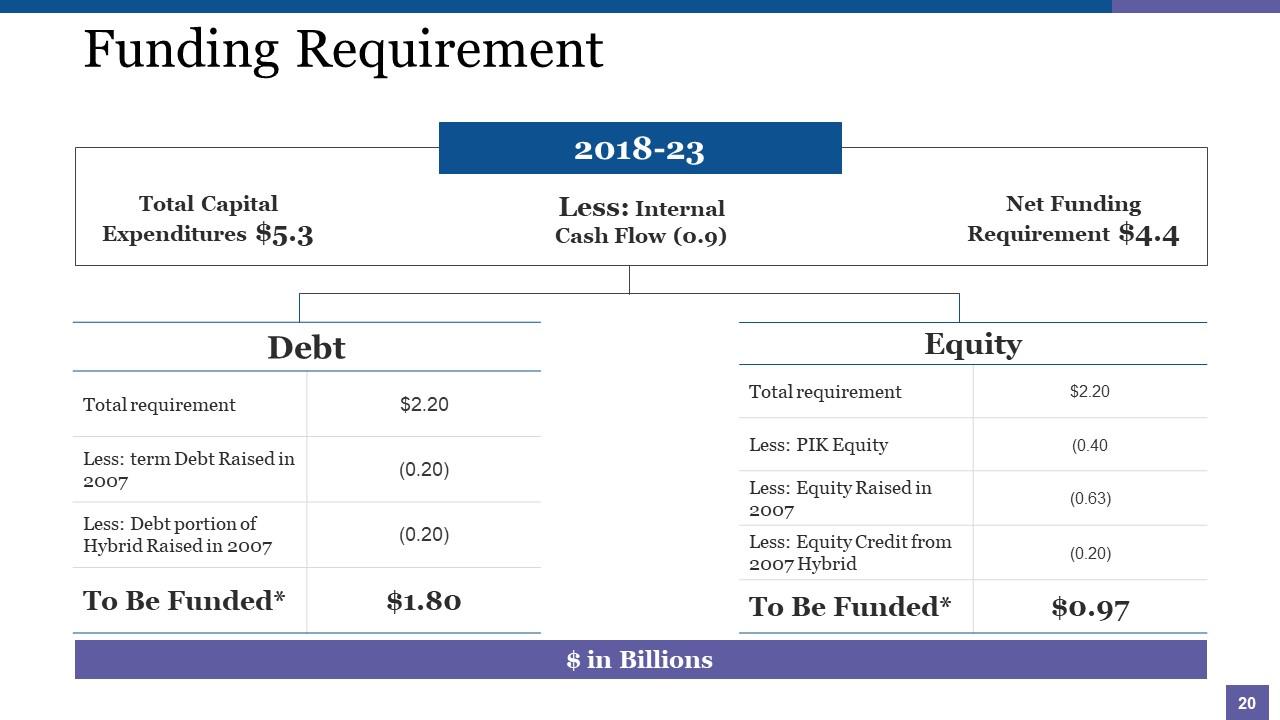
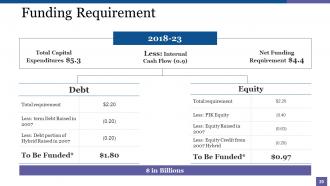
Slide 20: This slide shows Funding Requirement with the following points- Total Capital Expenditures, Less: Internal Cash Flow, Net Funding Requirement.
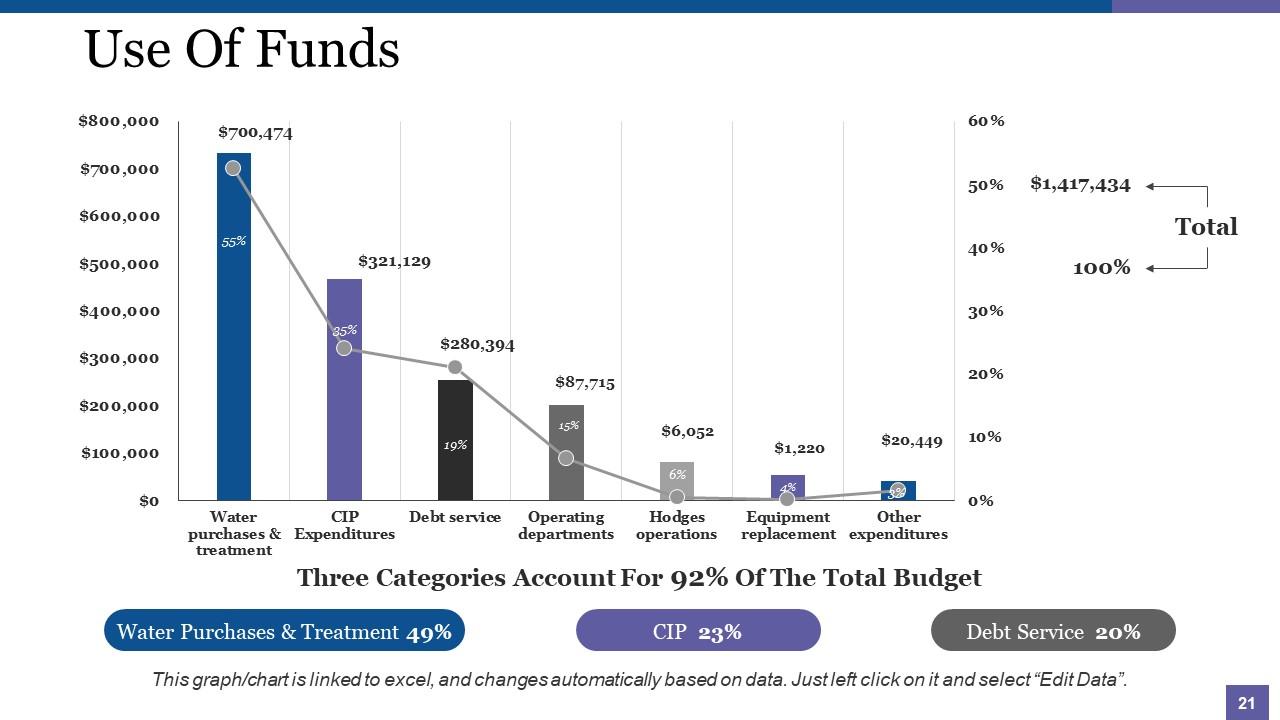
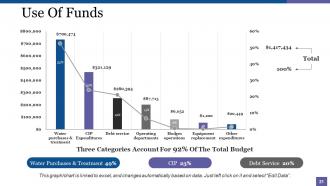
Slide 21: This slide displays Use Of Funds in graph form.
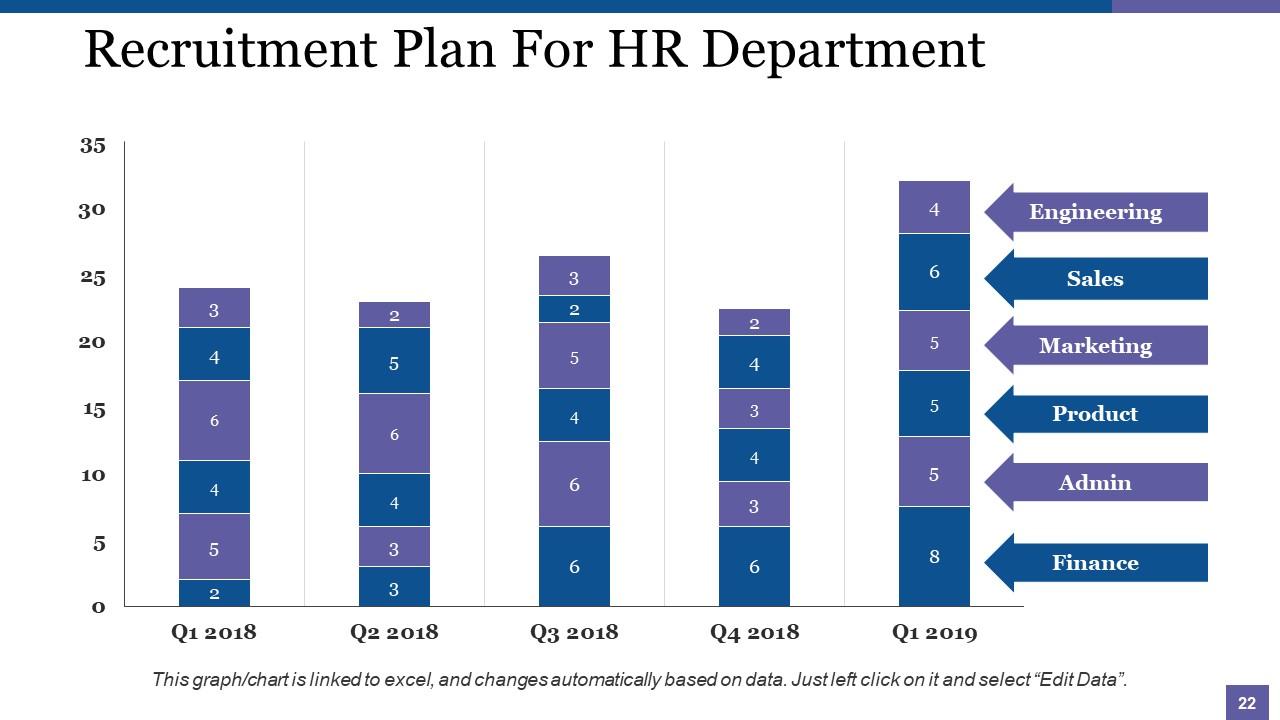
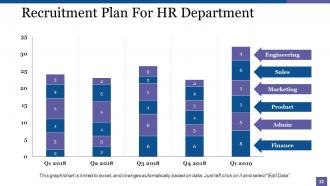
Slide 22: This slide presents Recruitment Plan For HR Department comprising of- Engineering, Finance, Admin, Product, Marketing, and Sales departments.
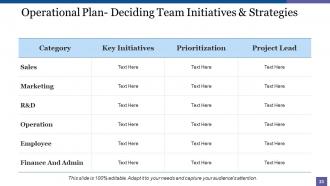
Slide 23: This slide showcases an Operational Plan- Deciding Team Initiatives & Strategies in tabular form.
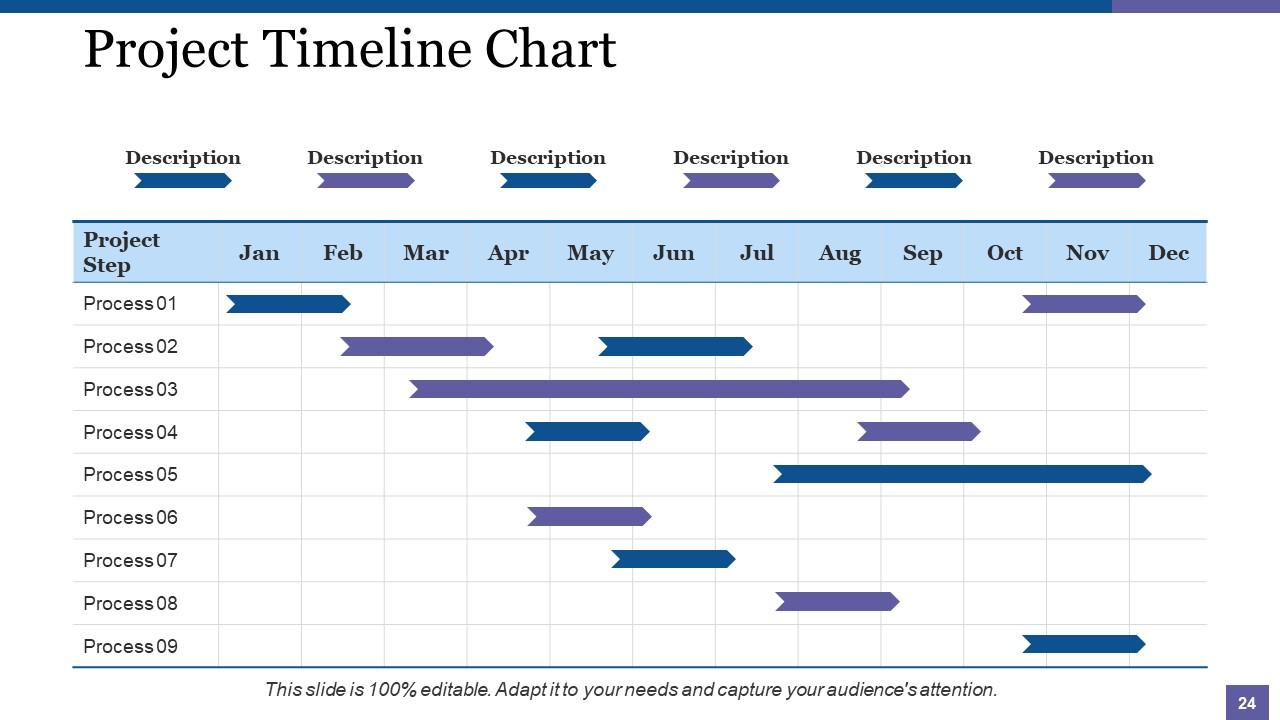
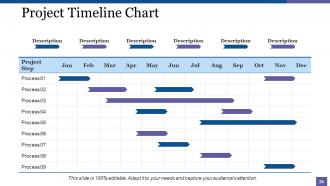
Slide 24: This slide displays a Project Timeline Chart. Present milestones, highlighting factors etc. here.
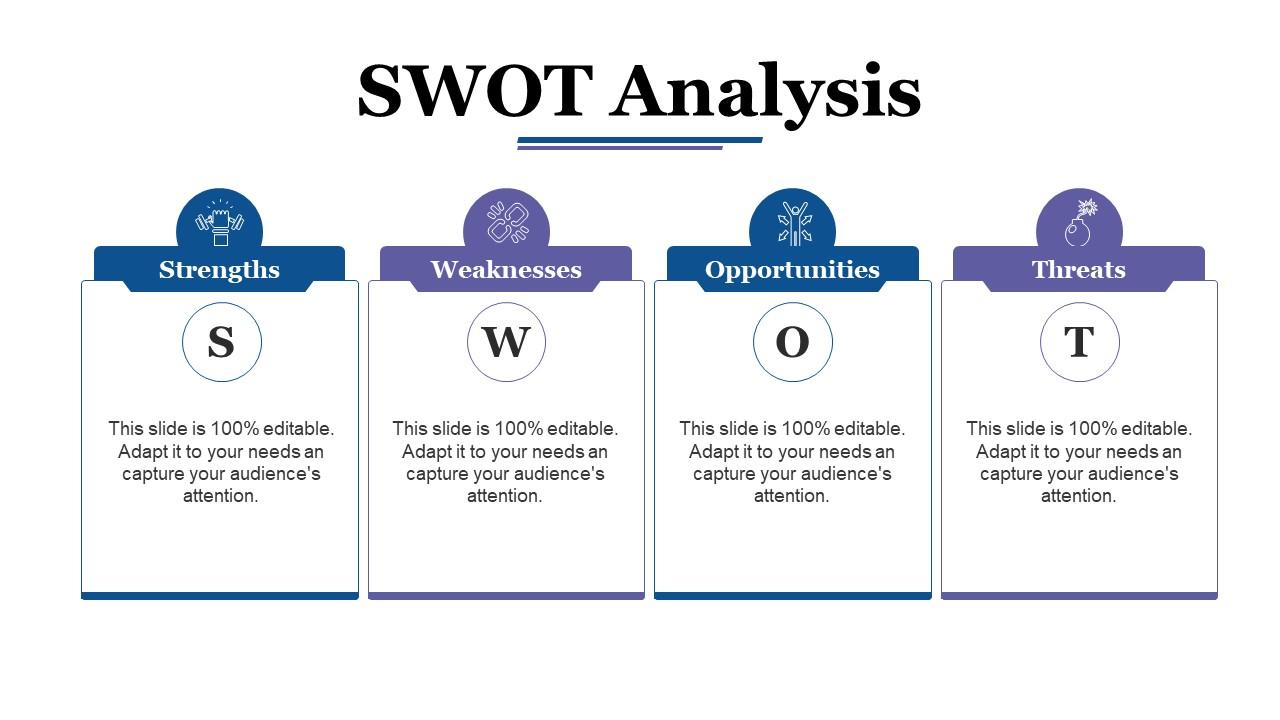
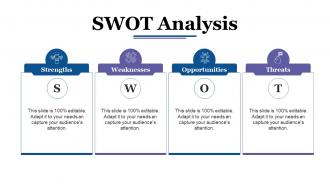
Slide 25: This is a SWOT analysis slide.
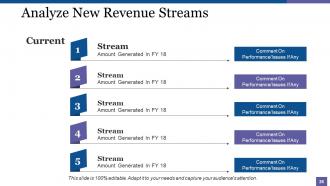
Slide 26: This slide showcases Analyze New Revenue Streams with Streams and Comments.
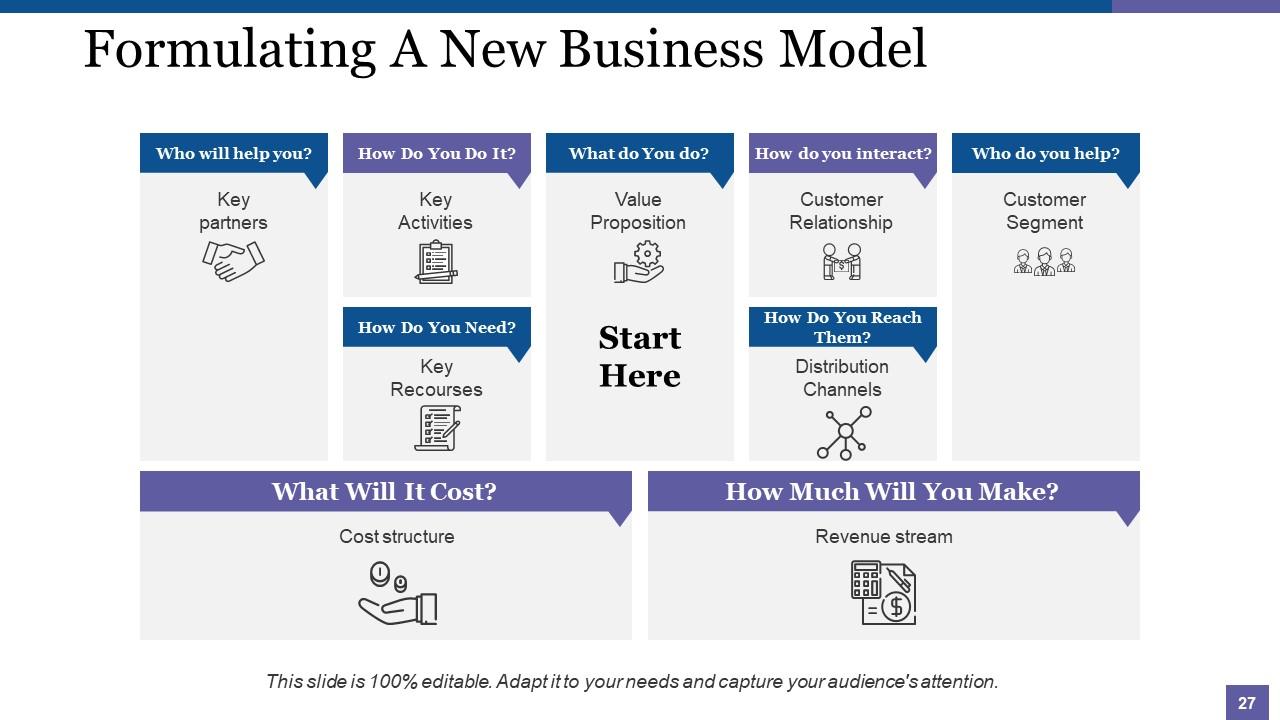
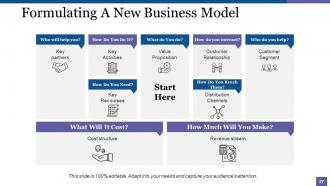
Slide 27: This slide displays Formulating A New Business Model with the following points- How Much Will You Make? Revenue stream What Will It Cost? Cost structure Who will help you? Key partners How Do You Do It? Key Activities How do you interact? Customer Relationship Who do you help? Customer Segment How Do You Reach Them? Distribution Channels How Do You Need? Key Recourses What do You do? Value Proposition.
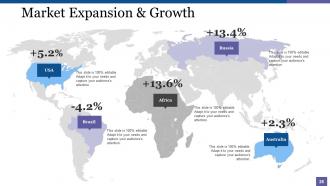
Slide 28: This slide presents Market Expansion & Growth on a world map image to state global specifications.
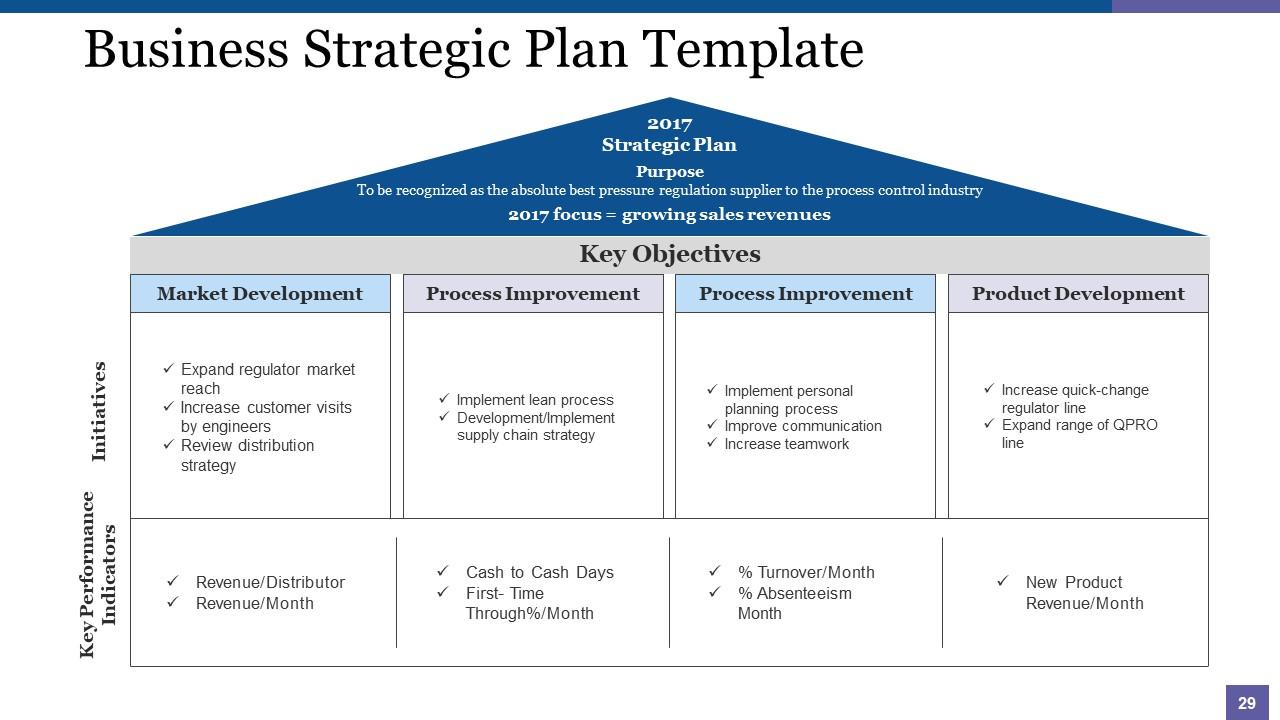
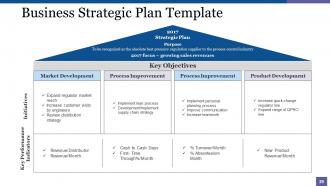
Slide 29: This slide shows a Business Strategic Plan Template with- Strategic Plan, Purpose, Key Objectives, Market Development, Process Improvement, Process Improvement, Product Development.
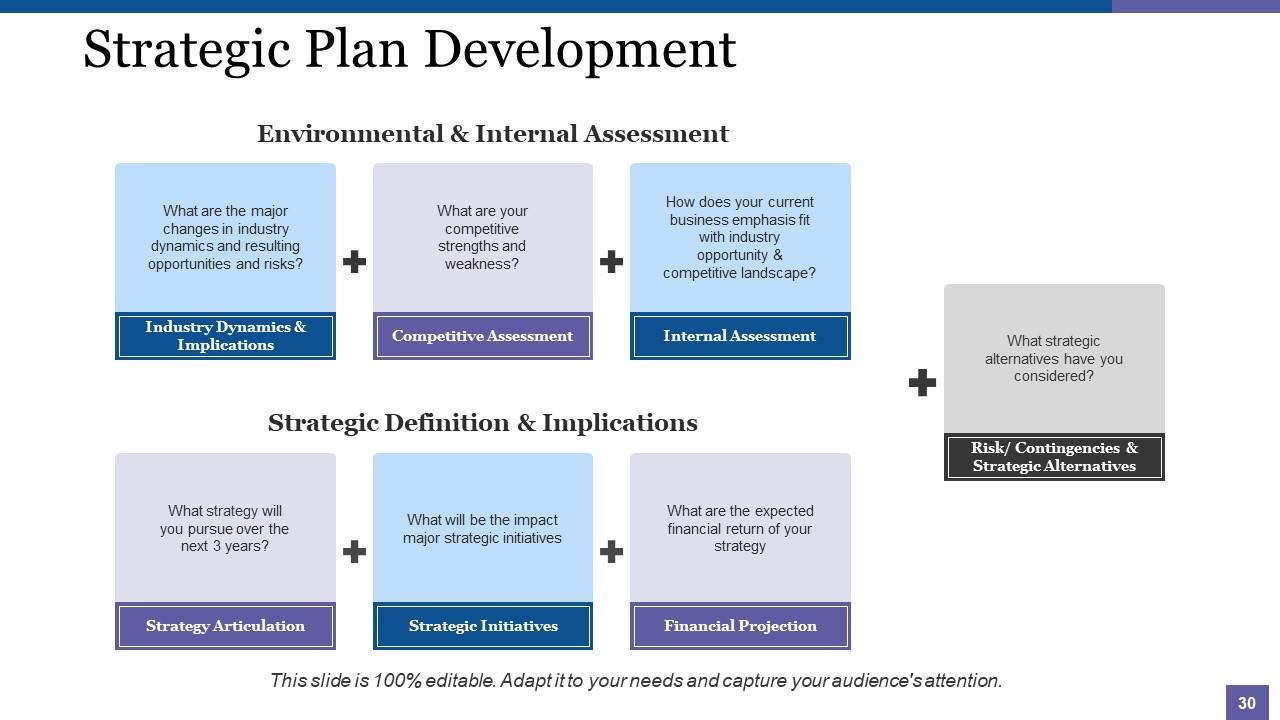
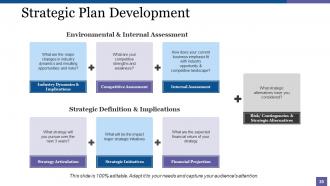
Slide 30: This slide shows Strategic Plan Development with the subheadings- Environmental & Internal Assessment: (Industry Dynamics & Implications What are the major changes in industry dynamics and resulting opportunities and risks? Competitive Assessment What are your competitive strengths and weakness? Internal Assessment How does your current business emphasis fit with industry opportunity & competitive landscape?) Strategic Definition & Implications: (Strategy Articulation What strategy will you pursue over the next 3 years? Strategic Initiatives What will be the impact major strategic initiatives Financial Projection What are the expected financial return of your strategy Risk/ Contingencies & Strategic Alternatives What strategic alternatives have you considered?)
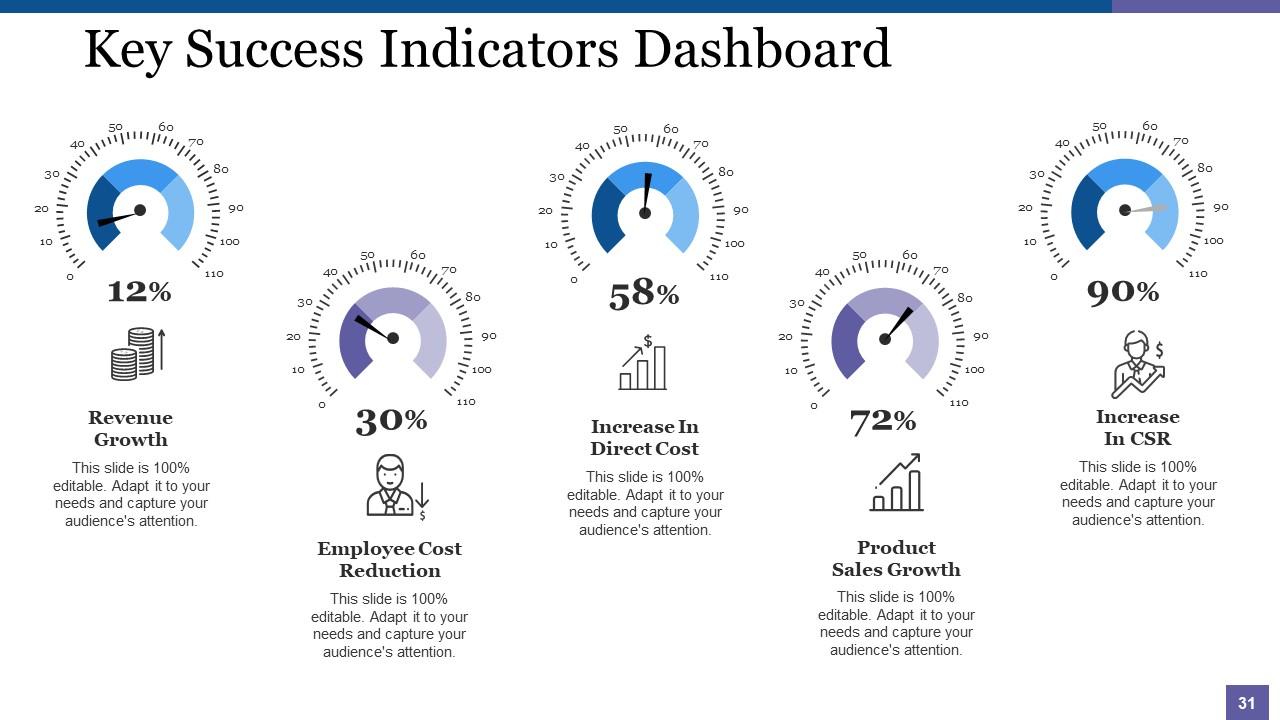
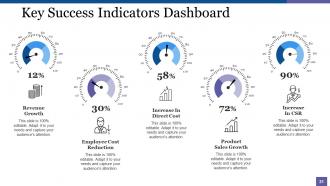
Slide 31: This slide presents Key Success Indicators Dashboard displaying- Revenue Growth, Increase In Direct Cost, Product, Sales Growth, Employee Cost Reduction, Increase In CSR.
Slide 32: This is a Strategic Management Icons Slide. Use the icons as per need.
Slide 33: This is a Coffee Break slide to halt. You can change the slide content as per need.
Slide 34: This slide is titled Charts & Graphs for moving forward. You can change the slide content as per need.
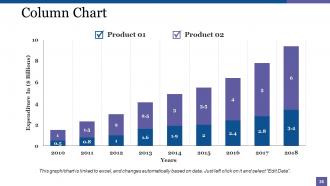
Slide 35: This is a Column Chart slide for product/entity comparison, specifications etc.
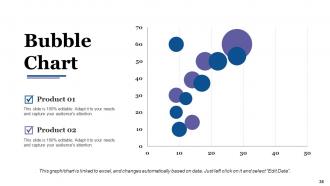
Slide 36: This is a Bubble Chart slide to show product/entity comparison, specifications etc.
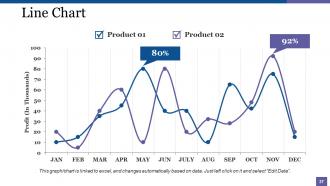
Slide 37: This is a Line Chart slide for product/entity comparison, specifications etc.
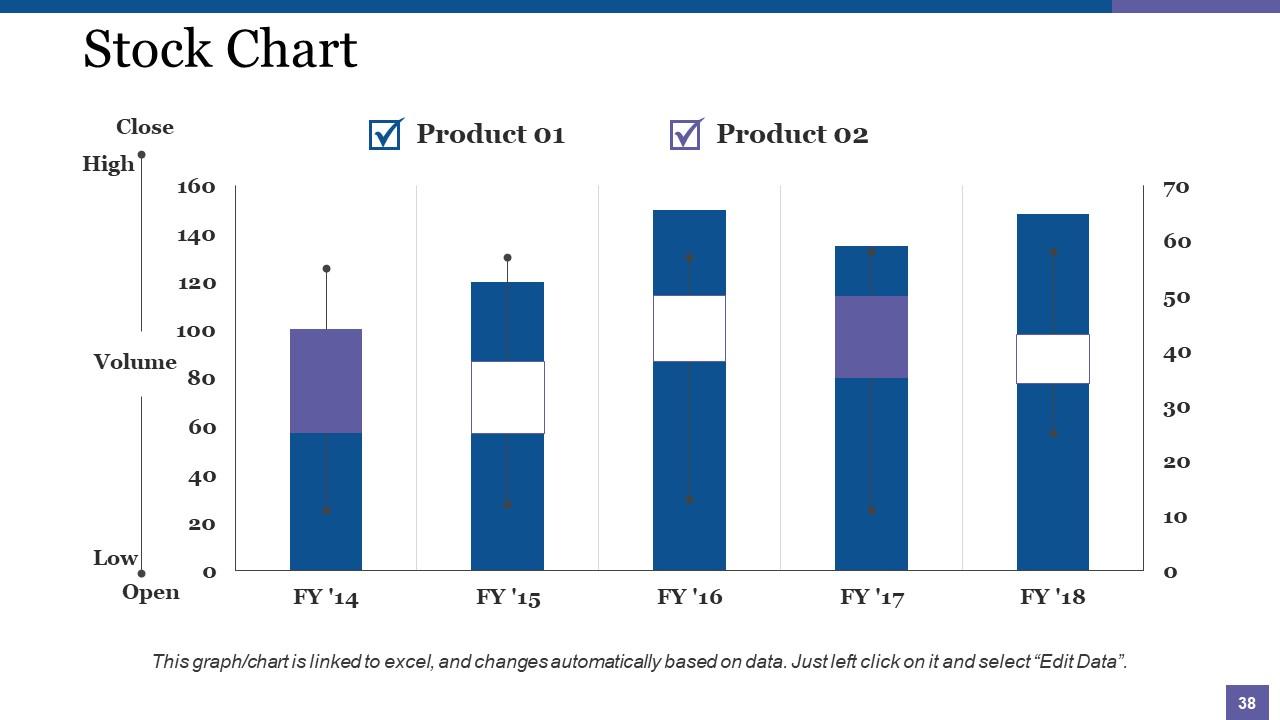
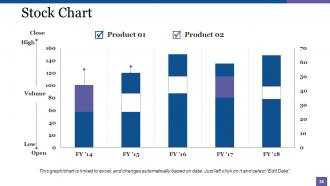
Slide 38: This is a Stock Chart slide for product/entity comparison, specifications etc.
Slide 39: This slide is titled Additional Slides to move forward. You can change the slide content as per need.
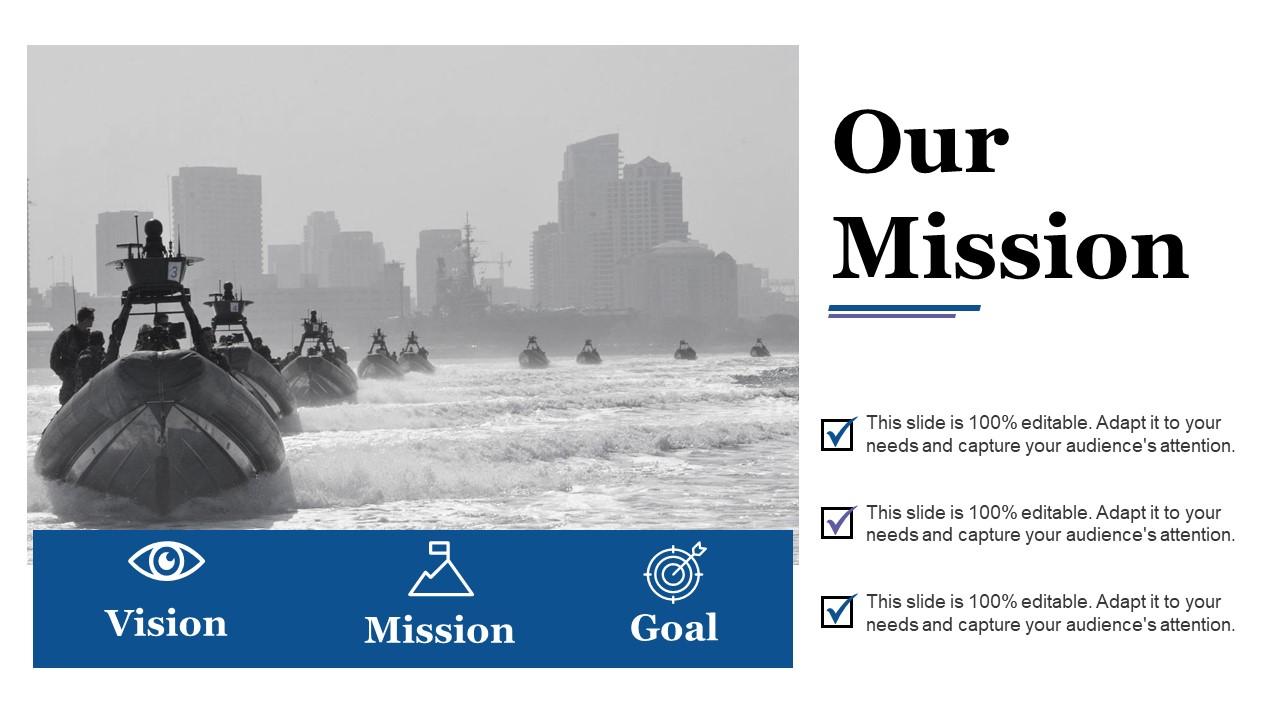
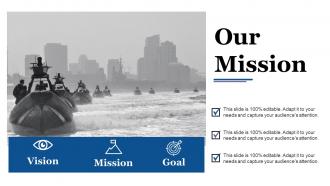
Slide 40: This is Our Mission slide with- Mission, Vision, and Goals. State them here.
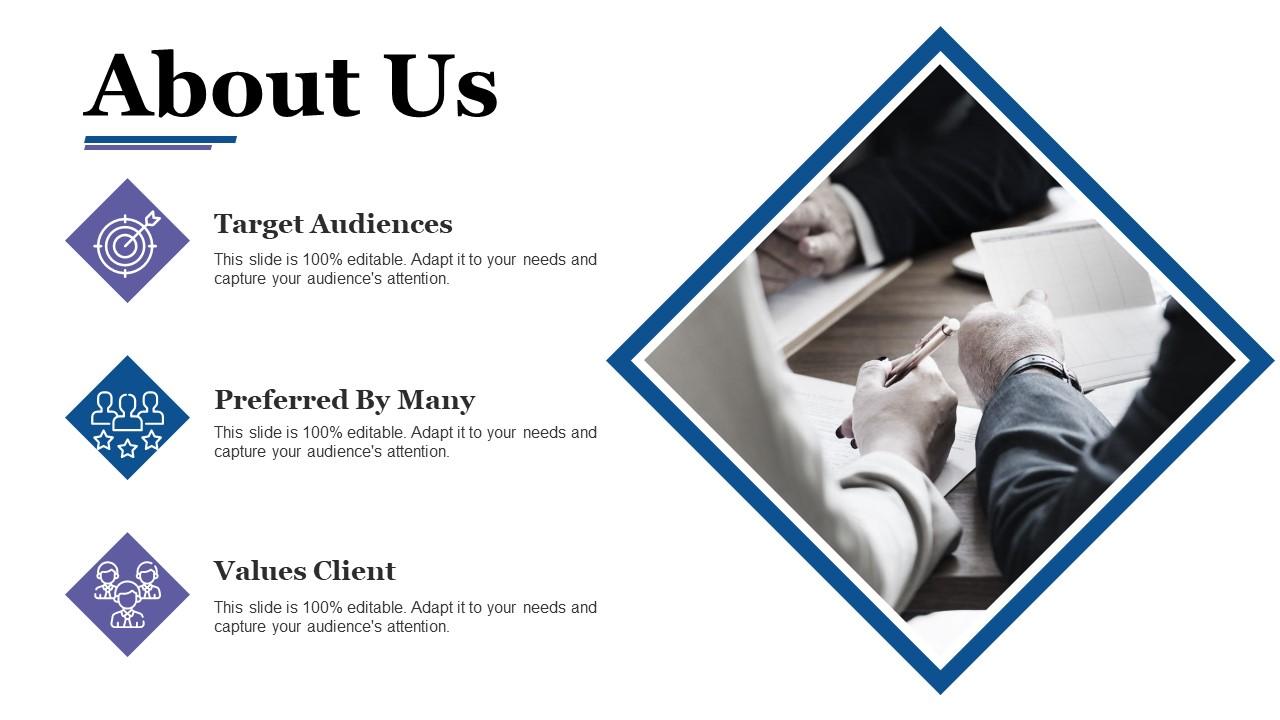
Slide 41: This is an About Us slide. State company/team specifications here.
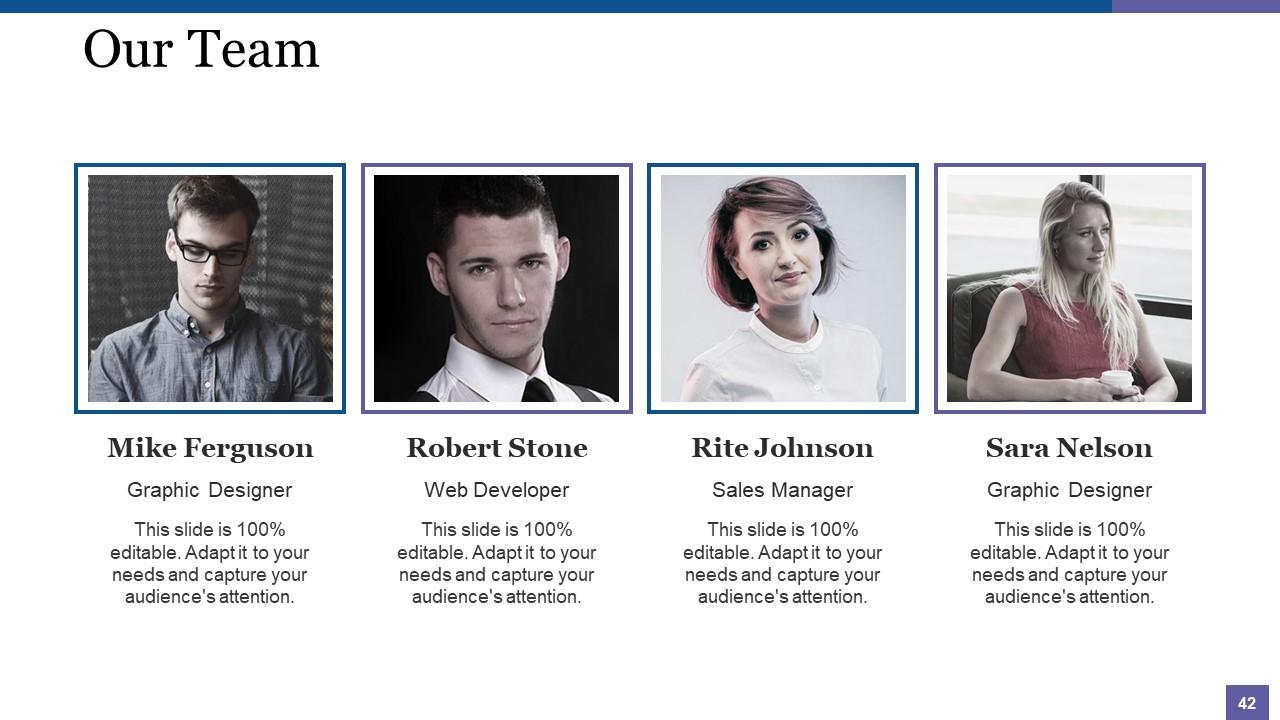
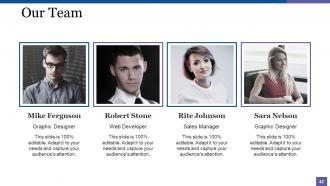
Slide 42: This is Our Team slide with name, designation and image box to fill the required information.
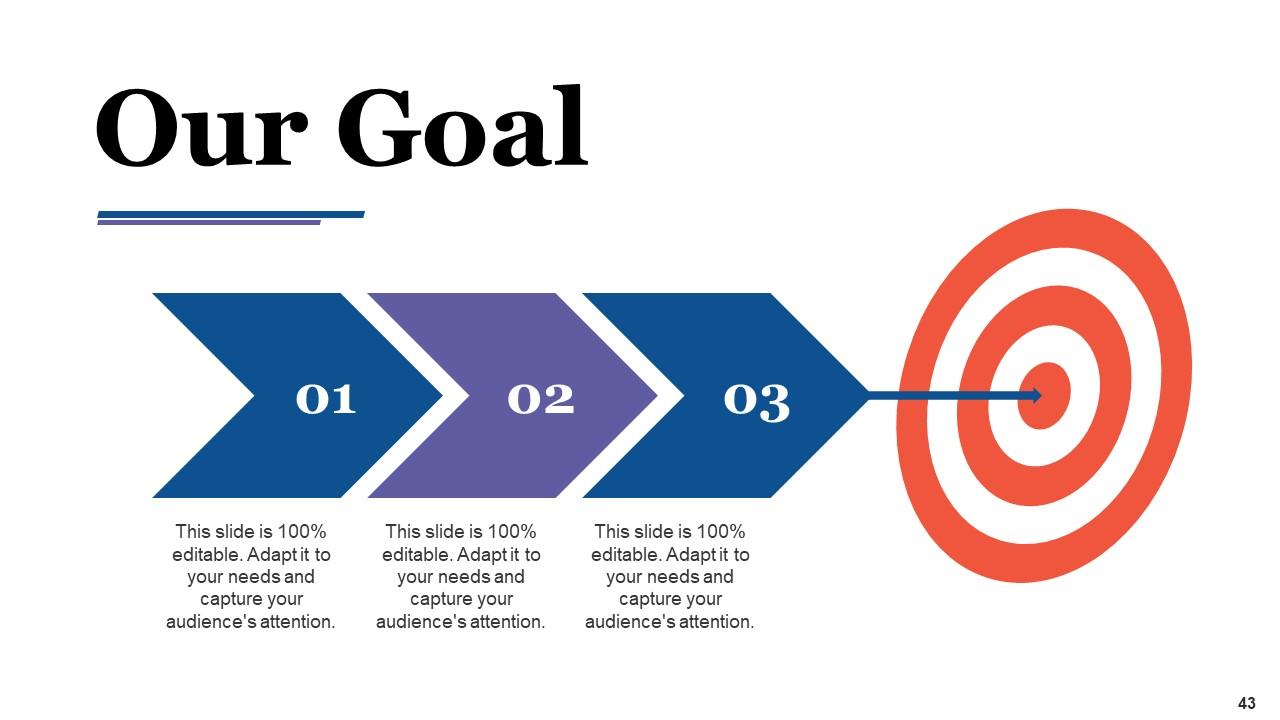
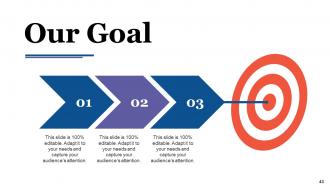
Slide 43: This is Our Goal slide to show targets, goals etc.
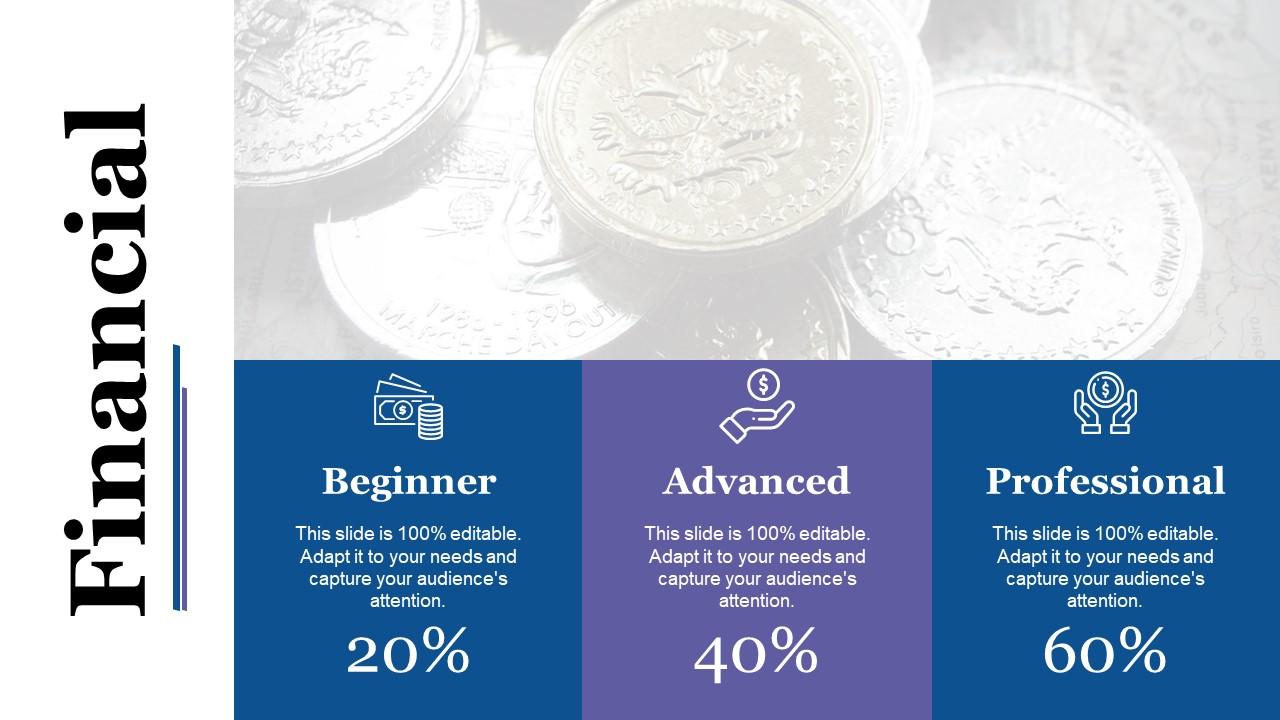
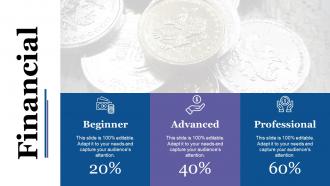
Slide 44: This is a Financial score slide to state financial aspects etc.
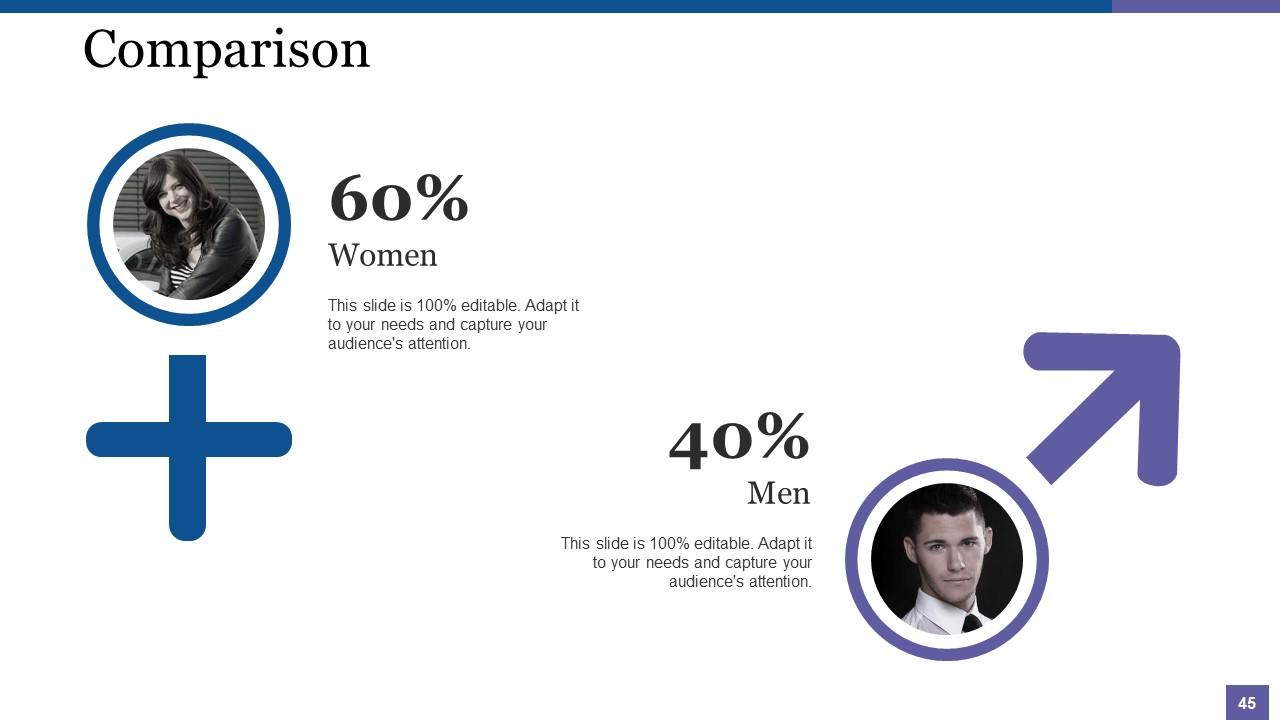
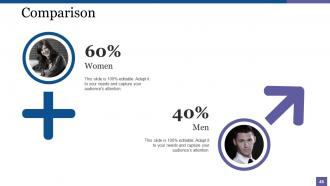
Slide 45: This is a Comparison slide for males and females. State comparison, specifications etc. here.
Slide 46: This is a Post It slide to show important information, events etc. Pin your information here.
Slide 47: This is a Mind Map image slide to show segmentation, information, specifications etc.
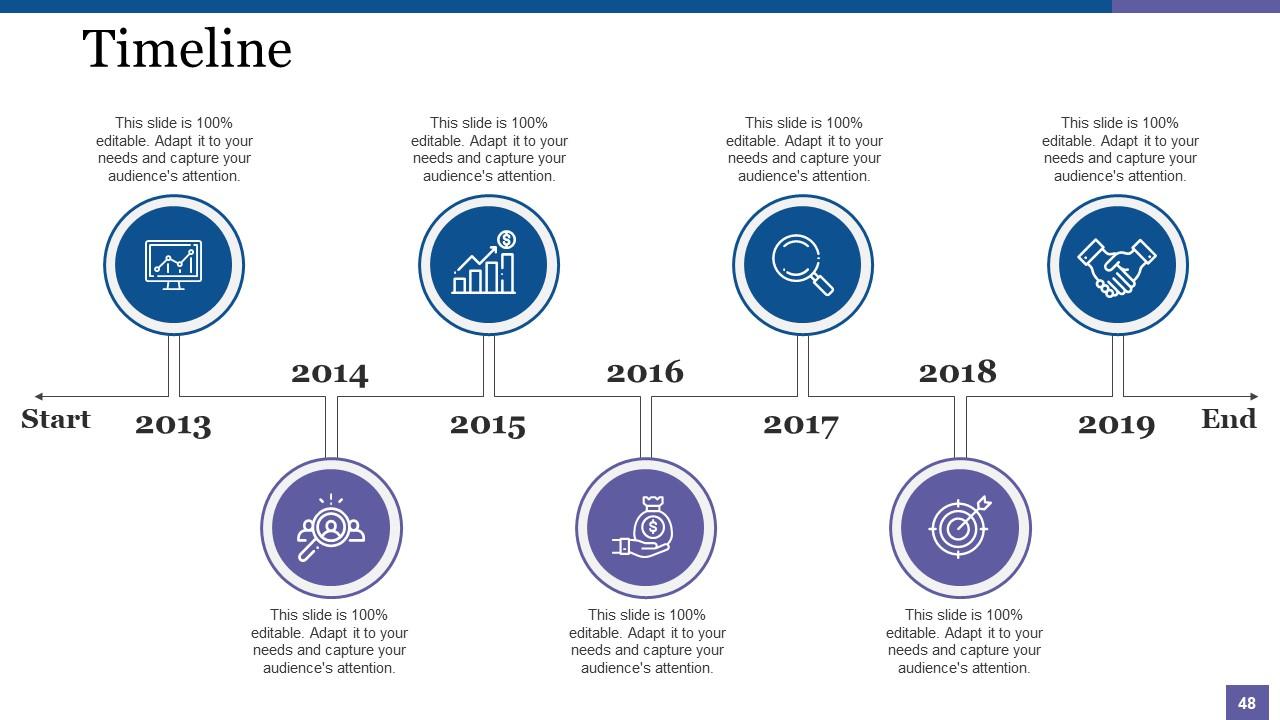
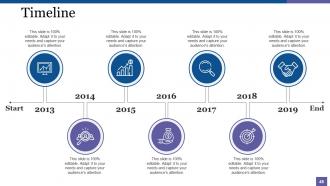
Slide 48: This slide showcases a Timeline to show milestones, important highlights etc.
Slide 49: This is a Bulb or Idea image slide to show ideas, innovative information etc.
Slide 50: This is a Thank You slide with Address# street number, city, state, Contact Numbers, Email Address.
Strategic Management Powerpoint Presentation Slides with all 50 slides:
Diminish the impact of the event with our Strategic Management Powerpoint Presentation Slides. It helps cushion the jolt.
-
Great product with effective design. Helped a lot in our corporate presentations. Easy to edit and stunning visuals.
-
Presentation Design is very nice, good work with the content as well.
