


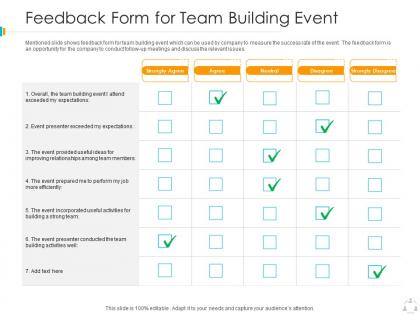
Feedback form for team building event




Try Before you Buy Download Free Sample Product
 Impress Your
 Audience
 100%
100% Editable
 Save Hours
 of Time


Our Feedback Form For Team Building Event are topically designed to provide an attractive backdrop to any subject. Use them to look like a presentation pro.
People who downloaded this PowerPoint presentation also viewed the following :
Feedback form for team building event with all 2 slides:
Use our Feedback Form For Team Building Event to effectively help you save your valuable time. They are readymade to fit into any presentation structure.

FAQs for Feedback form for
Okay so you want to be specific, not just "nice work!" Tell them exactly what hit - like "that opening story hooked everyone" or "slide 5's chart made everything click." Give it while it's fresh too, don't wait weeks. I'm terrible at remembering to do this honestly. Mix good stuff with what could be better, but focus on things they can actually fix next time. The sandwich method sounds cheesy but it works - compliment, suggestion, compliment. Just don't make it obvious you're doing it!
I always start with something positive - people shut down if you hit them with criticism right away. Then get into the stuff that needs work, but be super specific about it. Like instead of just saying "good job," tell them "that opening statistic totally grabbed my attention." Way more helpful, you know? Oh, and ask questions! "What if you tried this approach instead?" It makes the whole thing feel like a conversation rather than me just telling them what's wrong. People actually engage when it doesn't feel like a lecture. End on something encouraging though - leaves them motivated instead of deflated.
Oh man, non-verbal feedback is everything when you're presenting! Like, people's faces don't lie the way their words sometimes do. You'll see confused looks, heads nodding along, or - the worst - everyone suddenly finding their phones super interesting. I always watch for crossed arms or if people lean forward (that's the good stuff). Eye contact tells you tons too. The thing is, most people won't actually speak up if they're lost, so their body language becomes your secret weapon. You can literally adjust your pace or clarify things based on what you're seeing. It's like having a conversation without words.
Honestly, most people just ask "any feedback?" which is useless. Try specific questions instead - like "what part clicked for you?" or "where did you zone out?" I love anonymous stuff too - quick polls, sticky notes, whatever. Just don't wait forever to ask! People forget everything after like two days. The real trick is not getting defensive when they actually tell you something. Oh, and I always end with "what should I definitely do again next time?" - gives them something positive to focus on.
Honestly, the hardest part isn't the technical stuff - it's dealing with your own emotions. Your brain immediately wants to defend your work, so you're not really hearing what people say. Plus when you get conflicting feedback from different people? Ugh, that's the absolute worst because then you're trying to please everyone and it's impossible. Oh and super vague comments like "make it more engaging" are useless. I'd say pause before you react and ask follow-up questions when feedback's too unclear to actually do anything with.
Honestly, good visuals make such a huge difference for getting better feedback. People actually understand what you're saying faster when they can see charts or images instead of just listening. I always notice audiences ask way smarter questions too - probably because they're not lost trying to follow along in their heads. Visual learners will definitely give you more thoughtful responses. Just don't go overboard with flashy stuff that pulls attention away from your main point. Oh, and definitely run a few slides by someone first to make sure they actually make sense! Short sentences work great sometimes.
Start a simple feedback doc and write down the main stuff right after - trust me, you'll forget otherwise. I dump everything in there: what people said, evaluation themes, plus my own "oh crap that went badly" moments. Break it into content, delivery, tech problems. Don't try fixing everything at once though. Pick 2-3 things for your next presentation. Way more manageable. Also do a practice run with someone who'll actually tell you the truth, not just "looks great!" Honestly, those small tweaks add up faster than you'd think.
Dude, feedback styles are SO different across cultures. Some people want you to be super direct and specific. Others? That same approach feels harsh or embarrassing, especially in cultures where saving face matters. I totally bombed this once with a colleague! Starting with positives before criticism works great for some groups, but others think that's just wasting time. Even stuff like eye contact and whether you give feedback publicly vs. privately hits differently depending on someone's background. My advice? Just ask people upfront how they like receiving feedback. Saves everyone from those awkward moments later.
So formal feedback is like the official stuff - evaluation forms, scheduled meetings, performance reviews with actual criteria they write down. Informal's more like someone grabbing you after and saying "hey that went really well" or whatever they're thinking in the moment. Both are honestly pretty useful though. The formal stuff helps you track if you're actually getting better over time. But informal feedback? That's where you get people's real gut reactions - the stuff they might not put in writing. I'd definitely ask for both types because you need that full picture, you know?
Honestly, don't brush off the harsh stuff or get too hyped about compliments - treat both the same. What really matters is spotting patterns when multiple people say similar things. I used to get super defensive about criticism, but that's actually where you find the good stuff (annoying but true). Make three buckets: keep doing, tweak, and ditch completely. Just view it all as data, not someone attacking you personally. Oh, and don't try fixing everything at once - pick like 2-3 concrete changes for next time. That's way more realistic.
Honestly, inline comments in the presentation software work best for this stuff - way clearer than trying to describe slides over email. Though most people just default to email anyway (I do this too sometimes). You could also do a quick screen share to walk through everything together, or use a shared doc to track all the feedback systematically. Just make sure you're super specific about which slides you mean. Reference slide numbers or even timestamps if you're reviewing a recording. Oh, and don't just say "slide 3 looks off" - call out exactly which elements need tweaking. Makes everything way more actionable.
Practice with colleagues first - they'll catch stuff you miss. Watch faces during your actual talk, though honestly some people just have resting bored face regardless. Send quick surveys after asking specific stuff like "was the pacing too fast?" Don't wait around hoping for random feedback. Follow up with key people within a week while it's fresh in their minds. Mix up who you ask - different people notice different things. The trick is making it routine instead of crossing your fingers that someone will speak up.
Don't get defensive when people give you feedback - you'll just kill the conversation. Let them finish their questions too, even if you think you know what they're asking (trust me, you probably don't). Simple questions don't need long explanations either. Here's the thing that trips up most people: taking negative feedback personally. They're critiquing your work, not you as a person. I know it stings sometimes but try not to show frustration. Just say thanks and actually address what they brought up.
Honestly, timing is everything with feedback. Give it ASAP after the presentation - like within 24 hours, but sooner's even better. I always take notes during the actual presentation so I can share them right after while everything's still fresh. People forget the specific moments you're talking about if you wait too long, plus the whole vibe gets lost. And if they've got another presentation coming up? Immediate feedback means they can actually use your suggestions. Strike while they're still in that post-presentation mindset where they're actually receptive to hearing what you think.
Honestly, those awkward "any questions?" moments are the worst. Try setting up live polling with Mentimeter or Slido instead - you'll get way better responses. Anonymous Google Forms work great too since people can drop feedback without feeling put on the spot. Oh, and chat features are clutch because typing feels less intimidating than speaking up. I'm obsessed with using reaction emojis for quick vibe checks. Are people following along or totally lost? You can tell instantly. Just make sure you explain how people can reach you before you dive in.
-
Very unique and reliable designs.
-
Illustrative design with editable content. Exceptional value for money. Highly pleased with the product.