


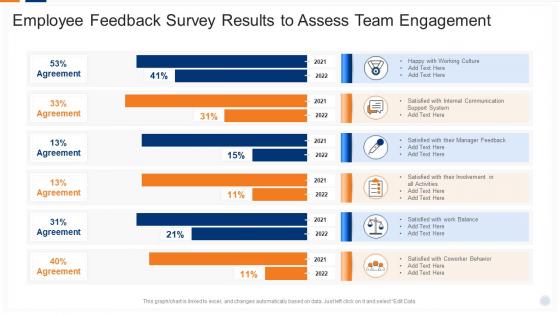
Employee Feedback Survey Results To Assess Team Engagement




Try Before you Buy Download Free Sample Product
 Impress Your
 Audience
 100%
100% Editable
 Save Hours
 of Time


Our Employee Feedback Survey Results To Assess Team Engagement are topically designed to provide an attractive backdrop to any subject. Use them to look like a presentation pro.
People who downloaded this PowerPoint presentation also viewed the following :
Employee Feedback Survey Results To Assess Team Engagement with all 7 slides:
Use our Employee Feedback Survey Results To Assess Team Engagement to effectively help you save your valuable time. They are readymade to fit into any presentation structure.





FAQs for Employee Feedback Survey Results To
So I'd definitely hit the basics first - job satisfaction, how they feel about their manager, career growth stuff. Work-life balance is obvious but critical. Also ask if they'd actually recommend working there to friends (that question reveals everything honestly). Throw in some questions about workload and recognition too. Oh and whether people feel connected to what the company's trying to do - sounds cheesy but it's massive for keeping people around. One more thing - do they feel safe speaking up with ideas? Keep it under 20 questions though or nobody will finish it. You can always dig deeper later once you see what's broken.
Oh definitely, anonymity changes everything with those surveys. People actually tell the truth when they're not worried about their boss tracking down who said what. Like, nobody's gonna trash-talk management if their name's attached, right? Without it you just get boring "everything's great!" responses that help nobody. Sure, you can't do individual follow-ups later, but honestly the real feedback you get is so much better. Way more useful for spotting actual problems instead of pretending everything's perfect when it's not.
Honestly, timing is everything - don't send it when everyone's swamped. Keep it short (like 10-15 minutes tops) because nobody has time for marathon surveys. Be super clear about why you're doing this and what'll actually happen with the results. People are so over surveys that disappear into the void, you know? Make it anonymous and say that upfront. Here's the thing though - if you did a survey before, you better show what changed because of it. That's how you get people to care next time. Oh, and friendly reminders work way better than pushy ones.
Here's what I've seen work best: do one big annual survey to get the full picture, then throw in a quick pulse check mid-year. Quarterly feels like overkill honestly - people get annoyed filling out surveys constantly. I learned that the hard way at my last job where we went survey-crazy for a while. The annual one gives you all the meaty data you need. Your mid-year pulse just tracks if changes are actually working. Pick whatever rhythm you can realistically maintain though. Better to be consistent with less frequent surveys than burn out trying to do too much upfront. Start simple and adjust from there based on how your team responds.
Honestly, it all comes down to whether your leaders actually give a damn about the feedback. When they share results openly and admit "yeah, we screwed up here" - that's when people start taking surveys seriously. I've watched so many companies just bury the results in some folder and wonder why engagement tanks. Your team needs to see real changes happen, not just another boring meeting about the results. Show some vulnerability, follow through on promises, and people will be way more honest next time. Otherwise you're just wasting everyone's time with paperwork.
Get results out fast - like within 2-4 weeks max while people still care. Don't dump spreadsheets on everyone (seriously, nobody wants 47 slides of charts). Break it into themes instead. Share the big surprises and what actually shocked you. Town halls work great, plus send summary emails. Oh, and definitely post key stuff on your intranet so people can reference it later. Here's the thing though - you HAVE to show what you're doing about their feedback. Otherwise next survey? Crickets. People won't bother if they think you're just collecting dust.
Definitely share everything with your team first - yes, even the brutal stuff. People can smell BS from a mile away if you sugarcoat it. Next, build actual action plans for the big issues. Don't do that vague "better communication" nonsense - give them real steps with deadlines. Here's the thing though: you've gotta keep updating everyone on progress. Radio silence after surveys is honestly the fastest way to destroy trust. Set up quick pulse checks later to see if things actually improved. Bottom line? Show them their feedback created real change, not just fancy presentations.
Ask about the stuff that actually matters for remote work - like whether they have decent wifi and a proper desk setup at home. Check if they feel connected to teammates or if they're just floating in space all day. Work-life boundaries are huge too since people end up answering emails at 9pm. I'd also dig into communication - are they getting the info they need or constantly confused? Oh, and company culture inclusion from their couch is tricky. Honestly, just chat with a few remote folks first about their real frustrations before writing anything.
Honestly, ditch some of those boring Likert scales and try ranking questions instead - way more interesting when people have to prioritize what actually matters to them. "Would you rather" scenarios work great too. My favorite trick? Story completion stuff like "The best day at work feels like..." People get weirdly creative with those. Slider scales are solid for capturing those in-between feelings that basic ratings miss. Oh, and always throw in follow-up questions after ratings - that's where you get the real insights. Just swap out 2-3 traditional questions next time and see what happens.
So pulse surveys are basically quick check-ins - maybe 5-10 questions you send monthly to see how people are feeling. Way different from those big annual surveys with like 50+ questions that cover everything from management to career stuff. Honestly, I think of it like glancing at your weather app versus watching the full forecast. The short pulses help you catch problems early and react fast. Those comprehensive ones? They're better for getting the complete picture when you're planning bigger changes. Use pulses to stay on top of things, then do the deep dive surveys when you need to make strategic decisions.
Segment your data first - department, tenure, role level. That's where you'll actually see patterns. Don't just grab numbers that look cool; make sure they're statistically significant (learned that one the hard way). Your lowest scores AND highest variance items? Those are goldmines for improvement opportunities. You want to cross-reference engagement stuff with business metrics like turnover and performance. Heat maps work great for showing managers their team's specific results - honestly, that's what finally gets leadership moving. The real win is when you can connect employee feelings to actual business outcomes in a clear story.
Honestly, engagement surveys can make or break your retention if you handle them right. People will absolutely stay longer when they feel heard and see actual changes happen. But here's the thing - you HAVE to act on the feedback. Can't just collect responses and file them away (we've all worked places that pull that nonsense). Address their complaints about workload or bad managers, and you'll build real loyalty. Ignore the results though? Watch people head for the door. Bottom line: don't bother surveying unless you're ready to actually fix what's broken.
Honestly, you've gotta think about who you're actually reaching with your survey. Don't just blast it through email - some people never check that stuff. Try multiple ways to get it out there, maybe even paper surveys for people who aren't online much. When writing questions, avoid assuming everyone's situation is the same. Like don't ask about office perks when half your team works remotely, that's just weird. Break down your results by different groups afterward so you can see if certain people are having completely different experiences. The follow-up part is what really matters though.
Honestly, digital surveys are a game changer compared to those awful paper ones we used to pass around. Mobile responses mean people can fill them out whenever - on the train, during lunch, whatever works. Real-time analytics are actually pretty cool too, you can break down responses by department or how long someone's been there. I'd start with something that connects to your HR system, saves tons of time on data entry later. The automated reminders alone make participation way better. Oh and the dashboards? Way easier to spot patterns than staring at spreadsheets all day.
Gallup, Glint, and Culture Amp sell industry reports that'll show you where you stand compared to similar companies. Most survey platforms throw in benchmarking data anyway - honestly one of the better reasons to pay for an established tool instead of cobbling something together yourself. HR associations and benchmarking groups share anonymous data too, which is pretty helpful. Just don't compare a tech startup to some old manufacturing plant, you know? Makes zero sense. I'd focus on your own year-over-year trends first. External benchmarks are great for finding gaps you might've missed.
-
Very unique and reliable designs.
-
Excellent Designs.