


Employee Engagement Powerpoint Presentation Slides





Try Before you Buy Download Free Sample Product
 Impress Your
 Audience
 100%
100% Editable
 Save Hours
 of Time


Use this employee engagement PowerPoint presentation to increase the compatibility and gelling between the colleagues. With the help of this PPT, employees can plan and engage in different activities which helps to break the ice for newbies and helps them to settle in the new environment. Also, the bonding activities in this PowerPoint presentation example are very helpful to create a warm and familiar environment for the employees to open up. Employees can cooperate better with their co-workers with the help of these techniques mentioned in this slideshow. Also, the icebreakers mentioned in this PPT are also very useful to create a cordial relationship between the boss and the employees as employee engagement is very necessary for a successful company’s becoming. Employee satisfaction can be achieved with the help of this PowerPoint theme in order to successfully create a stress-free environment for all the employees with openness. This PPT is really helpful for employee engagement in today’s stressful corporate world. Bare the truth with our Employee Engagement Powerpoint Presentation Slides. Your thoughts will dig up the facts.
People who downloaded this PowerPoint presentation also viewed the following :
Content of this Powerpoint Presentation
Slide 1: This slide introduces Employee Engagement. State Your Company Name and get started.
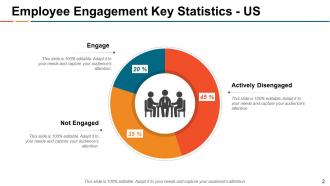
Slide 2: This slide shows Employee Engagement Key Statistics - US displaying- Actively Disengaged, Not Engaged, Engage.
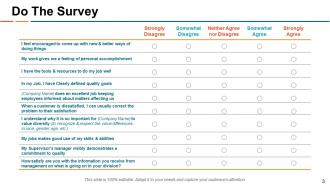
Slide 3: This slide presents Do The Survey with the following parameters- Strongly Disagree, Somewhat Disagree, Neither Agree nor Disagree, Somewhat Agree, Strongly Agree.
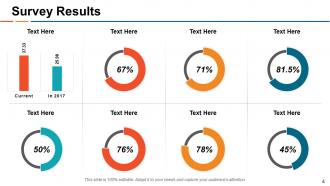
Slide 4: This slide presents Survey Results in donut chart form.
Slide 5: This slide presents Activities To Increase Employee Engagement.
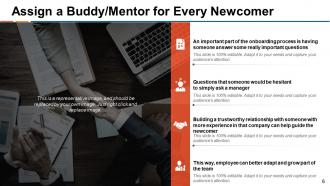
Slide 6: This slide showcases Assign a Buddy/Mentor for Every Newcomer with the following points- An important part of the onboarding process is having someone answer some really important questions. Questions that someone would be hesitant to simply ask a manager. Building a trustworthy relationship with someone with more experience in that company can help guide the newcomer. This way, employee can better adapt and grow part of the team.
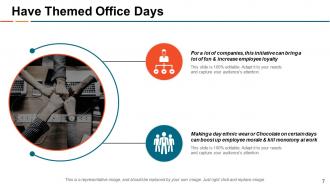
Slide 7: This slide shows Have Themed Office Days with the following points- For a lot of companies, this initiative can bring a lot of fun & increase employee loyalty. Making a day ethnic wear or Chocolate on certain days can boost up employee morale & kill monotony at work.
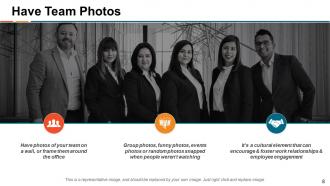
Slide 8: This slide shows Have Team Photos consisting of- Have photos of your team on a wall, or frame them around the office Group photos, funny photos, events photos or random photos snapped when people weren’t watching It’s a cultural element that can encourage & foster work relationships & employee engagement
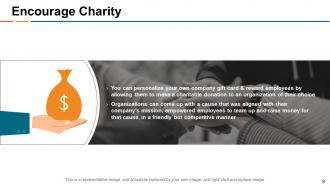
Slide 9: This slide shows Encourage Charity with- You can personalize your own company gift card & reward employees by allowing them to make a charitable donation to an organization of their choice. Organizations can come up with a cause that was aligned with their company’s mission, empowered employees to team up and raise money for that cause, in a friendly but competitive manner.
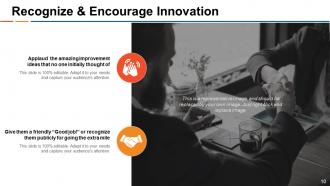
Slide 10: This slide shows Recognize & Encourage Innovation displaying- Applaud the amazing improvement ideas that no one initially thought of. Give them a friendly “Good job!” or recognize them publicly for going the extra mile.
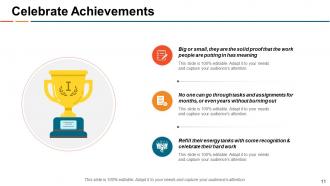
Slide 11: This slide showcases Celebrate Achievements of the entire team.
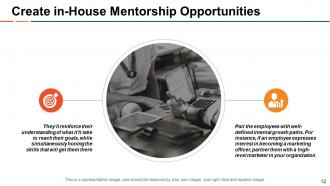
Slide 12: This slide shows Create in-House Mentorship Opportunities Pair the employees with well-defined internal growth paths. For instance, if an employee expresses interest in becoming a marketing officer, partner them with a high-level marketer in your organization. They'll reinforce their understanding of what it'll take to reach their goals, while simultaneously honing the skills that will get them there
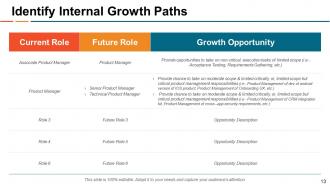
Slide 13: This slide showcases Identify Internal Growth Paths with role and opportunity.
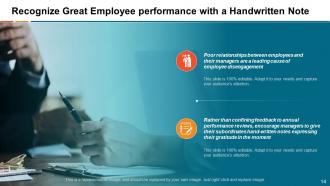
Slide 14: This slide shows Recognize Great Employee performance with a Handwritten Note displaying- Poor relationships between employees and their managers are a leading cause of employee disengagement. Rather than confining feedback to annual performance reviews, encourage managers to give their subordinates hand-written notes expressing their gratitude in the moment
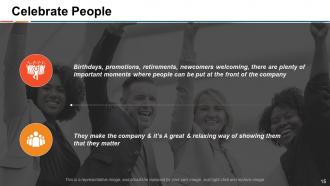
Slide 15: This slide shows Celebrate People displaying- Birthdays, promotions, retirements, newcomers welcoming, there are plenty of important moments where people can be put at the front of the company. T hey make the company & it’s A great & relaxing way of showing them that they matter
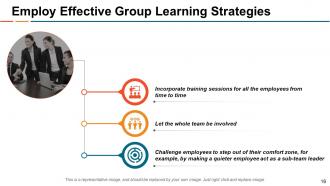
Slide 16: This slide presents Employ Effective Group Learning Strategies- Incorporate training sessions for all the employees from time to time, Let the whole team be involved, Challenge employees to step out of their comfort zone, for example, by making a quieter employee act as a sub-team leader.
Slide 17: This is an Employee Engagement Icons Slide. Use the icons as per requirement.
Slide 18: This slide is titled Additional Slides. You may change content as per your need.
Slide 19: This slide contains Our Mission with Vision and Goal. State them here.
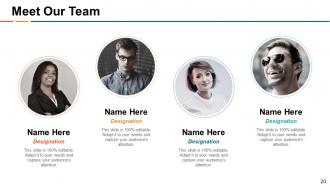
Slide 20: This slide presents Our Team with designation, image text holder and text boxes to fill information.
Slide 21: This is an About Us slide. State your position, facts or anything business here.
Slide 22: This is Our Goal slide. State them here.
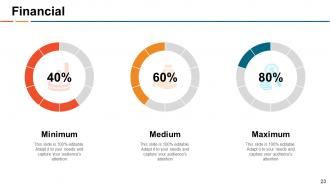
Slide 23: This slide is titled as Financials. Show finance related stuff here.
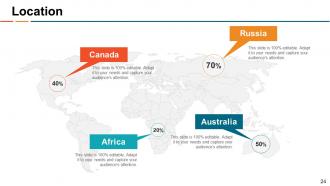
Slide 24: This is a Location slide of a world map image to show global growth, presence etc.
Slide 25: This slide presents a Timeline to show growth, milestones, evolution etc.
Slide 26: This is an Important Notes slide to flash company event, news or anything to highlight.
Slide 27: This is a Puzzle image slide with text boxes to state information, specifications etc.
Slide 28: This is Our Target slide. State them here.
Slide 29: This is a Circular image slide with text boxes to state information, specifications etc.
Slide 30: This is a Venn Diagram image slide with text boxes to state information, specifications etc.
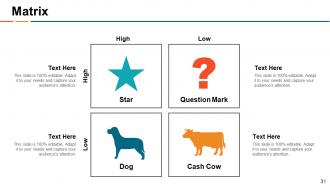
Slide 31: This is a MATRIX slide. Put relevant comparing data here.
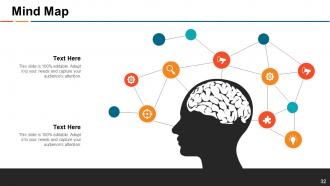
Slide 32: This slide presents a Mind Map slide to show segmentation, specifications etc.
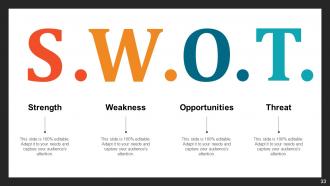
Slide 33: This is a SWOT analysis slide with text boxes to show information.
Slide 34: This is an Idea or Bulb slide. Present any new information, data here.
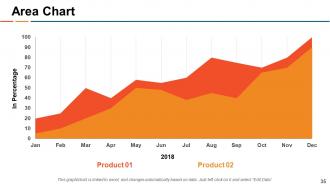
Slide 35: This slide shows an Area Chart for two product/entity comparison, information, specifications etc.
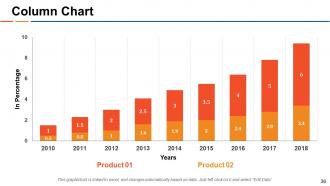
Slide 36: This slide showcases a Column Chart for two product/entity comparison, information, specifications etc.
Slide 37: This is a Thank You slide with Address # street number, city, state, Contact Numbers, Email Address to be put and displayed.
Employee Engagement Powerpoint Presentation Slides with all 37 slides:
Ensure every individual actually gets included with our Employee Engagement Powerpoint Presentation Slides. Bring alienation to an end.




FAQs for Employee Engagement
Honestly, it comes down to people feeling heard and valued. Clear growth paths matter a ton - nobody wants to feel stuck. Regular feedback from managers who actually listen? Game changer. Work-life balance is non-negotiable these days too. I've watched entire teams implode when leadership just talks the talk but doesn't walk it. Recognition hits different when it's genuine, and connecting daily work to bigger company goals gives people that sense of purpose they're craving. Oh, and just ask your team what they need most - their answers might shock you in a good way.
Honestly, the way you communicate with your team makes or breaks engagement. People want transparency and consistency - makes them feel actually valued, you know? Regular feedback beats those awful annual reviews every time (seriously, who thought once a year was enough?). But here's the thing - it can't just be you talking at them. Ask how they want updates delivered. Weekly check-ins work wonders. Listen to their concerns too. I've watched entire teams flip around just from better communication. Oh, and find out what gaps they're dealing with right now.
Honestly, leadership makes or breaks engagement. When managers actually listen and recognize good work, people notice. Their energy spreads through the whole team - it's wild how much that matters. Transparent leaders who include employees in decisions? That builds real trust and ownership. Distance kills everything though. I've seen teams check out so fast when their boss only does surface-level support. One-on-ones help tons, but focus them on development stuff, not just project updates. Sounds obvious but most managers still mess this up.
You'll need both surveys and real conversations to figure this out. Start with quarterly employee surveys asking about job satisfaction, manager relationships, career growth - the usual stuff. But here's the thing: surveys only tell half the story. Mix in regular one-on-ones and focus groups too. Track your turnover rates, sick days, internal promotions. Consistency matters most - stick with whatever methods you pick so you can actually see patterns developing. Honestly, I'd just do a quick pulse survey next month to get your baseline, then build from there.
Honestly, try Google's 20% innovation time thing - there's a reason it's so famous. Flexible PTO works great too. Set up peer recognition where people nominate each other instead of top-down stuff. Skip vouchers are weirdly popular (who knew?). The big thing is figuring out what your actual team wants, not what you assume they want. Oh, and reverse mentoring is cool - junior people teaching senior folks about new tools and trends. I'd start with just one thing though and see how it goes before you go crazy rolling everything out at once.
Honestly, remote work can totally boost engagement - you just gotta be way more intentional about it. Those random coffee chats and hallway conversations? Yeah, you lose all that spontaneous connection stuff. But here's the thing - remote people usually feel way more autonomous and have better work-life balance. The trick is being super deliberate with communication. Schedule regular one-on-ones, create some virtual team bonding (even if it feels weird at first), and don't let anyone disappear into isolation. Team rituals help too. It's doable, just takes more effort than when everyone's in the office.
Dude, engaged employees stick around way longer, so you're not constantly bleeding money on hiring and training new people. They actually give a damn about their work too - more productive, come up with better ideas, the whole thing. What really gets me is how they become walking advertisements for your company without you even asking. Companies with high engagement see like 23% better profits, which is insane when you think about it. Oh, and definitely start tracking your current numbers now. You can't improve what you don't measure, right?
Honestly, start with something simple like a recognition app and see how it goes. Employee apps and pulse surveys are great for getting instant feedback instead of waiting around for those yearly surveys nobody likes. We set up random channels in Slack - our memes one is actually hilarious and people bond over the weirdest stuff. Digital dashboards let you track engagement in real-time, which is pretty neat. The trick is picking tech that doesn't feel like extra homework for your team. Don't go overboard right away though - test one thing, see if people actually use it, then build from there.
Talk to them one-on-one first - that's where you'll actually figure out what's going wrong. Could be they're swamped, bored, or just feel invisible. I've watched so many managers mess this up by jumping straight to random fixes without knowing the real problem. Once you get the actual story, then you can do something about it. Maybe they need new projects, training, a role tweak, or honestly just someone to notice their work. But yeah, have that conversation this week. Really listen to what they say - don't just wait for your turn to talk.
Honestly, waiting for annual reviews is such a waste of time when you could be doing quick pulse surveys or daily check-ins through Slack instead. Your team will actually stay engaged when they get instant recognition and feedback right away. I've seen those awkward formal sit-downs kill morale – nobody wants that. Try setting up a simple kudos channel or weekly pulse checks. Makes it feel more like an actual conversation than some corporate evaluation thing. People stick around when they know their work matters now, not six months from now. Start small though, don't overwhelm everyone at once.
Dude, recognition is HUGE for keeping people engaged. Like, way bigger than most managers realize. It's not just saying thanks - you're basically telling someone their work actually matters. People who feel appreciated? They'll bust their ass for you and stick around longer. But here's the thing - it has to feel real. None of that generic "great work everyone" BS. Call out specific stuff they did in meetings or whatever. I swear, even small recognition can keep someone motivated for weeks. Just be consistent about it and don't make it weird.
Look, here's the thing - training programs work because they actually show people you give a damn about their future. Nobody wants to be stuck doing the exact same job forever, right? When you invest in skill-building, employees feel valued and can see where they're headed career-wise. It makes them way more confident too. The trick is matching what you're teaching to both what the company needs AND what they actually want to learn. Otherwise it's just another boring mandatory meeting that everyone zones out in. But when it clicks? People get genuinely excited about their work again.
Honestly, it's mostly communication stuff that trips people up. Different backgrounds mean people interpret feedback or recognition totally differently than you'd think. Language barriers make some folks hesitate to jump into conversations. Unconscious bias is real too - certain groups just don't get the same development chances. Company culture that's super rigid? People bounce fast. Oh, and here's what actually works - just ask your diverse team members what's getting in their way. Way better than some generic survey that nobody fills out properly anyway. Their real experiences will tell you everything you need to know.
Look, when people feel valued at work, they actually give a damn. Simple as that. If your team sees everyone getting fair shots at promotions and feels comfortable being themselves, they'll stay engaged. Nobody wants to mentally check out, but they will if there's obvious bias or they feel like outsiders. Diverse teams tackle problems way more creatively too - makes the job way less boring, honestly. Oh, and here's a quick test: watch your next meeting. Are people actually speaking up or just nodding along? That psychological safety thing is huge for keeping everyone invested.
Google's famous "20% time" thing worked insanely well - Gmail and AdSense both came from employees just messing around on side projects one day a week. Salesforce does this goal-setting framework called V2MOM plus all their equality stuff, keeps people super engaged. Netflix went crazy transparent, even sharing everyone's salaries, which honestly sounds terrifying but apparently builds trust? The pattern I see is giving people real control over their work and making them feel like they're doing something that matters. Maybe try something small first - like letting your team pick their own project priorities or being more open about company decisions.
-
Great quality slides in rapid time.
-
Best Representation of topics, really appreciable.