


Employee engagement results powerpoint slide images




Try Before you Buy Download Free Sample Product
 Impress Your
 Audience
 100%
100% Editable
 Save Hours
 of Time


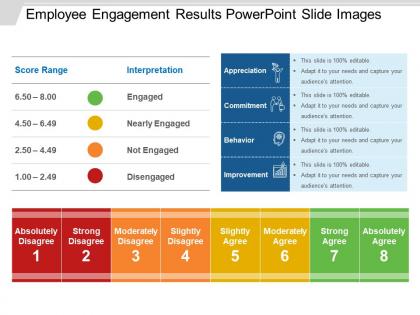
Make the jobs of your employees more fulfilling and engaging with this employee engagement results PowerPoint slide images. Use this presentation slide of employee engagement survey results to share results of conducted surveys of employee engagements so that you are more likely to make meaningful change in your organization. Our employee engagement dashboard presentation layout presents a powerful analysis tool that shows how your company is performing on important success factors and employee engagements. With the help of this engagement surveys PPT slide you can communication survey results and try to link employee feedback to business objectives, operational considerations, organizational goals and key results. Use this teamwork and alignment PowerPoint slide to fix the problems areas and making sure everybody on the team agrees on what the problems are. Try this template to develop a culture that foresters and encourages engagements and to makes sure they have the skills needed to get the job done. Download this presentation layout and for more visit our website. Employ your intelligence to give brilliant guidance with our Employee Engagement Results Powerpoint Slide Images. Be a beacon of inspiration.
People who downloaded this PowerPoint presentation also viewed the following :
Employee engagement results powerpoint slide images with all 5 slides:
Our Employee Engagement Results Powerpoint Slide Images help handle any gathering. Your directions get clearly disseminated.
FAQs for Employee engagement results
Honestly? Start with monthly pulse surveys instead of those useless annual ones. Three simple questions about connection, workload, and support will tell you everything. One-on-ones are clutch too. I know everyone's over video calls, but notice who keeps cameras on - that's your engagement right there. Track how people use Slack or whatever, response times and stuff, just don't be weird about monitoring. Oh, and see who actually shows up to virtual team events. Your managers probably have the best gut feel for their teams anyway, so definitely loop them in. Mix the numbers with real conversations and you'll figure out who's struggling pretty fast.
You've gotta walk the walk first - actually admit when you're stumped and ask for real input, not just lip service. One-on-ones are clutch for this stuff. When someone gives feedback, try responding publicly so others see you're not just nodding along. The worst thing? Leaders who say they want honesty then get all pissy when it happens. Mix up how people can reach you too - some folks freeze up in meetings but will totally open up over coffee or through anonymous surveys. Oh, and celebrate the hell out of people when they do speak up! Start small though.
Dude, professional development is seriously a game changer for morale. People feel valued when you invest in their growth instead of just keeping them stuck in the same role forever. Learning new skills, going to conferences, getting certifications - all that stuff gives them something to look forward to. Plus (and this is key) they're way more likely to stick around if they see a future there. Honestly, just asking your team what skills they want to develop will energize them. It's such an easy win but so many managers skip it.
Skip the generic "rate your satisfaction" questions - they're useless. Focus on stuff you can actually fix, like how often managers check in or whether workloads are fair. Break down results by team or how long people have been there so you can see what's really going wrong where. Throw in some open-ended questions but keep it under 15 minutes or people will bail halfway through. Here's the thing though - you absolutely have to share what you found and tackle the biggest problems. I've seen so many companies do these surveys then... nothing. People remember that stuff and won't participate next time.
Dude, recognition totally works - like 30-40% boost in engagement when you nail it. People just want to feel seen, you know? That dopamine rush from being appreciated is real. But here's the thing - timing matters way more than the actual reward. Skip the generic "great work" and get specific about what they did well. Honestly, I've seen people light up more from a genuine shoutout in meetings than from gift cards. Money's nice but... eh, personal recognition hits different. Figure out what each person on your team actually values first though.
Honestly, when people can actually be themselves at work instead of putting on some fake persona, they give way more of a shit. It's pretty simple - if your team feels safe speaking up and sees their ideas actually matter, they'll collaborate better and care about results. Diverse teams are just better at solving problems too, which makes the job less boring for everyone. But here's the thing - you can't just check the diversity box during hiring and walk away. You've got to look at how meetings actually run and who gets heard when decisions happen. Otherwise it's all performative nonsense.
Look out for people missing deadlines or doing lower quality work than usual. Also watch if they stop participating much in meetings or team stuff. Absenteeism goes up too, plus you'll hear more complaints about workload. The thing is, it starts small - like someone who used to volunteer for everything suddenly staying quiet during brainstorming. Honestly, regular one-on-ones are clutch for spotting this early. Ask open questions about what's bugging them and their job satisfaction. Listen to what they're NOT saying too, not just their words.
Honestly, it's all about figuring out what each generation actually wants. Boomers still prefer face-to-face recognition and clear paths up the ladder. Gen X? They just want balance and to be left alone to do their thing. Millennials need constant feedback and work that feels meaningful - yeah they get roasted online but whatever, that's how they operate. Gen Z cares way more about mental health resources and moving up fast. Survey your people first though! Don't just assume everyone wants the same boring team lunch. Customize based on what they tell you.
Oh dude, there's actually a bunch of good stuff out there! Culture Amp and TINYpulse are solid for those quick pulse surveys - way better than waiting around for yearly reviews. For daily stuff, Slack and Teams work fine for recognition and just staying connected. If you've got the budget though, check out 15Five or Bonusly. They do feedback, goals, and peer recognition all in one place which is honestly pretty sweet. Lattice is another one that's more performance-focused but has continuous feedback built in. My advice? Don't go crazy trying to implement five tools at once. Just pick whatever fixes your biggest headache first and build from there.
Honestly, team-building stuff works because it gets people talking beyond just "did you send that email?" When your coworkers actually know each other, they'll fight harder for the team. It breaks down those weird walls too - like when accounting acts like they're from another planet. The trick? Don't do anything that makes people cringe. Trust falls are the worst. Go for escape rooms or maybe volunteer somewhere together. Something they'd actually want to do on a Saturday, you know?
Don't treat this like a one-off survey thing - it needs to be ongoing. Also, never promise stuff you can't actually deliver because that'll tank morale faster than anything. Here's what I've learned: skip the guessing game and just ask people what they want (hint: probably not another pizza party lol). Copying what worked at some other company is pretty pointless since every workplace is different. My advice? Start small with changes you can realistically make happen, then build from there. Oh, and actually follow through - that's honestly half the battle right there.
Wellness programs work because they show people you actually give a damn about them as humans, not just work robots. Mental health support, gym stuff, stress management - it makes employees feel valued. Healthier people have more energy too, so it's this win-win thing. But honestly? Skip the crappy pizza parties. Survey your team first to figure out what they'd actually use. I've watched companies nail this when they invest in real programs that address actual problems. The whole thing creates momentum - people feel better, work better, everyone's happier.
Honestly, most managers just suck at listening - that's where I'd start. Get them trained on active listening first, then move into giving actual useful feedback instead of those generic "good job" comments. Role-playing helps tons because they can mess up without real consequences. The tricky part is teaching them to figure out what motivates each person individually. Some people want promotions, others just want flexibility, you know? One-on-ones are huge too - most managers either skip them or make them super awkward. Oh, and peer coaching works surprisingly well since they learn from each other's mistakes. Communication skills really are the foundation for everything else.
Dude, it's crazy how much people actually care when company values match what they believe in. Their work feels meaningful instead of just "another job." I've seen it firsthand - employees stay late, put in extra effort, really invest in results. But here's the thing: those values can't just be fancy posters in the break room. They need to show up in real decisions and how management treats everyone. Also, keep connecting people's daily tasks back to the bigger picture. Makes all the difference honestly.
Oh totally! Happy employees basically become your best customer service reps without even trying. They'll actually problem-solve instead of just following scripts, you know? I've noticed this at every job I've had - when people hate being there, customers can sense that weird energy immediately. It's so obvious. Companies with engaged teams see 12% higher customer satisfaction scores, which makes sense when you think about it. If someone genuinely cares about their work, they're gonna treat your customers way better. So yeah, fix your employee vibe first and the customer stuff usually follows.
-
Awesomely designed templates, Easy to understand.
-
Out of the box and creative design.