


Employee Engagement Planning Powerpoint Presentation Slides






Try Before you Buy Download Free Sample Product
 Impress Your
 Audience
 100%
100% Editable
 Save Hours
 of Time


Employee engagement is a workplace approach resulting in productivity and well-being. Select our Employee Engagement Planning PowerPoint Presentation Slides to showcase key elements of employee motivation and engagement. The content ready Employee Motivation PowerPoint complete deck will show you employee engagement key statistics, survey results, activities of increasing motivation, create in house mentorship opportunities, identify internal growth plans, recognize great employee performance, celebrate people, etc. Improving employee engagement can significantly improve company performance. Engaged employees work with full passion and spread positivity among co-workers. Utilize employee motivation strategy PowerPoint templates to boost your employee’s morale. Furthermore, employee satisfaction ppt visuals are apt to present various topics like human resource, job satisfaction, work motivation, work engagement, organizational commitment, internal marketing to name a few. Download high quality and well-researched employee motivation and retention presentation design to create an everlasting impression on your viewers.
People who downloaded this PowerPoint presentation also viewed the following :
Content of this Powerpoint Presentation
Slide 1: This slide introduces Employee Engagement Planning. State Your Company Name and begin.
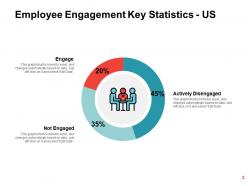
Slide 2: This slide shows Employee Engagement Key Statistics - US displaying- Actively Disengaged, Not Engaged, Engage.
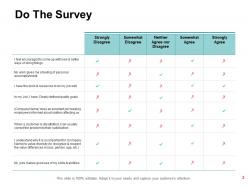
Slide 3: This slide presents Do The Survey with the following parameters- Strongly Disagree, Somewhat Disagree, Neither Agree nor Disagree, Somewhat Agree, Strongly Agree.
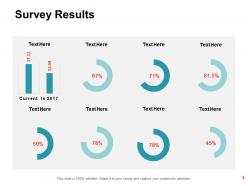
Slide 4: This slide presents Survey Results in donut chart form.
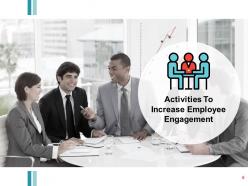
Slide 5: This slide presents Activities To Increase Employee Engagement.
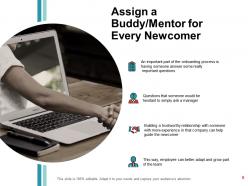
Slide 6: This slide showcases Assign a Buddy/Mentor for Every Newcomer with the following points- An important part of the onboarding process is having someone answer some really important questions. Questions that someone would be hesitant to simply ask a manager. Building a trustworthy relationship with someone with more experience in that company can help guide the newcomer. This way, employee can better adapt and grow part of the team.
Slide 7: This slide shows Have Themed Office Days with the following points- For a lot of companies, this initiative can bring a lot of fun & increase employee loyalty. Making a day ethnic wear or Chocolate on certain days can boost up employee morale & kill monotony at work.
Slide 8: This slide shows Have Team Photos consisting of- Have photos of your team on a wall, or frame them around the office Group photos, funny photos, events photos or random photos snapped when people weren’t watching It’s a cultural element that can encourage & foster work relationships & employee engagement.
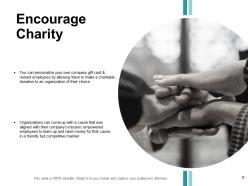
Slide 9: This slide shows Encourage Charity with- You can personalize your own company gift card & reward employees by allowing them to make a charitable donation to an organization of their choice. Organizations can come up with a cause that was aligned with their company’s mission, empowered employees to team up and raise money for that cause, in a friendly but competitive manner.
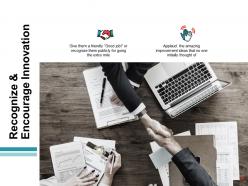
Slide 10: This slide showcases Recognize & Encourage Innovation.
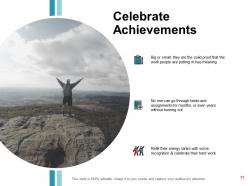
Slide 11: This slide displays Celebrate Achievements with related imagery and text.
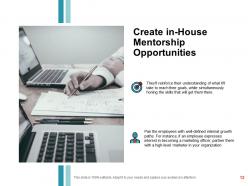
Slide 12: This slide shows Create in-House Mentorship Opportunities. Pair the employees with well-defined internal growth paths. For instance, if an employee expresses interest in becoming a marketing officer, partner them with a high-level marketer in your organization. They'll reinforce their understanding of what it'll take to reach their goals, while simultaneously honing the skills that will get them there.
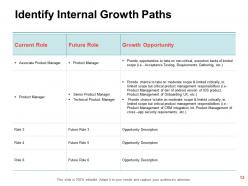
Slide 13: This slide showcases Identify Internal Growth Paths with role and opportunity.
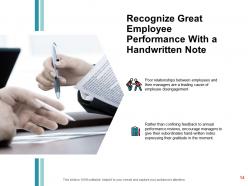
Slide 14: This slide shows Recognize Great Employee performance with a Handwritten Note displaying- Poor relationships between employees and their managers are a leading cause of employee disengagement. Rather than confining feedback to annual performance reviews, encourage managers to give their subordinates hand-written notes expressing their gratitude in the moment.
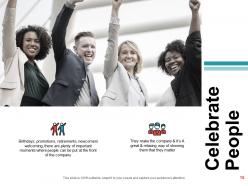
Slide 15: This slide shows Celebrate People displaying- Birthdays, promotions, retirements, newcomers welcoming, there are plenty of important moments where people can be put at the front of the company. T hey make the company & it’s A great & relaxing way of showing them that they matter.
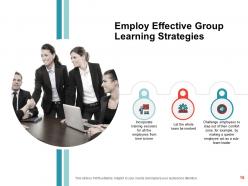
Slide 16: This slide displays Employ Effective Group Learning Strategies.
Slide 17: This slide presents Employee Engagement Planning Icons.
Slide 18: This slide reminds about 30 minutes coffee break.
Slide 19: This slide is titled as Additional Slides for moving forward.
Slide 20: This is Our Mission slide with related imagery and text boxes.
Slide 21: This is Meet Our Team slide with names and designation.
Slide 22: This is About Us slide to show company specifications etc.
Slide 23: This slide is titled as Financials. Show your finance related stuff here.
Slide 24: This is Our Goal slide. Show your important goals here.
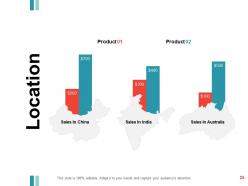
Slide 25: This is a Location slide with maps to show data related with different locations.
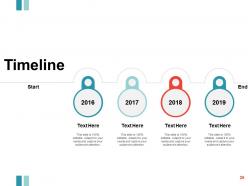
Slide 26: This is a Timeline slide. Show information related with time period here.
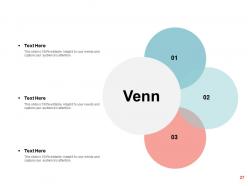
Slide 27: This is a Venn slide with additional text boxes.
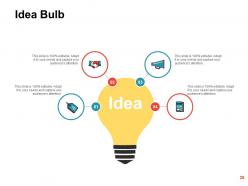
Slide 28: This is an Idea Bulb slide to state a new idea or highlight information, specifications etc.
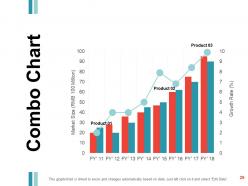
Slide 29: This slide shows Combo Chart with three products comparison.
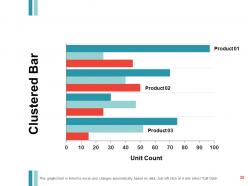
Slide 30: This slide presents Clustered Bar chart with three products comparison.
Slide 31: This is a Thank You slide with address, contact numbers and email address.
Employee Engagement Planning Powerpoint Presentation Slides with all 31 slides:
Our Employee Engagement Planning Powerpoint Presentation Slides make folks conducive to change. They create an atmosphere for acceptance.








FAQs for Employee Engagement Planning
High employee engagement indicators include consistent productivity levels, low turnover rates, active participation in company initiatives, positive peer collaboration, and proactive problem-solving behaviors. These engagement markers streamline organizational efficiency by reducing recruitment costs, enhancing team performance, and fostering innovation, with many companies finding that engaged employees deliver significantly higher customer satisfaction and ultimately drive competitive advantage in increasingly dynamic business environments.
Employee engagement significantly impacts organizational performance by increasing productivity, reducing turnover, enhancing customer satisfaction, and driving innovation through motivated workforce participation. Engaged employees deliver 23% higher profitability and 18% increased productivity, with companies like Google and Microsoft finding that strategic engagement initiatives streamline operations, minimize recruitment costs, and ultimately create sustainable competitive advantage in increasingly talent-driven markets.
Leaders can foster engagement through transparent communication, regular feedback sessions, professional development opportunities, flexible work arrangements, and recognition programs that celebrate achievements. These strategies enhance workplace satisfaction by empowering employees, building trust, and aligning individual goals with organizational objectives, with many companies finding that engaged teams deliver significantly higher productivity and retention rates.
Feedback mechanisms enhance employee engagement by creating transparency, fostering continuous improvement, and demonstrating organizational investment in professional development. Through regular performance reviews, pulse surveys, and open-door policies, companies streamline communication, address concerns proactively, and enable career advancement, with many organizations finding that structured feedback ultimately delivers higher retention rates and improved workplace satisfaction.
Company culture significantly influences employee engagement by establishing shared values, communication norms, recognition practices, and workplace behaviors that directly impact how connected employees feel to their organization. Organizations with strong, positive cultures create environments where employees experience greater job satisfaction, clearer purpose alignment, and stronger emotional investment, ultimately delivering higher retention rates, improved performance, and sustained competitive advantage across all business functions.
Remote work settings maintain employee engagement through regular virtual check-ins, flexible scheduling, clear communication channels, recognition programs, and collaborative digital platforms. These approaches streamline connection and accountability while enhancing work-life balance, with many organizations finding that remote teams deliver higher productivity and job satisfaction when supported by structured engagement strategies and meaningful virtual interactions.
Best practices for measuring employee engagement include regular pulse surveys, comprehensive annual assessments, stay interviews, performance metrics analysis, and 360-degree feedback systems. These methods work by capturing real-time sentiment, identifying engagement drivers, and tracking retention patterns, with many organizations finding that combining quantitative data with qualitative insights delivers more accurate engagement insights and actionable improvement strategies.
Recognition and rewards significantly boost employee engagement by acknowledging contributions, reinforcing desired behaviors, and creating emotional connections to workplace success. Through structured recognition programs, organizations enhance motivation, reduce turnover, and improve performance metrics, with many companies finding that consistent appreciation strategies ultimately deliver stronger team cohesion and competitive advantage.
Employee engagement and turnover rates demonstrate a strong inverse relationship, with highly engaged employees being significantly less likely to leave their organizations. Engaged employees feel valued, connected to company goals, and motivated in their roles, while disengaged workers often seek opportunities elsewhere, ultimately making engagement initiatives critical for talent retention and reducing costly recruitment expenses.
Training and development opportunities increase employee engagement by demonstrating organizational investment in career growth, enhancing job satisfaction through skill advancement, and creating clear pathways for professional progression. Companies offering structured learning programs, mentorship initiatives, and certification support find that employees show greater commitment, improved performance, and reduced turnover, ultimately delivering stronger retention and competitive advantage.
Management serves as the primary driver of employee engagement through clear communication, recognition programs, professional development opportunities, and creating supportive work environments. Effective managers enhance engagement by providing regular feedback, empowering decision-making autonomy, and aligning individual goals with organizational objectives, with many organizations finding that strong managerial relationships directly correlate with higher retention rates and improved performance outcomes.
Diversity and inclusion initiatives enhance team engagement by fostering psychological safety, encouraging diverse perspectives, and creating equitable advancement opportunities. Through inclusive hiring practices and bias training, organizations like financial services firms and healthcare systems cultivate environments where all employees feel valued, ultimately delivering higher collaboration, innovation, and retention rates across diverse workforce segments.
Common misconceptions include believing engagement equals happiness, that it's solely HR's responsibility, requires expensive perks, or happens naturally without strategy. Many organizations mistakenly think engagement is just about satisfaction surveys or one-time initiatives, when successful companies find that sustainable engagement requires ongoing leadership commitment, clear communication, and meaningful work connections, ultimately delivering improved productivity and retention.
Technology improves employee engagement through digital collaboration platforms, performance management systems, learning and development tools, recognition software, and employee feedback applications. These solutions streamline communication, automate routine tasks, and provide real-time insights into workforce satisfaction, with many organizations finding that integrated technology approaches ultimately deliver higher productivity and reduced turnover rates.
Sustained employee engagement delivers reduced turnover, increased productivity, enhanced innovation, improved customer satisfaction, and stronger financial performance. Organizations with consistently engaged workforces experience up to 23% higher profitability, 18% higher productivity, and significantly lower recruitment costs, while fostering cultures of continuous improvement that drive competitive advantage in increasingly talent-focused markets.
No Reviews