


Key Employee Engagement Strategies Powerpoint Presentation Slides





Try Before you Buy Download Free Sample Product
 Impress Your
 Audience
 100%
100% Editable
 Save Hours
 of Time


Employ Key Employee Engagement Strategies PowerPoint Presentation Slides to create a happy culture and more productive employees so that your organization grows. Indulge your employees in employee engagement strategies to increase the levels of productivity, retention of best talent, increased sense of health and well-being, and more. This content-ready employee engagement complete PowerPoint slideshow will show you ways to empower your employees. Assign a mentor to a newcomer, have a themed day office, include team photos, encourage charity, encourage innovation, and more. Not just this, this ready-to-use employee engagement PPT deck covers topics such as employee engagement key statistics, survey questionnaire, and survey analysis to get a clear picture of employee engagement in your organization. Understand employees and nurture them to bring out the best in them. Improve company’s performance by enhancing employee engagement strategies. Incorporate professionally designed key employee engagement strategies PPT templates to boost your employee’s morale. Assess the invention with our Key Employee Engagement Strategies Powerpoint Presentation Slides. Figure out how to improve it further.
People who downloaded this PowerPoint presentation also viewed the following :
Content of this Powerpoint Presentation
Today, many companies are focusing on employee engagement to retain high end talented workforce. No doubt they understand the importance of crucial employee engagement strategies, but fails to present them to their staff. The numerous reasons for this can be counted on fingers and include the difficulty of choosing the right approach and the simplicity of conveying these strategies in an accessible manner.
Being overwhelmed by the complexity and incomprehensive nature of the matter at hand, too many people do not employ winning engagement strategies. SlideTeam Key Employee Engagement Strategies Powerpoint Presentation slides are the real savior.
These 100% editable and customizable slides provide you a ready-made solution to create an impact. Let’s explore!
Are you seeking fresh perspectives? Check out our slide on the employee engagement calendar for a better approach.
Template 1 - Do The Survey

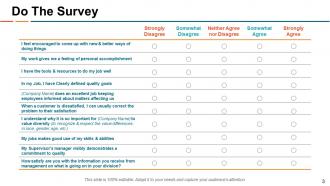
The slide includes a tabular representation that identifies various parameters, such as "Strongly Disagree," "Somewhat Disagree," "Neither Agree nor Disagree," "Somewhat Agree," and "Strongly Agree." An organization is likely to benefit from surveys by the ability to understand the sentiment of employees, identify areas that need improvement, and direct the engagement course accordingly. Such a slide is critical for HR practitioners, managers, and team leaders who would want to increase employee satisfaction and retention. It will help them by showing the significance of collecting employee feedback and leading positive organizational change.
Template 2 - Assign a Buddy/Mentor for Every Newcome

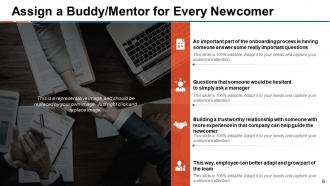
This slide is dedicated to one of the most important and somewhat effective employee engagement strategies – every newcomer should have a buddy/mentor. It can be said that one of the essential parts of the onboarding process is the presence and opportunity to ask a "dumb question" an employee may ask their boss over a cup of coffee. The buddy/mentor is the person who knows the answers and believes that some employees do not want to ask their boss but want to do the work as well as they can.
Template 3 - Have Themed Office Days
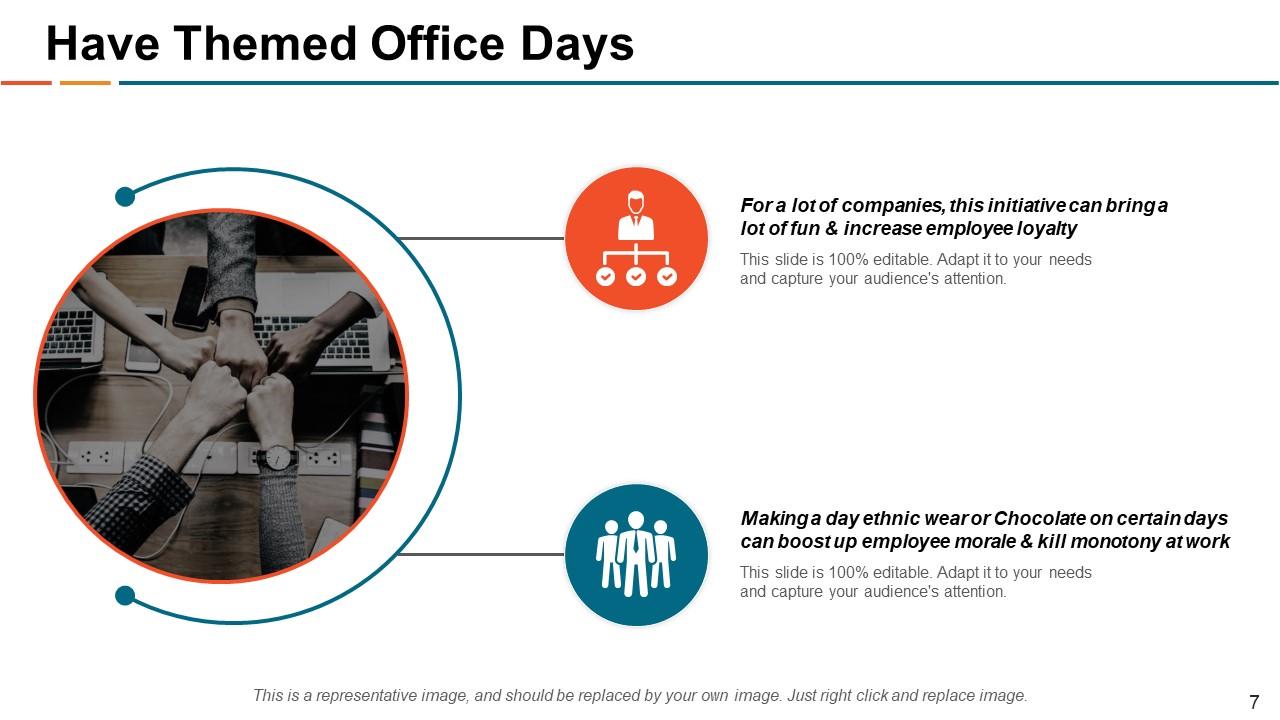
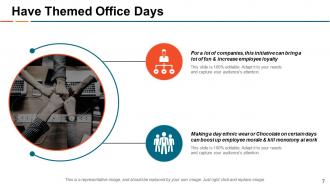
This slide strengthens employee-management relationships and enhances employee loyalty with its focus on ensuring an employee-friendly atmosphere. The slide makes a strong case for themed office days. Using these days as the launchpad, the management can increase zeal, enthusiasm and motivation among employees to work more productively.
Template 4 - Have Team Photos
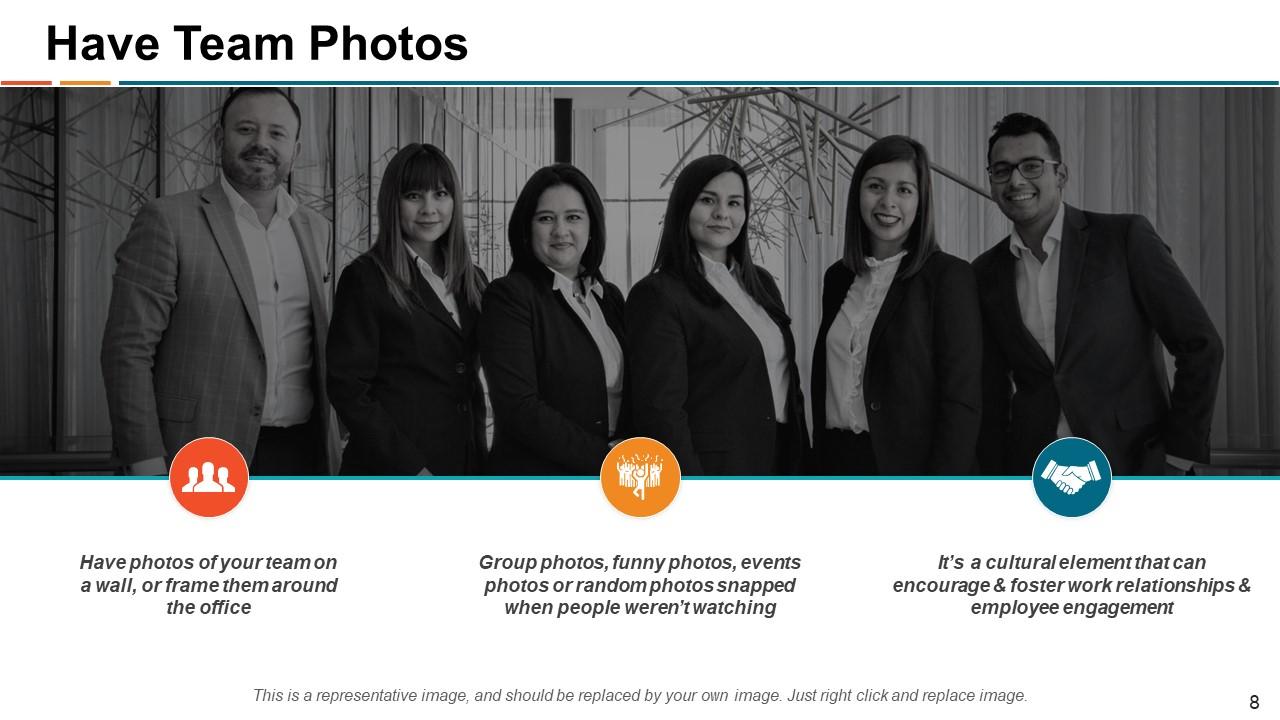
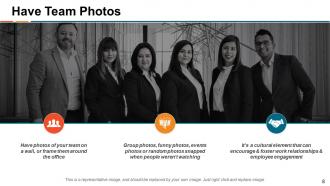
This slide showcases how team photos can serve as tools for fostering employee engagement and get them to be more present at work. HR professionals, managers, and team leaders may benefit from encouraging the use of group photos. In this way, the team photos would also reinforce organizational culture and visual storytelling, as well as remind the employees of their shared past and experiences, thus promoting the feeling of togetherness.
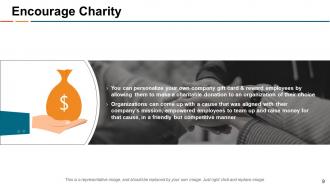
Template 5 - Encourage Charity

This slide shows how HR professionals, managers, and team leaders can utilize fostering charitable giving as a strategy that engages all employees in the company. Personalize the company's gift cards, bonuses, and end-of-year rewards for charitable donations to organizations and the causes the company and its employees care about. Getting all teams to raise funds for their chosen cause will engage everyone. Beyond the daily work-life focus, this slide engages employees to engage in charitable giving and create a socially responsible and engaged workforce mission.
Explore the latest insight on Employee Feedback Survey Results templates to assess team engagement.
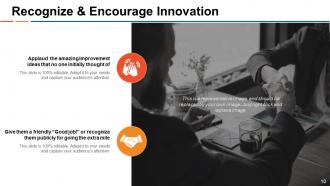
Template 6 - Recognize And Encourage Innovation
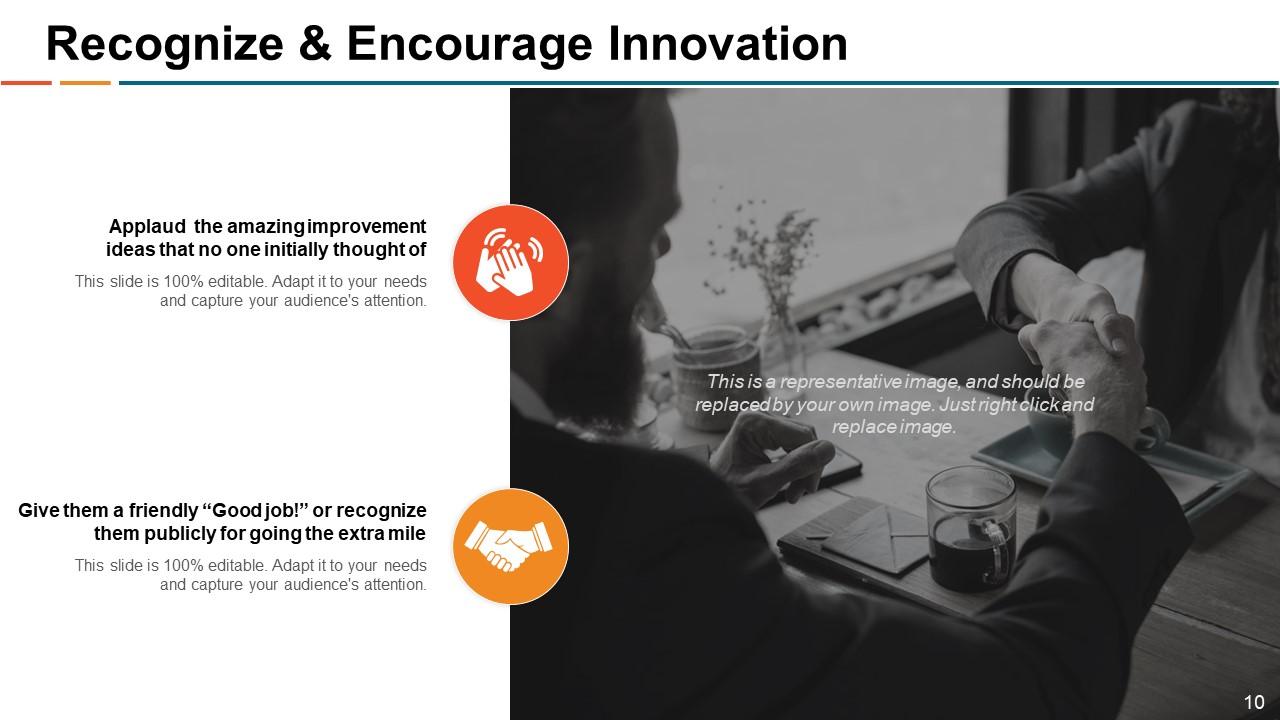
The slide presents recognizing and rewarding innovation as a crucial employee engagement strategy. The resource stresses the importance of accepting and congratulating the workforce for their creative ideas and contributions to improvement. From a simple "Good job!" to an award and public recognition, it promotes a culture of thankfulness and inspiration to go beyond the minimum. They are showing your employees that their innovative thinking is highly valued and appreciated and that they should not be afraid to share their ideas.
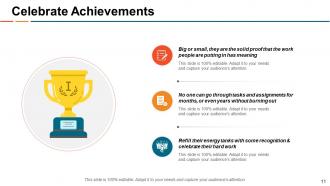
Template 7 - Celebrate Achievements

This slide helps to promote the concept that organizing different achievements is a significant part of developing employee engagement. It states that celebrating progress is one of the most powerful ways to maintain workers' interest in satisfying their duties. Furthermore, the slide says that both significant and minor achievements should be promoted to demonstrate to employees when their successful performance matters. By accepting that their hard work is appreciated, personnel frequently believe that their work is making a meaningful impact and are less discouraged and exhausted.
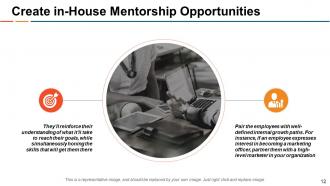
Template 8 - Create In-House Mentorship Opportunities
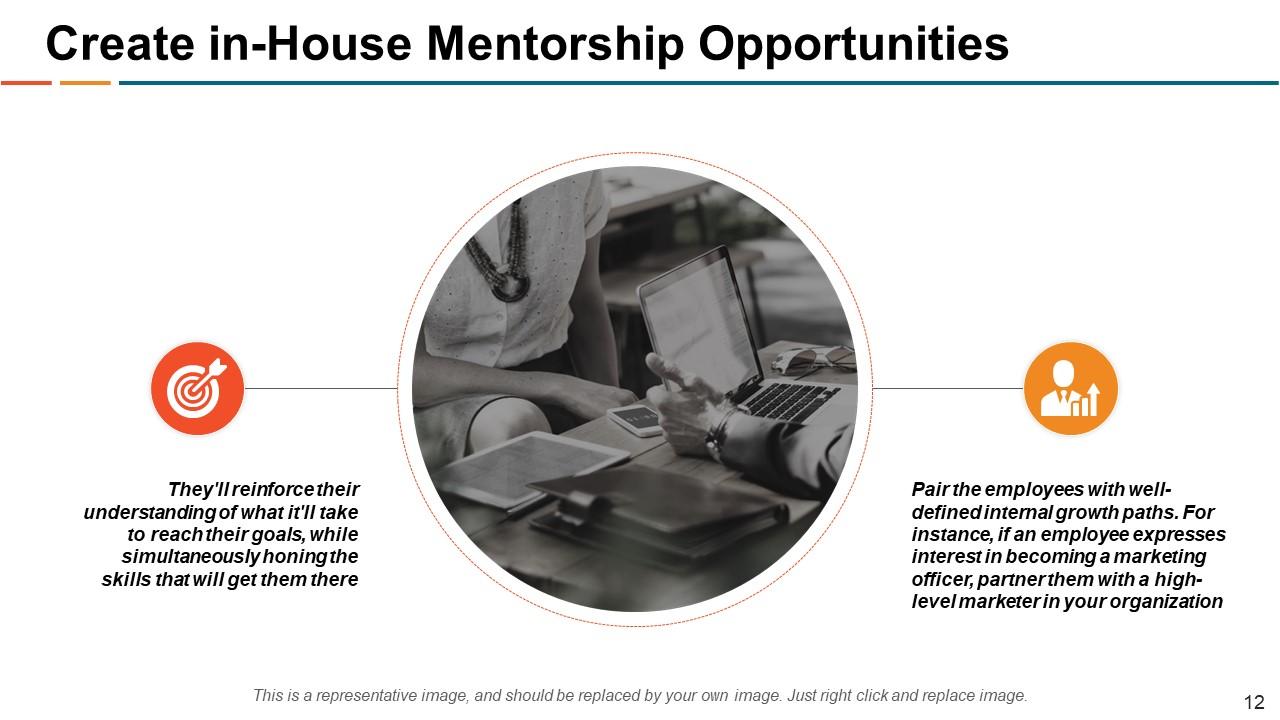
This slide advocates in-house mentorship chance as a reward for the good employees to learn even more. The slide proposes that employees should be matched with staff members who have clear internal growth paths, allowing the newer team members a clear idea of what to do to succeed in your organization. The slide will be used to sensitize employees on the importance of having a mentorship program and encourage them to complete it, till they are able to derive value. The message on the slide can be used to encourage staff to share insights and skills while leveraging learning to advance their career.
Template 9 - Identify Internal Growth Paths

This slide contains an evident tabulated format for defining internal growth paths for the organization. It provides the available roles, the ones reserved for the future, and the growth arrives for employees. Such an approach helps employees to understand their available opportunities and provides a better insight into the way of their career. It is also a valuable instrument for encouraging the workforce to define aspirational but feasible objectives. Please make use of it and start creating internal growth paths in your organization for engaged and highly motivated employees!
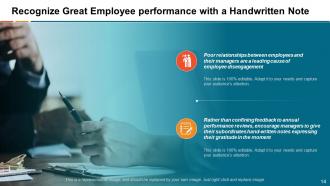
Template 10 - Recognize Great Employee Performance with a Handwritten Note

This slide focuses on the idea that excellent employee performance recognition needs a personal touch for it to be really appreciated. It advocates hand-written notes as one of the best ways to do this. This slide can be used by HR specialists, managers, and leaders to outline that all personalized recognition has a positive impact on employees' morale and engagement. The goal is to encourage them to take the time and ensure all workers get some positive feedback, and a thank you note. One can use this slide to start conversation and make it possible for all employees to feel appreciated and recognized by their leadership.
Engage Employees Now
In the rapidly changing world of modern workplaces, the lifeblood of organizational success is in the hands of highly engaged employees. These people are not only productive but also innovative and pioneering growth. However, achieving high and maintaining high levels of interaction is a challenging task. And it requires a strategic approach to understand the complex reservoir of relationships between the workforce and the organization. With our slides, you'll be able to communicate your crucial employee interaction strategies to any stakeholders you'll meet on your way toward better workplace practices. Don’t wait and download our slides and never worry about employee engagement matters anymore. Unlock the full potential of our Employee Engagement Strategies PowerPoint presentation today.
Discover our blog on Five Pillars for Employee Engagement and opt for better results.
Key Employee Engagement Strategies Powerpoint Presentation Slides with all 37 slides:
Make a genuine endeavour with our Key Employee Engagement Strategies Powerpoint Presentation Slides. They help make an earnest effort.





FAQs for Key Employee Engagement Strategies
Start with employee satisfaction scores and retention rates - those tell you the most. Pulse surveys are way better than annual ones (people actually fill them out). Track absenteeism and internal promotions too. Oh, and employee referrals - that's huge because happy people refer their friends. There's also eNPS which measures if employees would recommend your company as a place to work. Don't go crazy tracking everything though. Pick like 3 metrics max or you'll drown in data and nothing will be useful.
Honestly, ditch the micromanaging first - that kills morale instantly. Give people real control over their work and actual transparency about what's happening company-wide. Growth opportunities matter way more than those cringy pizza parties (seriously, who thought those worked?). Regular feedback is huge, but make sure it's meaningful stuff about their strengths. Oh, and train your managers properly! So many companies just promote their top performers without teaching them how to actually lead people. That's where things fall apart fast.
Honestly, leadership makes or breaks employee engagement. Your team picks up on everything - whether you actually care about them or you're just going through the motions. Micromanagers are the worst for this, they just suck all the energy out of people. What works is being real with your team and having their backs consistently. Give them room to grow too, because nobody wants to be stuck doing the same thing forever. Oh and definitely do regular check-ins - but here's the thing, you've got to actually follow through on what they tell you. Otherwise it's just performative BS.
Honestly, people just want to know their work matters and that someone notices. Feedback does that instantly. Without it, your team's basically flying blind for months wondering if they're screwing up. Weekly check-ins work way better than those dreaded annual reviews - nobody remembers what happened 8 months ago anyway. Recognition hits different too; we all get that little boost when someone says "nice job." It connects people to the bigger goals and helps them pivot quickly when needed. Even short conversations make a huge difference in keeping everyone engaged.
Yeah, remote work can totally kill engagement - people just feel cut off from everything. Communication gets all awkward and that team vibe disappears fast. I've watched it happen at like three different companies now. But honestly? You can fix it if you're really intentional about it. Weekly one-on-ones help tons, and not just the boring work stuff - actually ask how someone's doing. Virtual coffee breaks sound cheesy but they work. Also make sure you're calling out good work in your team channels where everyone can see it. The thing is, you have to try way harder than you ever would in person. It's annoying but worth it.
Oh totally! Google's "20% time" thing is pretty cool - people work on whatever they want one day a week. Flexible schedules help too, but like actually flexible, not fake flexible where you still get side-eye for leaving early. Peer recognition stuff works great - coworkers giving each other points or little rewards. Lunch and learns are solid if you get good speakers. Some places do volunteer days on company time which is nice. Gamifying goals can work but honestly depends on your crowd. You can't just throw foosball tables at people who really just want to go home at 5pm, right?
Dude, engaged employees are literally money in the bank. Your productivity shoots up 20-25% when people actually care about their jobs. Customer satisfaction gets way better too. The turnover thing is huge though - recruiting and training new people costs a fortune. Engaged workers collaborate more, stick around longer, and honestly just give a damn about finding better solutions. I've seen this play out at my old company - the teams where people were excited to be there crushed everyone else. Definitely measure where you're at first so you're not flying blind.
Honestly? Bad managers are the worst culprit here - they'll kill engagement faster than anything. Poor communication from leadership doesn't help either. People need to feel like their work actually matters, you know? Recognition goes a long way too. Start with regular one-on-ones and actually listen when your team brings stuff up. Celebrate the wins, even small ones. Don't micromanage everything - give people some autonomy over how they work. Oh, and connect their daily tasks to bigger company goals so they see the point. Pick one thing to focus on first and you'll notice changes pretty quick.
Honestly, just pick something that fixes your biggest problem first. Slack or Teams are great for getting people talking more. Those pulse survey apps actually tell you what's wrong instead of you just guessing (which we all do way too much). Recognition platforms where people can shout out good work are gold. Learning systems help with growth stuff. Project management tools show everyone how their work connects to the bigger picture - people love seeing that impact. The fancy AI platforms look cool but they're usually overkill. Start small and build from there.
Look, when people can actually be themselves at work instead of putting on some fake persona, they give a damn about what they're doing. Psychological safety is huge - if your team sees different perspectives in leadership and feels heard, they'll speak up with actual good ideas. Diverse teams legitimately solve problems better too, which shouldn't be surprising since you're getting different ways of thinking. But here's the thing - inclusion can't just be corporate speak. You've got to listen to the people who don't usually get heard and then do something about it.
Honestly, you've gotta look at both the numbers and the feelings stuff. Pulse surveys are clutch for getting real employee sentiment. Also watch your retention rates and see who's actually showing up to those optional company events - that tells you a lot. Exit interviews are where people finally spill the truth since they're already out the door anyway. Don't forget productivity metrics and internal promotions too. Engaged people usually perform better and stay longer for career growth. The trick is being consistent with measuring this stuff over time, not just sending out one survey and thinking you're done.
Yeah, engagement stuff totally depends on the industry. Tech companies go heavy on flexible schedules and innovation time - makes sense since those people live and breathe creativity. Healthcare workers? They're all about purpose and not burning out (which honestly seems impossible in that field). Manufacturing uses team bonuses and safety rewards. Retail's big on customer service training and performance pay. You really gotta know what clicks with your people though. Like, a coder and someone working a factory line aren't gonna be motivated by the same perks, you know?
Honestly, onboarding makes or breaks everything. Those first few weeks? They determine if someone's gonna be engaged for years or mentally checked out by month two. I've watched too many companies mess this up with boring paperwork marathons. What actually works is connecting new hires to real people and showing them why their job matters. Skip the endless compliance videos (well, don't totally skip them but you know what I mean). Focus on relationships instead. A chaotic start kills motivation fast, but when it feels intentional and welcoming, people stick around and actually care about the work.
Oh man, Google's 20% time thing is legendary - employees get one day a week for whatever passion project they want. Gmail came from that! So did AdSense. Salesforce does this "Ohana Culture" with volunteer days and recognition stuff. Buffer goes completely transparent with salaries and revenue, which honestly takes guts but builds crazy trust. Microsoft ditched their toxic stack ranking for growth mindset coaching and it totally changed everything there. I'd say start small though - pick one thing that actually makes sense for your company size, then build from there once people buy in.
Honestly, you've got more control over this than you think! Jump into meetings and actually speak up - share your ideas even if they're half-baked. Build real friendships with coworkers, not just the fake networking stuff. Take charge of your projects and find ways to make things better. Your manager probably wants your honest feedback way more than you realize, so tell them what's broken. I learned this the hard way at my last job. Don't just sit there waiting for someone else to make work interesting. Short sentences work. But you can also string together longer thoughts when you're explaining something that needs more context.
-
good
-
good