


Employee Retention Strategies Powerpoint Presentation Slides




Try Before you Buy Download Free Sample Product
 Impress Your
 Audience
 100%
100% Editable
 Save Hours
 of Time


Create a positive workplace with the help of Employee Retention Strategies Powerpoint Presentation Slides. Showcase the employee value proposition components such as rewards and benefits, employment brand, recruitment strategy, employment feedback, etc with this employee engagement plan PPT visuals. Showcase the factors that a company considers to attract and retain top talent by taking the assistance of this retention program PowerPoint slideshow. Present the methods to create an employee value proposition by utilizing the staff retention methods PowerPoint templates. Make your presentation eye-catchy by including high-grade icons present in the PPT deck. Demonstrate the organization’s commitment to employee growth, management development, ongoing employee recognition, community service, etc with the employee appreciation PPT layouts. Address the key factors that affect employee retention. You can also present ways to improve employee retention with our content ready retention programs PPT slideshow. Support an organization’s productivity by downloading these attention-grabbing retention strategies PowerPoint Presentation.
People who downloaded this PowerPoint presentation also viewed the following :
Content of this Powerpoint Presentation
Research shows that employee turnover is expected to cost the United States $430 billion a year by 2030. Reducing employee turnover rate and attracting top talent are ongoing discussions. Employers have crafted Employee Value Propositions (EVPs), a package of advantages and perks for employees in exchange for their skills, talent and labor.
Need to recognize red flags, solve problems, and create personalized interventions to boost employee happiness and satisfaction? Check out our blog.
As an example, consider Starbucks. It provides its employees with health and wellness benefits and stock options. Netflix provides a competitive salary package coupled with unlimited paid time off. Google offers flexible hours and benefits, such as free meals and access to on-site gyms. All of this is done to foster a more positive, healthy work environment where employees can be their productive-best selves.
This blog will help you win the talent war. It offers templates and examples to demonstrate well-defined EVPs. Use these presentations to discuss aspects of EVPs, such as compensation, benefits, rewards, career development, and work-life balance. This will help establish a positive organizational image for your company.
Download these PPT Templates to create or refocus your employee value proposition.
Also, check out SlideTeam’s Employee Wellness Playbook to help streamline efforts to improve employee wellbeing.
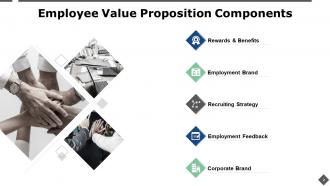
Template 1: Employee Value Proposition Components
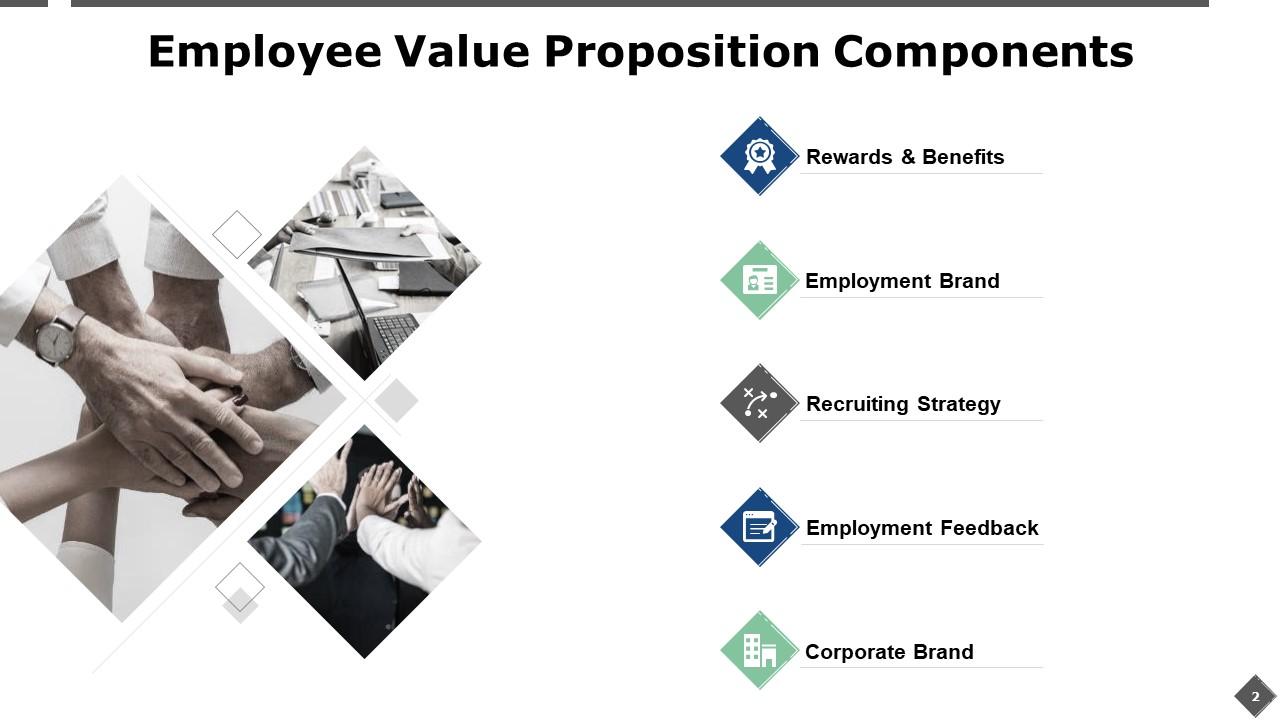
The Employee Value Proposition (EVP) contributes to the strength of your company brand. This PowerPoint Template depicts the key components of an EVP. It encompasses rewards and benefits, an employment brand, a recruitment strategy, employee feedback, and a corporate identity. These components provide you with an advantage over your competitors. Use this to discuss the special perks and opportunities that make an employer stand out as a class apart from competition.
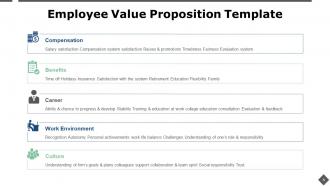
Template 2: Employee Value Proposition

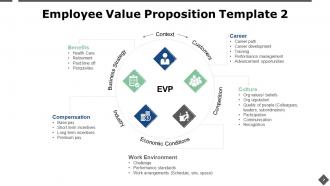
Research indicates that annually 35% of workers might or actually quit their professional jobs. As a result, investing in EVP can substantially benefit your organization. Use this PPT Framework to show the components of the EVP model for employee retention. It focuses on career, culture, benefits, remuneration, and the work environment to help you attract and retain talent. Your firm's success will be based on your ability to draw in, hold on to, and engage talent.
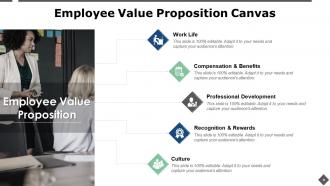
Template 3: Employee Value Proposition
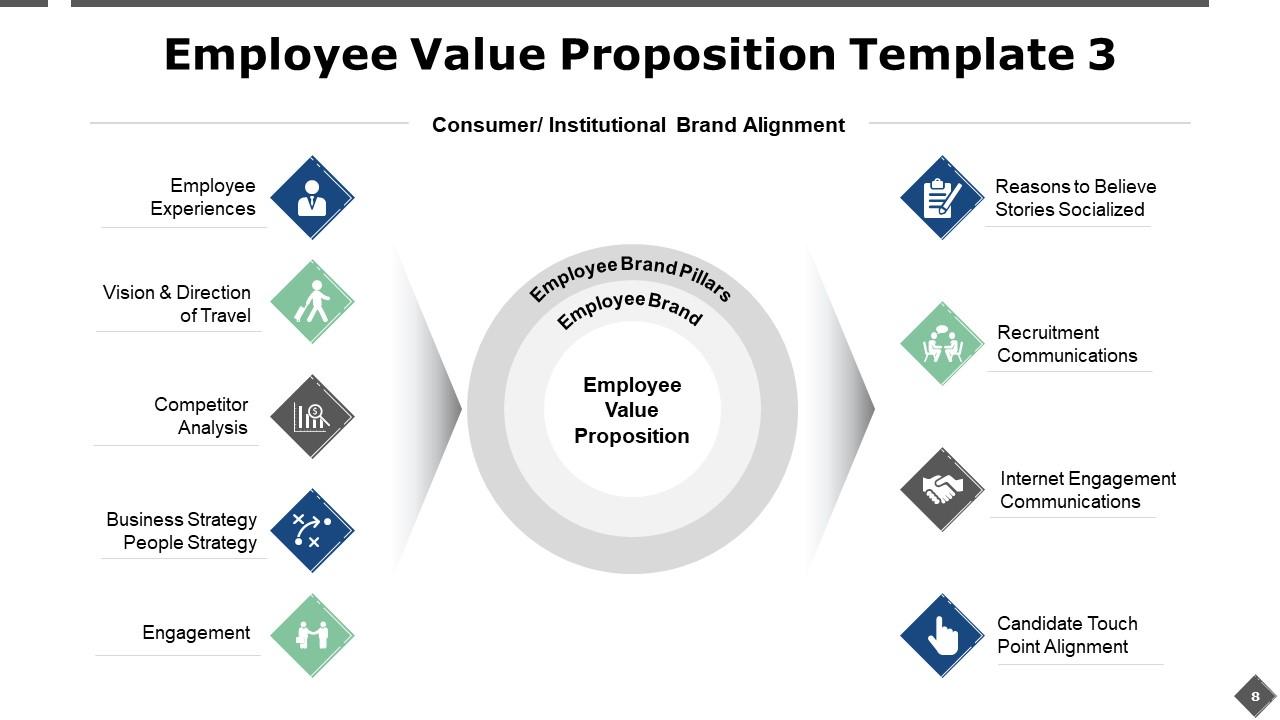
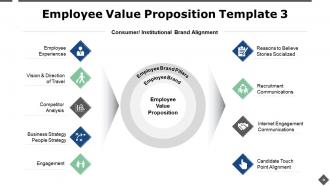
This PPT design delves into greater detail to develop a strong retention strategy. This well-designed EVP will help you reduce employee turnover and increase employee engagement. It discusses employee experiences, competitive analysis, engagement, recruitment communications, candidate touchpoint alignments, and other areas that shape staff retention efforts. Use this presentation as a quick reference to work on the many touch points and promote a culture of well-being.
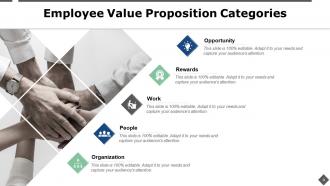
Template 4: Employee Value Proposition Categories
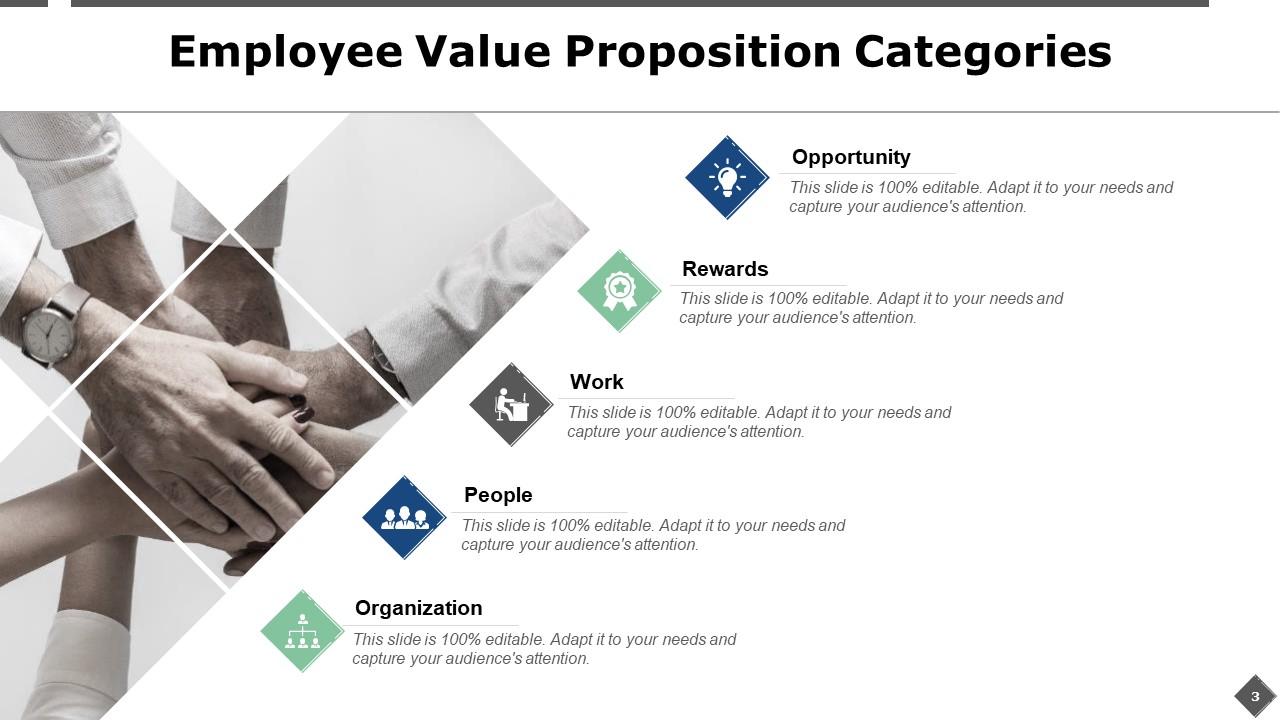
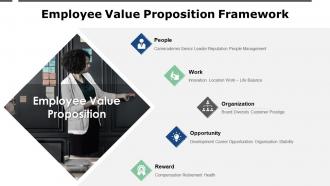
Need to create a compelling EVP for your company? Use this PPT Template to discuss EVPs. This helps develop a well-defined EVP for current and future hires. To reach the best level of performance at work, opportunity, rewards, work, people, and organization are all considered.
Retain your top performers.
Companies must develop an appealing Employee Value Proposition to maintain and attract top personnel to any job. Use SlideTeam’s PPT Templates to create an EVP unique to your organization.
PS Download SlideTeam’s Employee Experience Strategy Templates to increase employee productivity and revenues!
Employee Retention Strategies Powerpoint Presentation Slides with all 17 slides:
Use our Employee Retention Strategies Powerpoint Presentation Slides to effectively help you save your valuable time. They are readymade to fit into any presentation structure.



FAQs for Employee Retention Strategies
Honestly, flexible work stuff and solid health benefits are your biggest wins. Work-life balance is what people actually care about most - remote options, flex hours, all that. Health insurance is a given, but dental and mental health coverage? Those really make a difference. Professional development budgets are huge too since nobody wants to feel stuck in their role forever. Oh, and PTO policies - generous or unlimited time off gets people excited. I'd just ask your team what they want most first, then figure out what you can swing budget-wise. Some things you can roll out pretty fast.
Okay so here's the thing - you've gotta actually pay attention to what your people are saying in those surveys and exit interviews. Most places just dump all that feedback into some random spreadsheet and forget about it, which is honestly such a waste. Look for the stuff that keeps popping up - maybe it's crazy workloads or terrible managers or zero growth opportunities. Whatever it is, fix it fast and tell everyone what you're doing about it. People need to see their complaints actually matter, you know? Pick the biggest issue that everyone's complaining about and start there.
Dude, culture is everything for keeping people. I've watched friends bounce from jobs that paid well just because the vibe was awful. Others? They'll turn down bigger offers to stay somewhere they actually like going to work. Here's the thing - most companies just slap some inspiring words on their careers page and call it a day. That's useless. You need to actually walk the walk daily. Ask your team what they love about working there right now, then lean into that stuff hard. When people feel like their values match up with the company's actual behavior (not just the poster in the break room), they stick around way longer.
Dude, good onboarding can bump your retention up to 82% - that's huge. Those first 90 days are make or break. Give people clear expectations and help them connect with the team, and they'll actually want to stay. Mess it up though? They're already planning their exit strategy. I'd honestly start by figuring out what each role needs in their first month or two. People just want to feel like they know what they're doing and where they fit in. It's not rocket science, but so many companies screw this up.
Honestly, watch for the obvious stuff first - people calling out more, getting cynical, or just seeming drained. Those regular check-ins you do? Actually use them to dig deeper than "how's it going." I've found that behavior changes are usually the biggest tell. If someone who's normally chatty goes quiet, that's your red flag right there. Jump on workload problems fast and see if you can offer some flexibility with schedules or deadlines. Oh, and take a hard look at whether you're asking for too much - sometimes we don't realize how unrealistic our expectations have gotten. Catch it early before they mentally quit on you.
So definitely track your turnover rate monthly - that's the big one. Employee engagement surveys are honestly way more useful than people think, they'll show you problems before people actually quit. I'd also watch internal promotion rates and how long it takes to fill positions. Oh and exit interview themes, those can be brutal but super helpful. Cost per hire matters too since good retention means you're not constantly recruiting. Maybe set up some kind of quarterly check-in on all this stuff? That way you can ditch whatever isn't working.
Honestly, most companies just talk a big game about development but don't actually do anything. You need real one-on-ones where you discuss their career goals - not just project updates. Mentorship programs help too. Give people stretch assignments and cross-departmental projects so they can see how other parts of the business work (which they always find way more interesting than you'd think). Training budget matters, but hands-on experience matters more. When someone gets promoted internally, make a big deal about it. Everyone needs to see you're serious. Oh, and map out actual career paths for each role - people want to know where they could go next.
Honestly, start with Slack or Teams for daily check-ins. The random GIFs actually work better for team bonding than formal meetings - weird but true. Video calls are crucial for remote folks to maintain that face-to-face vibe. Tools like 15Five or Culture Amp help you check how satisfied everyone's feeling without being pushy about it. Asana keeps projects organized so people aren't constantly confused about who's doing what. Oh, and don't try implementing everything at once - just pick whatever fixes your biggest communication headache first.
Oh man, leadership style is HUGE for retention. Bad managers are basically retention poison - people don't quit jobs, they quit their bosses. When you've got supportive leaders who give solid feedback and don't breathe down everyone's necks? Night and day difference. I read somewhere that engaging leaders cut turnover by like 40%. Micromanagers though... ugh, they'll clear out your best people fast. If retention's tanking, honestly I'd look at your management first. Sometimes just getting those folks some coaching completely flips the script.
Yeah, flexible work totally increases loyalty. Your employees feel trusted when you're not breathing down their necks about where they work from. Remote options, flexible hours - that stuff makes people feel human instead of just cogs in a wheel. Honestly, it's such a simple thing but most managers still screw it up by saying they're flexible then micromanaging anyway. People want to handle their life stuff without lying about "dentist appointments" you know? Survey your team first though - what sounds flexible to you might not be what they actually need.
Honestly, recognition makes such a difference in keeping good people. Your top performers need to feel seen - whether that's public shout-outs, bonuses, or just acknowledging their wins. Without it, they'll start looking elsewhere pretty quickly. Make it specific too, not just generic "thanks for your hard work" nonsense. I've seen companies lose amazing employees simply because they never bothered saying "hey, that project you crushed last month really helped us hit our goals." Mix formal programs with casual recognition. People genuinely stick around when they feel valued, and it's way cheaper than constantly hiring replacements.
Honestly, people need to feel like they actually belong somewhere, not just clock in and out. Good onboarding helps - like actually introducing them to people and the vibe, not just paperwork. Those random coffee meetups work better than you'd think. Regular check-ins are clutch too, but skip the formal quarterly stuff that everyone dreads. Mix up project teams so people aren't stuck in their little silos all the time. Oh, and actually let everyone speak up in meetings - seems obvious but half the companies I know suck at this. It takes time though, belonging doesn't happen overnight.
Honestly? Just ask people what they actually want instead of guessing. I know it sounds obvious, but most companies never do this. Run surveys with different age groups and departments - you'll be shocked how much priorities vary. Some people are all about flexibility, others want mentorship or just better pay. Once you know what each group cares about, build benefits and career tracks around that stuff. The trick is actually following through though, not just collecting feedback and ignoring it. I'd start with focus groups for your biggest employee demographics this quarter.
Exit interviews are seriously underrated - people finally spill the truth when they're walking out the door. Instead of the usual "pursuing new opportunities" BS, you'll get the real deal about bad managers, dead-end roles, or drama between teammates. Yeah, some feedback's gonna hurt. But that's the point! Track what keeps coming up across different exits and you'll see blind spots you never noticed. I swear, sometimes it takes three people saying the same thing before leadership actually listens. Turn those patterns into fixes for your current team before more people bounce.
Honestly, remote connection is tough but totally doable. Coffee roulette works great - just randomly pair people for virtual chats. Care packages to remote workers' homes are a hit too. I'm obsessed with virtual lunch-and-learns because who doesn't love free DoorDash credits? Create Slack channels for random stuff, not just work. Celebrate wins publicly so everyone feels included. Oh, and rotate meeting times so remote folks aren't always stuck with weird hours. The trick is making sure office and remote people feel equally important. Pick one thing to try this month and go from there.
-
Easily Editable.
-
Very well designed and informative templates.
-
Easily Editable.
-
Professional and unique presentations.