


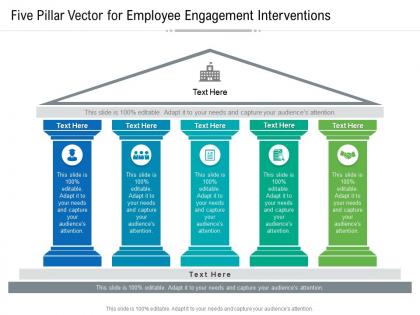
Five pillar vector for employee engagement interventions infographic template




Try Before you Buy Download Free Sample Product
 Impress Your
 Audience
 100%
100% Editable
 Save Hours
 of Time


Our Five Pillar Vector For Employee Engagement Interventions Infographic Template are topically designed to provide an attractive backdrop to any subject. Use them to look like a presentation pro.
People who downloaded this PowerPoint presentation also viewed the following :
Five pillar vector for employee engagement interventions infographic template with all 2 slides:
Use our Five Pillar Vector For Employee Engagement Interventions Infographic Template to effectively help you save your valuable time. They are readymade to fit into any presentation structure.
FAQs for Five pillar vector for employee engagement
Honestly, it comes down to a few key things. People need to feel heard by their managers and know there's room to grow. Money matters too - can't be engaged when you're worrying about bills, right? Recognition goes a long way, even just acknowledging good work. Give people some freedom in how they get stuff done instead of breathing down their necks constantly. Oh, and they've got to see how their role connects to the bigger picture. Good relationships with teammates help too. My advice? Just ask your people what's actually bugging them first.
Honestly, mix surveys with real data - that's where you'll get the truth. Keep pulse surveys super short though, like 5-10 questions max because people hate those endless ones. Then look at turnover, sick days, who's actually moving up internally. Exit interviews are amazing but yeah, kinda late to fix anything by then. Oh and see who shows up to optional stuff - that tells you a lot. The main thing is being consistent with whatever metrics you pick so you can actually spot patterns. I'd just start with one simple pulse survey next quarter and go from there.
Honestly? Your leadership style makes or breaks everything. I've watched incredible people just mentally check out under terrible managers - it's crazy how fast it happens. But here's the thing: when you're actually transparent about goals and listen to what they're saying, people feel like they matter. Give real feedback, not just the annual review BS. Create space where they can speak up without getting their head bitten off. Oh, and if you're not doing regular one-on-ones yet, start there. That's where you'll actually connect with them and figure out what drives each person.
Look, engaged employees literally care about what they're doing - that's why they work harder and make fewer mistakes. Your turnover drops too, which saves you a ton of money (hiring is expensive as hell). When people are actually invested, they collaborate better and come up with creative solutions instead of just clocking in and out. The research backs this up - engaged teams perform about 20-25% better consistently. My advice? Just ask your team what gets them excited about work and what drives them crazy. Sometimes the answers will surprise you.
Honestly, start with just recognizing good work - that stuff matters way more than people think. Flexible schedules help too if you can swing it. Training programs are solid, but here's the thing: you gotta actually listen when people bring up problems. Don't just nod and forget about it. Open communication is everything. I'd probably focus on one thing first though, maybe the recognition piece? Then build from there. The worst mistake is doing some big flashy initiative that dies after two months.
Honestly, feedback mechanisms work because people just want to feel like someone's actually listening to them. Set up regular check-ins - could be surveys, one-on-ones, whatever works for your team. But here's the thing that trips up most managers: you can't just collect all this input and then ghost everyone. People need to see what happened with their suggestions. Maybe you can't implement everything (budget constraints are real), but at least explain your reasoning. I'd say pick one method first and get good at it before adding more. Oh, and anonymous options usually get you the most honest responses.
Honestly? Most of the time it's because people feel invisible or like their work doesn't actually matter. Bad communication from the top doesn't help either. Micromanaging kills everything - I swear some bosses think hovering makes them better leaders. Growth opportunities matter too. When people feel stuck, they check out mentally. Start with regular one-on-ones if you aren't already. Celebrate the small wins, not just big ones. Help your team see how their daily stuff connects to the bigger picture. Give them room to learn new things and then actually trust them to do their jobs without breathing down their necks.
Honestly, it's all over the map. Some people absolutely love remote work - they get more done and feel way more trusted. Others? They're basically dying from loneliness and miss bumping into coworkers by the coffee machine. I've watched teams where it works great and others where it's a total disaster. The difference is usually whether managers actually put effort into staying connected. Like, you can't just assume people will figure it out themselves. Regular one-on-ones help, random video calls too. But yeah, you definitely have to work harder at it than when everyone's just... there.
Send them a welcome package before day one - nobody wants to walk in totally clueless. Get their laptop and workspace ready beforehand because honestly, there's nothing worse than killing someone's excitement by making them sit around waiting for IT. Pair them with a buddy who isn't their manager, someone who can show them around and answer weird questions like where to find decent coffee. In their first week, set up casual chats with teammates they'll work with. Oh, and give them a small project they can actually finish quickly - everyone needs that first win to feel good about joining.
Development programs work because they actually show people you give a damn about their future, not just what they can do for you right now. Survey your team first to see what skills they want - don't just assume. When employees see clear growth paths and get real training, they're way more engaged. Plus they stick around longer, which honestly saves you a ton on hiring costs. People learning new stuff are just naturally more motivated. I mean, who doesn't want to feel like they're moving forward instead of staying stuck?
Honestly, culture is everything when it comes to keeping people engaged at work. Trust me, I've seen teams completely transform just from having better communication and actually recognizing people's efforts. Short version: toxic workplace = people hate their jobs. Good culture? People actually want to show up. It's wild how much retention and productivity improve when employees feel like they matter beyond just their daily tasks. Oh, and here's something that actually works - start small by listening to what's bugging your team and celebrate the wins together. Those little changes add up fast.
Tech can totally transform how you handle engagement - way better than old-school methods. I'd start with something like Slack or Teams for dedicated channels, then maybe add pulse surveys for instant feedback instead of those yearly reviews nobody likes. Tools like Bonusly make recognition fun and gamified, which honestly works better than you'd think. But here's the thing - don't go crazy picking apps your team will never touch. Find one tool that fixes your biggest headache first. Get everyone actually using it, then build from there. The data you'll collect is seriously valuable for spotting patterns.
When people check out mentally, you'll see them rolling in late and missing deadlines left and right. Their work quality tanks, they stop speaking up in meetings, and suddenly they're "sick" way more often (honestly, we've all done that). Previously motivated people become withdrawn - that's your biggest warning sign right there. They'll complain more, avoid new projects like the plague, and just do the absolute minimum. It's pretty obvious when someone's physically there but mentally somewhere else entirely. If you're noticing this pattern, definitely grab them for a one-on-one chat to figure out what's actually happening.
Honestly, people just want to feel like their work matters. Recognition programs work because they show employees you actually notice what they're doing. Could be something as simple as calling someone out in a meeting or doing the whole formal award thing. The trick is being specific about what they did well instead of just saying "good job" all the time. I've seen this backfire when it's too generic though - people can tell when you're just going through the motions. When you do it right, it creates this cycle where people stay motivated because they know someone's paying attention. Even having coworkers recognize each other makes a difference.
Oh totally, there's a huge link between the two. People who actually like their jobs don't spend their lunch breaks scrolling through job postings, you know? I read somewhere that companies with engaged teams have like 40% less turnover - which honestly makes perfect sense. Why would someone bail if they feel valued and excited about their work? Money helps obviously, but if your retention sucks, start with making people actually want to show up. Way more effective than just throwing raises at everyone and hoping they'll stay.
-
Innovative and Colorful designs.
-
Unique design & color.
-
Presentation Design is very nice, good work with the content as well.
-
Excellent design and quick turnaround.
-
Informative presentations that are easily editable.