Employee Engagement And Retention KPI Dashboard
Try Before you Buy Download Free Sample Product
Audience
Editable
of Time
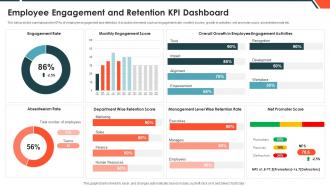
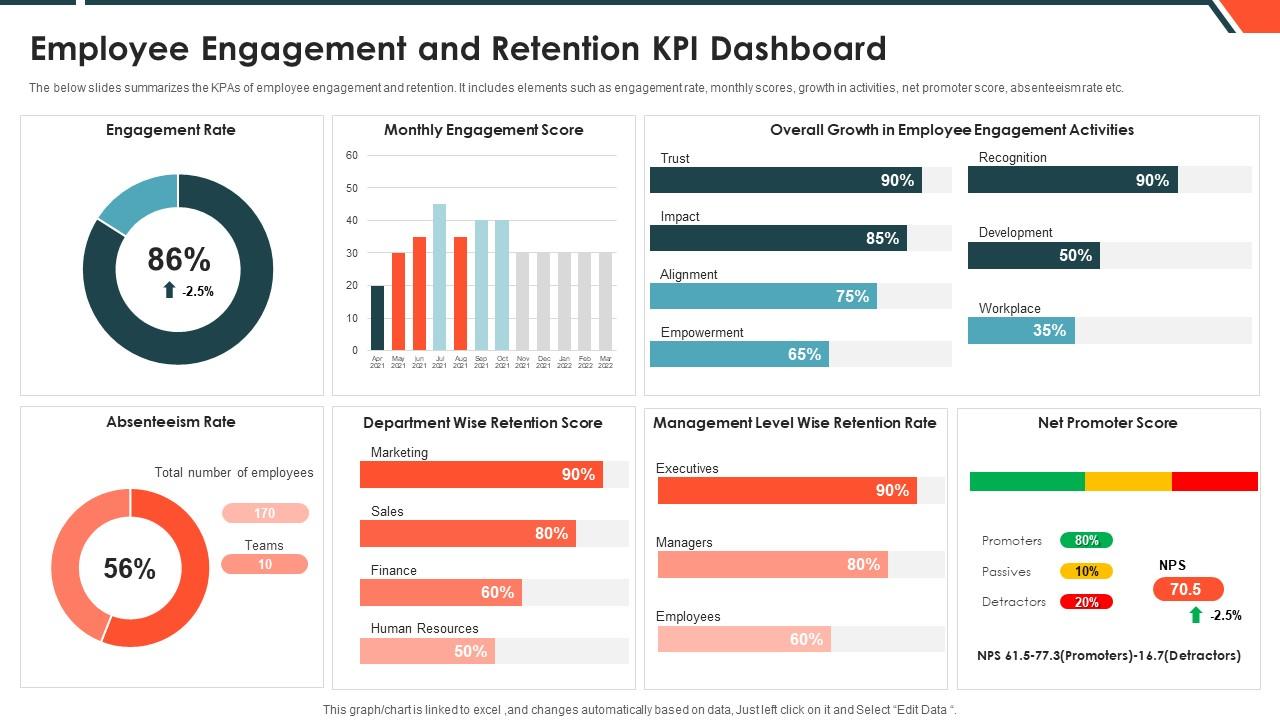
The below slides summarizes the KPAs of employee engagement and retention. It includes elements such as engagement rate, monthly scores, growth in activities, net promoter score, absenteeism rate etc.
People who downloaded this PowerPoint presentation also viewed the following :
Employee Engagement And Retention KPI Dashboard with all 7 slides:
Use our Employee Engagement And Retention KPI Dashboard to effectively help you save your valuable time. They are readymade to fit into any presentation structure.
FAQs for Employee Engagement And
Honestly, I'd start with those quick pulse surveys - maybe weekly or every other week. They're super easy to set up and you get real feedback fast. Also track who's actually showing up to virtual meetings and optional stuff, plus how quickly people respond to messages. One-on-ones are huge too, way more than they were in the office. Oh and definitely measure eNPS - that's basically asking if they'd recommend working there. The weird thing about remote is you lose all those casual conversations, so you have to be way more deliberate about checking in. Pulse surveys are probably your best bet to start.
Here's the thing - generic surveys are pretty useless because they don't capture what actually matters at YOUR company. Start by figuring out what drives success in your specific culture. Collaborative workplace? Track cross-team projects and peer recognition instead of just individual metrics. Innovation-focused? Measure idea submissions or creative project time. But honestly, the real key is asking your people what engagement means to them through focus groups or quick pulse surveys. I learned this the hard way at my last job. Then build your KPIs around those insights rather than some cookie-cutter template.
Dude, leadership is absolutely your biggest driver for engagement metrics. Good managers who are transparent and actually care about developing their people? You'll see job satisfaction and retention rates shoot up. But here's the thing - bad leadership kills those numbers instantly. People always say employees don't quit jobs, they quit bosses, and honestly that's so true. Your managers basically control everything from team vibe to whether people see a future there. I'd focus on fixing leadership first if you want to see real improvement in engagement scores.
So HRIS platforms are your best bet for automatically tracking engagement stuff in real-time. Set up automated surveys and those pulse tools - they'll monitor participation and give you instant visual reports. Honestly, beats the hell out of those old Excel nightmares we used to suffer through! The trick is getting everything to talk to each other. Your engagement scores, turnover numbers, performance data - all flowing into one dashboard. Oh and pro tip: don't go crazy buying everything at once. Pick one tool that plays nice with what you already have, then expand from there. Makes the whole thing way less overwhelming.
Don't try measuring everything at once - you'll just get buried in numbers that don't mean anything. Most companies only do those big annual surveys, which is honestly like checking your bank balance once a year. Pretty useless, right? You also can't just let leadership decide what to measure without asking actual employees what matters to them. Otherwise you're tracking stuff nobody cares about. I'd start with maybe 3-5 key things that actually connect to how your business performs, then add more later.
Check your engagement KPIs every 2-3 months - that's the sweet spot. Quarterly at bare minimum though. Don't do annual reviews, seriously. Engagement changes too fast and you'll miss everything important. When to adjust? Depends what your data's telling you. Stable scores and things are working? Keep going. But if survey participation drops or you're dealing with major org changes, pivot fast. Oh, and set those calendar reminders right now - I always forget to do these reviews otherwise. Trust me on that one.
Honestly, exit interviews are where you'll get the juiciest intel - people drop their filters when they're done pretending everything's fine. Try mixing in some employee interviews and focus groups too. Those engagement scores only tell part of the story, you know? Regular chats with managers can surface stuff like team drama or crazy workloads that surveys totally miss. I'd throw in some meeting feedback and just keep your eyes open for how people actually collaborate day-to-day. The whole point is figuring out what's really driving those numbers, then you can actually fix the right problems instead of guessing.
Talk to your employees first - ask them what engagement actually means before you build any metrics. Honestly, their answers will probably be way different than what leadership thinks. Run some focus groups or quick surveys about what makes them feel engaged at work. Then use that to figure out which KPIs actually matter vs the ones that just look pretty on dashboards. I'd start small - grab like 5-10 people this week and just ask them straight up what "feeling engaged" means to them. Test your metrics with employees once you've got them. Don't make it a one-and-done thing either.
Dude, engaged employees are literally money makers - like 23% more profitable and 18% more productive than companies with checked-out teams. Your turnover drops big time (hiring's expensive as hell), customers are happier, and everything just runs smoother. I've seen it firsthand - people actually give a damn about quality when they're engaged. They collaborate better, come up with cool ideas. Track stuff like eNPS scores every quarter. Those numbers predict your revenue way before it shows up in your bank account, which is pretty wild when you think about it.
Honestly, you need benchmarking or you're just guessing with your engagement numbers. Like, is 65% engagement good? Bad? Who knows without comparing it to your industry! I learned this the hard way at my last job - we thought our metrics were terrible until we realized we were actually above average for our sector. It's like getting graded on a curve. Your boss will actually listen when you say "we're beating 75% of companies" instead of just rattling off random percentages. Plus it helps you figure out what targets make sense and which metrics actually matter.
Honestly, manager relationships are huge - that one metric alone predicts like 60-70% of who's gonna leave. Career development satisfaction and workload balance are the other big ones. eNPS is decent but feels more reactive than predictive, you know? Oh, and definitely track "intent to stay" responses since that's basically people telling you their plans straight up. The thing is, you gotta measure this stuff quarterly not yearly because people's feelings change fast. I'd probably start with the manager piece first - it's wild how much that one relationship affects everything else.
Honestly, you gotta bake those engagement numbers right into performance reviews with real consequences. Give every manager specific targets for their team - not just "keep people happy" BS. I've watched too many companies where metrics just sit there doing nothing. Quarterly check-ins work well to track progress and actually fix problems when scores tank. Someone needs to own this stuff - usually HR working with department heads. Oh and start small! Pick 2-3 managers who'll actually care about it, then use their wins to get other teams on board.
Honestly, skip the boring spreadsheet dumps - nobody reads those anyway. Create visual dashboards showing trends over time instead of just random snapshots. People need to see the actual journey. Host some lunch sessions where you break down what the numbers mean for each team specifically. I always tie metrics back to real employee stories plus concrete actions we're taking. Give managers talking points so they can have decent conversations about it. The whole thing should feel relevant to people's daily work, not just another HR thing they have to sit through.
Ditch those old-school annual surveys - they're basically useless now. Instead, try real-time pulse checks and track stuff that actually matters: how well remote collaboration works, whether people feel burned out digitally, if they're using flexible schedules effectively. Career development tracking is huge too. Honestly? Skip measuring "work-life balance" and focus on autonomy levels and how well work integrates with life instead. Inclusion metrics matter way more than generic satisfaction scores. Oh, and definitely ask your team what engagement factors actually affect their day-to-day experience first - saves you from tracking pointless KPIs nobody cares about.
Dude, recognition is like a cheat code for engagement scores. You acknowledge someone's work and boom - better satisfaction, lower turnover, higher employer ratings. It's honestly the lowest-hanging fruit out there. People just want to feel valued, and it shows up instantly in your surveys. The trick is being specific about what they did well instead of throwing around vague "great work" comments. I'd start tracking how often you're actually recognizing people - probably less than you think. You'll notice the connection to engagement pretty fast. Sometimes I wonder why more managers don't just... do this more?
-
Crisp and neat slides. Makes it fun and easier to curate presentations.Â
-
A big thanks to SlideTeam! An incredible and diverse library of templates helped me with my business project presentation.