


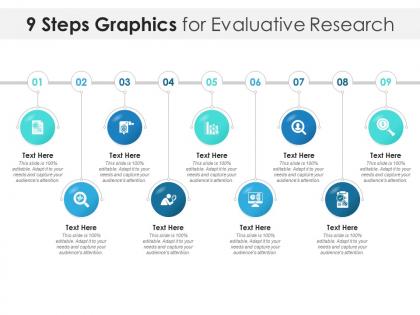
9 steps graphics for evaluative research infographic template




Try Before you Buy Download Free Sample Product
 Impress Your
 Audience
 100%
100% Editable
 Save Hours
 of Time


Our 9 Steps Graphics For Evaluative Research Infographic Template are topically designed to provide an attractive backdrop to any subject. Use them to look like a presentation pro.
People who downloaded this PowerPoint presentation also viewed the following :
9 steps graphics for evaluative research infographic template with all 2 slides:
Use our 9 Steps Graphics For Evaluative Research Infographic Template to effectively help you save your valuable time. They are readymade to fit into any presentation structure.
FAQs for 9 steps graphics for evaluative
So basically you're just trying to figure out if your program actually works and if it's worth the money/time you're throwing at it. First thing - define what success looks like specifically, not some vague bullshit. Then measure effectiveness, efficiency, and whether you're hitting your targets. Think of it like a report card but with real numbers. You also want to catch what's working so you can do more of that, and spot problems early before they blow up in your face. Honestly, most people skip the "defining success" part and wonder why their evaluation sucks later. Build everything around those concrete metrics you set up front.
So basically, evaluative research is when you're trying to figure out if something actually works or not. Exploratory research helps you discover new stuff, descriptive research tells you what's happening - but evaluative? You're making judgments. Does this program suck or is it worth keeping? Should we dump this policy or give it more funding? You're comparing results against benchmarks you set beforehand. Think like measuring if a new teaching method actually improved test scores. The whole point is deciding what to do next based on performance. It's way more about making calls than just collecting data, you know?
So there's basically three approaches you'll run into. RCTs are the gold standard - funders eat that stuff up, but they're honestly a nightmare to pull off in actual schools. Mixed methods is probably your best bet though - you get your hard numbers plus the story behind them from interviews and observations. Case studies are solid when you need to really dig into one specific program. Oh, and start with your evaluation questions first. That'll tell you which route makes sense. Don't just pick a method because it sounds fancy.
Okay so here's what I've learned the hard way - don't save evaluation for the end. Build it right into your milestones from the start. Weekly pulse checks, monthly stakeholder feedback, whatever works. Most PMs I know skip this because they're drowning in other stuff, but that's literally when you need it most. Put evaluation as a permanent agenda item and get someone to actually own collecting the data. Otherwise you'll be scrambling to figure out what went wrong during the post-mortem instead of catching issues while you can still fix them. Trust me on this one.
Your stakeholders are basically your sanity check for the whole evaluation process. Get them involved early when you're designing everything - they know the program inside and out (and yeah, they're probably paying for it too). Don't just check in at the start and finish though. Keep talking to them while you're collecting data because they'll catch stuff you totally miss. I learned this the hard way on a project last year. Treat them like actual partners, not just people you interview once. They help define what success looks like and give you access to participants. Pretty crucial honestly.
Ugh, the data collection thing is such a pain with nonprofits. Most don't have proper systems set up because they're just trying to serve people, you know? Their clients are often dealing with sensitive stuff too, so getting them to share info or do surveys is tricky. Staff turnover is brutal - whoever set up their tracking system probably left months ago. Budget's always tight so they can't invest in fancy tools or training. Honestly, your best move is making data collection part of what they already do daily. Don't create some separate process that feels like extra work. Keep it stupid simple or it won't stick.
Mix up your data sources - don't just rely on one method. Combine surveys with interviews and maybe some observation work too. Test your questions first! I learned this the hard way when half my survey responses made no sense because people were confused. Make sure everyone on your team collects data the same way. Write down every single step you take. Having another person look over your plan before you start is honestly a lifesaver - they'll catch stuff you missed.
So there's basically three main things you want to look at: did you hit your goals (outcome stuff), how smoothly did everything actually run (process), and what bigger changes happened that you maybe didn't expect (impact). Track the numbers - completion rates, costs, satisfaction scores - but honestly don't sleep on the qualitative stuff either. Like what people are actually saying about it, weird things that popped up. Here's the thing though: "success" totally depends on what you're doing. A training program's gonna look way different from some health initiative. My advice? Figure out what winning looks like before you start, then build everything around that.
Mix both together - that's honestly where you'll get the best results. I'd start with the numbers to spot patterns, then dig into interviews or focus groups to figure out why those trends exist. The quantitative stuff gives you the big picture scope, but qualitative data explains what's actually happening behind those metrics. You could also run them at the same time if you're in a hurry. Numbers without context are pretty useless tbh. Just make sure both types are answering different pieces of your main question.
Honestly, informed consent is huge - people need to know what they're signing up for and that they can bail anytime. Confidentiality is obviously critical, especially when you're dealing with stuff that could mess with someone's job or benefits. That gets ugly real quick. Power dynamics are tricky too. Participants might feel pressured to say what they think you want to hear. Be upfront about your methods and any conflicts you might have. Get IRB approval if you need it, but mostly just keep asking yourself: could this research accidentally screw over the people I'm trying to help? Trust me, it happens more than you'd think.
So basically, evaluative research gives policymakers real data instead of just hunches about what programs actually work. Politicians love concrete numbers - especially when budget season rolls around. Your findings show them which initiatives deserve more funding and which ones are total money pits. Plus it helps justify spending to taxpayers, which honestly matters more than people think. The trick is packaging your research so busy officials can digest it quickly. Short reports work better than dense academic papers. When you've got solid evidence backing your recommendations, decision-makers can't just brush off your work as easily.
So many tools out there, honestly it's kinda overwhelming. Qualtrics and SurveyMonkey are solid for surveys - can't go wrong there. Google Analytics shows you how people actually use your stuff, and Hotjar's heat maps are pretty cool to watch. UserVoice is decent for tracking product metrics too. For the heavy stats work, R or SPSS will crunch your numbers. Though I still use Google Forms for quick feedback sometimes because it's just... easy? Start with whatever your team already knows how to use. You can always add fancier tools later once you figure out what you actually need.
Dude, this stuff is huge when you're doing evaluations. Different cultures have completely different ideas about what "success" even means - like, your definition might be totally off for their community. The way people communicate varies too, so if you're using the wrong approach to collect info, you'll just get boring surface answers. Honestly, I learned this the hard way on a project once. What really works is getting local people involved right from the start to help design everything. They know what questions make sense and how to actually talk to their community. Don't just show up with your own framework and expect it to work.
So evaluative research is basically your reality check - it shows you what's actually working instead of what you think is working. Track your metrics, get feedback from people involved, spot where things aren't matching up with your goals. Honestly, most places just wing it without proper evaluation. It's like driving without GPS - you might get somewhere, but probably not efficiently. Use what you learn to tweak your processes and programs. Oh, and don't wait for yearly reviews. Set up regular check-ins so you're constantly improving instead of flying blind.
Okay so you definitely need good analytical skills and people skills - both matter a lot. Data collection is key, whether that's surveys, interviews, focus groups, whatever works for your specific questions. Being comfortable with quantitative and qualitative analysis helps (though honestly the qualitative stuff is where you really get what's actually going on). Critical thinking is massive since you're constantly weighing evidence and deciding if programs actually work. Oh and stakeholder management - because you'll present findings to people who might hate your conclusions. My advice? Figure out your evaluation framework first, then build everything else from there.
-
Unique and attractive product design.
-
Enough space for editing and adding your own content.
-
Designs have enough space to add content.
-
Topic best represented with attractive design.
-
Best Representation of topics, really appreciable.