


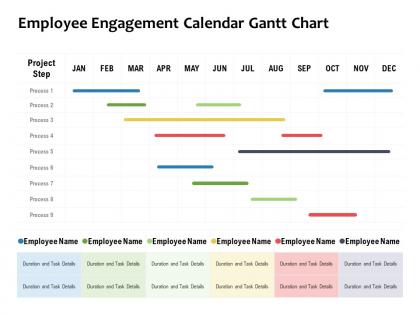
Employee engagement calendar gantt chart





Try Before you Buy Download Free Sample Product
 Impress Your
 Audience
 100%
100% Editable
 Save Hours
 of Time


Appeal to the discerning with our Employee Engagement Calendar Gantt Chart. They will acknowledge the benefits of your brand.
People who downloaded this PowerPoint presentation also viewed the following :
Employee engagement calendar gantt chart with all 2 slides:
Our Employee Engagement Calendar Gantt Chart ensure your brand gets acknowledged. Catch the eye of discerning folks.
FAQs for Employee engagement
Honestly? People want meaningful work that doesn't suck, some control over how they do their job, and to actually feel appreciated. Growth opportunities matter too - nobody wants to be stuck forever. Bad managers will tank engagement faster than you can blink, so that relationship is huge. Work-life balance became non-negotiable after COVID hit. Oh, and psychological safety is key - if your team's scared to speak up, you're screwed. Want real results? Just ask what's driving them crazy and fix it. Sounds simple but most companies overcomplicate this stuff.
Honestly, it's all over the map. Some people absolutely love working from home - no brutal commute, way better work-life balance, and they can actually focus without Karen from accounting interrupting every five minutes. Others feel super isolated though and miss being around their teammates. Communication is huge here. If you're checking in regularly and actually creating ways for people to connect (not just work stuff), it usually works out better. Oh, and giving them decent tech support doesn't hurt either. Really comes down to whether you're being intentional about it or just winging it.
Honestly, your leaders make or break engagement - I've watched entire teams flip around just because they got a manager who actually gave a damn. Mixed messages are the worst though, they'll kill morale instantly. What really works is when leaders are transparent, recognize people's work, and genuinely listen to feedback. Creates that safe space where folks feel heard, you know? The tricky part is getting all your leadership on the same page about how much they actually impact those engagement scores. Give them proper tools for real one-on-ones and regular check-ins - not just the surface-level stuff.
Mix surveys with actual behavior data - that's your best bet. Those giant annual surveys are the worst, so do quick quarterly pulse checks instead. Track stuff like eNPS, retention rates, who's joining voluntary programs. The juicy insights come from combining survey answers with real actions: event attendance, people switching teams internally, peer recognition stuff. Also do stay interviews with your rockstars and exit interviews when people bounce. Honestly, the behavioral data tells you more than people just checking boxes on surveys sometimes.
Honestly, this is way trickier than most people think! Start with weekly one-on-ones and some kind of virtual coffee thing. Remote people get left out of random conversations constantly, so you've got to be super intentional about looping them in. Set expectations around response times - that's huge. Celebrate wins where everyone can see them, not just in hallway chats. Give people flexibility to work when they're actually productive (shocking concept, I know). Pick one weekly ritual and don't try to do everything at once. Oh, and don't assume remote folks know what's happening - they usually don't.
Dude, the numbers don't lie - Gallup found that engaged employees boost profitability by 23% and productivity by 18%. Makes total sense though, right? When people actually give a damn about their job, they work harder and smarter. They're not just watching the clock. Plus they're way more accurate (like 12% better) and call in sick less often. I swear some managers still don't get this connection. If your team's productivity is tanking, maybe start with some quick pulse surveys or just have real conversations with people. Figure out why they've checked out mentally.
Honestly, it's usually communication issues at the top. Leadership doesn't explain decisions, people feel stuck with zero growth opportunities, and everyone's either overworked or totally undervalued. Micromanaging is the worst though - like, give people some breathing room! Try being more upfront about what's happening company-wise. Set up actual career paths instead of keeping everyone guessing. Oh, and recognize good work when you see it - costs nothing but makes a huge difference. Regular check-ins work great too. Just ask your team what's bugging them most. Their answers might surprise you.
Honestly, feedback loops work because people just want to feel heard. Set up regular check-ins - could be surveys, one-on-ones, whatever fits your vibe. The magic happens when you actually do something with what they tell you. Like, even tiny changes based on their input can totally shift how engaged people feel. Nobody wants to shout into the void, you know? I've seen teams completely turn around just from monthly pulse checks where management actually responds. Oh, and anonymous suggestion boxes are clutch if people are hesitant to speak up directly. Start small and see what sticks.
So recognition works because people actually want to feel like their work matters - sounds obvious but most managers totally miss this. When someone notices what you're doing specifically, not just some bland "good job," you'll naturally want to keep that momentum going. I've seen it happen so many times. The key is being genuine about it. Like, mention exactly what they did and how it helped the team or project. Generic praise feels hollow. Try calling someone out for their specific contribution in your next meeting - you'll probably see them light up.
Honestly, those first few weeks are make-or-break for employee engagement. Good onboarding with clear expectations and actual training? You'll get people who stick around and give a damn. Mess it up though, and they're mentally gone before they even settle in. I swear I've watched this play out at like every company I've worked at. The numbers don't lie either - places with solid onboarding programs see 70% better retention. Worth mentioning that 90 days seems to be the sweet spot for really getting someone integrated. Don't cheap out on this part!
Dude, transparency totally changes everything with team morale. When you're upfront about what's going on - good stuff AND the messy parts - people actually feel like they matter. No more treating them like mushrooms (kept in the dark, you know?). It kills all that weird speculation and gossip that happens when nobody knows what's happening. Plus your team gets way more bought-in when they understand why you're making certain calls. Honestly, just try being more open in your next meeting. Share some context you'd normally keep to yourself and see what happens.
Honestly, people get way more engaged when they see you're actually investing in their growth instead of just keeping them stuck in the same role forever. New skills make them feel confident and valued. But here's the thing - don't just dump random training on everyone. Ask what they actually want to learn first. Connect it to real advancement opportunities they care about. I've seen this work so well when companies do it right. People get excited about developing themselves, and your engagement numbers will definitely reflect that. It's pretty straightforward once you stop treating training like a checkbox exercise.
Talk to your team constantly - like, way more than you think you need to. People would rather hear bad news than sit in the dark wondering what's happening. Tell them what you know, what you don't know, and how changes will actually affect them. Also create real space for questions, not just those awkward "any questions?" moments at the end of meetings. One-on-ones are clutch here - your people will literally tell you what they need to stay bought in. I've seen teams fall apart because managers went radio silent during transitions. Don't be that person.
Your values and mission? They're literally everything when it comes to keeping people engaged. People need to get the "why" behind what they're doing or they'll just phone it in. I've watched entire teams flip around once leadership actually started living their values instead of just - you know those cheesy office posters? Yeah, those don't work. Recognition programs, career stuff, team building - it all has to connect back to your core principles somehow. Short version: show people how their daily work actually matters for the bigger picture. That's when they'll really care about showing up.
Look, when people can actually be themselves at work, they're way more engaged. It's pretty obvious but companies still miss this. Different backgrounds bring fresh ideas to meetings - you'll notice people speaking up more and coming up with stuff nobody else would've thought of. Plus retention gets better because employees feel like they actually belong somewhere. I mean, psychological safety isn't just some HR buzzword, it really works. Check out your hiring process first, then maybe look into employee resource groups. Those equitable advancement opportunities? They make people feel invested in sticking around and helping the company win.
No Reviews