


Employee Experience Powerpoint Presentation Slides




Try Before you Buy Download Free Sample Product
 Impress Your
 Audience
 100%
100% Editable
 Save Hours
 of Time


Capture the hearts of your audience with an engaging vision, decked up in our, employee experience PowerPoint presentation slides. This bundle of 37 high-quality slides is all set to take you on a ride with intrinsic employee experience topics in a business environment. Special graphs, charts, and spreadsheets are included here for a precise analysis. Pic charts, line charts, and dot graphs are included here to write on employee engagement key statics, survey analysis, activities to increase employee engagements. Our predesigned employee experience PowerPoint presentation editable layouts assist planners to segment and clarify the topic with brevity. Consider all important discussions and consider the minutest possibilities. Our layouts highlight the ingredients with clarity and can be applied by all kinds of professionals, managers, individuals, temporary permanent teams involved in any business. Everyone feels galvanized with our Employee Experience Powerpoint Presentation Slides. They foster great drive and determination.
People who downloaded this PowerPoint presentation also viewed the following :
Content of this Powerpoint Presentation
Slide 1: This slide shows the Employee Experience with imagery. Add in your company name to begin.
Slide 2: This is an Agenda slide. Present it cohesively here.
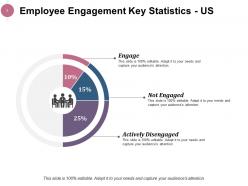
Slide 3: This slide presents a pie chart showing Employee Engagement Key Statistics - US with three parameters- Not Engaged, Engage, Actively Disengaged.
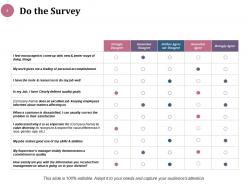
Slide 4: This is Do the Survey slide showing a survey containing questions which you can fill as per your business requirement.
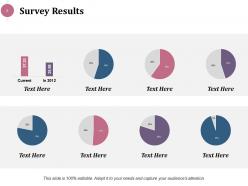
Slide 5: This slide shows Survey Results in charts and graphs.
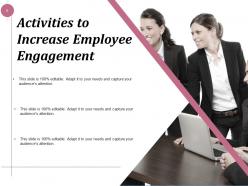
Slide 6: This slide shows Activities to Increase Employee Engagement which you can mention as per your business need.
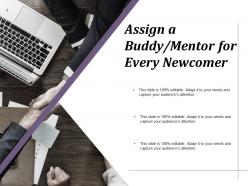
Slide 7: This is Assign a Buddy/Mentor for Every Newcomer slide. Use as per your requirement.
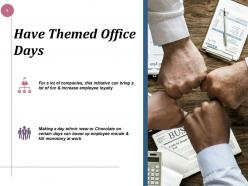
Slide 8: This is Have Themed Office Days slide with two points- For a lot of companies, this initiative can bring a lot of fun & increase employee loyalty, Making a day ethnic wear or Chocolate on certain days can boost up employee morale & kill monotony at work.
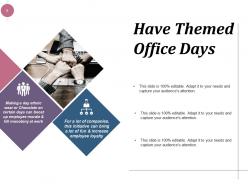
Slide 9: This is also Have Themed Office Days slide with text boxes to add relevant text.
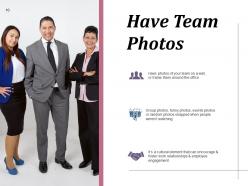
Slide 10: This is Have Team Photos slide in which you can add the photos of your team members.
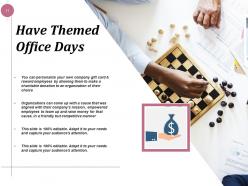
Slide 11: This is another Have Themed Office Days slide with these two points- You can personalize your own company gift card & reward employees by allowing them to make a charitable donation to an organization of their choice, Organizations can come up with a cause that was aligned with their company’s mission, empowered employees to team up and raise money for that cause, in a friendly but competitive manner. It also consists of text boxes which you can use to add your own points.
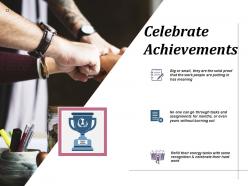
Slide 12: This is a Celebrate Achievements slide with the following features. Big or small, they are the solid proof that the work people are putting in has meaning, No one can go through tasks and assignments for months, or even years without burning out, Refill their energy tanks with some recognition & celebrate their hard work. You can also use this slide to add your own achievements.
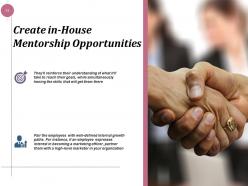
Slide 13: This slide helps to Create in-House Mentorship Opportunities. It also shows the following two points- They'll reinforce their understanding of what it'll take to reach their goals, while simultaneously honing the skills that will get them there, Pair the employees with well-defined internal growth paths. For instance, if an employee expresses interest in becoming a marketing officer, partner them with a high-level marketer in your organization.
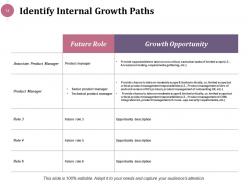
Slide 14: This slide helps to Identify Internal Growth Paths with the following sub headings to state- Future Role, Growth Opportunity.
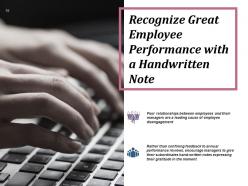
Slide 15: Use this slide to Recognize Great Employee Performance with a Handwritten Note which you can add.
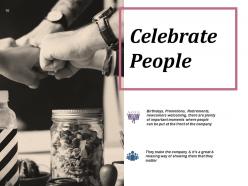
Slide 16: This slide tells you to Celebrate People with reference to their birthdays, promotions retirements etc.
Slide 17: This is Employee Satisfaction Icons Slide. Alter/ modify as per your requirement.
Slide 18: This is also Employee Satisfaction Icons Slide. Use as per your business requirement.
Slide 19: This slide is titled Additional slides to proceed forward. Modify slide content as per your need.
Slide 20: This slide represents Our Mission. State your mission, goals etc.
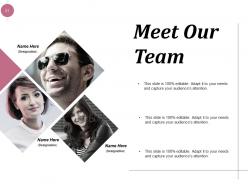
Slide 21: This slide showcases Meet Our Team with designation, text boxes and image to fit.
Slide 22: This is a Quotes slide to convey company/ organization message, beliefs etc. You may change the slide content as per need.
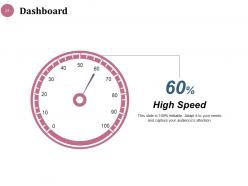
Slide 23: This is a Dashboard slide to show information in percentages etc.
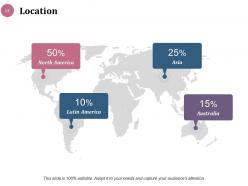
Slide 24: This is a Location slide to show global growth, presence etc. on a world map image.
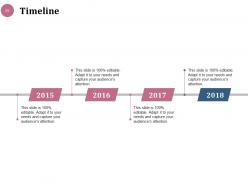
Slide 25: This is a Timeline slide to present important dates, journey, evolution, milestones etc.
Slide 26: This is a Post It slide to mark events, important information etc.
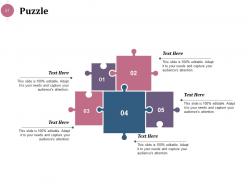
Slide 27: This is a Puzzle pieces image slide to show information, specifications etc.
Slide 28: This is a Target image slide. State targets, etc. here.
Slide 29: This is a Venn diagram image slide to show information, specifications etc.
Slide 30: This is a LEGO slide with text boxes to show information.
Slide 31: This is a Bulb or Idea slide to state a new idea or highlight specifications/ information etc.
Slide 32: This is a Coffee Break slide to halt. You may change it as per requirement.
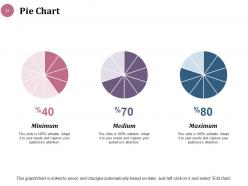
Slide 33: This is a Pie Chart slide to show product comparison etc.
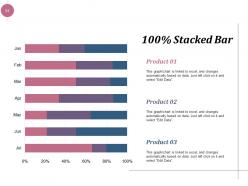
Slide 34: This is a 100% Stacked Bar Chart slide to present product/ entity comparison, specifications etc.
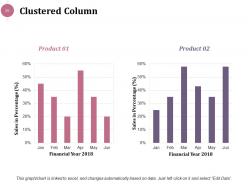
Slide 35: This is a Clustered Column Chart slide to present product/ entity comparison, specifications etc.
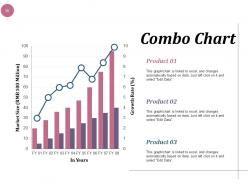
Slide 36: This is a Combo Chart slide to present product/ entity comparison, specifications etc.
Slide 37: This is a Thank You slide with Address# street number, city, state, Contact Number, Email Address.
Employee Experience Powerpoint Presentation Slides with all 37 slides:
Elaborate on a host of clever ideas with our Employee Experience Powerpoint Presentation Slides. Convince folks of your ingenuity.
FAQs for Employee Experience
Honestly, it starts with your boss and whether they actually give a damn about your growth. Good management makes or breaks everything. You also want decent growth opportunities - nobody wants to feel stuck, right? Your actual workspace matters more than people think. Depressing offices kill your soul. Work-life balance is non-negotiable these days. Oh, and having the tools you need to do your job without constantly fighting the system. But real talk? Fair pay and recognition trump almost everything else. When you feel valued and can see where you're headed career-wise, the other stuff becomes way more tolerable.
Look, happy workers genuinely make you more money. Productivity jumps like 20-25% when people feel good about their jobs. Turnover costs are insane - I've seen companies blow thousands just replacing one person. When employees actually care, they'll put in extra effort and work better as a team. But here's the flip side: miserable workers bring everyone down with them. Customer service tanks too. Honestly, most managers just assume people are fine without asking. Start doing quick pulse surveys to see how your team really feels, then actually fix what's broken. It's not rocket science.
Dude, your boss literally makes or breaks your whole work experience. Good leaders? They're the ones who actually listen in meetings and remember what you talked about last week. Bad ones will crush team morale so fast it's not even funny. What really matters is the day-to-day stuff - how they handle feedback, whether they celebrate wins (even small ones), and if they genuinely care about where you want to go career-wise. I've noticed the best managers are just consistent. They don't play favorites or change their mood every hour. Focus on really hearing people during one-on-ones - that's honestly where you can make the biggest difference.
Mix it up with surveys and actual conversations - pulse surveys are decent for tracking trends, but honestly they can feel kinda robotic. I'd throw in focus groups and one-on-ones too since those tell you the real story behind your numbers. Exit interviews are clutch for this stuff. Keep an eye on your eNPS scores and retention rates obviously. But here's the thing - none of this matters if you don't actually do something with the feedback. People get cynical fast when they share input and nothing changes. Always circle back and show what you've fixed based on what they told you.
Honestly, start with the basics - good communication tools like Slack or Teams, and video calls that don't randomly drop (Zoom's pretty solid). Project management stuff like Asana helps too. Your team probably needs decent headsets and VPN access that actually works - I can't stress this enough because bad audio makes everyone miserable. Miro's great for brainstorming sessions when you can't whiteboard together. Oh, and home office stipends are clutch. Before buying anything though, just ask your people what's driving them crazy. They'll tell you exactly what's broken and needs fixing first.
Your workplace culture literally makes or breaks whether people want to stay. Trust me on this one - I've seen it firsthand. Good cultures where people feel supported and recognized? Employees actually enjoy showing up. But toxic environments create this awful revolving door situation. Nobody sticks around when they're miserable. Culture affects everything too - how teammates interact, growth opportunities, the whole vibe. If you're losing good people left and right, honestly look at what it feels like to work there every day. That's usually where you'll find your answer.
Mix up pulse surveys with casual stuff like stay interviews or focus groups. Anonymous suggestion boxes are solid too. But here's the thing - you've gotta actually do something with the feedback. Otherwise people just get cynical about it. Share what you heard in quarterly meetings and be real about what you can fix right away vs. what takes time. I'd probably start with just one method though, don't overwhelm yourself trying to do everything at once. The transparency piece is huge.
Honestly, just tackle three things and you'll be golden. First, get all the boring paperwork and equipment sorted before they even show up - trust me, nobody wants to spend their first day drowning in HR forms. Then spread out the good stuff throughout week one instead of cramming everything into day one. Manager meetings, team intros, actual training. Oh, and definitely get them a buddy who's NOT their boss - that makes such a difference. I'd probably start with just one of these changes first though. Don't try to fix everything at once or you'll lose your mind.
Look, if your people are burned out and miserable, everything else falls apart. Simple as that. Ask them what they actually need instead of guessing - maybe it's flexible hours, mental health days, or just not being overloaded with work. I've seen teams completely transform when management actually listens. Stressed employees can't focus or do their best work anyway. It's like trying to run a marathon when you're already exhausted, you know? Plus when people feel supported, they stick around longer and the whole team vibe improves. Honestly, just showing you care goes further than most companies realize.
Look, you've gotta bring different people into the planning phase, not just ask for their thoughts after everything's decided. Give your employee resource groups some real power to make changes. Survey various groups regularly - trust me, everyone faces different obstacles at work. But here's what trips up most companies: they think one solution works for everyone. It doesn't. Your benefits and programs need to actually reflect how different people work best. I'd start by looking at what you're already doing and honestly asking - who are we missing here?
Oh absolutely, learning opportunities are huge for keeping people engaged. Nobody wants to feel stuck or like their skills are going nowhere, you know? I've seen it work really well when companies actually ask employees what they want to learn instead of just throwing random training at them. People light up when they feel invested in. The trick is making it about their career goals, not just checking boxes. Even something as simple as "what skills do you wish you had?" can totally change the vibe. It's honestly one of the best ways to show you actually care about their future.
Honestly, just start by asking people what they actually want - surveys work, but casual check-ins are gold. Everyone's wired differently, so throw out flexible stuff like remote options, different PTO setups, whatever. I totally bombed this once with my quiet team members who hated public praise (oops). Your HR data probably shows patterns you're missing across different groups. Multiple ways to win beats the cookie-cutter approach every time. Pilot small things first and expand what clicks. Some people thrive on shoutouts, others just want solid feedback and to be left alone.
Honestly, recognition programs work because they make people feel like their work actually matters. Nothing beats getting called out for doing something well - could be a quick shoutout in Slack or a formal award thing. Just make sure it's specific, not some generic "great job team" nonsense. Timing matters too. You can do simple stuff like extra PTO or gift cards, but even saying "hey, you absolutely nailed that presentation" goes way further than you'd think. Professional development opportunities are clutch if you've got budget. Start with the small wins though.
Your office setup seriously affects how people feel at work. Bad lighting or cramped desks just kill motivation - I've been there and it's awful. Good design actually helps teams collaborate better and gets more done. Ergonomic chairs prevent that 3pm slump, decent air quality keeps brains working, and flexible spaces let people work however they're most effective. Oh, and nobody should still be dealing with those soul-crushing cubicle mazes in 2024. Start by just asking your team what's bugging them most about their current space, then fix those issues first.
Honestly, you've gotta create spaces where people can actually connect beyond just deadlines and meetings. Try scheduling regular check-ins or getting teams to work on cross-functional stuff together. Virtual coffee chats are surprisingly good for this - I know it sounds cheesy but it works. Teams bond over the randomest things too, like sharing pet pics in Slack or arguing about the best lunch spots. The biggest thing though? People need to feel safe sharing dumb ideas without getting shot down. Don't go overboard with forced team activities - that'll backfire. Start with one or two simple things first.
No Reviews