


Employee Benefits Powerpoint Presentation Slides






Try Before you Buy Download Free Sample Product
 Impress Your
 Audience
 100%
100% Editable
 Save Hours
 of Time


Offer benefits to your employees to retain them. Get access to this professionally designed Employee Benefits PowerPoint Presentation Slides to boost employees to do quality work to achieve organizational goals and objectives. Showcase some of the perks to the employees such as paid vacation, pay raise, rewards, health insurance, etc. These benefits will not only retain the employees but will also help you differentiate your business from competitors. The employee benefits packages may include social security, employee allowances, medical insurance, profit sharing, retirement benefits, and more. Incorporate easy-to-understand employee benefits PPT presentation slideshow to support your employees. This complete deck comprises of various fringe benefits PPT templates. These templates are completely customizable. Edit color, text, icon, and font size as per your need. Add or remove the content, if needed. Download employee benefits PowerPoint templates to show your employees that they are important and backbone of your organization. Generate feelings of generosity with our Employee Benefits Powerpoint Presentation Slides. Appeal to folks to develop a humane approach.
People who downloaded this PowerPoint presentation also viewed the following :
Content of this Powerpoint Presentation
Slide 1: This slide introduces Employee Benefits. State Your Company Name and begin.
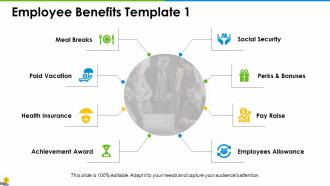
Slide 2: This slide showcases Employee Benefits Template 1 Social Security, Perks & Bonuses, Pay Raise, Employees Allowance, Achievement Award, Health Insurance, Paid Vacation, Meal Breaks.
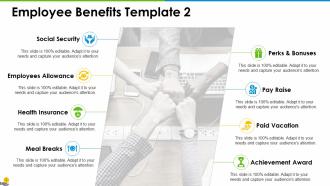
Slide 3: This slide showcases Employee Benefits Template 2 with these eight parameters- Perks & Bonuses, Pay Raise Paid Vacation, Achievement Award, Social Security, Employees Allowance, Health Insurance, Meal Breaks.
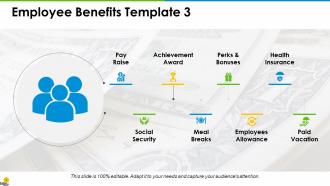
Slide 4: This slide presents Employee Benefits Template 3 with some of parameters we have listed- Pay Raise, Social Security, Achievement Award, Meal Breaks, Perks & Bonuses, Employees Allowance, Paid Vacation, Health Insurance.
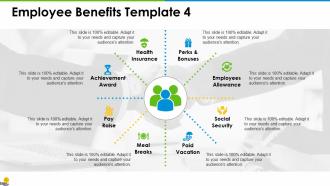
Slide 5: This slide presents Employee Benefits Template 4. We have shown some of them- Employees Allowance, Perks & Bonuses, Social Security, Paid Vacation, Meal Breaks, Pay Raise, Achievement Award, Health Insurance.
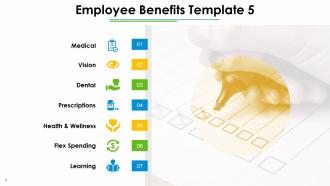
Slide 6: This slide showcases Employee Benefits Template 5. Use these we have listed or add your own- Prescriptions, Medical, Dental, Vision, Health & Wellness, Flex Spending, Learning.
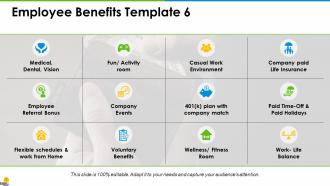
Slide 7: This slide displays Employee Benefits Template 6 with these of the benfits we have listed- Medical, Dental, Vision, Fun/ Activity room, Casual Work Environment, Company paid Life Insurance, Employee Referral Bonus, Company Events, Paid Time-Off & Paid Holidays, Flexible schedules & work from Home, Voluntary Benefits, Wellness/ Fitness Room Work- Life Balance.
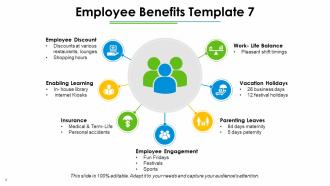
Slide 8: This slide showcases Employee Benefits Template 7.
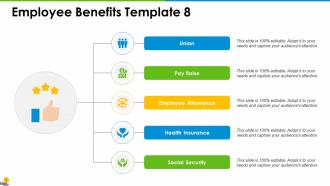
Slide 9: This slide shows Employee Benefits Template 8 with these five important factors- Social Security, Health Insurance, Employee Allowance, Pay Raise, Union.
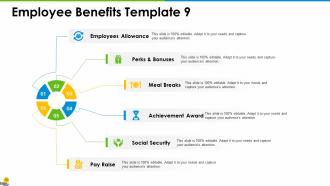
Slide 10: This slide presents Employee Benefits Template 9 with these six parameter- Employees Allowance, Perks & Bonuses, Meal Breaks, Achievement Award, Social Security, Pay Raise.
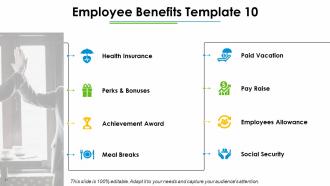
Slide 11: This slide showcases Employee Benefits Template 10 with these eight we have listed- Health Insurance, Perks & Bonuses, Achievement Award, Meal Breaks, Paid Vacation, Pay Raise, Employees Allowance, Social Security.
Slide 12: This slide presents Employee Benefits Icon Slide.
Slide 13: This slide is titled Additional slides to proceed forward.
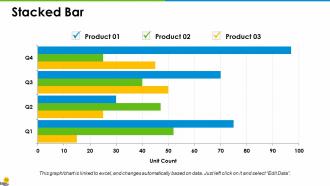
Slide 14: This slide shows a Stacked bar graph in terms of percentage and years for comparison of Product 01, Product 02, Product 03 etc.
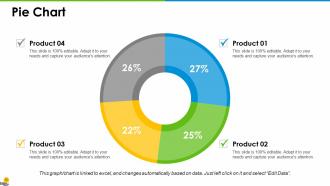
Slide 15: This slide showcases Pie Chart.
Slide 16: This is a Vision, Mission and Goals slide. State them here.
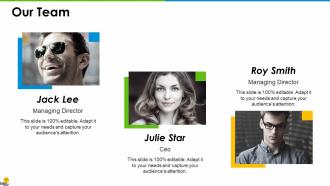
Slide 17: This is an Our Team slide with name, image&text boxes to put the required information.
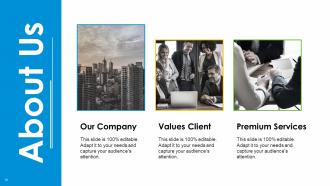
Slide 18: This is an About Us slide showing Our Company, Value Client, and Premium services as examples.
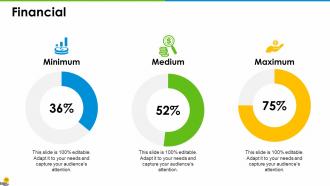
Slide 19: This is a Financial score slide. State financial aspects etc. here.
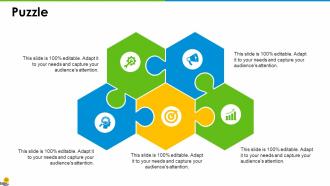
Slide 20: This is a Puzzle image slide to show information, specification etc.
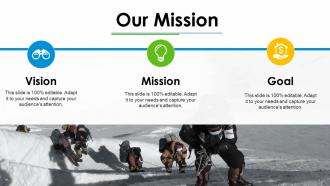
Slide 21: This slide represents Our Mission. State your mission, goals etc.
Slide 22: This is a Venn diagram image slide to show information, specifications etc.
Slide 23: This is a Thank You slide for acknowledgement.
Employee Benefits Powerpoint Presentation Slides with all 23 slides:
Acquire across the board flexibility with our Employee Benefits Powerpoint Presentation Slides. Cater for fast changing demands.
-
Employee Benefits
-
Employee Benefits Template 1
-
Employee Benefits Template 2
-
Employee Benefits Template 3
-
Employee Benefits Template 4
-
Employee Benefits Template 5
-
Employee Benefits Template 6
-
Employee Benefits Template 7
-
Employee Benefits Template 8
-
Employee Benefits Template 9
-
Employee Benefits Template 10
-
Employee Benefits Icon Slide
-
Additional Slides
-
Stacked Bar
-
Pie Chart
-
Our Mission
-
Our Team
-
About Us
-
Financial
-
Puzzle
-

Our Goal
-
Venn
-
Thank You
FAQs for Employee Benefits
Flexible schedules and solid health coverage are basically non-negotiable now. Mental health benefits became massive after the pandemic - people actually care about burnout prevention. I've literally watched candidates pick lower salaries for better PTO (wild, right?). Professional development money and student loan help are climbing fast, especially with younger hires. If you're redoing your package, start with flexibility. Remote options or flex hours usually cost way less than fancy perks but employees love them more. Oh, and retirement matching - that's still table stakes even though everyone takes it for granted.
Honestly, most people just toss those thick benefits packets straight in the trash. Make one-pagers instead for each big benefit - way less overwhelming. Videos work great for the confusing stuff like HSAs (I still don't totally get mine lol). Skip the mass emails, nobody reads those. Do lunch sessions where people can actually ask questions, or set up those speed-dating style booths during open enrollment. Face-to-face is where it's at. Start with whatever benefit confuses people most. Infographics help too if you're not into the video thing.
Dude, benefits are huge for getting good people. I've literally watched candidates turn down better pay because the health insurance was garbage or there was no PTO. Smart workers know they have choices - they're not just looking at your salary number. Flexible work stuff, decent healthcare, 401k matching... that's what shows you actually give a shit about them as people. Honestly? Go see what other companies in your space are offering and match it. You don't want to lose someone amazing over a crappy benefits package.
Honestly, just ask your people what they want first - don't assume you know. Parents might need childcare help, younger folks probably want student loan support, older employees usually care more about healthcare. Mental health stuff is everywhere now (my company just added therapy apps). Flexible PTO is pretty popular, plus remote work since everyone defines work-life balance differently anyway. Build like a benefits menu instead of forcing everyone into the same box. Pick 2-3 things from your survey results and test them out first.
So benefits are basically either taxable or pre-tax. Health insurance, 401k stuff, transit passes - those come out before taxes, which saves everyone money. But gym memberships? Company car you drive home? Life insurance over 50k? Yeah, those get added to your W-2 as taxable income. Honestly the life insurance thing catches people off guard all the time. You'll want to double-check with your payroll person or accountant though, because missing the reporting stuff can bite you later.
Oh totally, wellness stuff really does work for keeping people around and getting more done. Healthier employees call out sick way less often - which honestly saves everyone a headache. The retention part is probably even bigger though. People genuinely want to stay when they feel like the company actually gives a damn about them as humans, not just worker bees. You don't need to go crazy with it either. Maybe try mental health days first or throw some money at gym memberships? I'd start small and see what sticks before diving into the fancy stuff.
So portable benefits are huge right now - health insurance and retirement stuff that moves with you between gigs instead of being stuck to one employer. Uber and Lyft have these benefits pools where different platforms chip in based on your hours. There's also micro-benefits popping up everywhere... mental health apps, coworking spaces, equipment insurance. Way more practical for freelancers than traditional corporate perks, honestly. If you're dealing with gig workers, check out platforms like Stride or Even - they'll let you offer decent benefits without all the usual employment headaches.
Start with employee surveys - you need real data on what people actually use vs what just sits there collecting dust. Track your enrollment numbers and turnover rates before and after any changes. Focus groups are honestly your best bet though. People will tell you straight up what they care about, and it's usually not what you'd expect. Benchmark against your competitors too - if you're way behind, that's probably why you can't hire anyone decent. I'd run this kind of audit annually since benefits that worked five years ago might be totally irrelevant now. The bottom line? If you're hemorrhaging talent or struggling to recruit, your benefits are likely the problem.
Honestly, mixing up your communication channels works best. Monthly emails work great - just highlight different benefits each time. Throw up some simple infographics in break rooms too. Your intranet's probably underused for this stuff. Lunch-and-learns are gold though - seriously, free food gets people to actually show up and pay attention. Hit new hires hard during onboarding since they're actually listening then. Oh, and make sure managers know the basics so they're not clueless when people ask questions. I'd start by figuring out where your current communication is falling flat.
Yeah, it totally makes sense when you break it down by age. Younger folks - Gen Z and millennials - they're stressed about student loans and want flexible schedules, mental health days, that kind of stuff. Gen X is more focused on retirement savings and family coverage since they've got kids and mortgages to worry about. Boomers? Healthcare is huge for them, obviously. The smart move is mixing benefits across all these groups instead of just picking one thing and calling it a day. Nobody wants the exact same perks anyway.
So basically, you've got federal stuff that applies everywhere - FMLA, workers' comp, Social Security, the usual. But then it gets messy depending on your industry. Healthcare has its own insurance rules, construction companies deal with way stricter safety requirements. Oh and if you're unionized? Good luck with that extra paperwork. Honestly, the rules change so much by location too. I'd probably just bite the bullet and talk to an employment lawyer or HR person who knows your specific field. Trust me, the consultation fee is nothing compared to what you'll pay if you mess this up.
Oh definitely look into your benefits portal first - you'd be shocked what's hiding in there. Most places have EAPs that give you free counseling sessions, plus mental health coverage through regular insurance. Mental health days are becoming more common too. Honestly, EAPs are so underrated but they're lifesavers. Some companies throw in wellness apps or let you work from home when you're struggling. The trick is actually using this stuff before you hit rock bottom, which I'm terrible at but trying to get better about. Flexible schedules can be huge too if your job allows it.
Honestly, personalization is huge right now - people are over the generic benefits packages. Remote work changed everything too. Companies are doing home office stipends and mental health stuff instead of, like, free bagels in the break room. Tech integration is everywhere now. Apps for managing benefits, AI wellness coaching, all that. But here's the thing - you really need to ask your team what they actually want first. I swear, so many companies just guess and get it totally wrong. Cookie-cutter benefits don't work anymore, and surveying people upfront will save you so much headache later.
Honestly, flexible work is like a cheat code for benefits satisfaction. People love the autonomy almost as much as traditional perks. Your team will see remote work or flex hours as a huge benefit on its own. Plus it makes everything else actually usable - hard to hit that yoga class when you're stuck in traffic for two hours, you know? It builds trust too, which makes employees happier with your whole package. If you want better benefits satisfaction without breaking the bank, start there. Flexibility makes everything else work better.
Track the obvious stuff first - retention rates, healthcare savings, productivity bumps. Compare those against what you're spending on benefits. Honestly, just reducing turnover can save you crazy money per employee. Check engagement scores and how often people call in sick too. The math gets weird sometimes since you can't put a price on everything, but quarterly reviews help. Compare your numbers to before you had decent benefits. Oh, and recruitment gets way easier when you've got good stuff to offer. Best case scenario? You show your boss the program basically pays for itself.
No Reviews