


Employee Guidance Playbook Powerpoint Presentation Slides




Try Before you Buy Download Free Sample Product
 Impress Your
 Audience
 100%
100% Editable
 Save Hours
 of Time


The playbook emerges as a training guideline for employees at the workplace. It caters as a game plan for optimizing employee performance and leveraging existing talent pools. Grab our readymade and 100 percent editable Employee Guidance Playbook template. It covers workforce coaching program criteria based on different learning practices, talent growth for employees, various employee coaching methods, the importance of coaching for employees and employers, and engaging employees across the firm. The playbook covers a workforce coaching program highlighting a game plan for an employee coaching roadmap for a successful employee coaching program. The workforce required coaching across different departments, objectives of coaching offered to employees, trainee competency assessment matrix, workforce coaching requirements identification form, employee skills and knowledge requirements, and workforce coaching meeting schedule. Different coaching modules highlight effective employee onboarding, skills enhancement, sales team coaching, and an efficient customer support team. Moreover, it caters to trainers and coaching initiatives for employee coaching, communication skills coaching for executives, etc. Workforce coaching effectiveness and cost estimation are highlighted along with the workforce coaching performance tracking dashboard. Get access now.
People who downloaded this PowerPoint presentation also viewed the following :
Content of this Powerpoint Presentation
Slide 1: This slide introduces Employee Guidance Playbook. State Your Company Name and begin.
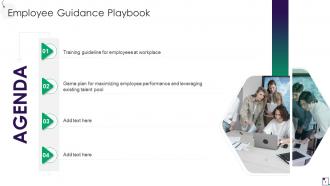
Slide 2: This slide states Agenda of the presentation.
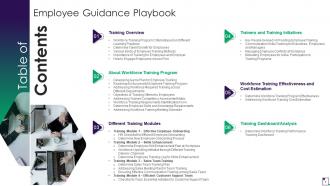
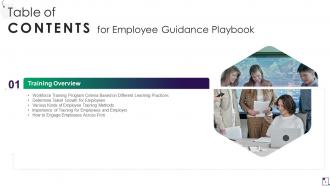
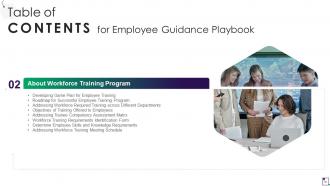
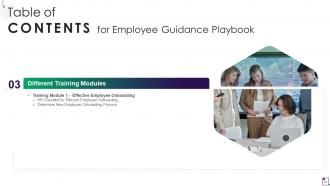
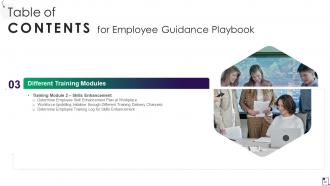
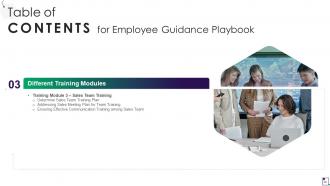
Slide 3: This slide presents Table of Content for the presentation.
Slide 4: This slide shows title for topics that are to be covered next in the template.
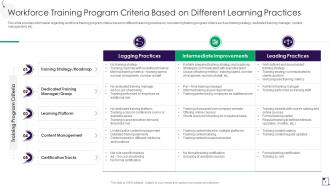
Slide 5: This slide displays Workforce Training Program Criteria Based on Different Learning Practices.
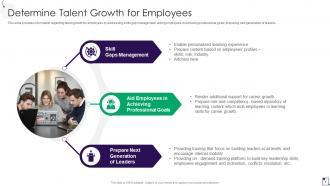
Slide 6: This slide provides information regarding talent growth for employees by addressing skills gap.
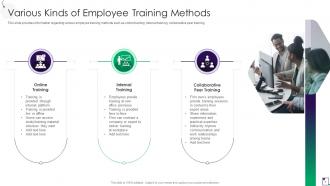
Slide 7: This slide represents Various Kinds of Employee Training Methods.
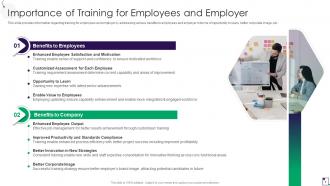
Slide 8: This slide showcases training for employees and employer by addressing various benefits to employees.
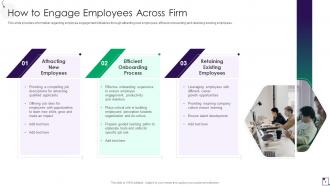
Slide 9: This slide shows Providing a compelling job descriptions for attracting qualified applicants.
Slide 10: This slide shows title for topics that are to be covered next in the template.
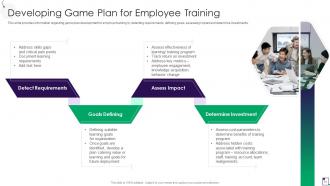
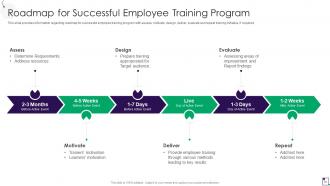
Slide 11: This slide presents Developing Game Plan for Employee Training.
Slide 12: This slide displays Roadmap for Successful Employee Training Program.
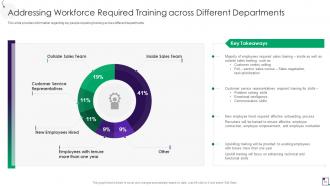
Slide 13: This slide represents Addressing Workforce Required Training across Different Departments.
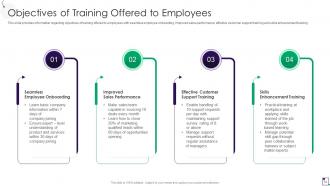
Slide 14: This slide showcases Objectives of Training Offered to Employees.
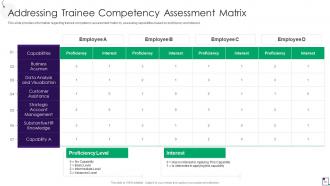
Slide 15: This slide shows Addressing Trainee Competency Assessment Matrix.
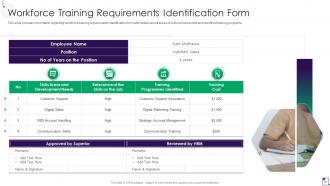
Slide 16: This slide represents Workforce Training Requirements Identification Form.
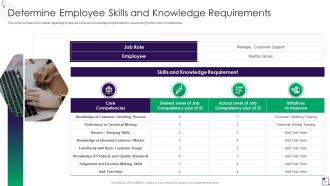
Slide 17: This slide showcases Determine Employee Skills and Knowledge Requirements.
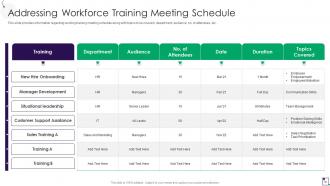
Slide 18: This slide shows Addressing Workforce Training Meeting Schedule.
Slide 19: This slide shows title for topics that are to be covered next in the template.
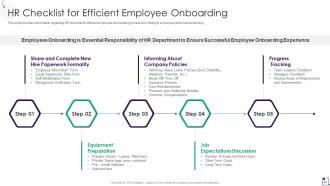
Slide 20: This slide displays HR checklist for efficient employee onboarding process from hiring to employee performance tracking.
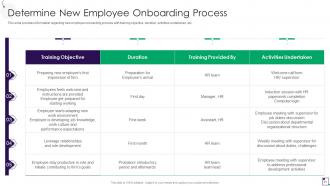
Slide 21: This slide represents Determine New Employee Onboarding Process.
Slide 22: This slide shows title for topics that are to be covered next in the template.
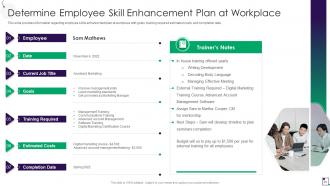
Slide 23: This slide presents Determine Employee Skill Enhancement Plan at Workplace.
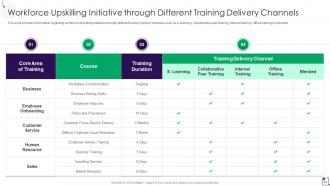
Slide 24: This slide displays Workforce Upskilling Initiative through Different Training Delivery Channels.
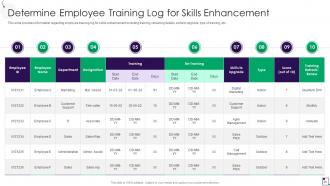
Slide 25: This slide represents Determine Employee Training Log for Skills Enhancement.
Slide 26: This slide shows title for topics that are to be covered next in the template.
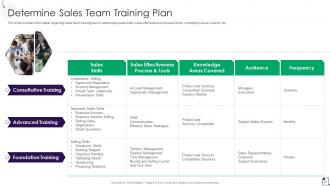
Slide 27: This slide provides information regarding sales team training plan by addressing sales skills.
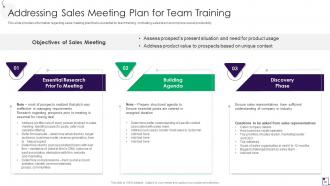
Slide 28: This slide represents Addressing Sales Meeting Plan for Team Training.
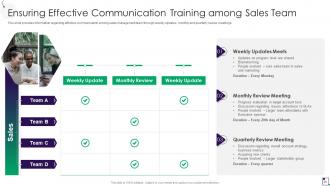
Slide 29: This slide showcases Ensuring Effective Communication Training among Sales Team.
Slide 30: This slide shows title for topics that are to be covered next in the template.
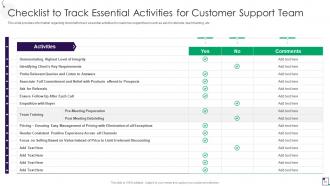
Slide 31: This slide presents Checklist to Track Essential Activities for Customer Support Team.
Slide 32: This slide shows title for topics that are to be covered next in the template.
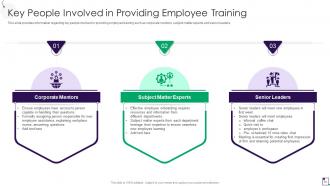
Slide 33: This slide displays Key People Involved in Providing Employee Training.
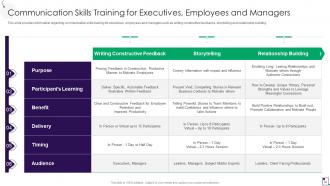
Slide 34: This slide represents Communication Skills Training for Executives, Employees and Managers.
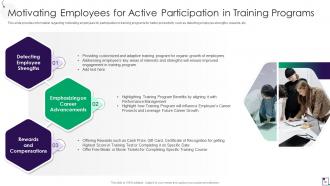
Slide 36: This slide showcases Motivating Employees for Active Participation in Training Programs.
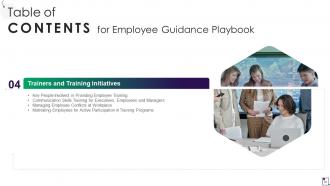
Slide 37: This slide shows title for topics that are to be covered next in the template.
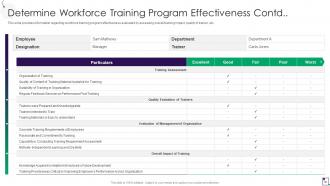
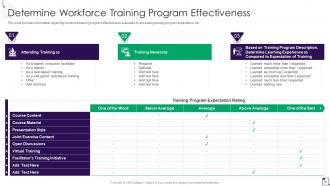
Slide 38: This slide presents Determine Workforce Training Program Effectiveness.
Slide 39: This is another slide continuing Determine Workforce Training Program Effectiveness.
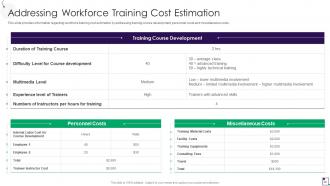
Slide 40: This slide provides information regarding workforce training cost estimation.
Slide 41: This slide shows title for topics that are to be covered next in the template.
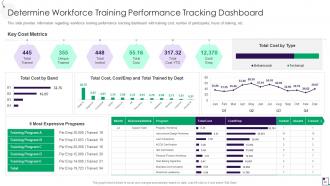
Slide 42: This slide presents Determine Workforce Training Performance Tracking Dashboard.
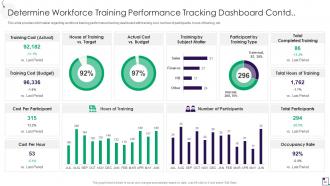
Slide 43: This is another slide continuing Determine Workforce Training Performance Tracking Dashboard.
Slide 44: This slide displays Icons for Employee Guidance Playbook.
Slide 45: This slide is titled as Additional Slides for moving forward.
Slide 46: This is Our Mission slide with related imagery and text.
Slide 47: This is About Us slide to show company specifications etc.
Slide 48: This slide shows Post It Notes. Post your important notes here.
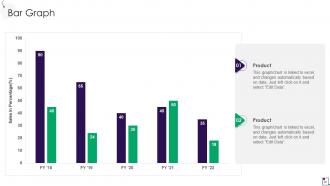
Slide 49: This slide presents Bar chart with two products comparison.
Slide 50: This is Our Team slide with names and designation.
Slide 51: This slide presents Roadmap with additional textboxes.
Slide 52: This is a Timeline slide. Show data related to time intervals here.
Slide 53: This slide contains Puzzle with related icons and text.
Slide 54: This is Our Goal slide. State your firm's goals here.
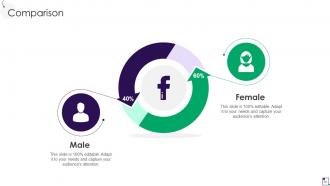
Slide 55: This is a Comparison slide to state comparison between commodities, entities etc.
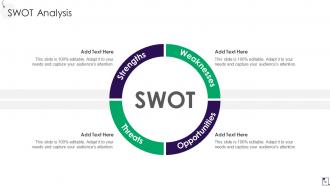
Slide 56: This slide shows SWOT describing- Strength, Weakness, Opportunity, and Threat.
Slide 57: This is a Thank You slide with address, contact numbers and email address.
Employee Guidance Playbook Powerpoint Presentation Slides with all 62 slides:
Use our Employee Guidance Playbook Powerpoint Presentation Slides to effectively help you save your valuable time. They are readymade to fit into any presentation structure.





FAQs for Employee Guidance Playbook
Key factors include clear learning objectives, personalized content delivery, regular feedback mechanisms, measurable performance indicators, and accessible resource formats. These elements work together by addressing diverse learning styles, ensuring relevant skill development, and tracking progress effectively, with many organizations finding that strategic guidance programs ultimately enhance employee retention, accelerate productivity, and deliver sustainable competitive advantage.
Organizations can tailor employee guidance by implementing personalized learning paths, flexible communication channels, multi-generational training approaches, cultural competency programs, and role-specific development frameworks. Through adaptive technologies and diverse delivery methods, companies streamline individual growth trajectories while accommodating different learning styles, career stages, and backgrounds, ultimately enhancing engagement and retention across their workforce.
Technology revolutionizes employee guidance through AI-powered learning platforms, virtual reality simulations, personalized training modules, real-time performance analytics, and mobile learning applications. These digital solutions streamline onboarding processes, enhance skill development, and deliver customized learning experiences, with many organizations finding that technology-driven guidance significantly reduces training costs while improving employee engagement and retention rates.
Managers can effectively communicate guidance through clear expectations, active listening, regular check-ins, visual aids, and documented follow-ups. These approaches streamline understanding by eliminating ambiguity, encouraging two-way dialogue, and providing multiple touchpoints for clarification, with many organizations finding that structured communication frameworks ultimately enhance employee performance, reduce confusion, and deliver stronger operational outcomes across teams.
Employee guidance success metrics include engagement scores, performance improvement rates, retention percentages, skill development assessments, and goal achievement ratios. These measurements enable organizations to track productivity gains, reduce turnover costs, and enhance career satisfaction, with many companies finding that comprehensive tracking ultimately delivers stronger employee loyalty and improved operational efficiency across departments.
Organizations can incorporate employee feedback through regular surveys, focus groups, one-on-one discussions, anonymous suggestion systems, and exit interviews to identify guidance program gaps. This feedback enables companies to refine mentoring approaches, adjust training content, and enhance support structures, ultimately delivering more personalized development experiences and improved retention rates across departments.
Common pitfalls include lack of clear communication, inconsistent feedback delivery, overwhelming employees with too much information at once, failing to personalize guidance approaches, and neglecting follow-up support. These challenges can undermine engagement and effectiveness, with many organizations finding that structured implementation timelines, regular check-ins, and tailored communication methods ultimately deliver better adoption rates and improved employee performance outcomes.
Mentorship programs enhance employee guidance by pairing experienced professionals with developing talent, facilitating knowledge transfer, skill building, and career navigation through structured relationships. These programs accelerate professional growth while improving retention rates, with many organizations finding that strategic mentorship initiatives ultimately deliver stronger succession planning, enhanced employee engagement, and competitive talent development advantages.
Company culture significantly impacts employee guidance effectiveness by shaping communication openness, trust levels, learning attitudes, and feedback receptivity within organizations. Strong cultures that prioritize development and psychological safety enable more meaningful mentoring conversations, faster skill acquisition, and better guidance implementation, with many companies finding that aligned cultural values ultimately accelerate employee growth and retention rates.
Peer-to-peer guidance enhances traditional training by leveraging employee expertise, creating mentorship networks, and fostering collaborative learning environments that build stronger team connections. This strategic combination delivers faster knowledge transfer, improved retention rates, and reduced training costs, with many organizations finding that employees learn more effectively from colleagues who understand their daily challenges.
Best practices for creating engaging employee guidance materials include using visual storytelling, interactive simulations, microlearning modules, personalized learning paths, and gamification elements. These approaches enhance knowledge retention by breaking complex information into digestible segments, incorporating real-world scenarios from various departments, and ultimately delivering improved training outcomes and employee engagement across organizations.
Organizations ensure inclusive guidance programs by establishing diverse mentoring pools, offering multiple communication channels, providing multilingual resources, accommodating different learning styles, and addressing accessibility needs. These approaches enable companies to reach employees across various backgrounds, experience levels, and physical abilities, while many organizations find that inclusive programs significantly improve employee engagement, retention, and overall workplace satisfaction.
Ongoing support reinforces employee guidance by providing continuous feedback, addressing emerging challenges, and adapting training to evolving business needs and individual development paths. This sustained approach enables organizations to maintain consistent performance standards, reduce skill gaps, and enhance employee confidence, with many companies finding that regular coaching sessions and mentorship programs ultimately deliver higher retention rates and improved operational efficiency.
Organizations keep employee guidance programs current by conducting regular industry trend assessments, establishing continuous feedback loops with employees, partnering with industry experts, and implementing agile program design methodologies. Through quarterly program reviews and real-time market monitoring, companies like financial services firms and healthcare organizations adapt their guidance frameworks swiftly, ultimately maintaining workforce relevance and competitive advantage.
Effective incentives include career advancement opportunities, skill-based bonuses, recognition programs, flexible work arrangements, and professional development funding. These approaches enhance engagement by connecting guidance participation to tangible career benefits, performance metrics, and growth pathways, with many organizations finding that employees respond most positively when programs directly support their individual aspirations and long-term success.
-
Great product with highly impressive and engaging designs.
-
A big thanks to SlideTeam! An incredible and diverse library of templates helped me with my business project presentation.