


Employee Assessment Powerpoint Presentation Slides




Try Before you Buy Download Free Sample Product
 Impress Your
 Audience
 100%
100% Editable
 Save Hours
 of Time


Employee Assessment PowerPoint Presentation Slides is an effective tool for managing employee performance. It is important to conduct assessments to help employees grow professionally. The job evaluation PowerPoint complete deck contains content ready slides such as employee assessment criteria table, employee assessment form, review card, scorecard, evaluation form, self-assessment form, employee performance analysis template, performance review table, cross-training analysis chart, employee competency analysis table to name a few. Talk about plans for employee professional growth using this employee performance review PPT visuals. Performance review Presentation slides allow you to provide feedback as well as identifying areas of improvement. Furthermore, the ready to use 360-degree feedback presentation layout is completely customizable. You can add or delete the content from templates. Our team of experts has also included icons for your convenience. Download performance appraisal PowerPoint templates to accomplish employee performance evaluation.
People who downloaded this PowerPoint presentation also viewed the following :
Content of this Powerpoint Presentation
Slide 1: This slide introduces Employee Assessment. State Your Company Name and begin.
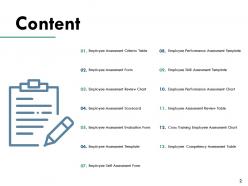
Slide 2: This slide shows Content of the presentation.
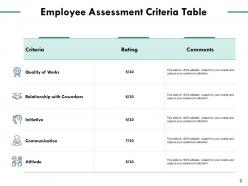
Slide 3: This slide presents Employee Assessment Criteria Table describing quality of works, relationship with coworkers, initiative, communication and attitude.
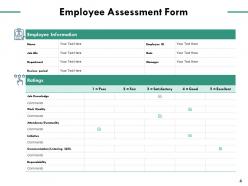
Slide 4: This slide displays Employee Assessment Form with employee information and ratings.
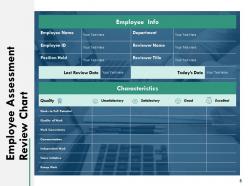
Slide 5: This slide represents Employee Assessment Review Chart with employee information and characteristics.
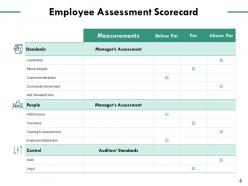
Slide 6: This slide showcases Employee Assessment Scorecard in a tabular form with categories as measurements, below par, par and above par.
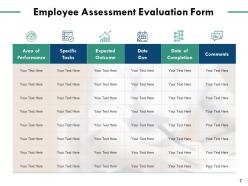
Slide 7: This slide shows Employee Assessment Evaluation From with categories as- area of performance, specific tasks, expected outcome, date due, date of completion and comments.
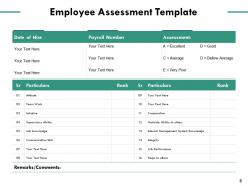
Slide 8: This slide presents Employee Assessment Template with date of hire, payroll number and assessment.
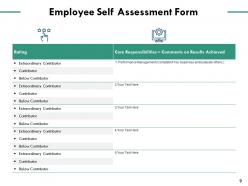
Slide 9: This slide displays Employee Self Assessment From describing ratings.
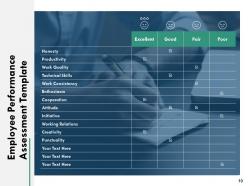
Slide 10: This slide represents Employee Performance Assessment Template.
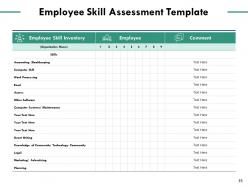
Slide 11: This slide showcases Employee Skill Assessment Template with categories as employee skill inventory, employee and comments.
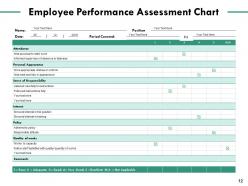
Slide 12: This slide shows Employee Performance Assessment Chart with attendance, personal appearance, sense of responsibility, interest, policy, quality of works and comments.
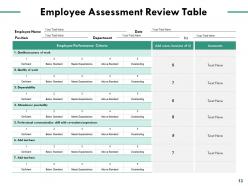
Slide 13: This slide presents Employee Assessment Review Table. You can add or edit data as per requirements.
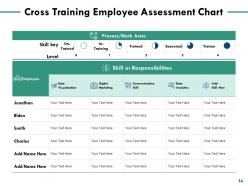
Slide 14: This slide displays Cross Training Employee Assessment Chart with process/work area and skills/responsibilities.
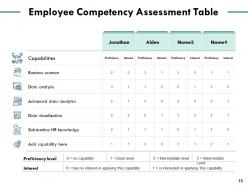
Slide 15: This slide represents Employee Competency Assessment Table with categories as- capabilities, business acumen, data analysis, advanced data analysis, data visualization and substantive Hr knowledge.
Slide 16: This slide showcases Employee Assessment Icons.
Slide 17: This is Meet Our Best Team slide with names and designation.
Slide 18: This is Our Mission slide with text boxes.
Slide 19: This is About Us slide to show company specifications etc.
Slide 20: This is a Comparison slide to state comparison between commodities, entities etc.
Slide 21: This is Our Target slide. State your targets here.
Slide 22: This is a Timeline slide. Show information related with time period here.
Slide 23: This is another slide continuing Timeline.
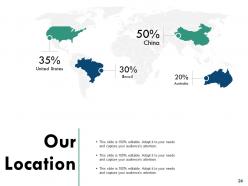
Slide 24: This is Our Location slide with maps to show data related with different locations.
Slide 25: This is Our Goal slide. State your important goals here.
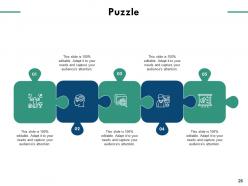
Slide 26: This is a Puzzle slide with text boxes.
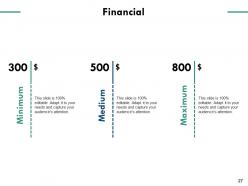
Slide 27: This is a Financial slide. Show your finance related stuff here.
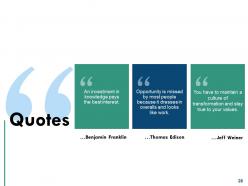
Slide 28: This is a Quotes slide to convey message, beliefs etc.
Slide 29: This is a Venn slide with additional text boxes.
Slide 30: This slide shows Mind Map for representing entities.
Slide 31: This slide displays Magnifying Glass with icons and text boxes.
Slide 32: This is Bulb or Idea slide to state a new idea or highlight information, specifications etc.
Slide 33: This is a Contact Us slide with Business Hours, address and email.
Slide 34: This is a Thank You slide with address, contact numbers and email address.
Employee Assessment Powerpoint Presentation Slides with all 34 slides:
Use our Employee Assessment Powerpoint Presentation Slides to effectively help you save your valuable time. They are readymade to fit into any presentation structure.
FAQs for Employee Assessment
Honestly, you've gotta start by figuring out what "good work" actually looks like for each person. Then ditch those awful yearly reviews - do monthly or quarterly check-ins instead. Self-assessments work surprisingly well because people actually think about their own progress. 360 feedback is amazing if your team isn't weird about it. Document everything (boring but necessary) and connect reviews to real growth opportunities. The whole thing should feel like you're helping them level up, not like some performance report card from hell.
Honestly, tech makes assessments way less of a headache. AI tools can spot performance patterns you'd totally miss, and automated 360 feedback saves so much time. Those video platforms for evaluating soft skills are actually pretty neat - way better than guessing in interviews. Digital stuff cuts out most of the paperwork BS and reduces bias since everything's standardized. Oh, and real-time productivity tracking is clutch if you're into data. I'd start with just one automated tool though. See how people react before you go crazy with it - some teams get weird about too much change at once.
Okay so you want both the hard numbers and the softer stuff. Goal achievement, productivity metrics, KPIs - all that measurable data is your starting point. But honestly, the soft skills matter just as much. Communication, teamwork, problem-solving abilities. Get 360 feedback from their peers and really observe how they work. Customer satisfaction scores are huge if that applies to their job. Oh, and don't sleep on innovation contributions - those can be tricky to measure but super valuable. My advice? Pick like 3-5 metrics that actually align with each role instead of drowning yourself in data.
Honestly, they're super helpful! You get to see how employees view their own work, which sometimes reveals stuff you'd never know about otherwise. Plus it shows whether they actually understand what's expected of them. I've noticed people are often way harsher on themselves than I'd ever be - which is interesting, right? But then you also catch those weird disconnects where someone thinks they're crushing it and... they're really not. The trick is using their answers to start real conversations instead of just accepting everything they write. Makes the whole evaluation feel less one-sided.
Honestly, it depends what you're going for. Manager evals are great for the big picture stuff and seeing if someone's hitting their goals. Peer feedback though? That's where you get the real tea on how people actually work together day-to-day. Self-assessments can be useful but some people are way too hard on themselves while others think they walk on water lol. 360-degree reviews combining everything usually work best since you catch things that might get missed otherwise. Quick performance check-ins? Just stick with manager reviews. Want the full story? Go 360.
Look, feedback is honestly the most important part of any good review process. It tells you what's actually happening versus just looking at spreadsheets all day. Get input from everyone - coworkers, people they manage, their boss. The folks working right next to them usually have the best dirt anyway. This whole 360 approach helps you spot things you'd totally miss otherwise and confirms what someone's really good at. Just don't ask vague stuff like "how's Sarah doing?" - you'll get useless answers. Be specific about what you want to know.
Build those bias checks directly into your process from day one. Structured interviews work great - same questions for everyone. Get multiple people evaluating, not just one person making all the calls. I'd definitely train your team on unconscious bias because most folks have no clue how their assumptions slip in. Document everything and stick to job-relevant stuff only. Oh, and audit your results regularly for weird patterns. The whole reactive approach never works well. Start by looking at what you're doing now and spot where bias might creep in, then create some safeguards.
Honestly, the biggest mistake is being way too vague with your feedback. Don't let one good thing blind you to everything else - that's the halo effect and it's super common. Also avoid only focusing on like, the last month instead of the whole year. Document stuff as it happens throughout the year instead of scrambling at the last minute (learned this the hard way). Personal bias creeps in more than you think. Even your best people need growth areas - nobody's perfect. Short sentences work. Keep it balanced and specific. Set up some basic tracking system so you're not sitting there going "um, what did Sarah do in March again?"
So basically, you want your performance reviews to actually match what your company's trying to accomplish. Figure out your main goals first - like boosting revenue or keeping customers happy, whatever matters most to you guys. Then build your assessment questions around those specific things. Instead of boring generic reviews, ask stuff like "how did this person help us keep customers around?" Much better than the usual fluff, honestly. Make sure every single category connects back to some business goal so people actually get why their work matters. It's way more straightforward than most companies make it.
Honestly? People actually *want* regular feedback - they're dying to know how they're doing. Just don't make it feel like a performance review from hell. Focus on specific stuff and connect it to where they could grow. I've watched entire teams flip their attitude once managers started giving consistent, real feedback instead of those awkward year-end bombshells. Nobody wants to get blindsided by problems that've been sitting there for months. Keep it frequent and balanced - maybe throw in what they're crushing too. That's how you avoid killing morale.
Look at your last performance reviews and find the biggest skill gaps - that's your starting point. Build training specifically around those weak spots instead of generic programs that nobody cares about. Honestly, most managers just do the review and forget about it, which is such a waste. After the training, check in again to see if people actually improved. Make it ongoing too, not just once a year. We did this with presentation skills last quarter and it worked pretty well. Pick one gap from your team and create a quick training plan around it - you'll see the difference.
Definitely set up one-on-ones instead of just emailing the results - getting performance feedback in your inbox on some random Tuesday is the worst. When you talk, use specific examples instead of vague stuff. I always try to mention what they're doing well alongside areas to improve. Give them room to respond too. Let them ask questions or push back if they disagree with something. Frame everything around what they can work on next rather than just "here's what you screwed up." Oh, and wrap up with actual next steps and when you'll check in again. Otherwise they'll just walk away confused about what to do differently.
Quarterly check-ins are your best bet, then do the big formal review once a year. I've watched teams completely burn out from monthly meetings - it's brutal. But if you wait longer than three months, problems just sit there and get worse. Make those quarterly ones feel more like conversations about growth instead of just pointing out what went wrong. Save the heavy documentation stuff for your annual deep-dive. Oh, and definitely test it out with just a few people first to see what actually works for your team.
Honestly, think of assessment feedback like a roadmap for your career. It pinpoints your strong areas and shows you what needs work. Pretty useful stuff, right? Use those insights to create focused goals - maybe sharpen a weak skill or double down on something you're already good at. Way smarter than just randomly picking development areas. Plus, it gives you solid talking points when you're discussing promotions with your boss. You'll know exactly which competencies to focus on for that next role. My advice? Turn everything into a 90-day action plan with specific steps you can actually follow.
You'll want to track the basics - retention rates, performance scores, promotion success for people who went through your assessment. Compare that data year over year (honestly, this stuff moves slow so don't expect miracles right away). Check if those skill gaps you found are actually shrinking. Survey managers too - are they making better hires? I'd look at both the hard numbers and the softer feedback. Sometimes the qualitative stuff tells you more than spreadsheets do. Just don't get impatient waiting for results to show up.
-
Great experience, I would definitely use your services further.
-
Amazing product with appealing content and design.