

Developing an employee experience strategy for your organization powerpoint presentation slides




Try Before you Buy Download Free Sample Product
 Impress Your
 Audience
 100%
100% Editable
 Save Hours
 of Time


Employee experience is the sum of all experiences employees have in the Organization across the employee lifecycle shaped by the Organizations culture. Companies that invest in employee experience report more profitability, less attrition, and workplace satisfaction. Here is a professionally designed Developing An Employee Experience Strategy for your Organization that will guide HR practitioners and stakeholders to realize the significance of developing a long-term EX strategy. The PowerPoint presentations guide HR professionals to focus on improving the experience across all stages of the employee lifecycle recruitment, onboarding, development, retention, and exit. Employee Experience involves building favorable conditions for all three environments cultural, physical, and technological. The deck covers useful, fully editable templates on employee personas, employee journey map, employee empathy mam, perks, and benefits to help you outline and execute the EX strategy seamlessly and efficiently. Book a free demo with our research team and customize this 100 percent editable template based on your business requirements through their assistance. Get access now.
People who downloaded this PowerPoint presentation also viewed the following :
Content of this Powerpoint Presentation
Slide 1: This slide introduces Developing an Employee Experience Strategy for your Organization. State Your Company Name and begin.
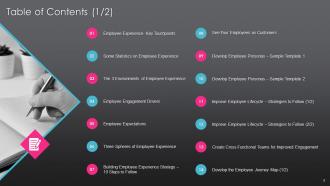
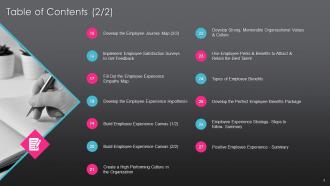
Slide 2: This slide presents Table of Content for the presentation.
Slide 3: This is another slide continuing Table of Content for the presentation.
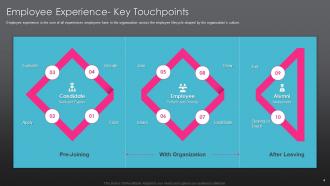
Slide 4: This slide represents Employee Experience- Key Touchpoints.
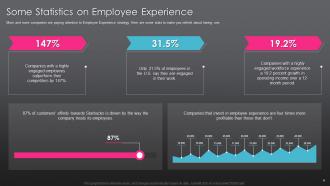
Slide 5: This slide showcases Some Statistics on Employee Experience.
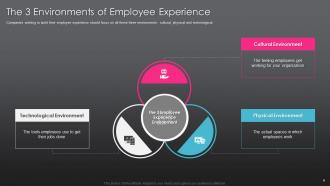
Slide 6: This slide presents The 3 Environments of Employee Experience.
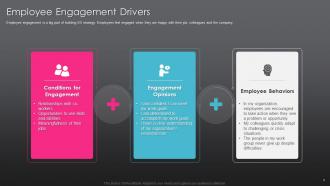
Slide 7: This slide displays Employee Engagement Drivers with additional textboxes.
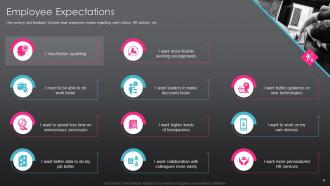
Slide 8: This slide represents Employee Expectations with related imagery.
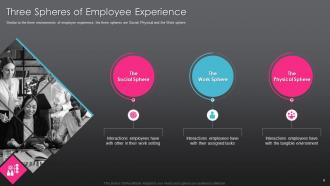
Slide 9: This slide showcases Three Spheres of Employee Experience.
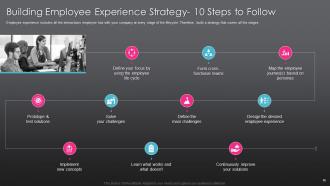
Slide 10: This slide shows Building Employee Experience Strategy- 10 Steps to Follow.
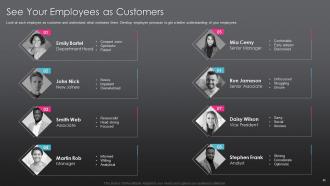
Slide 11: This slide presents See Your Employees as Customers.
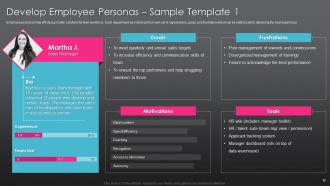
Slide 12: This slide displays Develop Employee Personas – Sample Template 1 describing- Goals, Motivations, Data/numbers, etc.
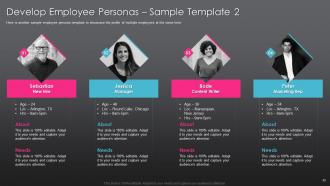
Slide 13: This slide presents sample employee persona template to showcase the profile of multiple employees.
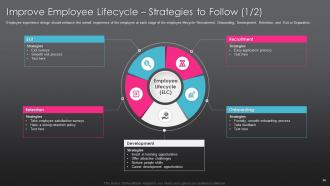
Slide 14: This slide displays Improve Employee Lifecycle – Strategies to Follow.
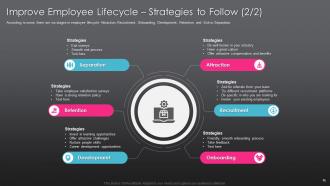
Slide 15: This is another slide continuing Improve Employee Lifecycle – Strategies to Follow.
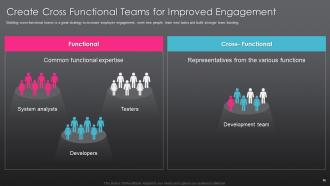
Slide 16: This slide represents Create Cross Functional Teams for Improved Engagement.
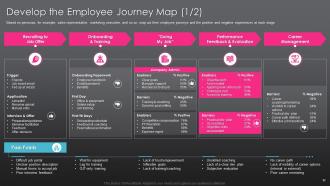
Slide 17: This slide showcases Develop the Employee Journey Map.
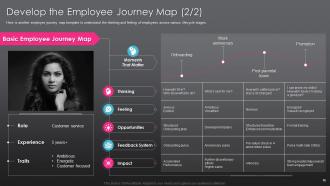
Slide 18: This is another slide continuing employee journey map template.
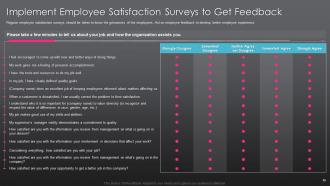
Slide 19: This slide showcases Implement Employee Satisfaction Surveys to Get Feedback.
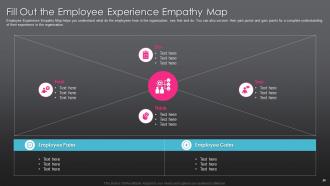
Slide 20: This slide shows Fill Out the Employee Experience Empathy Map.
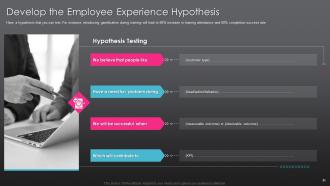
Slide 21: This slide presents Develop the Employee Experience Hypothesis.
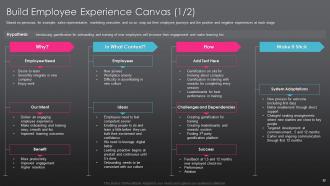
Slide 22: This slide presents Build Employee Experience Canvas describing- sales representative, marketing executive, and so on.
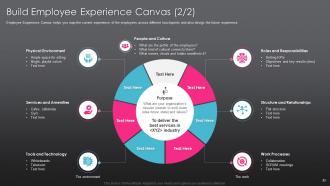
Slide 23: This is another slide continuing Build Employee Experience Canvas.
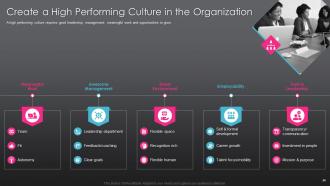
Slide 24: This slide displays Create a High Performing Culture in the Organization.
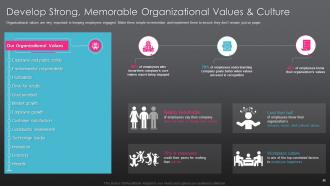
Slide 25: This slide represents Develop Strong, Memorable Organizational Values & Culture.
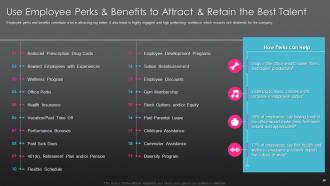
Slide 26: This slide showcases Use Employee Perks & Benefits to Attract & Retain the Best Talent.
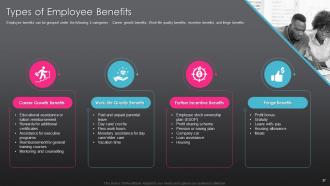
Slide 27: This slide shows Types of Employee Benefits describing- Career Growth Benefits, Educational assistance or tuition reimbursement, Rewards for additional certificates, etc.
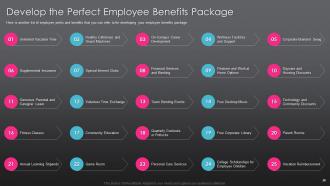
Slide 28: This slide presents Develop the Perfect Employee Benefits Package.
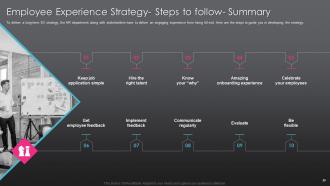
Slide 29: This slide displays Employee Experience Strategy- Steps to follow- Summary.
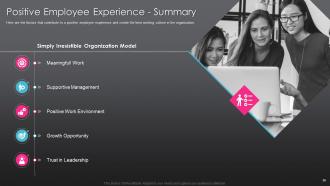
Slide 30: This slide represents Positive Employee Experience - Summary.
Slide 31: This slide showcases Icons for Developing an Employee Experience Strategy for Your Organization.
Slide 32: This is Our Mission slide with related imagery and text.
Slide 33: This is another slide continuing Our Mission.
Slide 34: This is About Us slide to show company specifications etc.
Slide 35: This is Our Team slide with names and designation.
Slide 36: This is a Timeline slide. Show data related to time intervals here.
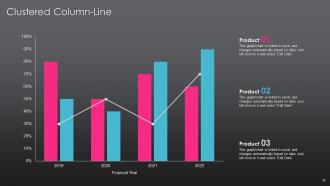
Slide 37: This slide provides Clustered Column chart with two products comparison.
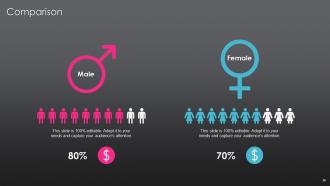
Slide 38: This is a Comparison slide to state comparison between commodities, entities etc.
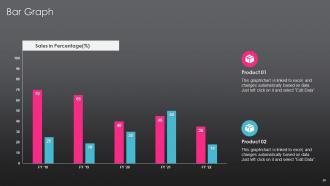
Slide 39: This slide presents Bar chart with two products comparison.
Slide 40: This slide provides 30 60 90 Days Plan with text boxes.
Slide 41: This is a Thank You slide with address, contact numbers and email address.
Developing an employee experience strategy for your organization powerpoint presentation slides with all 46 slides:
Use our Developing An Employee Experience Strategy For Your Organization Powerpoint Presentation Slides to effectively help you save your valuable time. They are readymade to fit into any presentation structure.





FAQs for Developing an employee experience strategy for your organization
Start with an audit of where you're at right now - that's honestly the most important step. Focus on employee journey mapping and regular feedback loops. Don't try fixing everything at once though, pick 2-3 areas max. Career development and recognition programs make a huge difference. So does leadership communication - people leave managers, not companies, you know? The boring stuff like competitive pay and benefits still matters too. Survey your people regularly and actually act on what they tell you. Exit interviews are gold if you're paying attention. Oh, and workplace culture initiatives... though that's probably its own conversation entirely.
Track the basics first - engagement scores, retention, eNPS from your regular surveys. Don't spam people with surveys though, nobody fills those out anymore. Productivity metrics and absenteeism tell you a lot too. Exit interviews are gold - that's where people actually talk. I'd also do stay interviews if you can swing it. The comments in pulse surveys matter more than the scores sometimes, tbh. Throw together a dashboard with maybe 5 key things you check monthly. Then dive deeper quarterly with leadership.
Look, you can't build a decent employee experience without actually knowing what's going on. Regular pulse surveys are clutch - plus exit interviews and just casual check-ins. I swear, most companies just guess what their people want and it's painful to watch. Create different ways for folks to give feedback so they'll actually be honest with you. Then here's the thing - you've gotta act on it. My old boss used to ignore survey results and wonder why engagement sucked. Don't be that person. Without real feedback you're basically throwing money at random stuff hoping it sticks.
Honestly just ask your team what's driving them crazy first - that's where I'd start. But yeah, tech definitely helps with the boring stuff. Slack keeps everyone in the loop without endless email chains. Those self-service HR portals are actually pretty great too - people can request PTO or update their address without bugging anyone. AI handles the repetitive help desk tickets now, which is wild if you think about it. The whole point is removing roadblocks so your people aren't wasting time on administrative nonsense. Don't overthink it though - sometimes the simplest tools make the biggest difference.
Honestly, start with recognition - like actual regular shoutouts, not just those awkward annual reviews nobody likes. Clear career paths are huge too so people aren't wondering if they're stuck forever. And god, communicate more! I can't stress this enough - people get so frustrated when they're blindsided by company changes. Maybe send out a quick survey first? See what's bugging your team most, then fix those things before trying to overhaul everything. It's way less overwhelming that way.
Culture and employee experience are basically the same thing, just different angles. Your culture shows up in everything - how meetings feel, whether people actually use their PTO, all of it. Here's the weird part though: it works both ways. Bad onboarding or crappy managers? That becomes your culture whether you meant it to or not. A collaborative workplace obviously creates totally different vibes than a cutthroat competitive one. I'd honestly start by looking at where your "values" actually appear in real employee moments versus just hanging on the wall.
Honestly, the worst thing you can do is try fixing everything at once - pick what actually bugs your people most. Ask them directly what sucks instead of guessing (I've seen so many companies just assume they know). Leadership has to be on board too, not just HR pushing it alone. Track your progress somehow or you'll have no clue if it's working. Oh, and don't go big right away. Start with small wins, see how people react, then expand from there.
Honestly, send them something cool before they even start - gets them hyped instead of dreading it. Give them a buddy who's not their boss for the random stuff like bathroom locations (trust me, this matters more than you think). Map out their first 90 days so they're not totally lost. Mix real conversations with the boring training stuff - team lunches work way better than endless PowerPoint slides. Oh, and actually check in at 30, 60, 90 days to see how they're feeling. You'd be surprised what you'll learn.
Dude, personalization makes such a difference because people actually feel seen instead of just being another cog in the machine. Studies show retention can literally double when you customize stuff to how people actually work and what they want from their careers. Makes total sense, right? Like, your top salesperson needs completely different growth opportunities than some quiet data analyst. I'd say just pick one thing to start - maybe how you recognize people or their training paths - and segment it based on what each group actually cares about. Small moves, big impact.
Honestly, your leaders set the whole vibe for everyone else. Employees basically copy what they see from the top - if managers are transparent and actually do what they promise, that energy spreads everywhere. I've watched this happen so many times. People get way more engaged when leadership communicates openly about problems and celebrates wins without being fake about it. Your managers have to model the stuff you want to see from everyone else. Oh, and here's what really works: have your leadership team ask themselves "what kind of experience are we creating right now?" Simple but it changes everything.
Start with engagement and retention rates - those are your bread and butter metrics. Employee Net Promoter Score is solid too, shows if people would actually tell their friends to work there. Internal mobility rates matter, plus how long new hires take to get up to speed. Don't sleep on tracking absenteeism patterns either. Exit interviews can catch stuff your regular surveys totally miss. Honestly though, pick like 3-4 metrics max that actually tie to what you're trying to fix. Otherwise you'll drown in data. Oh and start measuring this stuff now so you've got something to compare against down the road.
Remote work basically flips your whole employee experience approach upside down. No more casual hallway conversations or impromptu desk visits - everything has to be way more deliberate now. You'll need to rebuild onboarding, communication flows, recognition programs, all of it. The tricky part is making sure remote folks don't become second-class citizens compared to office people. Go digital-first with everything. Set clear async communication rules. Create actual opportunities for people to connect virtually (not just more Zoom meetings, ugh). Start by looking at what you do now and figuring out what completely breaks when everyone's scattered.
Honestly, just bake it into everything you're already doing. Hiring, onboarding, meetings - all of it. Look at your current employee journey and spot where bias sneaks in, then fix those moments. Create spaces where people actually feel safe to speak up. Build mentorship programs with diverse voices. Celebrate different backgrounds instead of just checking boxes. Flexible work helps too - not everyone thrives in the same environment, you know? The real magic happens when belonging feels natural, not forced. Start small but think about every touchpoint.
You need teams talking to each other, seriously. HR can't see everything – like when IT rolls out some clunky new system that's making everyone miserable. But if they're actually communicating with managers and ops teams, suddenly those stress points become obvious. Each department sees employee experience differently too, which is actually helpful. Operations might notice workflow issues while HR spots engagement problems. The trick is getting everyone to own employee satisfaction together, not just leaving it to HR. Set up regular check-ins between teams. Oh, and make sure they're sharing the same metrics so nobody's working toward different goals.
Honestly, L&D is massive for keeping people happy at work. Nobody wants to feel stuck in the same role forever - it's soul-crushing. When you actually invest in someone's growth, they feel valued and see a real future there. Retention goes up, satisfaction improves, the whole thing. It builds their confidence too, which makes daily work way more meaningful. The trick is figuring out what they actually want to learn, not just pushing random training modules on them. I mean, half the corporate training programs I've seen are pretty useless anyway.
-
Design layout is very impressive.
-
Unique design & color.