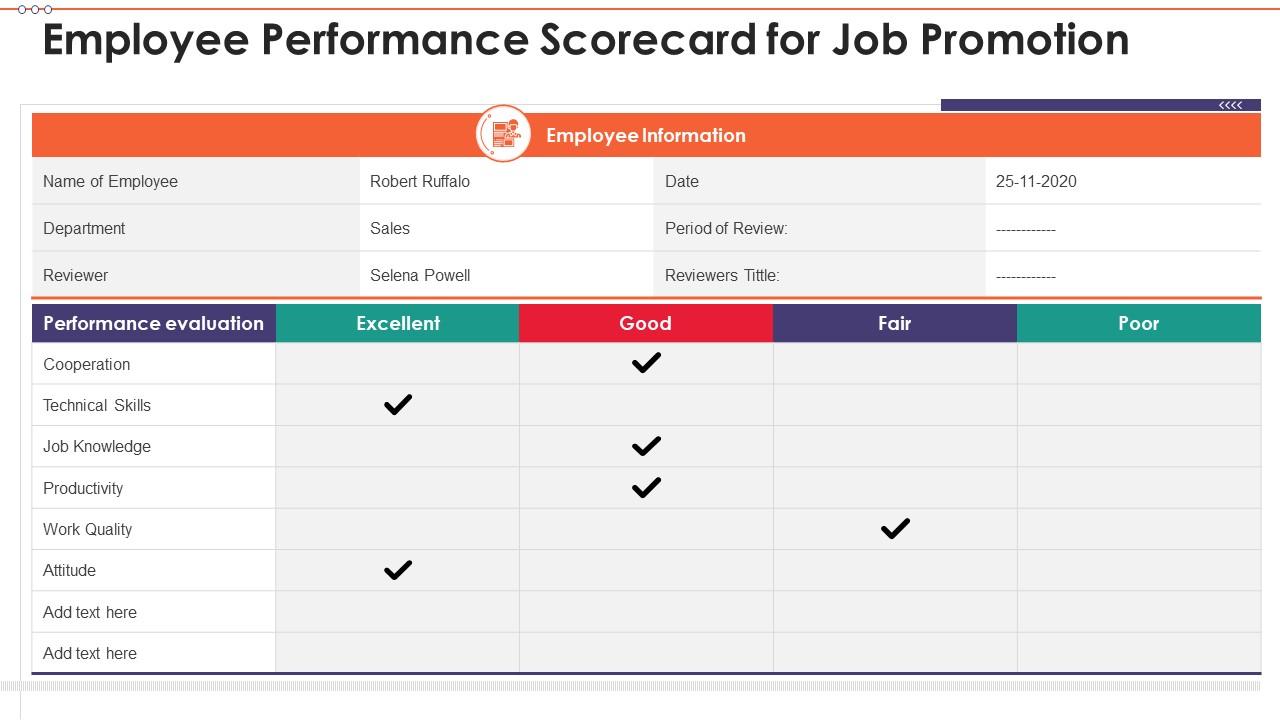
Employee scorecard performance scorecard for job promotion

Rating:
100%
Employee scorecard performance scorecard for job promotion
Slide 1 of 6
Favourites Favourites

Try Before you Buy Download Free Sample Product

Audience Impress Your
Audience
Editable 100%
Editable
Time Save Hours
of Time
The Biggest Sale is ending soon in
0
0
:
0
0
:
0
0
Rating:
100%
Deliver an outstanding presentation on the topic using this Employee Scorecard Performance Scorecard For Job Promotion Dispense information and present a thorough explanation of Technical Skills, Productivity, Performance Evaluation using the slides given. This template can be altered and personalized to fit your needs. It is also available for immediate download. So grab it now.

FAQs for Employee scorecard performance scorecard

Mix quantitative stuff with qualitative measures - goal achievement, productivity for their specific role, work quality, how they collaborate. Communication is massive honestly, I've watched solid performers completely bomb because they couldn't mesh with the team. Problem-solving and taking initiative matter too. Oh, and track their professional development progress. The trick is making sure your KPIs actually match what winning looks like in their exact position. Stick to maybe 4-6 strong indicators instead of creating some crazy long list that nobody will use.

Honestly, I used to be terrible at this - would just say "nice work" and call it a day. Big mistake. Get specific with examples of what they're crushing and what needs work. Skip the vague stuff. Ask what they think too, don't just lecture at them. I frame things like "I noticed..." instead of "you always..." so it doesn't sound like an attack. Oh, and don't dump everything during annual reviews - that's brutal for everyone. Give little bits throughout the year so nothing's a shock. Makes those formal sit-downs way less awkward.

Think of it as getting your side of the story in first. Your manager probably missed half the stuff you crushed this year, so this is where you remind them. Don't just rush through it like most people do - that's such a waste. Be real about what you struggled with too, but definitely don't downplay your wins. Honestly, I've seen people get way better reviews just because they actually put effort into this part. It gives you something concrete to talk about when you're sitting across from your boss. Oh, and it shows you're not clueless about your own performance, which managers love.

Document everything with specific examples - that's seriously your lifeline if HR comes knocking. I found that out the hard way last year! Stick to measurable stuff instead of personality judgments. Same rating scale for everyone, and try evaluating your whole team around the same time so you don't accidentally favor whoever you reviewed most recently. Getting input from other managers or peers helps too, though sometimes that's easier said than done. Here's the thing - if you can't point to concrete examples backing up your rating, you're probably letting bias sneak in.

Look at their past work first - what they've actually done well and where they're at skill-wise. That's your starting point. From there, sit down together and pick 2-3 goals that'll push them but won't make them want to quit, you know? I've found the sweet spot is challenging but not impossible. Think about their current workload too - no point setting ambitious targets if they're already drowning. Break the bigger stuff into smaller chunks so you can see how it's going and pivot if things aren't working. Oh, and figure out if they'll need training or extra resources beforehand.

Dude, most places stick with annual reviews but that's honestly pretty terrible timing. Quarterly makes way more sense - gives you actual time to see progress without burning everyone out on constant evaluations. Monthly quick check-ins between those work great too. Here's the thing: waiting a whole year means problems just sit there getting worse, plus people forget all the good stuff they accomplished. I learned this the hard way at my last job. Quarterly lets you fix things fast and keeps those growth conversations actually relevant. Schedule your next quarter now before you forget!

Ugh, learned this one the hard way when HR came back at me with questions! Skip the vague stuff like "good work" or "needs improvement" - you need actual examples and numbers. Write everything down within a day or two while you still remember what happened. I always keep the emails and project stuff as backup too. Cover both what they're killing it at AND what needs work. If you had a specific conversation, quote it directly and connect everything back to their actual job duties. Trust me, you'll be so glad you documented properly if things get messy later.

Honestly, tech has been a game-changer for performance reviews. Instead of that awkward scramble trying to remember what Sarah accomplished in March, tracking software keeps everything logged throughout the year. 360-degree feedback platforms make collecting input from different people super easy too. Analytics help you catch performance patterns you'd totally miss otherwise. The automated reminders are clutch - no more "oh crap, reviews are due tomorrow" moments. Having everything in one central spot just makes the whole process way more fair and objective. Your team can actually see their progress instead of wondering where they stand.

Honestly, company culture controls everything about how performance reviews actually play out. Collaboration-focused places? They'll weight teamwork super heavily in your eval. But toxic workplaces turn reviews into total political games instead of real feedback - seen it happen too many times. The culture decides if your manager gives you straight talk or sugarcoats everything to death. Also shapes whether they focus on helping you grow or just pointing fingers when stuff goes wrong. My advice? Check if your review criteria match the culture you actually want, not whatever sounds impressive in the employee handbook.

Honestly, the best thing you can do is flip the script and make it actually two-way. Start by having them fill out self-evaluations first - people are weirdly tougher on themselves than we are anyway. Let them tell you what support they need and suggest their own goals. During the actual meeting, give them space to talk about what's blocking them or if processes are messed up. Ask open-ended stuff and actually listen instead of just going through your checklist. Then work their ideas into whatever development plan you're putting together. Way better results when they feel heard, not just evaluated.

Ugh, recency bias is huge - like you'll totally forget everything except last Tuesday's drama. Don't be vague either, nobody knows what "needs improvement" actually means. I used to focus way too much on personality stuff instead of what they actually accomplished at work. Also? Skip that whole sandwich method where you hide bad news between compliments - it just makes everything confusing. You want specific examples from real situations that happened. And honestly, the worst thing is when managers never talk to people all year then dump everything in one awkward review. Have regular chats so nothing's a total shock.

Honestly, performance reviews can be total game-changers if you flip the script. Instead of just grading what already happened, dig into what skills they're missing and where they actually want their career to go. Then work backwards - what training do they need? Maybe a mentor or some challenging projects? The trick is making it feel like you're planning together, not lecturing them. I've watched managers completely turn around their teams this way. Oh, and don't wait a whole year to check back in - that's way too long. Monthly or quarterly works way better for keeping things on track.

So first figure out if it's a "can't do" or "won't do" thing. Training works great when someone literally doesn't know how to do something or is missing skills. Like, it's honestly the quickest fix in those cases. But if they're just not motivated or have attitude issues? Training won't help much. I learned this the hard way at my old job - we kept sending this one guy to workshops when he just didn't care. Match whatever training you pick to the actual gap you found. Then set clear deadlines for when you expect to see changes.

Honestly, performance reviews can actually change how your whole team talks about feedback - but only if you stop treating them like some dreaded annual ritual. Get your managers bringing up those evaluation topics during regular one-on-ones instead of saving everything for the big formal sit-down. When teams get used to this, the actual review just becomes paperwork for stuff you've already covered. Train managers to give feedback as things happen, not months later. Make it collaborative too - I love when managers start check-ins by asking "what do you need from me?" Short conversations beat those marathon review sessions every time.

So first thing - map your eval criteria straight to what your company actually wants to achieve. Those big strategic goals? Break them down into stuff individual people can actually control and measure. Honestly, I've seen way too many performance reviews that feel totally random compared to what the business cares about. Get your managers involved in translating the high-level stuff into clear expectations for each role. Oh, and don't forget to update these regularly when priorities change - nothing worse than being judged on outdated goals!

Ratings and Reviews

100% of 100
Review Form
Write a review
Most Relevant Reviews
  1. 100%

    by Curtis Herrera

    Great product with highly impressive and engaging designs.
  2. 100%

    by Charles Peterson

    Unique and attractive product design.

2 Item(s)

per page: