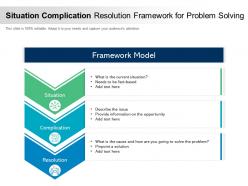
Situation complication resolution framework for problem solving
Try Before you Buy Download Free Sample Product
Audience
Editable
of Time
Our Situation Complication Resolution Framework For Problem Solving are topically designed to provide an attractive backdrop to any subject. Use them to look like a presentation pro.
People who downloaded this PowerPoint presentation also viewed the following :
Situation complication resolution framework for problem solving with all 2 slides:
Use our Situation Complication Resolution Framework For Problem Solving to effectively help you save your valuable time. They are readymade to fit into any presentation structure.
FAQs for Situation complication resolution framework
So basically you wanna define the problem first, then gather info, brainstorm ideas, weigh your options, pick one and run with it, then see how it went. Works for debugging, marketing stuff, even what to make for dinner lol. Honestly though, most people screw up by jumping straight to solutions - I do this too sometimes. Spend more time really understanding what's going on before you start fixing things. Try it with whatever you're working on right now. Pretty sure it'll change how you think about stuff.
Okay so think of it like this - you're finding the actual leak instead of just mopping up water forever. When you dig into what's really causing the problem, your fixes actually stick. I've watched teams patch the same issue like five times because they never looked deeper. Super frustrating to watch, honestly. Ask "why" at least five times - sounds basic but it works. Root cause analysis means you're not wasting time on quick fixes that'll break again next week. Plus stakeholders trust you way more when they see you're solving it for real this time.
Honestly, data is your best friend when solving problems - it keeps you from lying to yourself about whether stuff actually works. I've watched so many people think their solution was amazing while the numbers showed it did basically nothing. Track the right metrics from day one, not just whatever's easiest to measure. Leading indicators help you catch problems early instead of realizing months later you're screwed. The whole point is knowing what's really moving things forward vs what just looks good in meetings. Without solid metrics, you're basically flying blind and hoping for the best.
Yeah totally! Problem-solving frameworks work great with agile. I'd start with something simple like the "5 Whys" during your next retrospective - it's super helpful for getting to the root of blockers. You can also use design thinking or root cause analysis right in your sprint cycles. Sprint planning gets so much better when you actually define problems properly before breaking down user stories. Agile is basically just iterative problem-solving anyway, so it makes sense they'd work together. Pick one framework and test it out. Don't overthink it though - just see what clicks with your team first.
Oh man, biases totally screw with your thinking! You'll get stuck on the first idea that pops up or just look for info that backs up what you already think. Super annoying how they sneak in like that. What helps me is building in little reality checks - like actually asking people who disagree with me, or forcing myself to argue against my own solution before I commit. Sounds weird but it works. The confidence thing is huge too - we always think we're more right than we actually are. Just make questioning yourself part of your routine, you know?
Mind maps are honestly game-changers for team stuff. You can actually see how ideas connect instead of just having random bullet points everywhere. Some people on your team probably think way better visually anyway - they'll love seeing the whole picture spread out. During meetings, everyone's literally looking at the same thing, so you won't have those annoying moments where half the team is talking about completely different topics. It's weird how much clearer things get when you map it all out. Next time you're brainstorming, throw up a mind map first. Your team will probably feel way more on the same page.
Just tweak the basic framework to fit whatever industry you're dealing with. Healthcare folks will throw in extra safety checks because, well, people's lives are on the line. Tech companies love their rapid prototyping phases. Manufacturing gets obsessed with root cause analysis - honestly makes sense given how expensive mistakes can get. Take that standard approach (define, analyze, brainstorm solutions, implement, evaluate) and swap in the tools your industry actually uses. Different timelines too. Figure out what makes problem-solving weird in your specific field first, then adjust from there.
Honestly, just start with what you already have - PowerPoint works fine for basic flowcharts and process maps. Miro's pretty cool for visual stuff if you want something fancier, or Lucidchart. Documentation-wise, Notion's solid but I've literally seen teams crush it with just well-organized Google Sheets. The real trick is picking something everyone will actually use (not the shiniest tool). My old manager always said don't get fancy until you know the framework actually works. Start simple, see if it adds value, then worry about upgrading later.
First thing - check your own stress level because that stuff spreads like wildfire. I always start meetings by asking how everyone's doing (sounds cheesy but it actually works). Watch for body language shifts - when someone's getting wound up, let them vent before jumping back into solutions. Even if you totally disagree with someone, try "I can see this really matters to you." It's kind of magic how that phrase defuses things. Don't forget to actually listen to different viewpoints instead of just waiting for your turn to talk.
Honestly, the worst thing you can do is get so hung up on following every step perfectly that you forget what you're actually trying to solve. People waste tons of time obsessing over step one instead of just moving forward. Don't try cramming every problem into the same box either - some stuff needs flexibility, you know? Oh, and never skip defining the problem first. That's like... well, shooting blind basically. My take? Treat it more like loose guidelines than some sacred rulebook, and actually check if you're getting anywhere real.
Honestly, getting your team to solve problems together is a game changer. It breaks down those stupid silos where people hoard information. You'll see way better results because everyone brings different ideas to the table - like, the creativity boost is real when people aren't trying to one-up each other. Trust builds naturally, and people actually care about the solutions since they helped make them. The trick is giving everyone a chance to speak up without letting it turn into a free-for-all mess. Maybe start with something small first? Once you see how well it works, you can tackle bigger stuff.
So here's the thing - get them involved in *building* the framework from day one, don't just hand it over later. Ask what's actually broken and how they'd fix it. People buy into stuff they helped create. Start with something small that'll show results quick. Nothing convinces people like seeing it actually work in practice. Oh, and explain the reasoning behind each step, not just what to do. Honestly? Some pushback is totally normal at first. Change feels weird. My advice: bring them in early, prove it works fast, then keep reinforcing why it's worth their time.
Honestly, iterative testing saves you from going down rabbit holes for weeks. Test small chunks first, get people's reactions, then tweak stuff based on what they actually say. Way better than building everything and finding out later it sucks. It's kinda like debugging - catching problems early beats fixing a massive mess later. The whole point is making sure you're solving a real problem, not just something that sounds good in your head. You'll notice weird assumptions you didn't even realize you had. Start tiny, ask users what they think super early, and keep adjusting as you go.
Honestly, creativity is like your secret weapon when logic hits a wall. Instead of beating your head against the same obvious solutions, try brainstorming or asking "what if we did the complete opposite?" Sounds cheesy but I swear the wildest ideas sometimes crack everything open. Here's what works for me - spend 10 minutes just dumping every possible solution on paper, even the stupid ones. Don't judge anything yet! Save that analytical brain for later when you're sorting through the pile. You'll be surprised how many options you actually have once you stop limiting yourself to "normal" approaches.
Oh man, cultural differences totally throw off problem-solving approaches. Japanese team members usually want tons of consensus-building first. Meanwhile Americans are like "let's decide now!" I swear this kills so many sprint planning meetings lol. Some cultures dig deep into analysis, others just dive right into solutions. Risk tolerance is all over the place too. My advice? Ask everyone how they normally tackle problems back home. Then build your framework so it's flexible enough to work with different styles. Don't force one approach on everyone - it'll backfire.
-
Excellent template with unique design.
-
It saves your time and decrease your efforts in half.