


6 Step Approach Of Benchmarking Process




Try Before you Buy Download Free Sample Product
 Impress Your
 Audience
 100%
100% Editable
 Save Hours
 of Time


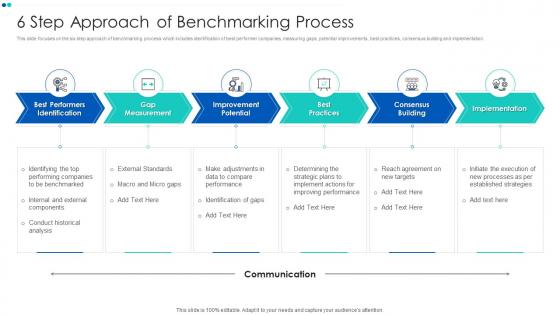
This slide focuses on the six step approach of benchmarking process which includes identification of best performer companies, measuring gaps, potential improvements, best practices, consensus building and implementation.
People who downloaded this PowerPoint presentation also viewed the following :
6 Step Approach Of Benchmarking Process with all 6 slides:
Use our 6 Step Approach Of Benchmarking Process to effectively help you save your valuable time. They are readymade to fit into any presentation structure.





FAQs for 6 Step Approach
So benchmarking is pretty straightforward once you break it down. Start by figuring out what you actually want to measure - I know it sounds basic but seriously, people mess this up constantly. Find the companies that are crushing it in that area to compare yourself against. Collect data on how you're doing now versus how they're performing. Look for the gaps between where you are and where they are. Then make a plan to close those gaps. Oh, and don't try to benchmark your entire operation at once - that's a recipe for burnout. Pick one thing first.
Honestly, I'd start with trade publications and industry associations - they usually have decent benchmark data. Annual reports from your competitors are gold mines too if they're public companies. McKinsey and those big consulting firms put out studies constantly (some cost money though, which is annoying). Government databases are surprisingly useful for compliance and safety standards. Oh, and don't try to track everything at once - pick maybe 3-5 metrics that actually matter to your business first. You can always add more later once you get the hang of it.
Pick 3-4 metrics that actually matter to your goals - seriously, measuring everything will just overwhelm you with useless data. Performance stuff like cost per unit or cycle time works great, depending on what you're benchmarking. Quality metrics are pretty much mandatory. Then throw in efficiency measures like error rates or how well you're using resources. Here's the thing though - make sure your benchmark partners actually track this stuff and will share it. I've seen people waste weeks planning around data they could never get their hands on. Keep it simple and focused on decisions you actually need to make.
Honestly? I'd say at least once a year, but it really depends on your industry. Tech moves crazy fast, so quarterly makes way more sense there. If you're in something more stable, annual reviews are probably fine. Oh, and definitely refresh your data whenever there's big industry drama - new regulations, major competitor shakeups, that kind of thing. The whole point is making sure you're not making decisions based on old info. I learned this the hard way when I was using six-month-old benchmarks that were completely irrelevant. Set those calendar reminders though, because this stuff is easy to forget about.
Honestly, the data situation is gonna be your biggest headache - companies either don't track what you need or their numbers are all over the place. Plus finding truly similar organizations? Way harder than you'd think since everyone's got their weird quirks. You'll constantly deal with comparing apples to oranges, especially across different industries. And don't get me started on convincing people this isn't just "copying the competition" - that's a whole political mess. Start with one simple metric though. Do internal comparisons first, then branch out once you can show it actually works.
Look, benchmarking is just comparing what you're doing to whoever's crushing it in your space. Pick some metrics that matter - like how long stuff takes, error rates, or how you're using resources. Then figure out what the top dogs are doing that you're not. Honestly, it's kind of like stalking your competition but in a productive way. You'll catch inefficiencies you totally missed before. The trick is finding one process that's really sucking and comparing it to your best competitor or even another department that's got their act together. Then just steal their playbook (legally, obviously) and adapt it to your situation.
Look, competitive analysis is basically your starting point for any benchmarking that actually matters. You've gotta figure out who you're measuring against first - direct competitors, industry leaders, maybe even companies from totally different sectors who crush it at stuff you want to get better at. Honestly, I'm always surprised how much you can learn just from digging into their processes and strategies, not just their numbers. Pick like 5-7 key competitors and start gathering whatever performance data you can find publicly, plus any insider info on how they actually operate. Otherwise you're just throwing darts blindfolded.
So what I do is create simple 1-5 scales for those fuzzy metrics like customer satisfaction or employee morale. Works pretty well honestly. Then you can break down your hard numbers by different qualitative buckets - maybe by company culture type or whatever market conditions you're dealing with. That's where you'll catch patterns that straight numbers miss. The trick is staying consistent with how you score and weight everything so people don't think you're just making stuff up. Oh, and don't go crazy - start with maybe 2-3 of these softer dimensions alongside your regular metrics. You'll get a way clearer picture.
Honestly, just tell them a story with your data. Start with what's happening in the business, then show where things are falling short. After that, hit them with the specific ways to fix it. Charts are your friend here - nobody wants to sit through spreadsheet hell for 20 minutes. Keep the nerdy methodology stuff short unless someone actually asks about it (which they probably won't). The real key? Come with 2-3 concrete actions they can take right now. Not vague "we should do better" nonsense. Give them actual next steps they can run with.
Honestly, tech is a game-changer for benchmarking - it kills all that manual spreadsheet nonsense. Analytics platforms let you track competitors and industry metrics in real-time, plus you'll catch trends you'd totally miss otherwise. AI tools are pretty solid at finding the right benchmarks for your specific setup too. Instead of going with your gut or some ancient report, you get consistent data that's actually reliable. My advice? Pick one tool that plays nice with what you're already using. Oh, and start with whatever benchmarking task eats up most of your time - that's where you'll feel the biggest relief.
So internal benchmarking is basically comparing stuff within your own company - like how different teams perform or how you've improved over time. External means stacking yourself up against competitors or industry averages. Honestly, start internal because getting that data is so much easier. You can spot what's working well in other departments and track if you're actually getting better. Once you've squeezed out those improvements, then dive into external benchmarking to see where you really stand competitively. That's where you'll find the bigger breakthrough opportunities you can't see just looking inward.
Honestly, start by checking where you're getting your data from - stick to solid industry reports and actual peer companies, not random websites. The biggest mistake I see people make? Mixing different measurement methods and then wondering why nothing adds up. Make sure you're defining metrics the same way across all your comparisons. Also, always cross-check with multiple sources because outliers will mess you up. Oh, and document everything you do - sounds boring but you'll thank yourself later when you need to run it again or figure out where something went wrong. Quick audit of your current process first though, you might catch some obvious gaps.
Don't trick people into sharing info - that's just shady. Be upfront about why you're collecting data and what you'll do with it. Respect confidentiality and never ask someone to break their NDA (that could get them fired). Once you have competitor intel, keep it locked down. I learned this the hard way when someone leaked our pricing strategy last year. Treat their data like you'd want yours treated. Get proper permissions first, obviously. Most people will actually help if you're honest about your research instead of being sneaky about it.
So benchmarking basically shows you what's actually possible out there. When you see other companies crushing it in ways you didn't even think of, it pushes you past just making tiny tweaks. You start asking "wait, how could we completely flip our approach?" I always tell people - don't just look at your direct competitors though. The really cool innovations? They come from random industries you'd never expect. Like, logistics companies learning from how restaurants handle rush orders. Set up regular sessions with your team and challenge yourselves to find at least one "impossible" thing to steal and adapt.
Honestly, Excel's still your best friend for this stuff - I know it sounds boring but it just works. Start with IBISWorld or Statista for industry data, then use SurveyMonkey to grab your own metrics. Tableau makes everything look way prettier if you need fancy visuals. Oh, and don't forget government databases - they're free and actually pretty solid. Trade association reports too. I'd mix like 2-3 tools instead of hunting for some perfect all-in-one thing that probably doesn't exist anyway. Begin with whatever you've got, then figure out what's missing as you go.
-
Design layout is very impressive.
-
Huge collection of high-quality templates. Worth each penny.