

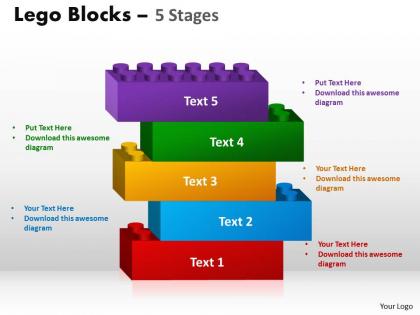
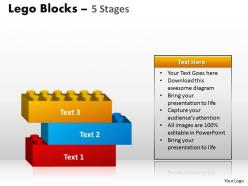
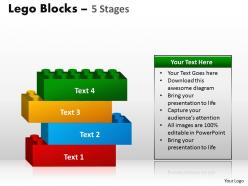
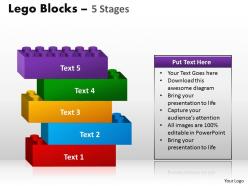
5 stages lego blocks




Try Before you Buy Download Free Sample Product
 Impress Your
 Audience
 100%
100% Editable
 Save Hours
 of Time


Let the cat out of the bag with our 5 Stages Lego Blocks. Take your team into confidence with your views.
People who downloaded this PowerPoint presentation also viewed the following :
5 stages lego blocks with all 9 slides:
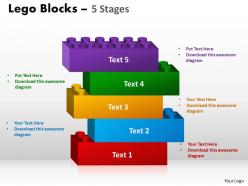
Flavour up your talk with our 5 Stages Lego Blocks. They will tickle the mental taste buds of your audience.
FAQs for 5
The key stages of the Lego building process include planning and design conceptualization, sorting pieces by color and size, constructing the foundation or base structure, building core components systematically, and adding final details and refinements. These stages streamline complex projects by ensuring organized workflow, minimizing errors, and maximizing creative efficiency, with many builders finding that structured approaches ultimately deliver more satisfying and professional results.
Effective Lego project planning involves defining your vision and scope, gathering necessary pieces and tools, creating detailed building phases, and establishing timeline milestones. Through systematic organization and reference materials, builders streamline complex constructions, minimize piece-hunting delays, and maintain momentum throughout assembly, with many enthusiasts finding that structured approaches ultimately deliver more satisfying results and enhanced creative outcomes.
**INPUT**: What tools or resources can enhance the Lego building experience for beginners? **OUTPUT**: Essential tools for beginners include brick separators for easy disassembly, organizing trays for sorting pieces, instruction apps for digital guidance, and adequate lighting for detailed work. These resources streamline the building process by reducing frustration, improving efficiency, and enabling more complex projects, with many builders finding that proper organization and lighting ultimately enhance creativity and building precision.
Professional Lego builders approach complex designs through systematic planning, modular construction techniques, and iterative prototyping processes. They break large projects into manageable sections, use specialized building techniques like SNOT (Studs Not On Top), and leverage digital design tools, with many architectural and engineering professionals finding that these methodical approaches streamline assembly while ensuring structural integrity and visual cohesion.
Color theory enhances Lego creations by establishing visual hierarchy, creating emotional impact, and guiding viewer attention through strategic contrast and harmony. Effective color combinations streamline storytelling in architectural models, landscape dioramas, and character designs, with many builders finding that complementary palettes deliver more engaging displays and ultimately strengthen the overall aesthetic impact of their constructions.
Builders can incorporate structural integrity into their Lego models through strategic brick overlapping, cross-bracing techniques, reinforcement with internal frameworks, and using longer bricks to span connections. These methods enhance model stability by distributing weight evenly, minimizing stress points, and creating robust foundations, ultimately delivering durable constructions that withstand handling while maintaining architectural authenticity.
Common Lego building challenges include missing pieces, structural instability, complex instruction sequences, color confusion, and time management during lengthy builds. These obstacles can be overcome by organizing pieces systematically, reinforcing connections with overlapping techniques, breaking complex steps into smaller segments, and creating adequate workspace lighting, ultimately delivering smoother building experiences and enhanced creative satisfaction for builders across all skill levels.
Collaboration significantly enhances group Lego building projects by combining diverse creative perspectives, distributing complex tasks efficiently, and fostering innovative problem-solving approaches that individual builders might miss. Through structured teamwork, groups achieve more intricate designs, faster completion times, and higher quality outcomes, with many educational institutions and corporate team-building programs finding that collaborative building develops both technical skills and communication abilities.
Digital tools for Lego design and planning offer enhanced visualization, precise piece counting, cost estimation, instruction generation, and collaborative sharing capabilities. These platforms streamline the building process by enabling designers to experiment with complex structures virtually, optimize piece usage for budget efficiency, and share blueprints with teams or communities, ultimately delivering faster prototyping and more sophisticated builds.
Storytelling enhances Lego builds by creating emotional connections, establishing clear narrative arcs, and providing context that transforms static constructions into dynamic experiences. Through character development, conflict resolution, and world-building elements, builders create immersive environments that engage audiences beyond visual appeal, ultimately delivering memorable presentations and deeper engagement with complex themes.
Techniques to improve Lego building efficiency include pre-sorting pieces by color and type, using organized storage systems, following step-by-step instructions systematically, building in sub-assemblies, and creating dedicated workspace areas. These methods streamline construction by minimizing search time, reducing errors, and enabling parallel assembly processes, with many experienced builders finding that organized preparation ultimately delivers faster completion times and enhanced building satisfaction.
Modifications and iterations significantly enhance Lego creations by enabling structural improvements, aesthetic refinements, and functional upgrades throughout the building process. Through continuous adjustments, builders achieve stronger connections, better proportions, and enhanced playability, with many finding that iterative design approaches ultimately deliver more innovative solutions and superior final models.
Creative display methods include floating shelves with LED backlighting, rotating platforms, custom shadow boxes, tiered acrylic risers, and wall-mounted display cases with themed backgrounds. These approaches enhance visual impact by creating depth, highlighting intricate details, and organizing collections by theme or complexity, while many builders find that strategic lighting and modular display systems maximize space efficiency and showcase craftsmanship effectively.
Builders can effectively document their Lego building journey through progress photos at key stages, time-lapse videos, detailed part inventories, and step-by-step breakdowns with commentary. These documentation methods enhance community engagement by showcasing techniques, troubleshooting moments, and creative decisions, while building personal portfolios that demonstrate skills, inspire fellow builders, and create valuable content for social media platforms.
Lego building stages offer cognitive development, spatial reasoning enhancement, problem-solving skills improvement, creativity stimulation, and fine motor coordination strengthening for both children and adults. These structured activities enhance learning through hands-on engagement, sequential thinking, and collaborative projects, with many educational institutions and corporate training programs finding that Lego-based exercises ultimately deliver improved focus, strategic planning abilities, and enhanced team communication skills.
-
Graphics are very appealing to eyes.
-
Innovative and Colorful designs.