


5 Year Career Development Plan Process




Try Before you Buy Download Free Sample Product
 Impress Your
 Audience
 100%
100% Editable
 Save Hours
 of Time


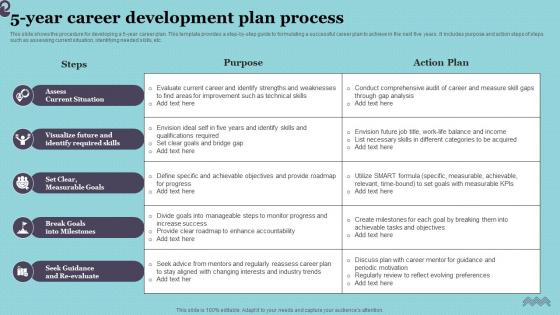
This slide shows the procedure for developing a 5 year career plan. This template provides a step by step guide to formulating a successful career plan to achieve in the next five years. It includes purpose and action steps of steps such as assessing current situation, identifying needed skills, etc.
People who downloaded this PowerPoint presentation also viewed the following :
5 Year Career Development Plan Process with all 6 slides:
Use our 5 Year Career Development Plan Process to effectively help you save your valuable time. They are readymade to fit into any presentation structure.





FAQs for 5 Year Career
Okay so you need five main things for a solid career plan. First, nail down specific short and long-term goals - like "get promoted to senior analyst in 18 months" instead of just "move up." Then create a realistic timeline (most people totally skip this step and wonder why they're stuck). Figure out what skills you actually need - both technical stuff like certifications and softer things like leadership. Don't forget to identify what resources or training you'll need along the way. Oh, and here's the game-changer: schedule quarterly check-ins with yourself to see what's working. Trust me, that last part makes all the difference.
SMART goals are honestly a game changer for career stuff. You stop saying vague things like "I want a promotion" and start getting specific - like "finish my project management cert by April so I can apply for that team lead position." The deadline piece is clutch because it actually forces you to do something. I used to be terrible at this! Tracking your progress keeps you from getting discouraged when things feel slow. When you can see you're moving forward, even in small steps, it's way easier to stick with your plan. Pick one goal this week and make it SMART - you'll see what I mean.
Dude, get yourself a mentor if you can. They've already screwed up all the stuff you're about to screw up, which saves you so much time. A good one will call out blind spots in your plan and suggest skills you didn't even know existed. Plus their connections are gold - I can't stress this enough. They'll also reality-check your timeline because we're all terrible at estimating how long things actually take. Just be super clear about what help you need. And honestly? Actually listen to what they tell you, don't just nod along.
Honestly? Do a real skills audit first - what are you actually good at vs what makes you want to hide under your desk. Get feedback from people you trust too, because we're all delusional about ourselves sometimes lol. Compare your abilities to job descriptions for roles you want. Those online assessments like StrengthsFinder can help if you're into that stuff. But here's the thing - don't try fixing everything at once or you'll burn out. Pick maybe 2 areas max and focus there. Being brutally honest with yourself about gaps is uncomfortable but it's the only way this works.
Honestly, start with those career assessment things like StrengthsFinder or the O*NET one - they're actually pretty helpful for figuring out what you're good at. LinkedIn Learning has solid courses if you need to pick up skills. Mind mapping tools are weirdly addictive for plotting out different career paths (I use MindMeister but there's others). Professional associations in your field usually have mentorship programs too, which is clutch. Oh, and definitely do some informational interviews - sounds scary but most people love talking about their jobs. Just don't go crazy trying every single tool. Pick like 2-3 max or you'll burn out fast.
Honestly, I'd check in on it every 3 months or so. Maybe 6 months if you're super consistent about it. Things change so fast though - like what felt right in January can seem completely wrong by July, you know? I always do mine after performance reviews since I'm already thinking about career stuff anyway. Oh and definitely set a phone reminder because I've totally forgotten before when work gets crazy. The job market shifts constantly too, so regular check-ins help you spot opportunities before they disappear. Short bursts work better than trying to overhaul everything once a year.
Honestly? Just help people out before you need anything - forward articles, connect folks who should know each other. LinkedIn's the obvious choice, but those industry events (even virtual ones) are actually worth it. I used to think networking was super fake until I realized it's literally just... talking about work stuff with people who get it. One meaningful convo per week is a solid goal - could be coffee with someone from another team or even just thoughtful comments on posts. Real relationships beat contact collecting every time.
Honestly, think of industry trends like your career compass - they point you toward where the real opportunities are gonna be. You don't want to waste time developing skills that'll be obsolete next year. Take marketing for example - if basic tasks are getting automated, focus on the creative strategy stuff instead. I'm always checking what's happening in my field and related ones too. Google alerts are clutch for staying updated. Follow some industry people on LinkedIn. Then just regularly check if you're headed in the right direction or if you need to pivot.
Look, you'll literally get left behind if you don't keep learning new stuff. Everything changes so fast now - like my company switched project management tools three times last year alone, it was insane. But here's the thing: staying current isn't just about survival anymore. Learning opens up promotions you didn't even know existed. Career pivots become possible. Work stays interesting instead of mind-numbing. I'd honestly rather quit than feel stuck doing the same thing forever. Just pick one trending skill in your field and spend 30 minutes weekly on it. Small steps work.
Honestly, just write down what actually drives you first - not what you think *should* matter, but what really does. Work-life balance? Creativity? Helping people? Whatever. Then check if your career goals match up with that stuff. Like, if you want balance but you're gunning for a role with crazy hours, that's not gonna work out well. I'd look for jobs where your day-to-day actually reflects your values. The goal is getting paid for something that doesn't make you miserable, you know? Maybe do this exercise this week and see what comes up - sometimes the patterns are more obvious than you'd expect.
Look for those stretch assignments nobody wants - cross-functional stuff that's outside your wheelhouse. Ask to mentor someone junior, that's huge for developing your leadership voice. Your company probably has leadership programs too, so jump on those. Get feedback from your manager about specific behaviors, not just generic "you're doing great" stuff. Oh and presentations are clutch for building executive presence - even if you hate public speaking like I do. Volunteer work outside the office is another solid way to practice making decisions and influencing people. It's really about getting actual experience, not just reading leadership books all day.
Ok so feedback is basically your career GPS - shows you where you actually are vs where you think you are. Ask your boss what specific skills would get you promoted, and get peer feedback on how you collaborate. I used to hate critiques but honestly? It's free coaching. Look for patterns in what people keep saying - that's your real development stuff right there. Turn those gaps into actual goals in your career plan. Oh and definitely follow up in like 3-6 months to show you've worked on their suggestions. Makes a huge difference.
Honestly, getting certified can really open doors for you. Companies love seeing those credentials on your resume - it shows you're serious about your field. You'll probably qualify for better-paying positions too, since some roles literally require specific certs. Industries like IT and project management are pretty strict about this stuff. My buddy just got his PMP and landed a promotion within months, so there's definitely something to it. I'd look into what certifications matter most in your industry first though. Don't just grab any random one - focus on what'll actually help you get where you want to be in a couple years.
Honestly, don't wait to think about work-life balance until you're already miserable. Build it right into your career planning from the start. I totally burned out chasing what seemed like my dream job - big mistake. Now when I'm looking at opportunities, flexibility and realistic hours matter just as much as the pay bump. Set your boundaries early and stick to them. Mine's no work emails after 7pm, but pick whatever works for you. Also think about timing - that cool traveling role might sound amazing, but maybe not when you've got little kids at home. Balance should be one of your success metrics, not just hitting the next promotion.
Honestly, self-assessment is like having a GPS for your career instead of just driving around aimlessly. You gotta be real about your skills, what you actually enjoy, and what makes you feel energized at work. I learned this the hard way – used to just throw applications at anything that looked decent. Terrible idea. Look for patterns in your peak work moments, maybe try some career assessments or just journal about it. The trick is being honest about both what you're good at AND what doesn't make you want to hide under your desk.
-
Great combination of visuals and information. Glad I purchased your subscription.
-
They helped us design the pamphlets for our church’s food drive! The people loved the design, and I’m happy to say it was successful. Thank you, SlideTeam!