


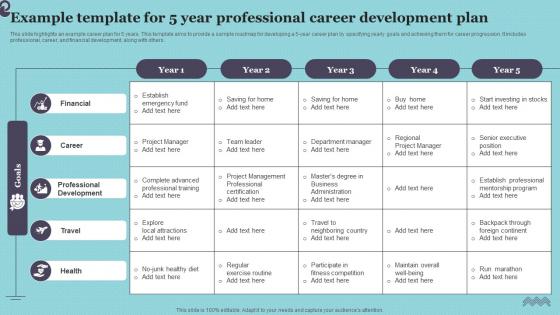
Example Template For 5 Year Professional Career Development Plan




Try Before you Buy Download Free Sample Product
 Impress Your
 Audience
 100%
100% Editable
 Save Hours
 of Time


This slide highlights an example career plan for 5 years. This template aims to provide a sample roadmap for developing a 5 year career plan by specifying yearly goals and achieving them for career progression. It includes professional, career, and financial development, along with others.
People who downloaded this PowerPoint presentation also viewed the following :
Example Template For 5 Year Professional Career Development Plan with all 6 slides:
Use our Example Template For 5 Year Professional Career Development Plan to effectively help you save your valuable time. They are readymade to fit into any presentation structure.





FAQs for Example Template For 5 Year Professional
So you need five key pieces: figure out what skills you currently have, set some realistic short and long-term goals, identify what you're missing skill-wise, create actual action steps with deadlines, and build in regular check-ins. That last one's crucial - I can't tell you how many people make these elaborate plans then never look at them again. Also, be real about timing. Like, don't tell yourself you'll learn Python in two weeks because that's just setting yourself up to fail. The whole point is making it specific enough that you can actually tell if you're moving forward or just spinning your wheels.
Honestly, just sit down and make a brutally honest list of what you're actually good at versus what makes you want to hide under your desk. I'd ask your manager and coworkers for feedback too - yeah it's awkward but they'll tell you things you can't see yourself. Then compare your skills to those job descriptions you've been bookmarking. You'll probably notice some patterns in what you're missing. Pick 2-3 gaps that would make the biggest difference for where you want to go and focus on those first. Don't try to fix everything at once or you'll burn out.
Honestly, mentorship can totally change your career trajectory. Find someone about 5-10 years ahead of where you wanna be - someone whose path you actually respect. Don't get hung up on making it super formal though. I've seen the best mentoring relationships start from random coffee conversations or even LinkedIn messages (I know, I know, LinkedIn can be cringy but it works). Your current network's probably a good starting point too. Industry events, professional groups, that sort of thing. Oh, and here's the key - ask specific questions instead of being like "will you be my mentor?" That's way too much pressure upfront.
Honestly, don't just network when you need a job - that's backwards. I used to think it was all fake schmoozing too, but it's more like... mutual help? Connect with people in roles you want, go to industry stuff, grab coffee. The key is actually helping others first - share cool articles, make introductions. I try to meet 2-3 new people monthly and check in with existing contacts every few months. It sounds calculated when I put it like that, but whatever works right? Your network ends up being this early warning system for opportunities you'd never see coming otherwise.
Here's what I wish someone had told me earlier - break those huge career dreams into actual deadlines. Like 6 months, 1 year, 3 years instead of "someday I'll run this place." Figure out what skills you actually need for the roles you want, then be brutally honest about where you're at now. I definitely aimed way too high way too fast at one point and it was... humbling lol. Make sure your goals match what's realistic at your company and in your industry. Oh and write this stuff down! Goals you don't track just turn into daydreams. Seriously, start planning your next move today.
Honestly, every 3-6 months is what most people say, but I'd do it quarterly if I were you. Things move so fast now - like that "perfect" plan you made last year? Probably needs some adjustments already. I usually just throw a reminder on my calendar and spend maybe 30 minutes looking at what's actually happening vs what I thought would happen. Some goals you'll crush way faster than expected, others become totally irrelevant. The job market's weird right now anyway, so staying flexible is key. Quick check-ins help you pivot without feeling like you're starting over.
Honestly, I'm obsessed with tracking career stuff now - started with just a simple spreadsheet but it's gotten way more elaborate lol. LinkedIn has decent career insights built in. Trello works great for bigger goals. I do this quarterly check-in thing with myself (super nerdy I know) plus keep a running career journal. Your company might have performance tools you can piggyback on too. MyPlan and 15Five are solid if you want something more official. Just pick whatever you'll actually stick with though. Maybe start tracking like 2-3 goals this week? The habit matters more than the perfect system.
Okay so first thing - actually figure out what your company's trying to do. Check their strategic plan, bug your manager about department goals, that kind of stuff. Most people totally skip this part which is dumb because then you're just guessing. Once you know if they're going hard on digital transformation or customer experience or whatever, match your skill building to that. Like if it's all about tech, focus there. Map out the gaps between where they're headed and what you can actually do right now. Then build your plan around fixing those specific holes. Way better than just randomly picking skills and hoping they matter.
Don't be super vague about what you want - "advance my career" means nothing, honestly. Set realistic timelines too because becoming CEO in 18 months? Not happening. Focus on building actual skills, not just chasing promotions. Here's the thing though - don't create your plan alone. Talk to your manager or find a mentor who can give you real feedback. And this might be obvious, but I've seen people do it: they write this elaborate plan then shove it in a drawer forever. Review it every few months so it actually stays useful as things change.
Honestly, personal branding is just your professional reputation but with more strategy behind it. You want people to know what you're good at and what you stand for. LinkedIn is obviously huge - update it with real achievements, not just job descriptions. Share stuff you actually care about in your industry. Network when you DON'T need anything (seriously, this matters). Volunteer for projects that'll get you noticed. Maybe write about topics you know well, or speak at events if that's your thing. The biggest thing? Be consistent across everything - your online presence, how you talk about work, all of it. People should be able to describe what you bring to the table without thinking too hard about it.
Look, companies are always changing and the people who learn new stuff fastest get noticed first. It's honestly that simple. You'll become the person they think of for cool projects and promotions because your skills stay current. I mean, why wouldn't they pick someone who's growing over someone who's just... there? Learning shows you're actually invested, not coasting. Pick something trending in your field - doesn't have to be huge - and spend like 30 minutes a week on it. Trust me, doors open that you didn't even know existed.
Honestly, I used to think soft skills were just fluff until I watched people with worse technical skills get promoted over me. Now I treat them like any other skill I need to master. Figure out what matters for your role - communication, leadership, whatever. Then get specific about it. Like "I'll present at the monthly meeting" or "lead that cross-team project." The measurable stuff works better than just hoping you'll magically improve. Find a mentor if you can, or take on assignments that stretch you a bit. It's wild how much these actually matter for moving up.
Honestly, feedback is like having a mirror for your career - you need it to see what's actually happening vs what you think is happening. Your boss and coworkers will tell you things you'd never figure out on your own. Maybe you're amazing at presentations but terrible at follow-through (been there). Regular feedback helps you find those blind spots and shows you what your company actually cares about for promotions. Don't wait for yearly reviews either - that's way too late. Try to get feedback every few months so you can actually course-correct.
Honestly, online courses are a game-changer for your career. Pick stuff that actually matches where you want to go professionally - LinkedIn Learning and Coursera have tons of options. I know someone who got promoted literally just from adding the right certifications to their resume. Here's the thing though: don't just hoard certificates like they're Pokemon cards. You've got to use what you learn in your actual job, then talk about those wins during reviews. Oh, and definitely update your LinkedIn with specific examples of how you applied new skills. The whole point is showing you're serious about growing, not just clicking through videos.
Figure out what skills you're missing first - like, really dig into job descriptions for roles you want. Then hit up LinkedIn hard. I know it sounds basic, but informational interviews actually work if you're not weird about it. Build a timeline with monthly goals: maybe get a cert, volunteer somewhere relevant, or take on different projects at your current job. The whole point is looking strategic, not like you're panicking to escape. Oh, and don't underestimate how much random coffee chats can help - people love talking about their careers if you ask the right questions.
-
Excellent design and quick turnaround.
-
Exclusive and extensive collection of templates. Really helped me create a professional presentation in just no time.