


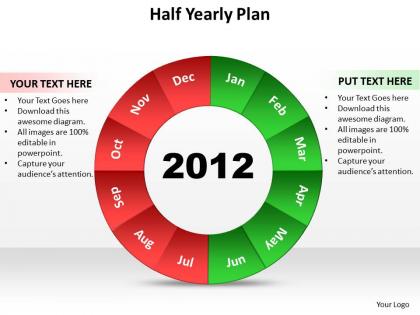
Half yearly plan 10




Try Before you Buy Download Free Sample Product
 Impress Your
 Audience
 100%
100% Editable
 Save Hours
 of Time


You probably think animations will impress your audience but you can be sure you'll only annoy them if you misuse it. That is why Half Yearly Plan 10 that have been created by presentation professionals are the best for you.
People who downloaded this PowerPoint presentation also viewed the following :
Half yearly plan 10 with all 6 slides:
Without a professional presentation your ideas could be left out in the cold. Use our range of professional Half Yearly Plan 10 to make sure that your statement is really being made.
FAQs for Half
Honestly, I'd start with your top 3-5 priorities and work backwards from there. Break those big goals into quarterly chunks so you're not scrambling at month six wondering where everything went wrong (been there!). Set clear, measurable targets with realistic deadlines. Monthly check-ins are clutch for staying on track. Oh, and definitely map out potential roadblocks ahead of time - trust me on this one. Getting your team on board early makes everything smoother. Don't forget to actually allocate resources properly or you'll be setting yourself up for frustration later.
Check your numbers monthly - revenue, milestones, whatever you're tracking. Don't overthink the tools honestly, a basic spreadsheet works fine (you can always upgrade later). Break those 6-month targets into smaller monthly pieces so you catch problems early instead of panicking at month 5. Monthly calendar reminders are clutch here. I learned this the hard way - when you're swamped, these reviews are the first thing to disappear. But they're what keep you from going completely off track. Just pick a day each month and stick to it.
Honestly, the biggest mistake is being way too ambitious - like setting goals that would take a whole year to hit. I've watched so many teams do this and crash hard. Don't make your plan super rigid either, because things always shift. Oh, and definitely get input from stakeholders first! Otherwise you'll build something that looks amazing but nobody actually wants. Most people also forget to add buffer time for when stuff inevitably goes wrong. Better to pick fewer things and nail them than spread yourself too thin. You can always add more later if you're killing it.
So basically, you take your big yearly goals and chop them into 6-month chunks that actually make sense. Your annual plan is like "we want to grow revenue by 30%" but the half-yearly version gets into the weeds - which campaigns you'll run, deadlines, budget stuff. Way more concrete. Plus you can course-correct faster when shit inevitably hits the fan (and it always does, right?). I honestly think 6 months is the sweet spot for planning. Not too short where you're constantly scrambling, but not so long that you're basically guessing what'll happen. It bridges that annoying gap between your big dreams and what you're doing Tuesday morning.
Honestly, data analysis is just your reality check for the half-yearly plan. It shows what's actually working vs what you *thought* would work. Pull your top 3-5 metrics from Q1 and compare them to your original assumptions - conversion rates, budget burn, whatever matters for your goals. You'll spot trends and see which targets are realistic or completely unrealistic. Nobody wants to admit their projections were wrong (been there), but better to pivot now than faceplant later. Check your KPIs, find the bottlenecks, then adjust your strategy.
Honestly, monthly check-ins are your best friend here. Don't let people get away with vague "we're making progress" updates - you need actual numbers and specifics. Every single goal should have one person's name attached, even the group stuff. Trust me on this one - I've watched so many projects just... evaporate because everyone assumed someone else was on it. Keep a shared doc or dashboard visible to the whole team. Short meetings work better than long ones, btw. And yeah, you'll probably need to shift goals around as things change. That's totally normal.
Honestly, I'd just go with Notion or Airtable to start - they're super flexible and won't box you in as your goals change. Google Sheets is solid too if you're more of a spreadsheet person (which I totally get, sometimes basic is better). Trello's nice if you're visual and like seeing everything laid out on boards. The real trick is picking whatever you'll actually stick with - I've seen people get all excited about fancy tools then abandon them after two weeks. Set up those quarterly check-ins and keep it simple. You can always get fancier later once you figure out what actually works for you.
Before you start planning the next six months, take a hard look at what just happened. Did you actually hit your targets? What slowed you down? Honestly, I'm always embarrassed by how wildly optimistic my old timelines were - like thinking that integration would take "just a few days" lol. Write down the patterns you notice. Maybe you always underestimate technical work, or maybe Sarah's team is consistently behind. Keep it simple though - just a quick doc you can reference when setting new goals. It'll save you from making the same mistakes twice.
Honestly, just be real about what's working and what's totally flopping. Move your budget/time from the stuff that's clearly not happening to whatever's actually showing results. I know it sucks to admit when something isn't panning out, but I've watched teams waste months on dead-end strategies just because they wrote it down in January. Check your numbers every month instead of waiting till the end. Build in some wiggle room for the rest of the year so you can actually pivot when needed. And yeah - keep everyone in the loop when you make changes or people will be confused as hell about the new direction.
Honestly, six months is the sweet spot for talent development. Quarterly planning? You're just firefighting the whole time. With half a year, you can actually map out learning paths that make sense and pair people with mentors who'll click. Stretch assignments, cross-training, certs - all that stuff needs time to work. I mean, you want to see real growth, right? But it's not so long that you can't switch gears if someone's priorities change. Start with your stars and high-potential people, then tie their goals directly into what the business needs.
Pick 3-5 metrics max - trust me on this one. More than that and you'll get scattered. Go specific too, like "boost Q2 revenue by 15%" instead of just "increase sales." Mix leading indicators (stuff you do) with lagging ones (results you get). Be realistic about your resources though. I made that mistake last year and it was rough. Oh, and focus on metrics that actually matter for your big picture goals - sounds obvious but it's easy to track vanity metrics instead. Keep asking yourself "will this number actually tell me if I'm winning?"
Honestly, you've got to speak different languages to different people. Executives just want the big picture - ROI, outcomes, done. Team leads need the nitty-gritty timelines and who's doing what. I'd kick off with an all-hands, then follow up with written stuff (though let's be real, half won't read it). Visual roadmaps are your friend here - way better than wall-of-text documents. Break things down by department so people see what actually affects them. Don't sugarcoat the challenges either. People appreciate honesty about potential roadblocks. Set up smaller Q&A sessions afterward - gives folks space to actually ask questions without feeling dumb in front of everyone.
Dude, you should totally get your team involved in that half-yearly planning thing. People actually give a shit about goals when they help create them – weird how that works, right? Your team sees all the daily chaos you probably miss from up top, so they'll call out any unrealistic deadlines before you embarrass yourself. Honestly, I was skeptical about this collaborative stuff at first, but it really does work. You get fresh ideas you'd never think of alone. Different perspectives are clutch. Try running a session next time where everyone owns at least one big project. Trust me on this one.
Yeah, market analysis is super important for your six-month plan. Honestly, I'd call it the foundation everything else sits on. You gotta know what's happening with competitors and where trends are going, otherwise you're just guessing at everything. The data helps you set targets that actually make sense and catch problems early. I usually tell people to spend like 20% of their planning time just researching - sounds like a lot but it's worth it. Start with competitor stuff and customer feedback first. That combo gives you the clearest picture of what to focus on next.
Dude, make your data actually stick in people's heads with visual stuff. Journey maps work awesome - show where you've been vs where you're going. Or do infographics with icons instead of those soul-crushing bullet points everyone hates. Interactive presentations are clutch too, like quizzes about your key metrics or live polls. Oh, and report card formats that literally grade different areas? Sounds super childish but stakeholders eat that shit up for some reason. Video summaries grab attention too. Dashboard mockups are pretty solid if you're not terrible at presenting. Just match whatever vibe your audience has.
-
Editable templates with innovative design and color combination.
-
Best way of representation of the topic.