


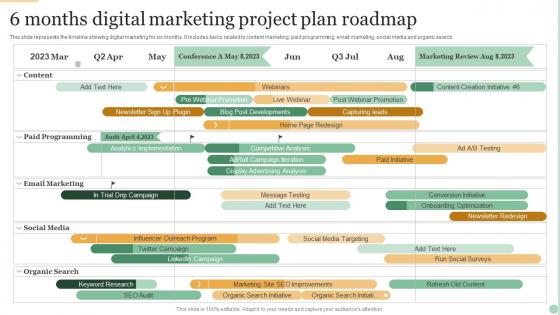
6 months digital marketing project plan roadmap




Try Before you Buy Download Free Sample Product
 Impress Your
 Audience
 100%
100% Editable
 Save Hours
 of Time


This slide represents the timeline showing digital marketing for six months. It includes tasks related to content marketing, paid programming, email marketing, social media and organic search.
People who downloaded this PowerPoint presentation also viewed the following :
6 months digital marketing project plan roadmap with all 6 slides:
Use our 6 months digital marketing project plan roadmap to effectively help you save your valuable time. They are readymade to fit into any presentation structure.






FAQs for 6 months digital marketing
Okay so you need five main things for your digital marketing plan. First, set clear goals with actual numbers you can track. Then figure out who your audience really is - seriously, this is where everyone screws up and just assumes they know their customers. Map out your content strategy and decide which platforms actually make sense for your business. Don't waste time on every single social media channel just because they exist. Budget allocation comes next, then create a timeline with milestones. Oh and treat it like a Google doc you can tweak every few months, not some permanent thing carved in stone.
Honestly, just connect your marketing metrics to what actually makes you money. Too many people get obsessed with follower counts when they should be watching conversions - I've seen this mistake so many times lol. Your marketing funnel needs to match how customers actually buy from you. Have weekly meetings between marketing and business teams to check if you're hitting the goals that matter. Quick pivots are everything when something isn't working. The whole point is creating that feedback loop so you're not wasting time on stuff that doesn't move sales.
Focus on traffic, conversion rates, cost per acquisition, and customer lifetime value - those are the ones that actually matter. Don't get sucked into vanity metrics like follower counts (I've made that mistake before). Email open rates and click-through rates show if people give a damn about your content. Social engagement matters too, but only if it's real engagement. Set up a weekly dashboard so you can catch problems early. Oh, and make it simple - you don't want to spend hours analyzing data when you could be improving your campaigns instead.
Start with who's already buying from you - check your website analytics and see what these people actually look like. Demographics, what they're doing, what problems they have. Yeah, you'll need to make those buyer persona things (I know, I know, sounds boring but trust me). Survey your customers, creep on your competitors' social media followers, use Google Analytics. Facebook Insights is pretty solid too. Here's the thing though - don't try targeting literally everyone. Pick 2-3 specific types of people max. Then test it out with small campaigns and tweak based on real results, not just your gut feeling.
Honestly, content marketing is like the backbone of everything else you'll do online. Blog posts help your SEO rankings. Videos get people engaging on social. Case studies give your sales team actual ammunition to work with. The trick is matching your content to where people are in their buying journey - someone just discovering you needs different stuff than someone ready to purchase. I'd start by figuring out what content you're missing, then map out a calendar that actually supports your bigger marketing goals. It really does touch every other channel you're using.
Honestly? Just pick 2-3 platforms where your customers actually spend time - forget what those social media "experts" keep pushing. Create stuff that actually helps people instead of constantly hawking your products. I can't tell you how many businesses I see posting those terrible stock photos with zero personality. Don't be that guy. Jump into conversations, reply to comments, be a real person. Post 3-4 times weekly and see what hits. Once you figure out what works, do more of that. Consistency beats perfection every time.
Honestly, just grab your phone right now and try buying something on your site - I bet you'll find like 3 things that annoy you immediately. Mobile-first is everything these days. Your site needs to load in under 3 seconds or people bounce. Make buttons way bigger than you think (thumb navigation is clunky), and definitely streamline that checkout process. SMS marketing actually converts really well for mobile users since they're always distracted or rushing around. Oh, and don't forget your emails need to look good on phones too - that's where everyone reads them anyway.
Dude, AI is honestly kind of wild for marketing right now. It's automating stuff like audience segmentation and personalizing emails without you having to do the grunt work. Plus chatbots can handle basic customer questions (though some are still pretty robotic, not gonna lie). The predictive analytics part is where it gets interesting - you can actually see which leads might convert before wasting time on dead ends. Real-time campaign optimization is huge too. Your ads automatically adjust bids based on what's working. I'd start with something simple like automated email personalization, then build from there once you get comfortable.
Don't treat SEO like some add-on you'll figure out later - bake it right into your roadmap from the start. Match your keyword research with your content calendar and think about search intent for every campaign. I swear, teams that try to retrofit SEO always end up in a mess. Quarterly tech audits should be standard. Your social and email stuff? Plan it around those target keywords too. Track organic performance with everything else you're measuring. The whole point is weaving SEO through all your work instead of having it fight for scraps in its own corner.
Honestly, the biggest mistake I see is people locking into these super rigid yearly plans. Build in flexibility from day one instead. Every quarter, actually sit down and review what's bombing vs what's crushing it - then change course if you need to. Keep some budget flexible between channels, stay on top of industry updates (I know, boring but necessary), and always run a few test campaigns alongside your main stuff. Oh and make checking your data a weekly thing, not monthly. You'll catch shifts way earlier that way. Trust me, I've watched too many teams ride dead strategies into the ground just because "the plan says so."
Honestly, most people mess up by being way too vague with their goals. Pick 2-3 solid initiatives instead of trying to juggle twelve things at once. Your timelines? They're probably too ambitious - campaigns always drag longer than expected (learned this the hard way). Don't skip competitor research or ignore what your budget can actually handle. Also, loop in your sales team and customer service people early on. They talk to real customers daily and have insights you definitely need. Build in checkpoints to pivot when things aren't working. Trust me, you'll need them.
So basically you stop guessing and start knowing what actually works. Track everything first - that's the boring part but trust me, it matters. I used to just dump money into Facebook ads like an idiot and cross my fingers. Now you can see which campaigns actually convert, where your good leads come from, and honestly? Where you're just burning cash for no reason. A/B test different approaches, watch how people behave on your site, then adjust based on real data instead of whatever "feels" right. Way better than making decisions because you had too much coffee that morning.
Honestly, email marketing is like having a direct hotline to your customers. It connects everything else you're doing - social media, your website, all of it. The ROI is insane compared to throwing money at Facebook ads (trust me on this one). What makes it work is segmenting people based on where they are in your sales process. You can send totally different messages to someone who just discovered you vs. a repeat customer. Start with some basic automated sequences for different customer paths. That's where you'll actually see your conversion rates jump. Plus it keeps people engaged way longer than most other channels.
Focus on the metrics that actually make you money - conversion rates, customer acquisition cost, and lifetime value. Those are your bread and butter. Don't get sucked into vanity metrics like clicks or impressions (learned that one the hard way). Attribution tracking is huge so you can see which channels really drive sales. For ROI, just divide revenue by marketing spend, but honestly some campaigns take forever to convert so pick the right timeframe. I'd start with maybe 3-5 key metrics that match your goals. Track those consistently before you add more stuff.
Okay so first things first - get a brand guidelines doc sorted with your messaging, visuals, tone, all that stuff. It's literally your bible. Then make templates for each platform because honestly, your team will thank you later when they're not starting from scratch every damn time. I'd also suggest doing a content calendar so you can plan campaigns as a whole instead of just winging it everywhere. Oh and definitely have someone (maybe you?) eyeball everything before it goes live - catches the weird inconsistencies. Monthly audits are clutch too. Just screenshot all your channels and put them side by side. You'll see the problems instantly.
-
“Excellent service from the customer support team when I wanted a slide that was a bit different from those on their standard menu. Super helpful.”
-
Unique research projects to present in meeting.