


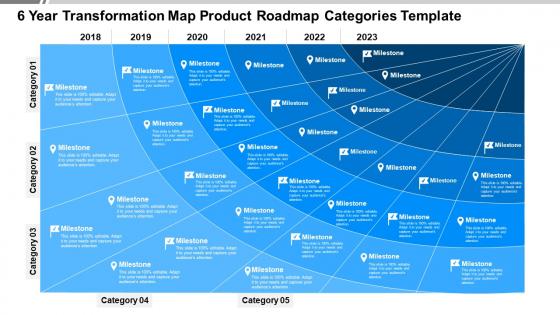
6 year transformation map product roadmap categories template





Try Before you Buy Download Free Sample Product
 Impress Your
 Audience
 100%
100% Editable
 Save Hours
 of Time


Get it first hand from our 6 Year Transformation Map Product Roadmap Categories Template. Authenticity of the gen is guaranteed.
People who downloaded this PowerPoint presentation also viewed the following :
6 year transformation map product roadmap categories template with all 5 slides:
Correct the disorder with our 6 Year Transformation Map Product Roadmap Categories Template. Address factors causing conflict.
FAQs for 6 year transformation map product
So you need three main pieces: your strategic goals (the why), specific features (the what), and realistic timelines. Most teams totally bomb the stakeholder buy-in part - it's tedious but crucial. Show dependencies between features and add success metrics so you can track progress. Keep it visual and actually update the thing regularly. Seriously, nothing screams "we don't have our act together" like a roadmap from six months ago collecting digital dust. Oh, and make sure you map what you're currently working on against these pieces first.
Don't just collect feedback and call it a day. Build it right into your roadmap process from the start. Quarterly surveys work well, plus regular user interviews and those sales team sessions where they vent about what customers actually want. Here's the thing though - most PMs dump everything into a spreadsheet and forget about it. Create some kind of scoring system instead that weighs feedback against your goals and what you can realistically build. Then (this part's crucial) tell people what made the cut and why. Honestly, stakeholders just want to know you're actually listening to them.
So strategic roadmaps are your big picture stuff - like 6-12 months out, focusing on major themes and business goals. What problems are we actually solving for users, you know? Tactical ones dive way deeper. We're talking 1-3 month sprints with specific features and delivery dates. Strategic = the "why" and "what." Tactical = "how" and "when." Honestly, you probably need both (even though it's kind of a pain). I'd start strategic first to get everyone aligned, then break that down into smaller tactical pieces your dev team can actually work with. Makes the whole thing way less overwhelming.
Quarterly updates are probably your sweet spot, but it really depends on your industry. Fast-moving markets? You might need monthly check-ins or you'll be scrambling to catch up. I've watched teams crash and burn sticking to roadmaps that were dead on arrival - total nightmare. Your team needs some stability though, so don't go crazy with constant changes. Maybe every 6 weeks works better than strict quarters? Whatever you pick, just don't let it collect dust for more than 3 months. Stakeholders get antsy when they think you're not paying attention to what's actually happening out there.
Look, market research is basically how you figure out what people actually want instead of just guessing. I can't tell you how many teams I've watched build cool stuff that totally flopped because they never asked customers first. Use it to decide which features matter most and catch opportunities before other companies do. The whole point is balancing what users need with what makes business sense - and what's actually possible to build. Oh, and don't just do research once at the beginning. Build those check-ins right into your roadmap so you're always course-correcting instead of flying blind.
Think of it like this - roadmaps stop everyone from working on random stuff. Your engineering team won't be building features that marketing has no clue how to sell. Sales knows what's actually coming instead of making promises about vaporware (which honestly happens way too often). Design can plan ahead instead of scrambling last minute. Short version: shared priorities mean less chaos. When someone asks "why aren't we doing X instead?" you point to the roadmap. Just make sure people can actually find the damn thing - don't hide it in some buried Confluence page.
So for roadmaps, ProductPlan or Aha! are solid picks - they're made for this stuff and stakeholders can actually view them without wanting to scream. Miro works too if you don't mind building everything from scratch (which honestly isn't that bad). I've watched teams somehow make roadmaps in Notion and even PowerPoint... not my first choice but whatever gets the job done. Budget tight? Just use what your team already has access to. ProductPlan's free trial is worth checking out though. The real trick is finding something everyone will actually use instead of abandoning after two weeks.
Honestly, I just focus on three things: business impact, customer value, and how hard it'll be to build. Score each feature on potential revenue or cost savings first. Then look at user impact - how many people need this and how desperately? Technical complexity is huge too. Sometimes the "okay" solution that ships in two weeks beats the perfect one that takes three months. I make a basic scoring spreadsheet for all this (yeah, I know, spreadsheets are boring but they work). The trick is explaining your logic to stakeholders upfront so they don't get mad when their favorite idea gets pushed to next quarter.
Honestly, visual roadmaps are game-changers for keeping stakeholders awake during presentations. Color coding makes priorities super obvious at a glance. Progress bars? They're perfect for showing where features actually stand. I learned this the hard way after watching people's eyes glaze over during my first text-heavy roadmap review - never again. Icons help people quickly spot different product areas, and swimlanes make timelines way less confusing. Those impact vs effort charts are clutch for defending your decisions too. Don't overwhelm yourself though - start simple with maybe color coding and one other element, then add more as you get comfortable.
Honestly, just get ahead of it and tell people right away when things change. Nobody likes being blindsided - they'd rather hear about delays upfront than find out later through the grapevine. Mix up how you communicate too: quick Slack messages work great for minor shifts, but bigger changes need actual conversations where people can ask questions. Always explain the "why" behind changes though. Makes it feel less like random chaos and more like actual strategy. Oh, and set up regular check-ins so people aren't constantly wondering what's happening. Even boring "nothing's changed" updates help build trust.
Honestly, you'll want both delivery and outcome metrics - can't just pick one. Are you hitting milestones and release dates? Cool, but that's only half the story. The real test is whether users actually give a damn about what you shipped. Look at adoption rates, revenue bumps, customer satisfaction scores. I'd also throw in some leading indicators like whether your roadmap helps teams prioritize better (super underrated IMO). Oh, and watch for scope creep - if it's happening constantly, something's off. Pick maybe 3-4 metrics that actually matter to your stakeholders and stick with those.
So with Agile, your roadmap gets way more flexible than that old waterfall stuff. You're tweaking things constantly based on what users actually tell you and how sprints go. Quarterly goals work better than trying to plan a whole year out - trust me on that one. The roadmap becomes this living thing that changes every few weeks. Feels totally chaotic initially, not gonna lie. But you end up focusing on big themes instead of getting stuck on specific features. Stakeholders hate the uncertainty at first. Just plan to revisit everything after sprint reviews and you'll be fine.
Don't get too specific with dates way out in the future - you'll just end up constantly changing things and pissing people off. Your roadmap isn't a wish list either, so resist cramming every feature request in there. Teams always mess this up! Getting input from engineering and sales is crucial, otherwise you're just guessing. Focus on the big problems you're solving instead of just rattling off features. Honestly, the best roadmaps tell a story about your direction rather than being some detailed project plan. Oh, and don't build it alone in a room somewhere - that never works.
Think of your roadmap like building blocks - start with your big picture vision, then break it into 3-month chunks that actually get you there. I always work backwards from that 12-18 month goal to figure out what's realistic each quarter. The trick is making sure your quick wins aren't just random customer requests (they never stop asking for stuff, btw). Each deliverable should either test your assumptions or lay groundwork for bigger features down the road. Short wins are great, but they can't just be busy work that makes everyone feel productive.
Don't just dump a finished roadmap on your team - that never works. Get them involved in building it from the start. Run workshops where everyone can weigh in on priorities and timelines. People actually buy into stuff they helped create. Also, you'll need to explain the "why" behind your choices, especially when someone's favorite feature gets cut (there's always drama around this). Keep doing regular check-ins too - things change and your roadmap should adapt. The whole point is making it feel like "ours" instead of something handed down from above. Maybe start with a planning session next week?
No Reviews