

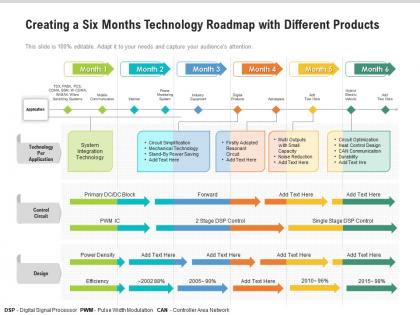
Creating a six months technology roadmap with different products




Try Before you Buy Download Free Sample Product
 Impress Your
 Audience
 100%
100% Editable
 Save Hours
 of Time


Visualize your work plan and communicate your ideas impactfully with our pre designed Creating A Six Months Technology Roadmap With Different Products. Showcase the detailed overview of the project, the key deliverables, and the milestones to be achieved with the help of our fully customizable PowerPoint layout. You can easily emphasize on the project goals and discuss all the activities involved in an easy to comprehend manner by utilizing our professionally designed PPT theme. This roadmap PowerPoint layout is a perfect strategic planning tool that can help in keeping the project on track. With our attractive PowerPoint theme, you can articulate the workflow, track the work progress, and have a clear vision of the goal to be achieved. Download this versatile Creating A Six Months Technology Roadmap With Different Products and save your hours of work.
People who downloaded this PowerPoint presentation also viewed the following :
Creating a six months technology roadmap with different products with all 2 slides:
Use our Creating A Six Months Technology Roadmap With Different Products to effectively help you save your valuable time. They are readymade to fit into any presentation structure.
FAQs for Creating a six months technology roadmap
So basically you need three main pieces: where you're at now, where you want to be, and how to get there. Map out your current tech situation first. Then figure out your 1-3 year goals. The real work is in that middle part though - plotting all the projects, what depends on what, key milestones, etc. Oh and make sure people actually buy into this thing and review it regularly. I've seen way too many roadmaps just collecting dust. Start simple with a visual template so everyone can follow along without their eyes glazing over.
Start with mapping your business goals to actual tech projects - expanding into new markets? Focus on scalable infrastructure first. Every major tech spend should support a real strategic goal, not just be "nice to have" stuff. Honestly, I've watched too many companies chase shiny new tools that do absolutely nothing for their bottom line. Review your roadmap regularly since business priorities change constantly. Oh, and get leadership doing quarterly roadmap check-ins - otherwise tech and business strategy drift apart fast. Don't let that happen.
Oh man, you absolutely need stakeholder feedback or your roadmap becomes total fantasy. I learned this the hard way when my team basically built in a bubble for months - disaster. Talk to everyone: customers, sales, engineers, leadership. They'll tell you what actually matters vs what sounds cool in meetings. Set up regular check-ins and surveys, sure, but honestly? Those random hallway conversations usually give you the real dirt. People are way more honest when it's not a formal thing. Always ask "what are we missing?" and don't just nod along - actually listen to what they're saying.
Honestly, quarterly updates are usually the sweet spot. But if you're in something fast-moving like fintech or AI, monthly makes way more sense. Match it to how quickly your industry actually changes, you know? Six months without touching it? That's when your roadmap basically becomes science fiction. I've watched teams do this and it's painful. Monthly works great when customer needs shift constantly or tech moves fast. Stable industry? Quarterly's fine. Just pick something and actually stick to it - set that calendar reminder now or you'll definitely forget.
Honestly, you need both the "early warning" stuff and the "did it actually work" measurements. Track things like hitting milestones on time and whether your teams have what they need - that's your heads-up before things go sideways. Then measure the real outcomes: faster launches, better ROI, how much people actually use the new features. Don't forget to just ask your teams how they feel about it all - sometimes the best insights come from casual conversations, not spreadsheets. Pick maybe 4 metrics max that connect to what your business actually cares about.
Honestly, I'd set up review checkpoints every few months to reassess everything. That way you can pivot when new tech drops or the market shifts. We made the mistake once of committing too hard to some framework that died within like 12 months - brutal lesson there. Focus your roadmap on what outcomes you want, not the exact tech stack. Keep your short-term stuff detailed but leave the longer horizon pretty loose. Oh, and definitely keep a running list of emerging tools to check out regularly. Makes it way easier to jump on something when it actually looks game-changing instead of just hyped.
Honestly, the worst mistake is getting way too detailed on stuff that's months away. You'll be wrong anyway and spend forever updating it. Don't build it solo either - grab input from engineering, product, everyone. I've watched teams create these gorgeous roadmaps that totally ignore tech debt or basic system constraints. Such a waste. Keep it flexible since priorities always shift (trust me on this one). Focus on real business wins, not just shiny new tech you want to play with. Quarterly check-ins work well for staying grounded.
Honestly, just bake flexibility right into your roadmap upfront - create "innovation slots" where you can drop in new tech as it proves itself. Think of it like... idk, leaving space for unexpected dinner guests? Set your evaluation rules now: does this actually solve problems, what'll it cost to integrate, does it match your goals. Then do quarterly reviews to test new stuff against those criteria. Way better than scrambling later to jam in some shiny tech that looks cool but doesn't really help anything. Trust me on this one.
Dude, you gotta visualize that roadmap. People just don't get spreadsheets - they need to *see* the timeline with all the milestones and dependencies mapped out. I can't tell you how many meetings I've sat through where everyone's talking in circles until someone finally grabs a marker and draws it out. Non-tech folks especially need this stuff visual so they understand why feature X has to come before feature Y, what resources you'll need, etc. Plus it's way easier to catch unrealistic deadlines when everything's laid out like that. Just grab a simple timeline tool and tweak it based on what people say.
Honestly, roadmaps are lifesavers for resource planning. You can see exactly when you'll need devs, budget, or hardware instead of panicking at the last second. I've watched teams waste so much money because they didn't plan ahead. The best part? You'll catch when multiple teams are basically building the same thing (happens more than you'd think). Leadership actually listens when you show them clear timelines and dependencies too. Just pull out your roadmap during quarterly planning and match your resources to the timeline. Trust me, beats those awkward "we desperately need engineers now" conversations.
So there are a bunch of good frameworks out there - Technology Roadmapping (TRM), Stage-Gate, Agile roadmapping. TRM's probably where I'd start since it's built for this stuff. You could also look at lean startup methods or the Three Horizons model if your company's into that strategic planning thing. Honestly though? The framework you pick doesn't matter as much as getting everyone on the same page about what's actually important and when things need to happen. That's where it gets messy. Start with basic TRM and add more complicated stuff later once your team isn't drowning in the process.
Honestly, external stuff is always messing with your tech roadmap. Market trends shift where customers want to go, so you're suddenly reprioritizing features or doing complete pivots. Regulations are the worst though - especially if you're in fintech or healthcare. New compliance rules can totally wreck your timeline and force these crazy emergency changes. Then competitors drop something that changes everything. My advice? Build flexibility in from the start so you can roll with it without scrapping your whole plan. Otherwise you'll just be constantly starting over, which sucks.
You really need to get other departments involved from the start - don't try to plan this stuff alone. Sales knows what customers actually want, finance knows your budget limits, and ops can tell you if you're being totally unrealistic about capacity. I learned this the hard way when engineering said something was "totally doable" but then support couldn't handle the complexity and we had to backtrack. It's way easier to get everyone's input upfront rather than trying to fix things later. Set up regular check-ins with different teams during planning - trust me, it'll save you so much headache down the road.
Honestly, I'd go with like 60-70% of your roadmap focused on the stuff that's gonna keep your boss happy and show quick results. Save the remaining chunk for the cool experimental stuff and long-term vision work. Otherwise you'll just end up in that awful cycle where you're constantly putting out fires - been there, it sucks. Every quarter, sit down and actually look at what you're working on. You might be surprised how much of your current work already connects to bigger goals anyway. Just don't let yourself drift too far into either camp or you'll regret it later.
There's a bunch of good options depending on what you need. Productboard and Aha! are the big names - they're built just for roadmapping and handle all the stakeholder stuff really well. Miro's great if you want something more visual and flexible. Monday.com works too, especially if you're already doing project management there. Honestly? I've seen people make decent roadmaps in PowerPoint, though updating them later is such a headache. My take is just start with whatever tool your team's already comfortable with. You can always switch to something fancier once you figure out what you actually need.
-
It saves your time and decrease your efforts in half.
-
Awesome presentation, really professional and easy to edit.
-
Use of icon with content is very relateable, informative and appealing.