


Creating a five years technology roadmap with different products




Try Before you Buy Download Free Sample Product
 Impress Your
 Audience
 100%
100% Editable
 Save Hours
 of Time


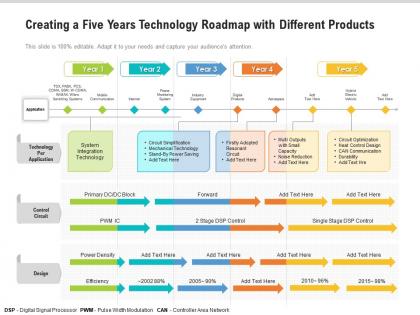
A well thought out action plan makes execution easier and increases the possibility of success significantly. Ensure hitting all the milestones within the deadlines by introducing our fully customizable Creating A Five Years Technology Roadmap With Different Products. Streamline the work related information, budget, timeframe, key deliverable, landmarks, and major steps involved, all in one place to give an organized overview of the project by utilizing our PowerPoint theme. Minimize time lag and increase work efficiency by providing insight into the process with our comprehensively researched roadmap PowerPoint layout. Color coding helps in highlighting the process and grabs the attention of the audience. Download our handy Creating A Five Years Technology Roadmap With Different Products to identify the possible problem areas in a much shorter time and propose solutions. Have a productive brainstorming session with your workforce by utilizing our action plan visualization tool.
People who downloaded this PowerPoint presentation also viewed the following :
Creating a five years technology roadmap with different products with all 2 slides:
Use our Creating A Five Years Technology Roadmap With Different Products to effectively help you save your valuable time. They are readymade to fit into any presentation structure.

FAQs for Creating a five years technology roadmap
You'll need a solid timeline first - when's everything happening? Then figure out where you're at right now tech-wise and where you want to be. Set actual milestones, not vague goals. Getting leadership on board is critical though. Seriously, I've watched so many roadmaps crash because nobody upstairs cared. Map out what resources you need and how projects connect to each other. Build in regular check-ins too since things always go sideways. Pro tip: start with your biggest headaches and some easy wins. Quick victories early on will buy you credibility for the harder stuff later.
Map every tech project to actual business goals first - seriously, if you can't connect it to revenue or real improvements, why are you doing it? I've watched teams waste months on "cool" stuff nobody wanted. Work backwards from where your company wants to be in 3-5 years. What capabilities do you actually need? Prioritize based on impact vs how hard it'll be to build. Don't just check in with business folks during planning season - make it regular. Your roadmap isn't set in stone, it should shift when priorities change.
You literally cannot build a good tech roadmap by yourself - trust me on this one. Get engineering, product, sales, and customers involved early or you'll create something totally useless (learned this the hard way). Different groups see different problems. Start by figuring out who actually cares about the outcome, then set up regular check-ins to bounce ideas around. Don't just present to them - make it collaborative. Oh and validate your assumptions constantly because you're probably wrong about at least half of them. The mix of voices matters way more than having the perfect process.
Honestly? Update it quarterly minimum, but monthly if things are crazy busy. Tech moves so damn fast - I've seen six-month roadmaps become totally useless. New tools pop up, budgets get slashed, priorities flip overnight. Your stakeholders will change their minds too (they always do). Treat it like a living doc instead of carving it in stone. Block an hour each quarter with your team to actually look at what happened vs what you planned. Start there and see how it goes. Oh, and don't overthink it initially.
Honestly, I'd go with stage-gate processes first - way easier to get your head around than jumping into complex stuff. S-curve analysis and scenario planning work great too, but save those for later. Start simple with stage-gate, then add technology trend tracking and competitive intel as you go. The whole thing needs to match where your company actually is maturity-wise, not where you think it should be. Don't overcomplicate it early on. Your team will get comfortable with the basics, then you can layer in the fancy analytical stuff. Makes the roadmap actually useful instead of just... pretty?
Honestly, I just set up a routine where I'm constantly scanning stuff - industry reports, research papers, what competitors are doing. Tech blogs are my guilty pleasure but they're goldmine for this. Conferences too, though some are overpriced. Once something catches my eye, I check if it actually fits our goals and timeline. Don't throw everything at the wall - that's expensive and messy. Map the really promising ones onto your roadmap based on how mature they are. Start with tiny pilots first. Way better than going all-in on something that might flop completely.
Don't make it too rigid - that's the death of any good roadmap. Priorities shift constantly (learned this the hard way), so build in room to pivot. Also, resist cramming every feature request in there just to keep people quiet. Focus on what actually matters for your main goals. Honestly, the biggest mistake I see is people treating roadmaps like some sacred document instead of something that evolves. Short bursts work better than mega-detailed plans that'll be outdated next week. And actually update the damn thing regularly - don't just create it once and forget about it.
Track your delivery timelines first - hitting those milestones matters. Budget variance is another big one, plus adoption rates for any new tech you're rolling out. Honestly, stakeholder buy-in can make or break everything (seen too many good plans die there). Are teams actually using the roadmap to make decisions, or is it just sitting there looking pretty? Check if you're solving the business problems you originally targeted. Oh, and quarterly reviews are clutch - that's where you can pivot if something's not working. The softer stuff matters too, like whether people trust the direction you're heading.
So I've tried a bunch of these. ProductPlan and Aha! are really good if you want something built specifically for roadmaps - they're pretty intuitive. Miro's my go-to though, honestly I get way too distracted making everything look perfect in there lol. Lucidchart's similar if you want that visual flexibility. For basic stuff, Visio works fine or even PowerPoint if you're just starting out. Oh and Roadmunk's decent too, forgot about that one. I'd probably try ProductPlan's free trial first - see if the fancy features are actually worth paying for vs just using something simpler.
Compliance stuff is basically like having speed limits on your roadmap - you've gotta hit certain deadlines whether you want to or not. GDPR was a nightmare for everyone I know. New healthcare regs can totally wreck your feature plans too. ISO certifications will force specific tech choices on you. The worst part? These requirements love showing up halfway through your timeline and derailing everything. I learned this the hard way last year. Always pad your roadmap with extra time and track regulatory changes in your space. Trust me, constantly putting out fires gets old fast.
Honestly, user feedback is everything for roadmap prioritization. When people tell you something's broken or they desperately need X feature, you've gotta shuffle your timeline around that. I've watched teams build these perfect-looking roadmaps that totally flopped because they never actually talked to users. Set up regular feedback channels so you're not just throwing darts at a board. Pain points tell you what to build next and what can wait. Just make sure you balance what users want with what's actually doable - sometimes they want the moon and you've got three developers.
Think of a tech roadmap as your GPS for innovation - it stops you from getting distracted by every cool new gadget or trend. You'll be able to see exactly where your current tech falls short and what you actually need to build next. The best part? It gets your whole team on the same page instead of everyone working on their own random side projects (we've all been there). Oh, and it helps you catch emerging tech before your competitors do. Just don't treat it like it's set in stone - I'd say review it every few months to keep things realistic and properly funded.
Short-term roadmaps are way more concrete - like 6-18 months out with actual features and stuff you can realistically build. Long-term ones? Honestly they're basically fancy guesswork since everything changes so fast in tech. But they're still useful for big architectural decisions and figuring out where to throw your money. Your short-term should have real milestones and resource planning. Update it every quarter or so. Long-term is more about vision and strategic direction - keep it flexible because you'll definitely be tweaking it based on what users actually want and whatever new tech pops up.
Honestly, just get everyone in the same room (or Zoom) every couple weeks - engineering, product, sales, whoever. Map out your next quarter together first so you're all starting from the same page. Each team needs to actually speak up about timeline stuff because they'll catch issues you'd never see coming. Pick any shared tool - Miro, a basic spreadsheet, whatever. The tool doesn't really matter if people don't use it consistently. What does matter is being transparent about trade-offs and what's actually realistic. Oh, and figure out who's talking to who between teams so nothing falls through the cracks.
Track your delivery stuff first - milestone completion, budget variance, timeline hits. Leadership loves that data. Then focus on outcome metrics like adoption rates and actual performance gains from your new tech. Business impact is key since that's why you built the roadmap anyway. I'd also watch leading indicators - team velocity, early blocker identification, that kind of thing. Monthly stakeholder reviews work well, though honestly quarterly adjustments based on learnings matter more. Don't get too caught up in perfect metrics though.
-
The content is very helpful from business point of view.
-
Much better than the original! Thanks for the quick turnaround.
-
Great product with highly impressive and engaging designs.
-
Very well designed and informative templates.
-
Great product with highly impressive and engaging designs.