


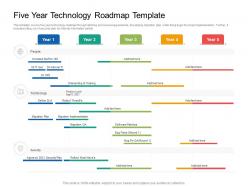
Five year technology roadmap timeline powerpoint template





Try Before you Buy Download Free Sample Product
 Impress Your
 Audience
 100%
100% Editable
 Save Hours
 of Time


Our Five Year Technology Roadmap Timeline Powerpoint Template are topically designed to provide an attractive backdrop to any subject. Use them to look like a presentation pro.
People who downloaded this PowerPoint presentation also viewed the following :
Five year technology roadmap timeline powerpoint template with all 2 slides:
Use our Five Year Technology Roadmap Timeline Powerpoint Template to effectively help you save your valuable time. They are readymade to fit into any presentation structure.
FAQs for Five year technology roadmap
Okay so you'll need three main things: a timeline for when you're adopting stuff, clear business goals behind each decision, and how you're allocating resources. Honestly, timelines are such a pain because tech projects always run late, but you still gotta have target dates. Map out where you are now versus where you want to be for each tech area. Don't forget dependencies between projects - that's where things get messy. Keep it visual and update quarterly minimum. Oh, and start with your biggest headaches first, then figure out what tech changes will actually fix them. Way easier than trying to boil the ocean.
Look at business value first - what's actually gonna make you money or hit your strategic goals? Those go to the top of the list. After that, figure out how hard each thing is to build and what you'll need resource-wise. Dependencies are huge though. Some tech won't work without other stuff being done first. I usually just make a basic scoring sheet for this because otherwise you end up making decisions based on whatever sounds cool that week. Timing matters too - market shifts can bump lower-priority stuff up real quick. Write down why you chose what you chose so you can look back in a few months.
You really can't build a solid tech roadmap without getting everyone involved. Engineering, product, sales, leadership - they all see different pieces of the puzzle that'll affect your timeline. Without their buy-in, you end up with this gorgeous plan that sits unused (trust me on this one). Getting alignment on trade-offs early is huge, especially when things get crazy. Regular cross-functional meetings help validate your assumptions and keep priorities realistic. Start mapping out who you need and get those conversations scheduled. Oh, and don't underestimate how long these alignment discussions actually take - they're worth it though.
Honestly? Every 3-6 months works for most people. Fast-moving stuff like AI or fintech probably needs quarterly check-ins since everything's constantly shifting. Slower industries can get away with twice a year. Don't wait for some major disruption to hit before updating - you'll be playing catch-up forever. Block calendar time now for regular reviews (I learned this the hard way). Your engineering team should definitely be involved too since they usually see technical changes coming before the rest of us do. Way better to have a set schedule than just winging it.
Honestly, Visio and Lucidchart are pretty solid if you want something flexible with good templates. ProductPlan and Roadmunk are built specifically for roadmaps though - way better collaboration tools. Look, if you're just getting started, don't sleep on PowerPoint or Google Slides. They're free and you can actually do a lot with them (I know, I know, sounds basic but whatever). Miro's great for brainstorming sessions too. My advice? Try a few free trials first. No point paying for something your team won't actually use.
Start by mapping out everything you've got - all your systems, apps, infrastructure. I know it sounds boring as hell, but document what's actually working vs what's driving everyone crazy. Talk to your teams about their biggest pain points since they're dealing with this mess every day. Also check how your data moves between systems and where things get stuck. Honestly, just throw it all in a spreadsheet or make some kind of visual map. That becomes your starting point for figuring out what needs fixing first.
You need to track two things: did you actually deliver what you promised, and did it matter? For delivery, I look at hitting milestones on time and staying within budget. Pretty straightforward stuff. Impact is harder but way more crucial - are you moving the needle on business goals and fixing real problems? Stakeholder satisfaction matters too, though some people will complain no matter what you do. Oh, and team velocity if you're doing agile. Just don't go crazy with metrics - pick maybe 4 max or you'll spend more time measuring than building.
Look, first thing - don't get distracted by every new tech trend that pops up. I've watched so many teams go down rabbit holes with stuff that sounds cool but doesn't actually solve their problems. Map out what fits your timeline realistically. Quick pilots for things that are ready now, longer bets for experimental stuff. Build in checkpoints to reassess - roadmaps aren't set in stone. Honestly, most "innovation initiatives" I've seen just become expensive wish lists. Test small before you commit big. Keep one foot in reality while you're exploring new possibilities.
Dude, you absolutely need your tech roadmap tied to business goals. Otherwise you're just building random cool stuff that doesn't matter. I've watched so many teams get hyped about new tech only to have everything scrapped later - brutal waste of time. When your tech actually supports business objectives, suddenly everyone cares and you get budget approval way easier. Plus it makes prioritizing decisions obvious when money gets tight. Honestly, the ROI difference is night and day. My rule: every roadmap conversation should start with "does this actually help us make money or keep customers happy?"
Start small - pilot programs are your friend here. Test with just a few people so you don't blow up everything at once. Train your team way before you need them ready (trust me on this one). Budget extra time and cash because something will definitely go wrong. Make sure you can actually roll back if it all goes sideways - I've watched companies get totally stuck with broken systems. Get everyone on board first though, otherwise you'll be fighting uphill the whole time. Oh, and set clear metrics upfront so you know if it's actually working.
Oh man, the worst thing you can do is get super detailed about stuff that's like a year out. You'll be wrong every time and spend forever updating it. Also don't just lock yourself in a room to write it - I've seen so many people skip talking to stakeholders and then wonder why nobody cares about their roadmap. Here's the thing though: it's not a project plan! Show direction and priorities, not exact dates. And honestly? Review it every quarter or it becomes useless pretty fast. Keep anything past 6 months really high-level.
Set up regular feedback loops - surveys, user interviews, support tickets, the usual stuff. But here's the thing: tons of teams collect feedback and then it just sits there (been there myself, honestly). Make a scoring system so you can tell the difference between must-haves and random feature requests. I'd do quarterly reviews where you actually connect user feedback to what's coming next on your roadmap. Usage analytics help too, obviously. Your users feel heard, you build things people want instead of shooting in the dark. Win-win.
Don't just dump the roadmap on people - get them involved from day one. Ask each group what's driving them crazy and what they actually need. Map everything back to their specific problems, and yeah, be honest about the tough choices you're making. Check in regularly because things change fast and you want to spot pushback early. Oh, and find someone in each group who actually gets excited about your vision - they'll sell it way better than you can. I learned this the hard way, but document every piece of feedback so people see you're not just ignoring them. Makes a huge difference.
Build your roadmap like it's meant to change - seriously, treat it as something alive, not carved in stone. Every quarter or so, sit down and look at what's actually happening in the market, what customers are saying, competitor moves, all that stuff. I've watched teams religiously follow plans that stopped making sense months ago (kinda painful honestly). Define your big goals super clearly, but keep the how and when flexible. Set up moments where you can shift direction without blowing everything up. Oh, and start watching for early signs of market changes now so you're not always playing catch-up later.
Okay so first thing - know your audience. Execs want the big picture stuff and timelines, but your engineering team needs all the technical nitty-gritty. Definitely use visuals because honestly, roadmaps in plain text are just painful to follow. Don't go overboard though - I've seen some that look like a kindergarten art project exploded. Here's what really matters: explain WHY you're making these decisions, not just what's happening when. Oh, and be upfront about the stuff you're not sure about yet. Things will change (they always do), so keep everyone in the loop when they do.
-
Unique design & color.
-
Great quality product.
-
It saves your time and decrease your efforts in half.
-
Best Representation of topics, really appreciable.
-
Best Representation of topics, really appreciable.
-
Excellent products for quick understanding.
-
Understandable and informative presentation.
-
Awesome presentation, really professional and easy to edit.
-
Informative design.
-
Excellent design and quick turnaround.
-
Page:
- You're currently reading page 1
- Page 2
-
